

Overview
Picture bearing buddies as bouncers at an exclusive club where only grease gets VIP access—they’re protective wheel bearing covers that need regular maintenance to prevent roadside drama. This expert guide outlines five crucial maintenance tips: establish a regular greasing schedule, ensure proper installation, perform routine inspections, protect during storage and water exposure, and understand pressure management to extend bearing life and avoid costly repairs.
Table of Contents
- Introduction
- What Are Bearing Buddies?
- Tip 1: Regular Greasing Schedule
- Tip 2: Proper Installation and Adjustment
- Tip 3: Inspection Routine
- Tip 4: Protection During Storage and Water Exposure
- Tip 5: Understanding Pressure Management
- Conclusion
- Frequently Asked Questions
Introduction
If you’ve ever towed a trailer, you know that wheel bearings can make or break your journey. Proper bearing buddy maintenance isn’t just a good idea—it’s essential for preventing those heart-stopping roadside breakdowns that always seem to happen at the worst possible moment.
As a mechanic with 20+ years of experience working with trailers, I’ve seen what happens when bearing buddies are neglected. It’s not pretty, and it’s certainly not cheap to fix. The good news? A little preventive care goes a remarkably long way.
In this guide, I’ll walk you through five proven maintenance tips that will extend the life of your bearing buddies and save you from costly repairs. These simple steps have helped countless trailer owners avoid the dreaded “wheel-falling-off-mid-highway” scenario that keeps me busy with emergency repairs every summer.
What Are Bearing Buddies?
Before diving into maintenance, let’s clarify what bearing buddies actually do. These clever devices are protective covers that fit over your trailer’s wheel bearings, creating a sealed environment that keeps water and debris out while keeping grease in.
The genius of bearing buddies is their spring-loaded design. This spring applies constant pressure to the grease, forcing it toward the bearings while simultaneously preventing water intrusion. Think of them as the bouncers at an exclusive club where only grease gets VIP access.
The benefits of properly functioning bearing buddies include:
- Extended bearing life (often 2-3 times longer)
- Protection against water damage, especially for boat trailers
- Ability to add grease without disassembling the hub
- Visual indicator of grease levels via the piston position
Without this protection, water inevitably finds its way into your bearings, causing rust and premature failure. I’ve replaced countless bearings that could have lasted years longer with proper preventative maintenance using bearing buddies.
Tip 1: Regular Greasing Schedule
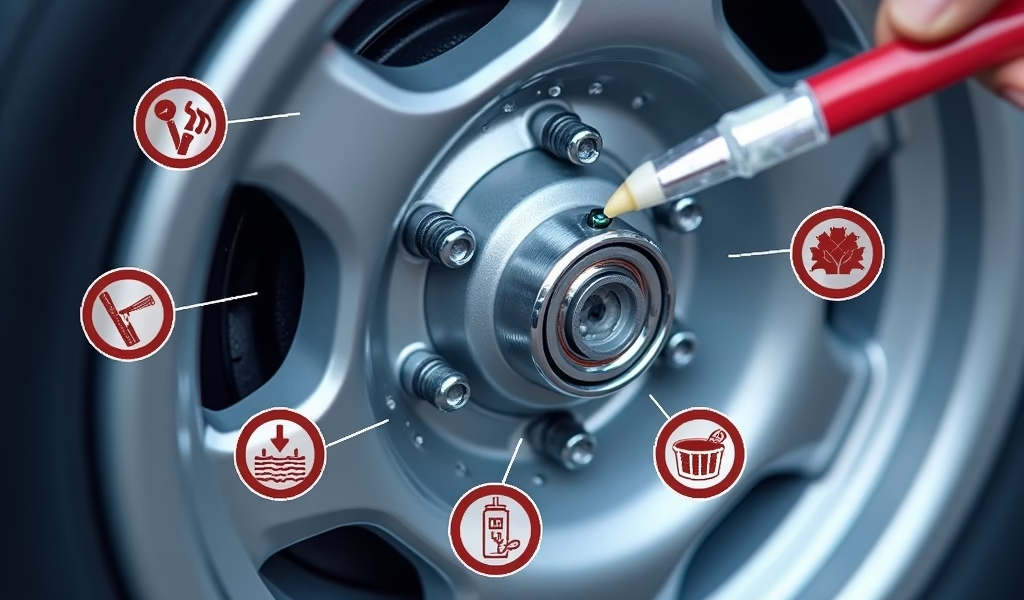
The number one rule of bearing buddy maintenance is consistent greasing. Based on my experience in the shop, here’s what I recommend:
- For occasional weekend warriors: Every 3-6 months
- For regular haulers: Every 2,000 miles or quarterly
- For commercial trailers: Every 1,000 miles or monthly
- After each water immersion (for boat trailers)
Your bearing buddies aren’t shy about telling you when they need attention. If the piston has receded into the hub, it’s their way of saying, “I’m hungry!” This visual indicator shows that the grease volume has decreased and needs replenishment.
When greasing, moderation is key. Use a standard grease gun with the appropriate fitting and add grease until the piston extends about 1/8 inch from the hub face. If grease starts oozing out like lava from a science fair volcano, you’ve gone too far.
As for grease selection, this isn’t the place to pinch pennies. Marine-grade wheel bearing grease with high water resistance is the gold standard. Look for lithium-complex greases with a National Lubricating Grease Institute (NLGI) rating of #2. Your bearings deserve the good stuff, especially if your trailer sees water action.
Tip 2: Proper Installation and Adjustment
Even the finest bearing buddies won’t perform if they’re improperly installed. When installing or checking installation, ensure they sit flush against the hub with no gaps or tilting. The flange should make complete contact with the hub surface—think of it like needing a perfect seal.
Proper compression is crucial. The internal spring should apply enough pressure to keep water out but not so much that it pushes grease past the inner seal. It’s a delicate balance, like seasoning a perfect dish.
To check if your bearing buddies are adjusted correctly, press on the face plate. It should have a slight give—about 1/8 inch—before resistance increases. If it doesn’t move at all, it’s too tight. If it moves more than 1/4 inch, it’s too loose.
Common installation mistakes I see regularly include:
- Using a hammer instead of a rubber mallet (metal-on-metal is never good)
- Installing without cleaning the hub surface
- Choosing the wrong size (measure twice, buy once)
- Forgetting to check the bearings themselves before installation
Before installing bearing buddies on an older trailer, I strongly recommend inspecting the bearings themselves. No amount of protection will save bearings that are already damaged. When in doubt, a complete bearing replacement before installing new bearing buddies gives you a fresh start.
Tip 3: Inspection Routine
Developing a regular inspection routine for your bearing buddies is like flossing—not the most exciting activity, but you’ll thank yourself later. During visual inspections, look for:
- Corrosion or pitting on the chrome surface
- Cracks or dents in the housing
- Discoloration that might indicate overheating
- Grease leakage around the edges
- Piston position (should be slightly extended)
Checking for leaks requires detective-level attention. A small amount of grease at the back seal is normal, like a little sweat during exercise. However, significant leakage indicates a problem with either the bearing buddy itself or the rear seal.
Pre-trip inspections are non-negotiable, especially before long journeys. It takes just minutes to check your bearing buddies but hours (and hundreds of dollars) to deal with failed bearings on the roadside. As we say in the shop, “An ounce of inspection is worth a pound of tow truck.”
When should you replace rather than maintain? If you notice severe rust, cracks in the housing, inability to hold pressure, or excessive play in the hub, it’s time for replacement. Even the most diligent maintenance regimen can’t resurrect a bearing buddy that’s lived its full life.
Tip 4: Protection During Storage and Water Exposure
Boat trailer owners, this section is your bible. Your bearing buddies face the aquatic equivalent of a mud wrestling competition every time you launch or retrieve your boat. The transition from hot road to cold water creates vacuum pressure that can draw water past even well-maintained seals.
After each water exposure, grease your bearing buddies to displace any water that might have sneaked past the defense system. Consider it an immediate shower after swimming in a questionable lake—non-negotiable for health reasons.
For long-term storage, fill the bearing buddies completely with fresh grease and consider protective covers—yes, covers for your covers! These rubber protectors shield against dust, UV damage, and curious critters during storage periods.
Additional protection options include specialized waterproof grease for marine applications and sacrificial anodes for trailers frequently submerged in saltwater. These extras might seem excessive, but they’re cheap insurance against bearing failure.
For winter storage in cold climates, I recommend a complete bearing service in the fall. This allows you to inspect, clean, and re-grease the entire bearing assembly before the trailer sits idle for months. Many bearing failures I see in spring could have been prevented with proper winterization.
Tip 5: Understanding Pressure Management
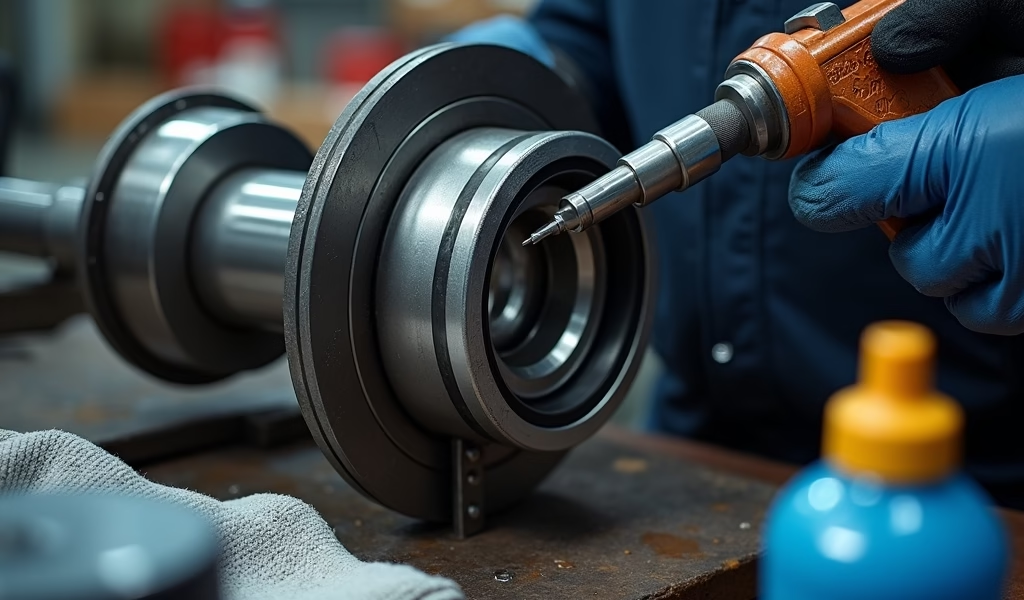
The spring inside your bearing buddy isn’t just there for decoration—it’s the pressure management system that keeps everything in balance. This spring applies constant pressure to the grease, forcing it toward the bearings while keeping water out.
To check proper pressure, press on the face plate. As mentioned earlier, you should feel about 1/8 inch of movement before the spring resistance increases. This slight give indicates the spring is properly tensioned and ready to perform its duties.
Most bearing buddies feature a built-in pressure relief function that prevents over-pressurization. When adding grease, continue until you see a slight movement of the piston outward, then stop. If you continue pumping like you’re inflating a bicycle tire before a race, excess grease will simply be forced out the back seal, creating a mess and potentially damaging the seal.
Warning signs of excessive pressure include:
- Grease leaking from the rear seal
- Difficulty turning the wheel by hand
- Piston extended more than 1/4 inch
- Bearing overheating during operation
The beauty of bearing buddies is that they maintain constant, appropriate pressure without your intervention between maintenance sessions. This “set it and forget it” (until the next scheduled maintenance) approach makes them ideal for trailers that sit for extended periods between uses.
Understanding the pressure system helps you avoid both under-greasing (leading to water intrusion) and over-greasing (leading to seal damage). This balance is critical for getting the maximum life out of your wheel bearings and maintaining your trailer in top condition.
Conclusion
Maintaining your bearing buddies might not be as exciting as a day on the lake or a camping trip, but it’s certainly more enjoyable than dealing with a catastrophic bearing failure that turns your trailer into an impromptu roadside attraction.
The cost benefits are clear as day: A tube of quality marine grease costs about $10, and spending 15 minutes every few months on maintenance is minimal compared to the $200+ for new bearings, not to mention potential towing fees that make ATM withdrawal fees seem reasonable by comparison.
Beyond saving money, properly maintained bearing buddies provide peace of mind—knowing that your trailer is safe, reliable, and ready for adventure at a moment’s notice. Safety on the road isn’t just about protecting your investment; it’s about protecting yourself and others from preventable accidents.
Mark your calendar now for your next bearing buddy maintenance session. Your future self, wallet, and fellow road-travelers will thank you for your diligence. Remember, in my 20+ years as a mechanic, I’ve never seen a properly maintained bearing buddy fail—but I’ve replaced thousands that were neglected.
Frequently Asked Questions
How often should I grease my bearing buddies?
For recreational use, grease every 3-6 months or every 2,000 miles, whichever comes first. Boat trailers should be greased after each water immersion.
Can I use any grease in my bearing buddies?
No, use only high-quality marine-grade wheel bearing grease with NLGI #2 rating. Regular automotive grease lacks the water resistance needed for proper protection.
How do I know if my bearing buddies need grease?
Check the position of the piston—if it’s recessed into the hub rather than slightly protruding, you need grease. You should see a small portion of the piston (about 1/8″) extending from the housing.
Can bearing buddies prevent all water damage?
They significantly reduce water damage but aren’t 100% waterproof, especially during prolonged submersion. Regular maintenance after water exposure is still necessary for maximum protection.
How do I know when to replace my bearing buddies?
Replace them if you see corrosion, cracks, dents, or if they can’t maintain pressure. Most quality bearing buddies last 5-7 years with proper maintenance.