
Overview
Ever wonder why your trailer keeps trying to commit tire suicide on the highway? This article details seven essential trailer tire pressure checks including knowing recommended pressure levels, regular monitoring, pre-trip inspections, proper inflation techniques, weight distribution considerations, timely replacement of aging tires, and emergency preparedness to ensure safety on the road and extend tire life.
Table of Contents
- Understanding Trailer Tire Pressure
- Check #1: Know Your Recommended Pressure
- Check #2: Regular Monitoring
- Check #3: Pre-Trip Inspection
- Check #4: Proper Inflation Techniques
- Check #5: Weight Distribution
- Check #6: Tire Age and Replacement
- Check #7: Emergency Preparedness
- Conclusion
- Frequently Asked Questions
Understanding Trailer Tire Pressure
When it comes to trailer safety, proper tire pressure isn’t just a minor detail—it’s absolutely critical. In my 20+ years as a mechanic, I’ve seen too many ruined vacations and damaged equipment caused by neglected trailer tires. The National Highway Traffic Safety Administration reports that approximately 11,000 trailer-involved crashes occur annually, with tire failures being a primary cause.
Trailer tires differ significantly from your everyday vehicle tires. While they might look similar, trailer tires are engineered specifically to carry heavy loads in a straight line. They don’t assist with steering or braking like your car tires do.
Maintaining proper trailer tire pressure affects everything from fuel economy to safety. Under-inflated tires flex excessively, building up dangerous heat that leads to premature wear and potential blowouts. Over-inflated tires, on the other hand, have reduced contact with the road, compromising traction and increasing vulnerability to impact damage.
Let’s examine the seven essential checks that will keep your trailer rolling safely and extend the life of your tires. Following these straightforward practices will save you money, prevent roadside emergencies, and protect your valuable cargo.
Check #1: Know Your Recommended Pressure
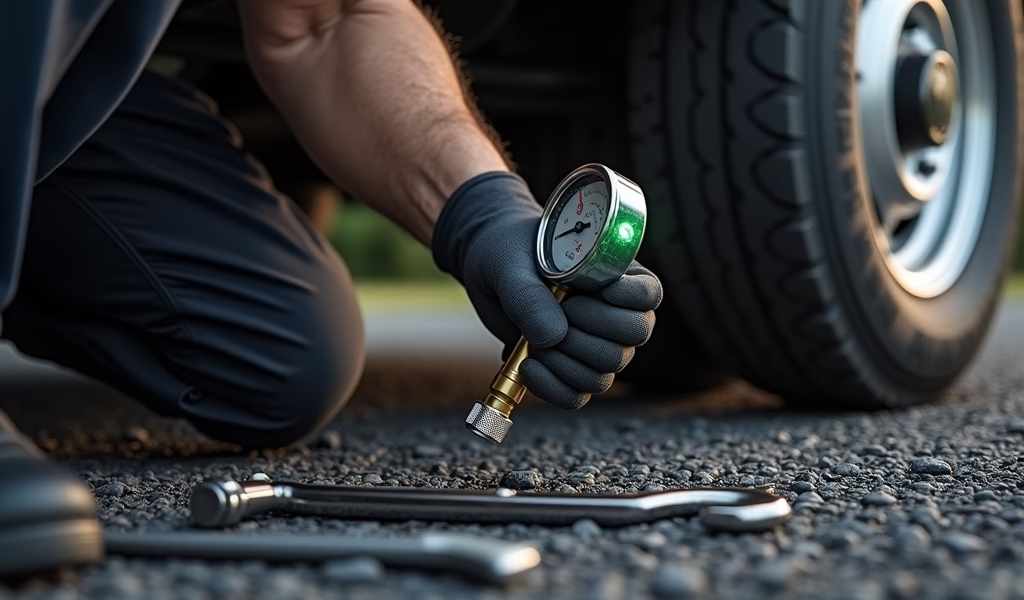
Finding the correct tire pressure for your trailer isn’t guesswork—it’s science. The recommended pressure depends on your trailer’s weight, the tires’ load rating, and the manufacturer’s specifications. Don’t just pump them up to the maximum pressure listed on the sidewall; that’s the maximum they can hold, not necessarily what they should hold.
Start by locating your trailer’s data plate, typically found on the tongue or frame. This plate contains crucial information including the Gross Vehicle Weight Rating (GVWR) and sometimes the recommended tire pressure. If you can’t find this information there, check your owner’s manual.
Understanding tire load ratings is essential. Each tire comes with a load rating (B, C, D, E, etc.) that indicates how much weight it can safely carry. A higher letter means a higher load capacity. For example, ST205/75R15 tires with a load range D can safely carry more weight than the same size with a load range C.
Also, know the difference between ST (Special Trailer) and LT (Light Truck) tires. According to the Tire Rack’s technical resources, ST tires are specifically designed with stiffer sidewalls to handle the unique demands of trailering. Using the wrong tire type is like using a screwdriver when you need a wrench—it might seem similar but won’t perform correctly.
Check #2: Regular Monitoring
Trailer tires lose pressure over time, even when not in use. I recommend checking your trailer tire pressure before every trip and at least monthly during storage periods. For commercial trailers or frequent users, weekly checks are advisable.
Always check pressure when tires are “cold”—meaning they haven’t been driven on for at least three hours. Hot tires can show pressure readings 5-10 PSI higher than their actual cold inflation pressure, giving you a false sense of security.
Invest in a quality digital tire pressure gauge. The pencil-style gauges are convenient but notoriously inaccurate. A good digital gauge costs around $15-$25 and provides readings accurate within 0.5 PSI. Consider it cheap insurance against a $200 tire or a ruined $5,000 vacation.
For those who tow regularly, a portable air compressor is invaluable. Models that run off your vehicle’s 12V outlet are reasonably priced and can save you from hunting for a gas station with a working air pump when you discover low pressure before a trip. You can also check tire pressure with these portable units on the go.
Check #3: Pre-Trip Inspection
Beyond checking pressure, a thorough visual inspection before every trip can prevent disasters. Start by examining the entire tire surface. Look for cracks in the sidewall, which indicate age deterioration or UV damage. Check for bulges or blisters that signal internal damage and impending failure.
Pay attention to tread wear patterns. Even wear across the tread surface is ideal. Center-only wear indicates over-inflation, while wear on both edges suggests under-inflation. If you notice wear primarily on one edge, your trailer may have alignment issues requiring professional attention.
Don’t overlook valve stems and caps. These small components play a vital role in maintaining pressure. Cracked or damaged valve stems can leak air slowly, while missing caps allow dirt and moisture to enter the valve, potentially causing leaks. Metal valve caps offer better durability than plastic ones, especially for trailers stored outdoors.
Remember to check the spare tire too—it’s often the most neglected tire until you desperately need it. A flat spare tire becomes useless when you have a roadside emergency.
Check #4: Proper Inflation Techniques
Properly inflating trailer tires requires more than just pumping air. First, remove the valve cap and check the current pressure with your gauge. If the pressure is too low, connect your air compressor or air hose firmly to the valve stem. Add air in short bursts, rechecking the pressure frequently to avoid over-inflation.
If you accidentally over-inflate, don’t simply release air by depressing the valve stem with a tool. This method often releases too much air too quickly. Instead, use the pressure release button on your gauge to remove small amounts until reaching the target pressure.
Account for temperature fluctuations when planning long trips. Tire pressure changes approximately 1-2 PSI for every 10°F change in ambient temperature. If you’re traveling from a cool morning into a hot afternoon, your pressure will increase naturally. Conversely, if you’re driving from a warm region to a significantly colder one, you may need to add air during your journey.
Elevation changes also affect tire pressure. Pressure increases about 1 PSI for every 2,000 feet of elevation gain. This might not matter for short trips, but for cross-country journeys with significant elevation changes, be prepared to adjust your tire pressure accordingly.
Check #5: Weight Distribution
Your trailer’s weight distribution directly impacts tire pressure requirements and overall safety. Improperly loaded trailers put excessive stress on certain tires, leading to premature wear and potential failures.
The tongue weight—the downward force your trailer exerts on the hitch ball—should typically be 10-15% of your trailer’s total weight. Too little tongue weight causes dangerous trailer sway, while excessive tongue weight overloads your tow vehicle’s rear tires and suspension.
For accurate weight measurements, consider visiting a commercial scale at a truck stop or weighing station. Many RV dealers also offer weighing services. Portable tongue weight scales are available for home use and provide valuable data for proper loading.
When loading your trailer, place heavier items low and centered over the axles. Avoid concentrating weight on one side, which can cause uneven tire wear and handling problems. According to Federal Motor Carrier Safety Administration guidelines, properly secured and distributed cargo significantly reduces accident risk during emergency maneuvers.
Check #6: Tire Age and Replacement
Trailer tires have a limited lifespan regardless of tread depth. Unlike your car that you drive regularly, trailers often sit for extended periods, which accelerates rubber deterioration through oxidation and UV exposure.
To determine a tire’s age, locate the DOT code on the sidewall. The last four digits indicate the manufacturing date—the first two numbers represent the week, and the last two represent the year. For example, “2519” means the tire was manufactured in the 25th week of 2019.
Most manufacturers and industry experts recommend replacing trailer tires every 3-6 years, regardless of tread depth or appearance. This might seem wasteful, but rubber compounds deteriorate internally in ways not visible to the naked eye. The cost of replacement is minimal compared to the potential damage from a blowout.
Signs that demand immediate replacement include:
- Cracks in the sidewall deeper than 2/32 inch
- Exposed tire cords or belts
- Tread depth less than 2/32 inch (use a tread depth gauge or the penny test)
- Bulges or blisters on the sidewall
- Uneven wear patterns that can’t be corrected
When shopping for new trailer tires, don’t focus solely on price. Consider load capacity, speed rating, and build quality. Remember that higher-quality tires typically offer better heat resistance and durability—crucial factors for trailer applications.
Check #7: Emergency Preparedness
Even with perfect maintenance, emergencies happen. Being prepared can transform a potential disaster into a minor inconvenience. Always carry a properly inflated spare tire that matches your trailer’s existing tires in size and load rating.
Invest in a good-quality tire changing kit specifically designed for your trailer. Remember that trailer tires often require higher lifting capacity than passenger vehicle jacks provide. Make sure your jack can safely lift your fully loaded trailer.
Carry a tire repair kit for temporary fixes. Modern plug kits combined with portable compressors can get you to a service station when you’re miles from help. I’ve personally rescued many stranded travelers with these simple tools.
Know the proper procedure for handling a blowout while towing:
- Maintain a firm grip on the steering wheel
- Resist the urge to brake hard immediately
- Gradually reduce speed by slowly releasing the accelerator
- Once you’ve slowed significantly, gently brake and pull completely off the road
- Activate hazard lights before exiting your vehicle
Practice preventive maintenance by having a “tire emergency kit” containing valve stems, valve core tools, a pressure gauge, and valve caps. These small items can prevent air loss when you’re far from service facilities.
Conclusion
Proper trailer tire pressure isn’t just about avoiding flats—it’s about ensuring the safety of your family, your valuable cargo, and other motorists sharing the road. By implementing these seven essential checks, you’ll significantly reduce your risk of tire-related incidents while extending tire life and improving fuel efficiency.
Remember that trailer tires face unique challenges: they carry heavy loads, often sit unused for extended periods, and rarely receive the attention given to vehicle tires. This neglect makes them particularly vulnerable to failure precisely when you’re counting on them most.
Make these checks part of your regular routine, not just a one-time effort. Document your tire pressure readings to track patterns and predict potential issues before they become emergencies. A small notebook kept with your tire gauge can be invaluable for this purpose.
Trailer towing should be an enjoyable experience that expands your recreational possibilities—not a source of anxiety or danger. With these seven essential tire pressure checks, you’re well-equipped to hit the road with confidence, knowing your trailer is rolling on properly maintained tires.
Frequently Asked Questions
What happens if trailer tire pressure is too low?
Underinflated trailer tires flex excessively, building heat that leads to premature failure and potential blowouts. They also increase rolling resistance, reducing fuel economy and placing extra stress on your towing vehicle.
How often should I check my trailer tire pressure?
Check trailer tire pressure before every trip and at least monthly during storage periods. For commercial trailers or frequent users, weekly checks are recommended.
Should trailer tires be inflated to the maximum pressure on the sidewall?
Not necessarily. The sidewall shows maximum pressure, but you should inflate to the manufacturer’s recommended pressure based on your trailer’s weight. Check your trailer’s data plate or owner’s manual for the correct specification.
Do trailer tires lose air when not in use?
Yes, trailer tires naturally lose 1-3 PSI per month even when not in use. Environmental temperature changes accelerate this loss, making regular checks essential even for stored trailers.
How long do trailer tires typically last?
Most manufacturers recommend replacing trailer tires every 3-6 years regardless of tread depth due to rubber deterioration. Actual lifespan depends on storage conditions, usage patterns, and maintenance practices.