
Overview
When it comes to brake controller installation, safety isn’t just a suggestion—it’s the whole enchilada that keeps your trailer from becoming an uninvited guest in your backseat. This guide covers ten critical safety steps for proper installation, from selecting the right controller and disconnecting your battery first, to securing proper wiring connections and thorough testing, all emphasizing that proper installation is essential for preventing “accordion-style parking” incidents on the highway.
Table of Contents
- Why Brake Controllers Matter: Safety First
- 1. Choose the Right Brake Controller for Your Vehicle
- 2. Gather All Necessary Tools Before Starting
- 3. Disconnect the Battery First
- 4. Follow Manufacturer’s Instructions Precisely
- 5. Proper Mounting Location Is Critical
- 6. Secure All Wiring Connections
- 7. Use Proper Grounding Techniques
- 8. Avoid Interference With Vehicle Systems
- 9. Test Thoroughly Before First Use
- 10. Schedule Professional Inspection If Uncertain
- The Bottom Line: Safety Isn’t Optional
- How Knows Your Car Can Help
- Stay Connected with Knows Your Car
- Frequently Asked Questions
Why Brake Controllers Matter: Safety First
Have you ever watched a trailer fishtail down the highway and thought, “There but for the grace of good brakes go I”? If you’re planning to tow anything heavier than your neighbor’s opinion of your parking skills, a brake controller is your new best friend. This unassuming device is the unsung hero of the towing world, coordinating your vehicle’s braking force with your trailer’s brakes to prevent what I like to call “accordion-style parking” – where your trailer tries to occupy the same space as your tow vehicle.
At Knows Your Car, we’ve seen the aftermath of improperly installed brake controllers, and trust me, it’s not a pretty sight. It’s like watching someone try to parallel park with their eyes closed – technically possible, but rarely ends well. Proper brake controller installation isn’t just about preventing embarrassing roadside moments; it’s about ensuring you, your passengers, and everyone sharing the road with you gets home safely.
1. Choose the Right Brake Controller for Your Vehicle
Selecting a brake controller is a bit like choosing a dance partner – compatibility matters, and stepping on toes can be painful. There are two main types to consider:
Proportional brake controllers sense your vehicle’s deceleration and apply the same force to your trailer brakes. They’re the smooth operators of the brake controller world, offering the most responsive braking experience. Think of them as the Fred Astaire of brake controllers – elegant, responsive, and worth the extra investment.
Time-delayed brake controllers apply a predetermined amount of braking power based on how you adjust them. They’re more like that friend who always shows up a few minutes late to everything – functional but not always perfectly timed.
When considering compatibility, check your vehicle’s towing capacity, existing wiring harness, and the type of trailer you’ll be hauling. A lightweight pop-up camper has different needs than a double-axle horse trailer loaded with equine passengers who have no interest in an impromptu sliding lesson.
Budget considerations are valid, but remember: skimping on your brake controller is like buying discount parachutes – saving money now might cost you dearly later.
2. Gather All Necessary Tools Before Starting
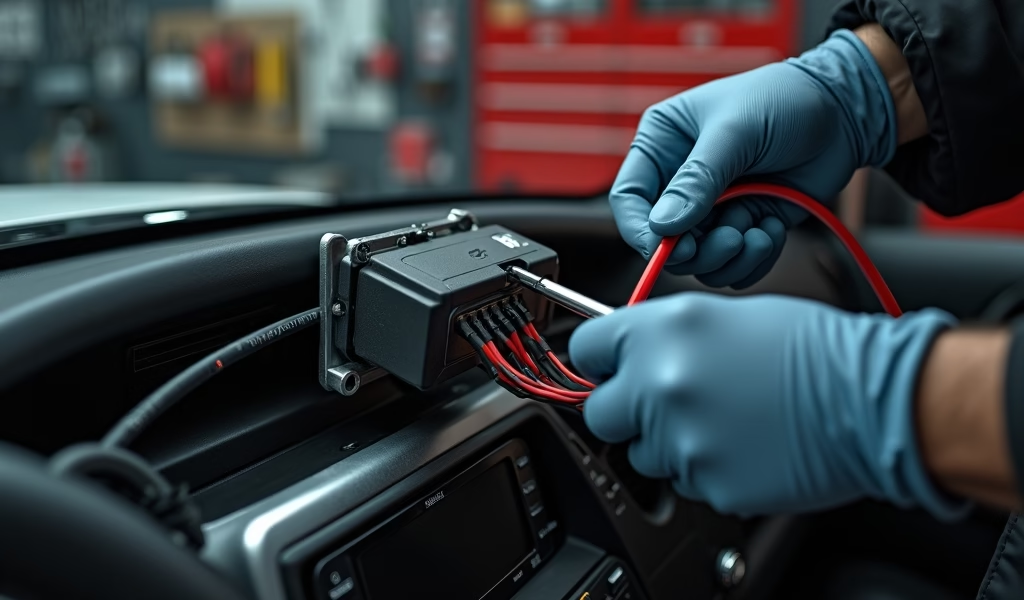
Nothing derails a project faster than the mid-installation realization that you’re missing a crucial tool. Before you start, gather these essentials:
- Wire crimpers/strippers
- Phillips and flathead screwdrivers
- Socket set and wrenches
- Voltage tester
- Drill with bits (for mounting)
- Wire ties or clips
- Electrical tape
Optional tools that make life easier:
- Wire fishing tools
- Wire loom for professional-looking installation
- LED test light
- Helping hands (the tool, though an actual extra set of hands works too)
Safety equipment isn’t optional:
- Safety glasses (because eyes and flying wire snippets don’t mix)
- Work gloves
- Knee pads if you’ll be under the dashboard
Lay everything out before you start – it’s like mise en place for mechanics, ensuring your installation flows smoothly without the “where did I put that?” dance.
3. Disconnect the Battery First
Skipping this step is like trying to perform dental work on a conscious lion – unnecessarily dangerous and likely to end in tears. Always disconnect the negative terminal of your battery before starting any electrical work.
The proper procedure:
- Locate your vehicle’s battery
- Identify the negative terminal (usually marked with a minus sign or black cover)
- Loosen the terminal clamp with the appropriate wrench
- Remove the cable and position it away from the terminal
- Insulate the terminal with a towel to prevent accidental reconnection
Common mistakes include disconnecting the positive terminal first (creating a potential short circuit if your tool touches metal) or forgetting to wait a few minutes for vehicle systems to fully power down before beginning work.
According to the National Highway Traffic Safety Administration, working with a connected battery can potentially trigger airbags and other safety systems, turning your DIY project into an expensive lesson in electricity management.
4. Follow Manufacturer’s Instructions Precisely
Generic installation guides are like one-size-fits-all hats – they technically fit everyone but look good on almost no one. Your brake controller’s manufacturer has created specific instructions for a reason, and following them is crucial.
Find model-specific instructions:
- In the box with your controller
- On the manufacturer’s website
- Through customer service if papers have gone missing
Key points often overlooked include specific wire color codes (which can vary between manufacturers), mounting angle requirements for proportional controllers, and vehicle-specific adapter needs. Reading the manual might feel old-fashioned in our YouTube tutorial era, but it’s like having the answers to the test before you take it – only a fool would ignore them.
5. Proper Mounting Location Is Critical
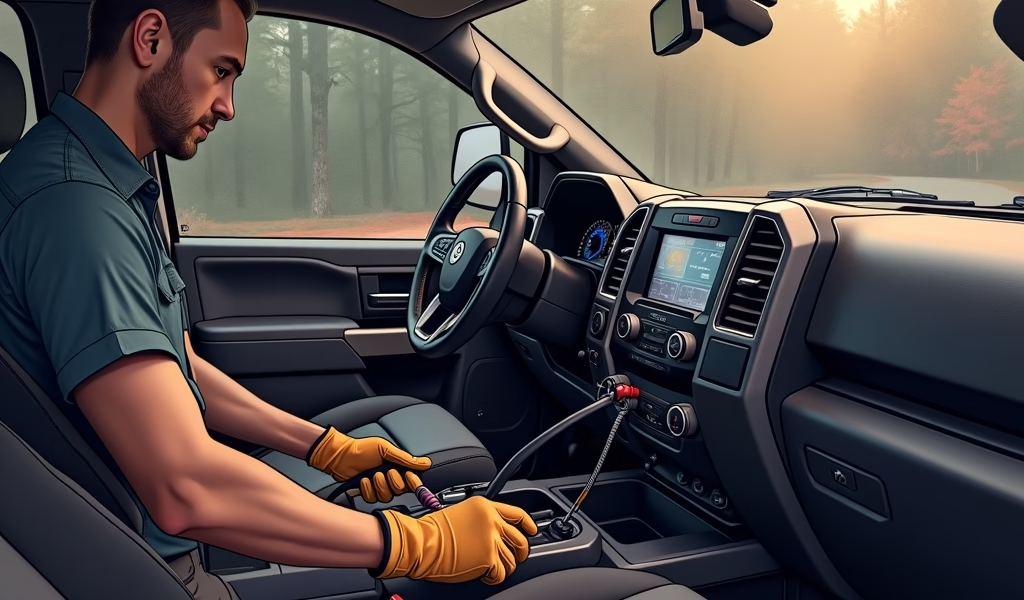
Mounting your brake controller is a bit like real estate – it’s all about location, location, location. The ideal placement should:
- Be within easy reach of the driver
- Not interfere with knee space or airbag deployment
- Allow for adjustment while driving
- Keep the unit level and secure
- Prevent obstruction of other controls
Proportional brake controllers need to be mounted at a specific angle to accurately sense deceleration. It’s like putting a level on a crooked shelf – if the starting point is off, everything that follows will be too.
Most controllers come with mounting brackets, but you might need additional hardware depending on your vehicle’s interior configuration. Remember, a securely mounted controller is crucial – a controller flopping around under your dash is about as useful as windshield wipers on a submarine.
6. Secure All Wiring Connections
The electrical connections in your brake controller installation are like the foundation of a house – invisible once the job is done, but catastrophic if they fail. Ensure all connections are:
- Clean (free of dirt, grease, or corrosion)
- Tight (no wiggle room for wires to come loose)
- Properly crimped or soldered (no “twist-and-tape” shortcuts)
In regions with high humidity, salt exposure, or extreme temperatures, weatherproofing your connections is essential. Heat-shrink tubing and dielectric grease are your friends here, creating a moisture barrier that prevents future corrosion.
Test each connection before final assembly by giving wires a gentle tug – if they pull free with hand pressure, they’ll certainly fail when subjected to road vibration. Think of it as the “toddler test” – if a determined two-year-old could pull it apart, it needs to be more secure.
7. Use Proper Grounding Techniques
Grounding mistakes are among the most common issues in brake controller installations, yet proper grounding is as important to your electrical system as the foundation is to your house. A poor ground connection can cause intermittent operation, weak braking response, or complete system failure.
To identify a good ground point:
- Look for a clean, paint-free metal surface directly connected to the vehicle’s frame
- Avoid aluminum components or plastic-lined areas
- Use an existing ground bolt when possible
- If creating a new ground point, scrape away all paint and protective coatings
Test your ground with a multimeter to ensure continuity between your ground point and the negative battery terminal. A proper ground reading should show virtually zero resistance. Remember, electricity is like water – it always seeks the path of least resistance, and your goal is to make sure that path is exactly where you want it to be.
8. Avoid Interference With Vehicle Systems
Modern vehicles are packed with sensitive electronic systems that can be affected by improper wiring installation. When routing your brake controller wires:
- Keep them at least 6 inches away from airbag components
- Avoid running alongside factory wiring for radios, sensors, or computers
- Secure wires away from moving parts like steering columns, pedals, or seat tracks
- Use existing wire channels and looms when possible
The steering column area is particularly crowded in modern vehicles – it’s like trying to find space in a Manhattan apartment. Take your time here and ensure no wires can be pinched or pulled when the steering wheel is turned or adjusted.
Remember, the goal is integration, not interference. Your brake controller should become part of your vehicle’s systems, not an unwelcome guest that disrupts everything else.
The Society of Automotive Engineers provides detailed guidelines on avoiding electronic interference in vehicle systems, emphasizing the importance of proper wire routing and shielding.
9. Test Thoroughly Before First Use
Once installation is complete, it’s tempting to hit the road immediately to try out your new controller. However, thorough testing is essential – consider it the dress rehearsal before the main performance.
Step-by-step testing procedure:
- Reconnect the battery
- Turn on the vehicle (don’t start it yet)
- Verify the controller powers up
- Check for error codes or warning lights
- Connect your trailer
- Start the vehicle and verify trailer lights function
- Test the manual override function while stationary
- Perform a slow, controlled test drive in an empty parking lot
- Gradually increase braking force to ensure proper response
Watch for issues like delayed response, pulling to one side during braking, or unusual noises from the trailer brakes. Any of these symptoms indicate adjustment or troubleshooting is needed before highway travel.
The most common issues include incorrect gain settings (too high or too low), wiring mistakes that cause partial or intermittent operation, or improper controller calibration. Address these in a controlled environment, not while descending a mountain pass with your life savings worth of camping gear in tow.
When checking brake fluid levels after installation, make sure both your tow vehicle and trailer braking systems are topped up for optimal performance.
10. Schedule Professional Inspection If Uncertain
While many vehicle owners are comfortable with DIY installation, there’s no shame in seeking professional help. In fact, it’s a sign of wisdom rather than weakness – like consulting a doctor instead of performing your own appendectomy.
Consider professional installation if:
- Your vehicle has complex multiplex wiring systems
- You don’t have experience with automotive electrical work
- Your trailer uses advanced braking systems or requires integration with trailer sway control
- You don’t have access to proper tools or a suitable workspace
Professional installers will check aspects that DIYers might miss, such as integration with vehicle stability systems, proper circuit protection, and manufacturer-specific wiring requirements. The cost typically ranges from $150-300 depending on vehicle complexity and controller type – a small price compared to the potential costs of accidents or vehicle damage from improper installation.
If you’ve already installed your brake controller but want peace of mind, many shops offer an inspection service for around $50-75. Think of it as insurance – a small investment that could save you from much larger expenses down the road.
The Bottom Line: Safety Isn’t Optional
Proper brake controller installation isn’t just about convenience – it’s about ensuring you can stop tons of momentum safely when needed. Think of it this way: your trailer brakes are only as good as the controller commanding them, and that controller is only as good as its installation.
By following these ten safety tips, you’re not just installing a device; you’re creating a seamless braking system that protects you and everyone sharing the road with you. Regular maintenance and testing of your brake controller should become part of your pre-trip checklist, just like bleeding your car brakes when necessary.
Remember, when it comes to towing safety, an ounce of prevention is worth a pound of roadside assistance calls.
How Knows Your Car Can Help
At Knows Your Car, we’re passionate about helping vehicle owners maintain their towing safety. Here are three ways we can assist with your brake controller needs:
1. Professional Installation Services: Our certified technicians can install your brake controller with precision, ensuring proper integration with your vehicle’s systems and optimal performance.
2. System Inspections and Diagnostics: If you’ve already installed a controller but are experiencing issues, we can diagnose problems and recommend solutions to keep you safe on the road.
3. Educational Workshops: Join one of our monthly towing safety workshops where we cover brake controller setup, maintenance, and troubleshooting in a hands-on environment.
Stay Connected with Knows Your Car
Want to keep your vehicle knowledge fresh and up-to-date? Subscribe to our newsletter for seasonal maintenance tips, product reviews, and exclusive discounts. Our subscribers also get priority scheduling for services during peak seasons – because we believe knowledge and preparation should be rewarded!
Subscribe to Our Newsletter
Join the thousands of savvy vehicle owners who receive our monthly updates by entering your email below. We promise not to flood your inbox or share your information – just useful content that keeps your vehicles running smoothly and safely.
What brake controller installation experiences have you had? Share your stories in the comments below – the good, the bad, and the “I should have read this article first” moments. Your experience might just save another tower from making the same mistakes!
Remember, at Knows Your Car, we believe that understanding your vehicle isn’t just about knowledge – it’s about confidence and safety on every journey you take.
Frequently Asked Questions
How long does it take to install a brake controller?
For most DIYers, plan on 1-2 hours for installation. Professional installations typically take 30-60 minutes depending on the vehicle and controller type.
Do I really need a brake controller for my small trailer?
If your trailer has its own brakes, you absolutely need a controller regardless of size. Most states legally require controllers for trailers over 3,000 pounds.
Can I install a brake controller without drilling holes?
Many newer controllers offer no-drill mounting options using adhesive pads or dashboard clips. Vehicle-specific wiring harnesses can also eliminate the need for cutting or drilling.
How do I know if my brake controller is working properly?
A functioning controller will illuminate when you apply the brakes and allow manual activation when you slide the manual control. Proper operation means your trailer should stop smoothly without jerking or pulling to either side.
What’s the difference between a $50 and $250 brake controller?
More expensive controllers typically offer proportional braking, digital displays, multiple trailer memory settings, and diagnostic capabilities. The premium models also tend to have more precise braking control and often include built-in safeguards against trailer sway.