
Overview
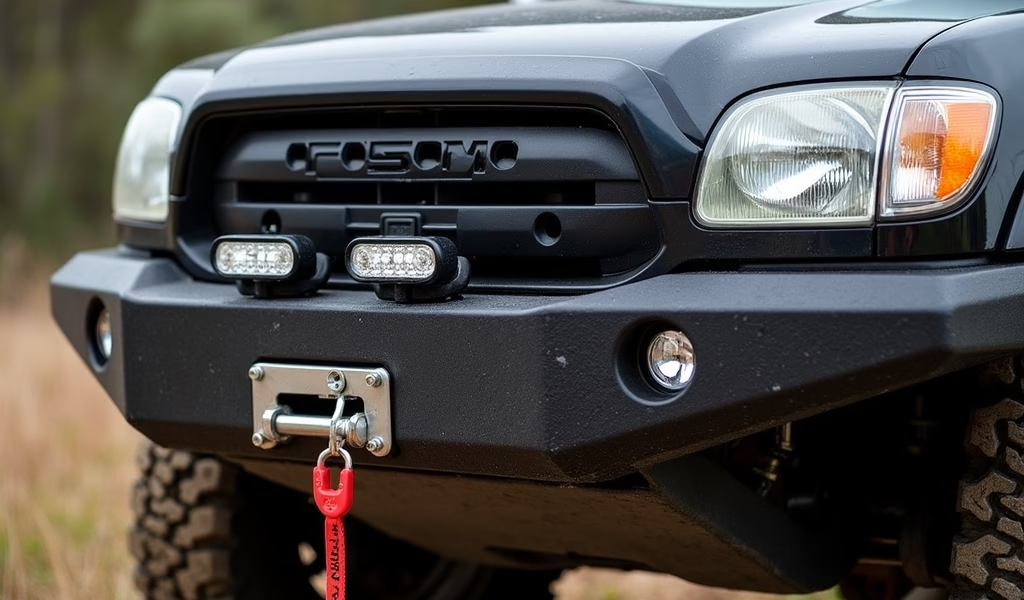
For off-road enthusiasts who don’t want their winch bumper turning into a useless hunk of metal at the worst possible moment, this guide provides five essential maintenance tips: regular inspection, proper cleaning with rust prevention, bolt/mount maintenance, cable/rope care, and electrical system upkeep. Following these straightforward maintenance practices ensures your winch bumper system will be ready to pull you out of trouble when you’re stuck axle-deep in mud with nothing but regret and a phone with no signal.
Table of Contents
- Understanding Winch Bumper Capacity
- Tip #1: Inspect Your Winch Bumper Regularly
- Tip #2: Proper Cleaning and Rust Prevention
- Tip #3: Don’t Forget Bolt and Mount Maintenance
- Tip #4: Cable and Synthetic Rope Maintenance
- Tip #5: Winch Motor and Electrical System Care
- Conclusion
- Frequently Asked Questions
Your winch bumper is more than just a good-looking addition to your truck or Jeep. It’s your ticket out of trouble when the trails get tough. But like any hardworking piece of equipment, it needs proper care to keep performing when you need it most.
I’ve been working on 4x4s for over 15 years, and I’ve seen firsthand what happens when folks neglect their recovery equipment. Trust me—there’s nothing worse than being stuck in mud up to your axles with a winch that won’t work because it hasn’t been maintained.
In this guide, I’ll walk you through the five most critical maintenance tips to keep your winch bumper in top shape, ready for whatever challenges your adventures throw at you.
Understanding Winch Bumper Capacity
Before diving into maintenance, you need to understand what your winch bumper can handle. Winch bumper capacity refers to how much weight or pulling force the bumper can support without failing.
Most off-road enthusiasts focus on their winch’s pulling capacity—10,000 pounds sounds impressive, right? But here’s the catch: if your bumper is only rated for 8,000 pounds, that extra pulling power isn’t just useless—it’s downright dangerous.
Your bumper’s capacity depends on several factors:
- Material construction (steel, aluminum, or composite)
- Mounting design and attachment points
- Thickness and quality of the materials used
- Overall fabrication quality
You can usually find capacity ratings in your owner’s manual or on the manufacturer’s website. Can’t find it? Give them a call—this isn’t information you want to guess at. Remember, your bumper’s capacity should exceed your winch’s rating by at least 1.5 times for a safe margin of error.
Now that we understand what we’re working with, let’s look at how to keep it in top shape.
Tip #1: Inspect Your Winch Bumper Regularly
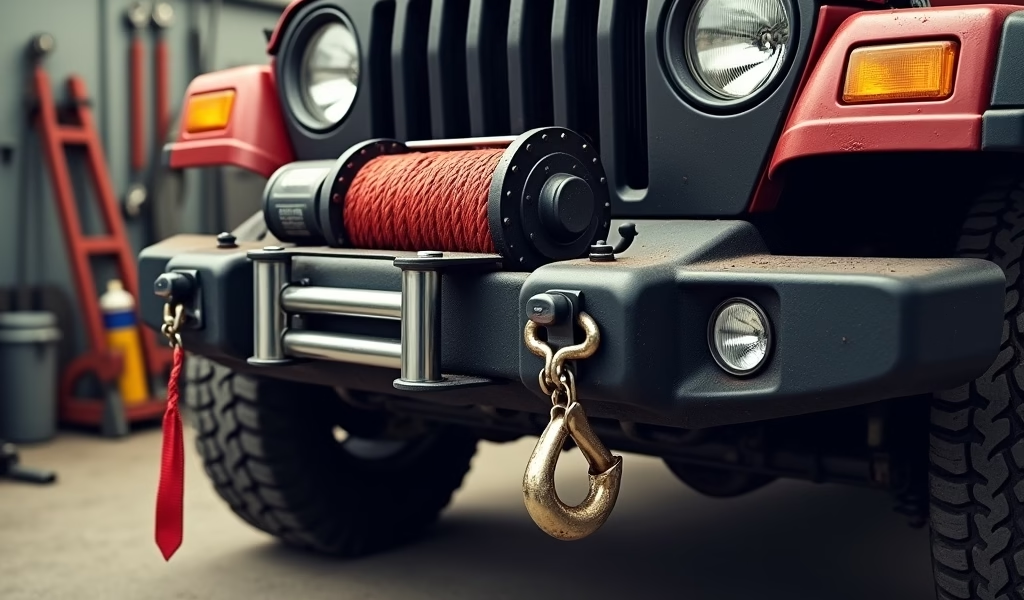
Regular inspections are the backbone of good maintenance. I recommend a quick visual check before and after each off-road trip, with a more thorough inspection monthly.
Here’s what to look for during your inspections:
- Cracks or deformation in the bumper structure
- Loose bolts or mounting hardware
- Signs of rust or corrosion, especially at welds and seams
- Damage to the fairlead (the guide where your winch cable passes through)
- Integrity of attachment points between the bumper and vehicle frame
Pay special attention to the bumper-to-frame connection. This is where stress concentrates during winching operations, and failure here can be catastrophic. If you notice any unusual movement or hear creaking sounds when pushing on your bumper, something’s wrong.
After heavy use or particularly challenging recoveries, take time for an extra inspection. What you’re looking for is anything unusual—bends, cracks, or distortions that weren’t there before. These could indicate you’ve approached or exceeded your bumper’s capacity limits.
Catching small issues early prevents bigger problems down the road. A loose bolt is an easy five-minute fix in your garage, but a completely detached bumper on a remote trail? That’s a story you’ll be telling for years—and not the good kind.
Tip #2: Proper Cleaning and Rust Prevention
Your winch bumper lives a tough life. It’s constantly bombarded with mud, water, road salt, and trail debris—all enemies of metal components. Regular cleaning isn’t just about looking good; it’s about survival.
After every off-road adventure, especially ones involving water crossings or mud, give your bumper a thorough cleaning. Use plain water for most dirt and a mild soap for stubborn grime. Avoid harsh chemicals that might damage finishes or seals.
Pay extra attention to these often-missed areas:
- Behind the bumper where it meets the vehicle
- Around winch mounting bolts and fairlead
- Inside any openings or cut-outs
- Electrical connections and winch controls
Once clean and completely dry, apply a protective coating. For painted bumpers, automotive wax works well. For raw or powder-coated steel, a light coat of WD-40 or specialized rust inhibitor provides good protection. I personally like using CorrosionX on my rig—it’s amazing for long-term protection.
If you wheel in coastal areas or regions where roads are salted in winter, you’ll need to be even more vigilant. Salt accelerates corrosion dramatically, so rinse thoroughly after exposure and apply protection more frequently.
Remember, rust never sleeps, but a little preventative care goes a long way toward keeping your bumper solid and reliable for years to come.
Tip #3: Don’t Forget Bolt and Mount Maintenance
The mightiest bumper in the world is useless if it’s not properly attached to your vehicle. Bolts and mounting points are the unsung heroes of your winch system, and they deserve regular attention.
Start by checking all visible fasteners for tightness. A torque wrench is your best friend here—guessing isn’t good enough when your safety is on the line. Your bumper’s installation instructions should specify proper torque values, but if you don’t have them, most heavy-duty bumper bolts should be torqued between 65-85 ft-lbs.
Look for these warning signs of mounting problems:
- Rust streaks emanating from bolt holes
- Gaps between the bumper and mounting surface
- Visible movement when pushing on the bumper
- Unusual rattling or movement while driving
If you find loose hardware, don’t just tighten it and forget it. Remove the bolt, clean the threads, apply a medium-strength threadlocker like Loctite Blue, and torque to specification. For bolts that keep coming loose, consider upgrading to higher-grade hardware.
Inspect the actual mounting points on your frame as well. Cracks, elongated bolt holes, or bent brackets are serious issues that need immediate attention. These problems won’t fix themselves, and they’ll only get worse with continued use.
After any significant winching operation, recheck all your mounting hardware. The repeated stress of pulling can gradually loosen even properly torqued bolts, and catching this early prevents bigger problems.
Consider creating a maintenance schedule and keeping notes. Mark your calendar for quarterly checks, and document what you find. This helps track gradual changes that might otherwise go unnoticed until failure occurs.
Tip #4: Cable and Synthetic Rope Maintenance
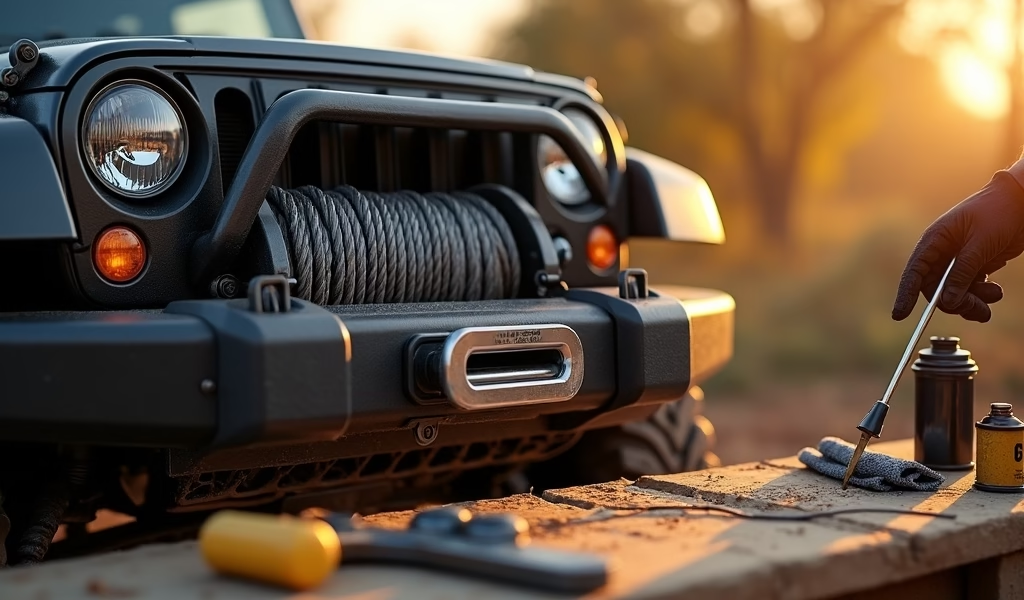
Your winch cable or synthetic rope is literally your lifeline in recovery situations. Different materials require different care approaches, but both need regular attention.
For steel cables:
- Inspect the entire length for kinks, fraying, or “bird-caging” (where strands separate)
- Clean with a rag dampened with light oil to remove dirt and provide protection
- Check for flat spots or crushing, which weaken the cable
- Ensure the hook and thimble are secure and undamaged
For synthetic ropes:
- Look for cuts, abrasions, or melted sections
- Clean with plain water—no detergents or chemicals
- Allow to dry completely before respooling
- Check for UV damage, which appears as fading or stiffness
Proper spooling is crucial for both types. After use, your cable or rope should be respooled under tension. This prevents loose wraps that can cause binding and damage when you need to use your winch. Many off-roaders use a simple technique: attach the hook to a tree or another vehicle, put the transmission in neutral, and slowly back up while operating the winch to take up slack.
If you notice damage that concerns you, don’t take chances. Replace steel cables when you find six or more broken strands in a single lay, significant kinks that won’t straighten, or any major corrosion. For synthetic ropes, replace if you find cuts that reduce diameter by more than 25%, significant abrasions, or chemical damage.
Remember, your winch line is only as good as its weakest point. Regular inspection and maintenance ensure it’s ready when you need it most.
Tip #5: Winch Motor and Electrical System Care
Even with a perfectly maintained bumper and cable, your winch is useless without reliable electrical connections. Water, mud, and vibration are constant threats to your winch’s electrical system.
Start with the basics—battery connections. Your winch draws massive current, and any resistance in the electrical path reduces performance. Check and clean your battery terminals regularly, ensuring they’re tight and corrosion-free. Follow the power cables from battery to winch, looking for wear, abrasion, or damage to the insulation.
Next, inspect the solenoid pack (the control box that manages power to the winch motor). This is often mounted on the winch itself or nearby on the bumper. Check that:
- All connections are tight and clean
- The housing is intact without cracks or damage
- Mounting is secure and protected from excessive vibration
- Any seals or gaskets are in good condition
For the winch motor, look for signs of water intrusion or corrosion. Many winches claim to be waterproof, but that doesn’t mean they should be submerged regularly. After water crossings, check motor vents for moisture and allow them to dry completely.
Testing is essential. Once a month, run your winch out several feet and back in, paying attention to:
- Unusual noises or grinding sounds
- Hesitation or sluggish operation
- Proper function of the clutch engagement
- Smooth, controlled operation of the remote
If you store your vehicle for extended periods, disconnect the winch control to prevent battery drain. For long-term storage, consider applying dielectric grease to electrical connections for added protection.
Many electrical issues can be prevented with simple protective measures. A neoprene winch cover costs little but provides excellent protection against the elements. For frequently submerged winches, consider upgrading to marine-grade sealed connections.
Remember, electrical problems often start small but grow quickly. That minor corrosion on a connection today could be a complete failure when you’re stuck axle-deep in mud next month.
Conclusion
Your winch bumper system represents both a significant investment and a crucial safety component of your off-road setup. By following these five maintenance tips, you’ll maximize its lifespan and ensure it’s ready when you need it most.
Regular inspections, proper cleaning, attention to mounting hardware, cable care, and electrical system maintenance aren’t complicated tasks. They require only basic tools and a bit of your time. Yet these simple routines can make the difference between a quick recovery and a very long day (or night) stuck on the trail.
Remember that maintenance is cumulative—small issues compound over time, while regular care prevents problems before they start. Create a simple maintenance schedule and stick to it. Your future self, possibly cold, tired, and stuck in the middle of nowhere, will thank you profusely.
Treat your winch bumper with respect, understand its capacity limitations, and it will serve you faithfully through countless adventures. After all, the best recovery is the one that goes smoothly, gets you back on the trail quickly, and becomes nothing more than a funny story to tell around the campfire.
Frequently Asked Questions
How do I find my winch bumper’s weight capacity?
Check your owner’s manual or the manufacturer’s website for official ratings. If unavailable, contact the manufacturer directly as capacity varies by design and materials used.
Can I exceed my winch bumper’s capacity in an emergency?
It’s strongly advised against exceeding rated capacity even in emergencies. Doing so risks catastrophic failure that could cause injury or further damage to your vehicle.
How often should I clean my winch bumper?
Clean after each off-road trip, especially after mud or water exposure. In coastal or road-salt areas, clean more frequently, ideally within 24 hours of exposure.
Should I lubricate my winch cable?
Steel cables benefit from light oiling to prevent rust and corrosion. Synthetic ropes should never be oiled – clean with water only and allow to dry completely.
Can I install a higher capacity winch than my bumper is rated for?
No, always match or underrate your winch compared to your bumper’s capacity. Installing a stronger winch on an underrated bumper creates a dangerous failure point.