

Overview
Volvo cars are like that reliable Swedish friend who’s obsessed with safety but requires regular spa treatments to stay happy. The article provides seven essential maintenance tips for Volvo owners, emphasizing that these well-engineered vehicles deliver exceptional longevity, comfort, and safety when properly maintained with the right fluids, timely belt/chain service, cooling system care, software updates, exterior/interior protection, and specialist attention.
Table of Contents
- Introduction
- Are Volvos Good Cars? An Honest Assessment
- Why Proper Maintenance is Essential for Volvos
- Maintenance Tip #1: Follow the Recommended Service Schedule
- Maintenance Tip #2: Use the Right Fluids and Parts
- Maintenance Tip #3: Pay Special Attention to the Timing Belt/Chain
- Maintenance Tip #4: Monitor and Maintain the Cooling System
- Maintenance Tip #5: Keep Electronics Updated
- Maintenance Tip #6: Protect the Exterior and Interior
- Maintenance Tip #7: Find a Volvo Specialist
- Conclusion
- Frequently Asked Questions
Introduction
Volvo has built its reputation on safety and reliability for decades. While other manufacturers focused on speed and style, Volvo invented the three-point seatbelt and gave it away to competitors because they valued saving lives over profits.
But are these Swedish machines truly worth your investment? And once you’ve welcomed one into your garage, how do you keep it running smoothly for years to come? Let’s dive into an honest assessment of these vehicles and share seven maintenance tips that will help your Volvo live a long, healthy life on the road.
Are Volvos Good Cars? An Honest Assessment
Yes, Volvos are generally excellent vehicles, but they do come with their own set of quirks and considerations.
Historically, Volvo built cars with remarkable durability. The boxy 240 series from the 1970s-90s became legendary for reaching mileages well beyond 300,000 while still running strong. Modern Volvos continue this tradition of longevity, albeit with significantly more complex electronics.
Safety remains Volvo’s primary focus. The company’s vision that “no one should be killed or seriously injured in a new Volvo” isn’t just marketing—it’s backed by consistently top crash test ratings and innovative safety features and systems that often appear in Volvos years before competitors adopt them.
The ownership experience includes exceptional comfort (Volvo seats are consistently rated among the best in the industry), understated luxury, and interior design that perfectly embodies Scandinavian minimalism. Recent models like the 2022 XC60 and XC90 SUVs have won numerous awards for their blend of safety, technology, and design.
However, every rose has its thorns:
- Higher maintenance costs than mainstream brands (though typically lower than German luxury competitors)
- Complex electronics that occasionally develop quirks
- Parts that can be pricier than Japanese counterparts
Compared to other premium brands, Volvos offer comparable quality to Audi or BMW but with less emphasis on performance and more focus on comfort and safety. They’re the sensible professor to BMW’s energetic athlete.
Why Proper Maintenance is Essential for Volvos
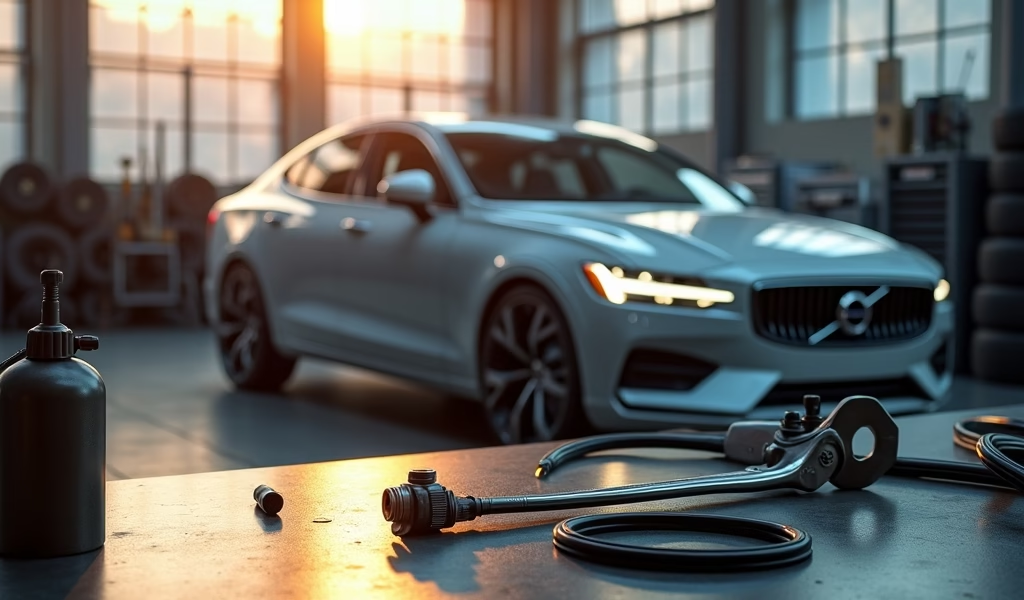
Maintaining a Volvo properly is like tending a garden—consistent care yields beautiful results, while neglect leads to expensive problems.
These premium vehicles incorporate sophisticated engineering that delivers exceptional performance when properly maintained but can develop costly issues when ignored. According to data from the Consumer Reports reliability studies, a well-maintained Volvo will not only preserve its impressive safety characteristics but will also retain its value better than a neglected one.
When maintenance slides down the priority list, even these robustly built machines begin to show their displeasure. Electronic gremlins multiply, fluid leaks appear, and that silky-smooth engine develops a temperament that’s anything but Swedish calm.
In my 20+ years as a mechanic specializing in European vehicles, I’ve seen 10-year-old Volvos that look and drive like new, and 3-year-old examples that appear to have aged in dog years—the difference almost always comes down to maintenance habits.
Maintenance Tip #1: Follow the Recommended Service Schedule
Volvo’s service intervals aren’t suggestions—they’re carefully calculated prescriptions for automotive longevity. Modern Volvos typically follow a schedule based on either time (usually annually) or mileage (typically 10,000 miles), whichever comes first.
Your Volvo’s Sensus infotainment system will remind you when service is due, but here’s a quick rundown of critical milestones:
- 10,000 miles: Oil and filter change, vehicle health check
- 20,000 miles: Cabin air filter replacement, brake fluid inspection
- 30,000 miles: Engine air filter replacement, fuel filter check (diesel models)
- 40,000 miles: Spark plug replacement (most gasoline models)
- 60,000 miles: Transmission fluid service
Newer models with the 2.0L four-cylinder engines (both T5 and T6 variants) introduced from 2015 onward are particularly sensitive to oil change intervals. Missing these can lead to issues with the turbocharger or supercharger components that help these small engines deliver surprising punch.
Maintenance Tip #2: Use the Right Fluids and Parts
Your Volvo has specific preferences when it comes to what goes in and on it. Using the wrong oil or parts is like serving instant coffee to a barista—technically it works, but you’ll pay for it later.
Volvo engines, especially the newer Drive-E powertrains found in post-2015 models, require specific oil viscosities and specifications. Most modern Volvos need fully synthetic oil meeting Volvo’s VCC RBS0-2AE standard. Using incorrect oil can affect everything from fuel economy to turbocharger life.
As for parts, this is where the debate gets interesting. OEM (Original Equipment Manufacturer) parts come directly from Volvo and fit perfectly but command premium prices. Quality aftermarket alternatives from reputable brands can offer savings without significant quality compromises.
Areas where OEM is worth the investment include:
- Electronic components
- Engine management sensors
- Safety-related parts
- Timing components
Places where quality aftermarket parts make sense:
- Brake pads and rotors (from premium suppliers)
- Filters
- Basic maintenance items
Maintenance Tip #3: Pay Special Attention to the Timing Belt/Chain
If an engine were a symphony, the timing system would be the conductor—and one wrong beat can turn the music into expensive chaos.
Volvo has used both timing belts and chains depending on the model and year:
- 5-cylinder engines (common in 2004-2014 models like the S60, V70, and XC90) use timing belts that require replacement every 105,000 miles or 10 years
- Newer 4-cylinder Drive-E engines (2015+) use timing chains designed to last the life of the vehicle
- 6-cylinder engines in older XC90 and S80 models use timing chains that should be inspected around 120,000 miles
Neglecting a timing belt replacement on a 5-cylinder model can lead to catastrophic engine failure. Warning signs of timing issues include unusual engine noise, rough idle, or check engine lights.
For owners of 2001-2014 5-cylinder models, set a calendar reminder for this critical maintenance item—it’s not something you want to forget.
Maintenance Tip #4: Monitor and Maintain the Cooling System
Swedish cars may be built for cold climates, but their engines still need to maintain perfect temperature—just like humans.
Volvos, particularly the P2 platform models (2001-2009 S60, V70, XC70, and S80), have some known cooling system vulnerabilities. These include plastic components that become brittle with age and expansion tanks that can develop hairline cracks.
Preventative cooling system maintenance should include:
- Changing coolant every 4-5 years regardless of mileage
- Visually inspecting hoses and connections annually
- Replacing the expansion tank proactively on older models around 80,000-100,000 miles
- Testing the thermostat operation during regular services
Early warning signs of cooling issues include temperature fluctuations, sweet smells from the engine area, or puddles of colorful liquid (usually green or pink) under your parked car.
Remember: cooling system failures cascade quickly from minor leaks to major engine damage, so addressing them promptly is essential.
Maintenance Tip #5: Keep Electronics Updated
Modern Volvos pack impressive computing power, and like your smartphone, they occasionally need updates to function optimally.
Software updates for Volvos can address everything from drivability issues to infotainment quirks. Newer models with Sensus systems (2015+) can receive some updates over-the-air, but many still require dealer assistance.
To check if updates are available:
- For newer connected models, check the Sensus system under “Settings > System Information”
- For all models, have the VIN ready and contact your dealer service department
- Alternatively, use the Volvo On Call app if your vehicle supports it
Common electronic issues that updates can resolve include:
- Infotainment system freezes or slow responses
- Climate control inconsistencies
- Transmission shifting behavior
- Driver assistance system calibrations
The 2016-2018 XC90s in particular benefit from software updates that improved both functionality and reliability. According to J.D. Power reliability data, vehicles that receive regular software updates show fewer electrical complaints over time.
Maintenance Tip #6: Protect the Exterior and Interior
Volvos are built to withstand harsh Scandinavian conditions, but they still benefit from proper care. Regular protection extends both appearance and value.
Volvo’s paint tends to be slightly softer than some competitors, making regular washing and occasional waxing particularly important. Modern Volvos (2019+) use environmentally friendly water-based paints that provide excellent finish but can benefit from paint protection products.
For exterior maintenance:
- Wash regularly using the two-bucket method
- Apply a quality synthetic wax or sealant quarterly
- Consider ceramic coating for newer models
- Address stone chips promptly, especially on white and silver models
Interior care is equally important, especially for Volvos famous for their distinctive materials:
- Nubuck/textile upholstery (common in R-Design models) requires specific cleaners—avoid leather products
- The real wood trim in Inscription models benefits from occasional conditioning
- Leather seats in Volvos respond exceptionally well to proper leather conditioners applied twice yearly
The panoramic sunroofs on XC60 and XC90 models deserve special attention—keep the drains clear and tracks lubricated to prevent water intrusion during heavy rain.
Maintenance Tip #7: Find a Volvo Specialist
Finding the right mechanic for your Volvo is like finding the right doctor—expertise in your specific condition matters tremendously.
Volvo-specific knowledge makes a significant difference in both diagnostic accuracy and repair efficiency. These vehicles have unique systems that generalist shops often misdiagnose or inefficiently repair.
Benefits of using Volvo specialists include:
- Familiarity with common model-specific issues
- Access to specialized diagnostic equipment
- Experience with Volvo-specific repair procedures
- Understanding of the parts ecosystem
To find a good specialist:
- Check Volvo owner forums for recommendations in your area
- Ask for evidence of Volvo-specific training or certification
- Inquire about their diagnostic tools (VIDA is Volvo’s proprietary system)
- Request references from other Volvo owners
When shopping for used Volvos, having a specialist inspect your potential purchase can save you from expensive surprises down the road.
Conclusion
So, are Volvos good cars? Like most relationships, the answer depends largely on how you treat them. Give a Volvo the maintenance it deserves, and it will reward you with years of safe, comfortable, and distinctively Swedish transportation.
These vehicles occupy a unique space in the automotive landscape—prioritizing safety and comfort over raw performance, embracing technology that serves the driver rather than distracts, and wrapping it all in design that stands out through understated elegance.
Whether you’re driving a vintage 240 wagon that refuses to die or a sleek new S60 with impressive technology, following these maintenance principles will help your Volvo deliver on its promises of longevity and reliability. While they might not be the most affordable cars initially, their long-term value proposition is strong when properly maintained.
As the Swedes might say: “Det finns inget dåligt väder, bara dåliga kläder”—there’s no such thing as bad weather, only bad clothing. Similarly, there are few bad Volvos, just badly maintained ones.
Frequently Asked Questions
How long do Volvo cars typically last?
With proper maintenance, Volvos regularly last 200,000-300,000 miles. Many owners report their well-maintained Volvos lasting 15-20 years without major issues.
Are Volvos expensive to maintain compared to other brands?
Volvos cost more to maintain than mainstream brands like Toyota or Honda but less than most German luxury brands. Parts and labor costs typically fall between Japanese and German competitors.
Are newer Volvos as reliable as older models?
Newer Volvos (2015+) have more complex electronics but maintain good reliability when properly serviced. The legendary durability of older brick-shaped Volvos set an extraordinarily high bar that’s difficult for any modern vehicle to match.
Which Volvo model is most reliable?
The XC60 consistently ranks as Volvo’s most reliable model in recent years. The V60 wagon also demonstrates excellent long-term reliability with fewer reported issues.
Is it worth buying a used Volvo?
A used Volvo with complete service history can provide exceptional value. Look for well-maintained examples with documented service records and have it inspected by a Volvo specialist before purchase.