
Overview
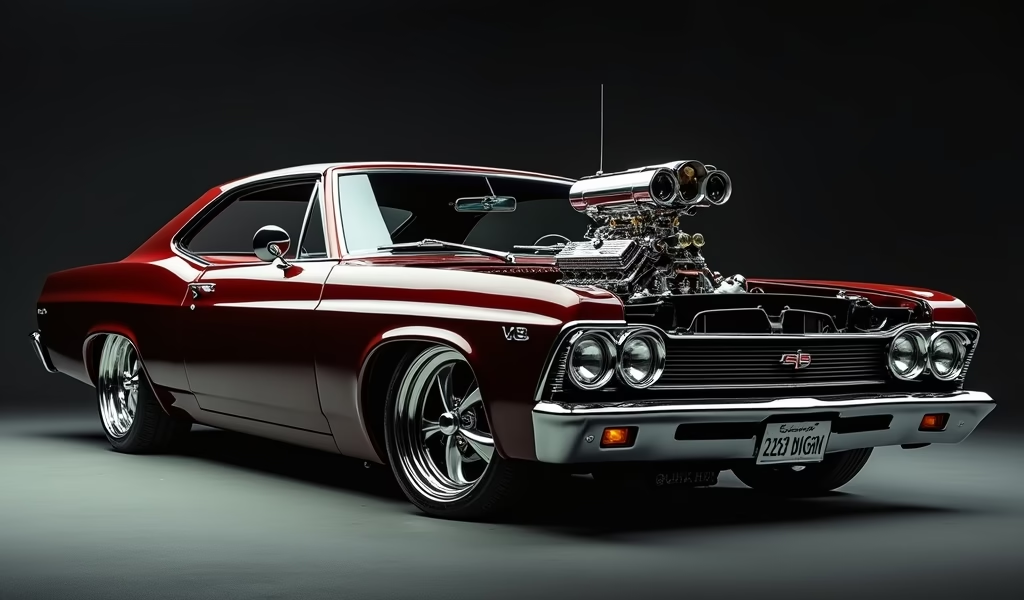
Like a delicate dinosaur that drinks motor oil instead of water, a 60s muscle car requires seven specific maintenance secrets: proper oil with ZDDP additives, meticulous carburetor tuning, vigilant cooling system care, electrical system preservation, correct storage techniques, suspension/brake maintenance, and thorough documentation with strategic parts sourcing. These specialized maintenance practices preserve not just metal and rubber but living pieces of American automotive history that were built to rumble down highways rather than collect dust in garages.
Table of Contents
- Introduction
- Secret #1: Oil Selection Matters
- Secret #2: Carburetor Care and Tuning
- Secret #3: Cooling System Vigilance
- Secret #4: Electrical System Preservation
- Secret #5: Proper Storage Techniques
- Secret #6: Suspension and Brake Maintenance
- Secret #7: Documentation and Part Sourcing
- Conclusion
- Frequently Asked Questions
Introduction
There’s something magical about the rumble of a big-block V8 that modern cars just can’t replicate. 60s muscle cars weren’t just transportation – they were American dreams cast in steel, chrome, and horsepower. I’ve spent three decades with my hands deep in these mechanical marvels, and I’m here to tell you they don’t build ’em like they used to.
Whether you’ve just inherited Grandad’s pristine Pontiac GTO or finally purchased that project Mustang you’ve been eyeing since high school, these classics require a special kind of care that most modern mechanics simply don’t understand. The difference between a muscle car that’s a garage ornament and one that turns heads on weekend cruises often comes down to these maintenance secrets.
At our shop, we’ve seen everything from perfectly preserved time capsules to basket cases brought back from the brink. Through it all, these seven maintenance secrets consistently separate successful restorations from expensive disappointments. Let me walk you through what really matters when keeping these American legends on the road.
Secret #1: Oil Selection Matters
Modern synthetic oils might work wonders in your daily driver, but they can spell disaster for your 60s muscle car. The fundamental difference lies in what’s missing: zinc and phosphorus compounds (ZDDP) that your classic engine desperately needs.
Your muscle car’s flat-tappet camshaft design requires these additives to prevent premature wear. Without adequate zinc protection, you could be looking at a camshaft failure within just a few thousand miles – an expensive lesson I’ve seen too many new owners learn the hard way.
For most 60s muscle cars, I recommend a high-quality conventional oil with ZDDP additives specifically formulated for classic cars. Brands like Valvoline VR1 Racing, Pennzoil High Mileage, and Brad Penn Penn-Grade 1 offer excellent protection for these older engines.
Viscosity selection is equally important. For most applications, a 10W-30 or 10W-40 hits the sweet spot, though those big-block engines might benefit from a slightly heavier 20W-50 in summer months. And forget that 5,000-mile oil change interval your modern car enjoys – change your muscle car’s oil every 3,000 miles or at least once a year, whichever comes first.
Remember that even if that Chevelle only comes out for weekend drives, oil still deteriorates with time. Old oil becomes acidic and loses its protective qualities even when the engine isn’t running. That’s why annual oil changes are essential even for low-mileage classics.
Secret #2: Carburetor Care and Tuning
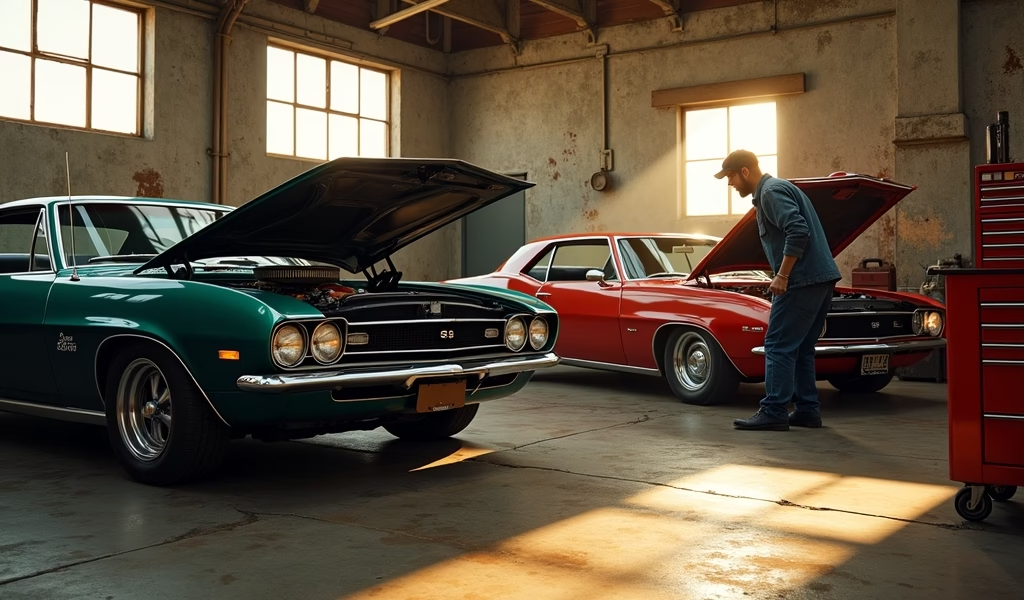
In today’s world of fuel injection and computer controls, proper engine tuning through carburetor maintenance has become something of a lost art. Yet nothing impacts your muscle car’s performance, reliability, and fuel economy more than a properly tuned carburetor.
Today’s ethanol-blended fuels create special challenges for vintage carburetors. The ethanol attracts moisture and creates gummy deposits that can clog jets and passages. A quarterly carburetor cleaning with quality carburetor cleaner will prevent most issues before they start.
When adjusting your carburetor, always start with the basics: set the float level correctly, then move to the idle mixture screws. Make small, methodical adjustments – no more than 1/8 turn at a time. Listen to your engine; it will tell you when the mixture is right through smooth idle and crisp throttle response.
Keep a notebook documenting each adjustment. When you find that sweet spot where the engine purrs like a content cat, you’ll want to replicate those settings after maintenance or seasonal changes. This simple habit has saved my customers countless hours of repeated tuning.
When faced with carburetor troubles, rebuilding almost always trumps replacement for both originality and performance. Quality rebuild kits usually cost under $100, while correct replacement carburetors can run into the thousands. Only consider replacement if you’re dealing with a warped body or stripped threads in critical areas.
Secret #3: Cooling System Vigilance
If there’s one system that keeps muscle car owners up at night, it’s cooling. These high-compression engines generate tremendous heat, and their original cooling systems were often barely adequate when new. Fifty-plus years later, they need special attention.
The first misconception is that a radiator is just a radiator. In reality, a properly restored or upgraded cooling system can make the difference between enjoying your muscle car and watching it steam by the roadside. Start by ensuring your radiator is clean both externally and internally – blocked fins and clogged passages are common in older vehicles.
Contrary to popular belief, the bright green antifreeze of yesteryear isn’t your only option today. Modern coolants formulated for classic cars offer superior corrosion protection for those vintage metals. I recommend a 50/50 mix with distilled water (never tap water – minerals are your radiator’s enemy) for optimal protection.
Make it a habit to flush and replace that coolant every two years, regardless of mileage. While you’re at it, replace deteriorating rubber hoses and inspect your water pump for signs of wear. The weep hole on the bottom of your water pump should be dry – any coolant leakage there indicates failing seals.
For those seeking improvements without sacrificing originality, consider a high-efficiency radiator core that maintains the original appearance. Modern aluminum radiators can provide up to 30% better cooling while looking period-correct from a few feet away. Subtle electric fans as auxiliary cooling and modern water pumps with improved flow characteristics also provide excellent temperature insurance without visual compromise.
Secret #4: Electrical System Preservation
The electrical systems in 60s muscle cars represent a fascinating middle ground – more complex than their 1940s predecessors but far simpler than today’s computerized networks. This simplicity is both a blessing and a curse when it comes to maintenance.
Your original wiring harness is now over half a century old, with insulation that’s likely brittle and cracking. Inspect it regularly, particularly where wires pass through metal firewalls or near exhaust components. Heat-shrink tubing and period-correct cloth tape can provide protection while maintaining authenticity.
Grounding issues cause about 80% of electrical problems I see in classic cars. Corrosion at ground points creates resistance, which leads to voltage drops and mysterious electrical gremlins. Clean all ground connections annually with a wire brush and apply dielectric grease to prevent future corrosion.
For cars driven infrequently, a quality battery maintainer is essential. Modern reproductions offer the visual appeal of original batteries with improved internal components – truly the best of both worlds. A battery disconnect switch provides cheap insurance against electrical drains during storage and potential fire hazards.
Consider upgrading to a modern electronic voltage regulator disguised in a vintage housing. This simple modification dramatically improves charging system reliability while remaining undetectable to all but the most discerning judges at car shows. Your alternator and battery will thank you with longer service life and more consistent performance.
Secret #5: Proper Storage Techniques
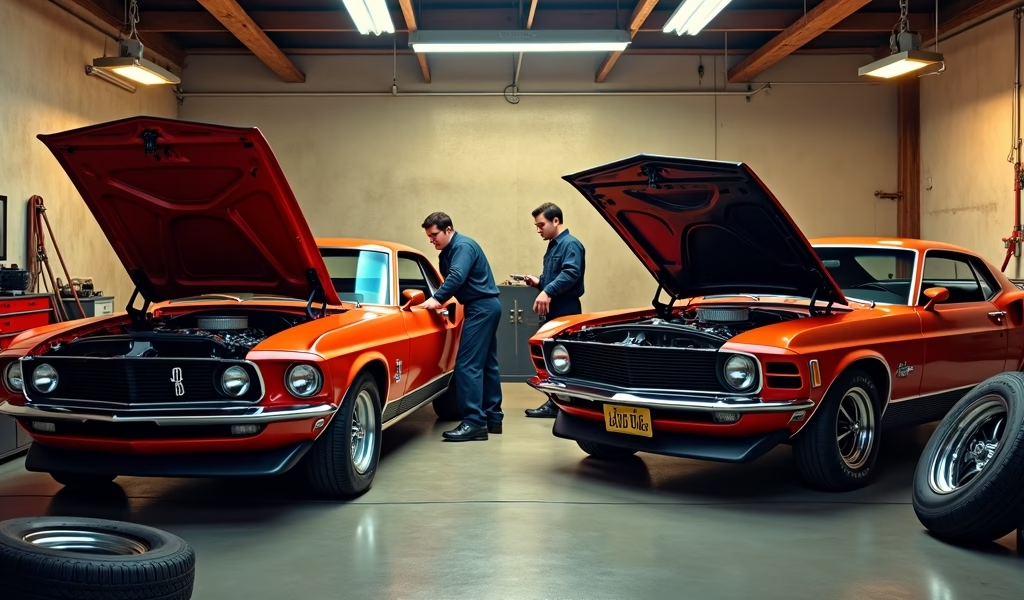
Nothing kills a classic faster than improper storage. I’ve seen beautiful muscle cars deteriorate rapidly after just one poorly planned winter hibernation. The way you put your car away matters tremendously, even if it’s only for a few months.
The ideal storage environment would be climate-controlled at around 50-60°F with 40-50% humidity. Since most of us don’t have museum-quality garages, aim for dry and stable conditions. A concrete floor with a vapor barrier prevents ground moisture from attacking your car’s undercarriage.
Avoid covering cars in unheated garages with non-breathable covers – they trap moisture against the car’s surface, creating perfect conditions for rust. Instead, use breathable cotton or specialized car cover materials that allow air circulation while keeping dust away.
Before storage, give your muscle car a thorough cleaning, including undercarriage washing to remove corrosive road salts and debris. Apply quality wax to painted surfaces and protectant to vinyl and rubber components – these simple steps prevent deterioration during storage.
Fill the tank with premium fuel mixed with stabilizer (I recommend PRI-G or Sta-Bil), and drive the car for at least 20 minutes to ensure treated fuel circulates through the entire system. Change the oil before storage, not after – used oil contains contaminants that can damage engine bearings during dormancy.
Even in storage, monthly attention prevents decay. Start the engine and allow it to reach operating temperature monthly if possible. This circulates vital fluids and keeps seals from drying out. If startup isn’t possible, at least roll the car a few feet to prevent flat-spotting those vintage tires and creating new pressure points on aging suspension components.
Secret #6: Suspension and Brake Maintenance
While engines get all the glory, it’s the suspension and brakes that keep these high-powered machines safely on the road. The massive torque these cars produce puts tremendous strain on components that are now decades old.
The eternal debate in muscle car circles is originality versus drivability. For show cars, original components rebuilt to factory specifications maintain value and authenticity. For drivers, subtle upgrades like polyurethane bushings (which look identical to rubber but last significantly longer) provide improved handling without visual compromises.
Brake systems deserve special attention. Those drum brakes that seemed adequate in 1968 can be downright terrifying in today’s traffic. Modern brake pads and shoes with improved friction materials can dramatically improve stopping power without changing the external appearance.
Inspect brake lines for corrosion, particularly where they’re exposed to the elements or pass near exhaust components. Those original steel lines corrode from the inside out, giving little warning before catastrophic failure. Stainless steel replacements bent to match original routing patterns provide peace of mind without compromising originality.
Check suspension mounting points for structural integrity, especially in unibody cars like Mustangs and Camaros. Rust in these areas isn’t just cosmetic – it’s a structural problem that compromises safety. Frame connectors and strategic reinforcements can provide improved rigidity and handling while remaining hidden from casual observation.
When rebuilding your suspension, consider using modern synthetic fluids in components like power steering systems – they provide better protection and longevity while being visually indistinguishable once installed. These small upgrades can dramatically improve the driving experience without affecting the car’s authentic appearance.
Secret #7: Documentation and Part Sourcing
The final secret isn’t about wrenches and grease but about information and relationships – often more valuable than the parts themselves. Proper documentation and knowing where to find quality parts can save you thousands in both money and heartache.
Document everything – every oil change, part replacement, and modification. Comprehensive records can add thousands to a muscle car’s value, especially for rare models. Create a maintenance schedule based on the original owner’s manual (available as reproductions if you don’t have the original) and stick to it religiously.
The reproduction market has exploded over the past decade, but quality varies wildly. Establish relationships with reputable suppliers who specialize in your specific make and model. Online forums dedicated to your muscle car can provide invaluable vendor reviews from those who’ve already separated the treasure from the trash.
For truly rare components, never underestimate swap meets and old-school networking. Sometimes that perfect original part is sitting in someone’s garage, waiting for the right conversation to bring it back into circulation. I’ve found NOS (New Old Stock) parts for customers simply by asking the right questions at car club meetings.
Find a mechanic who understands vintage muscle cars before you need one desperately. The best relationships are built on small jobs that demonstrate their expertise, not emergency situations where you have no leverage. A good classic car specialist is worth their weight in gold when properly maintaining these American treasures.
Join local and national clubs dedicated to your specific model – the wealth of knowledge and supplier connections is worth far more than the membership fees. These communities can help you trace part numbers, find obscure components, and learn from others’ mistakes rather than making your own expensive ones.
Conclusion
Maintaining a 60s muscle car isn’t just about preserving metal and rubber – it’s about keeping automotive history alive. These seven maintenance secrets represent decades of collective wisdom from those who’ve kept these legends roaring long after their contemporaries became crusher fodder.
The rewards of proper muscle car care extend beyond reliable operation. There’s a special satisfaction in piloting a perfectly maintained piece of history – a visceral connection to an era when car engines had personalities as distinct as their owners.
Remember that these magnificent machines weren’t built to sit in museums – they were born to run. With proper care, your 60s muscle car can continue to deliver those heart-pounding moments that no modern vehicle can quite replicate. The soundtrack of American muscle deserves to be heard for decades to come.
If you’re just starting your muscle car journey, take these maintenance secrets to heart. Learn from those who’ve kept these beasts running for half a century. Document your work, join a community of like-minded enthusiasts, and never stop learning about these fascinating machines.
The time and effort you invest in proper maintenance will be repaid tenfold in driving enjoyment, preserved value, and the satisfaction of knowing you’re doing right by a genuine American icon. Now get out there and make some noise – these cars were meant to be driven!
Frequently Asked Questions
What’s the best oil for a 60s muscle car?
High-quality conventional oil with ZDDP additives specifically formulated for classic cars. Most engines perform best with 10W-30 or 10W-40 viscosity, changed every 3,000 miles or annually.
How can I prevent my muscle car from overheating?
Ensure the cooling system is clean, use quality coolant with distilled water, and consider a high-efficiency radiator core. Regular maintenance of the water pump, thermostat, and hoses prevents most overheating issues.
Are modern parts safe to use in classic muscle cars?
Many modern components offer improved reliability while maintaining original appearance. Focus on invisible upgrades like electronic ignition modules, improved brake pads, and synthetic fluids that don’t compromise authenticity.
How should I store my muscle car for winter?
Store in a dry environment, add fuel stabilizer, change the oil, and use a battery maintainer. A breathable car cover and monthly start-ups (or at least rolling the car a few feet) prevent deterioration during storage.
What’s the most important maintenance tip for a 60s muscle car?
Documentation and preventative maintenance are the keys to long-term success. Keep detailed records of all work, follow a regular maintenance schedule, and address small issues before they become major problems.