

Overview
Cars weighing over 6,000 pounds—the sumo wrestlers of the road—require special maintenance regimens including synthetic oil changes every 5,000-7,500 miles, transmission fluid maintenance, enhanced brake care, suspension inspections, cooling system optimization, proper tire management, and regular fuel system cleaning. Following these seven specialized treatments will extend vehicle longevity to potentially 300,000+ miles while preventing costly repairs and maintaining performance and safety for these heavyweight champions of the automotive world.
Table of Contents
- Understanding Heavy-Duty Vehicles
- Heavy-Duty Oil Change Regimens
- Transmission Fluid Maintenance
- Enhanced Brake System Care
- Suspension System Treatments
- Cooling System Optimization
- Tire Rotation and Pressure Management
- Fuel System Cleaning and Maintenance
- Conclusion
- Frequently Asked Questions
Understanding Heavy-Duty Vehicles
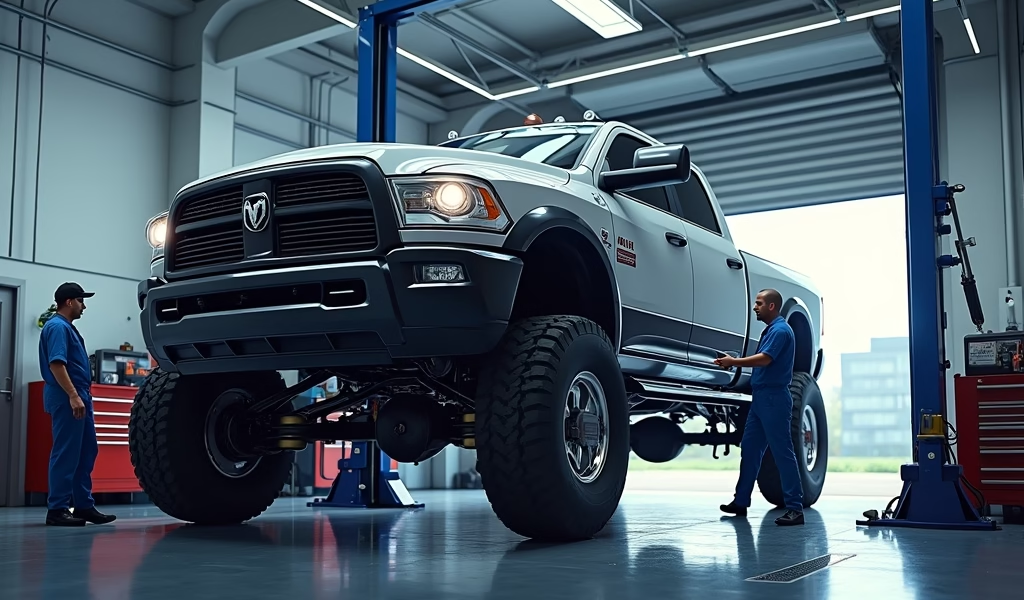
When we talk about cars over 6000 pounds, we’re entering the heavyweight division of the automotive world. These aren’t your everyday commuter vehicles – we’re discussing substantial machines like full-sized SUVs, heavy-duty pickup trucks, and luxury behemoths that command respect on the road.
As a master technician with 25 years under my belt, I’ve seen firsthand how these vehicles require specialized maintenance approaches. Their sheer mass puts unique stresses on every component from drivetrain to suspension. Think of it this way: asking a heavy-duty vehicle to perform with standard maintenance is like asking a bodybuilder to maintain peak performance on a ballerina’s diet.
The good news? With the right maintenance regimen, these workhorses can deliver exceptional longevity. Many heavy-duty trucks for sale today are engineered to hit 300,000 miles or more – but only with proper care.
Let’s dive into the seven proven maintenance treatments that will keep your heavyweight vehicle running smoothly for years to come.
Heavy-Duty Oil Change Regimens
Oil is the lifeblood of any engine, but for vehicles tipping the scales over 6000 pounds, it’s absolutely critical. These powerhouse engines generate tremendous heat and pressure, demanding lubricants that can withstand punishment.
Forget the old 3,000-mile oil change rule – it simply doesn’t apply here. For most heavy-duty vehicles, manufacturers recommend synthetic oils with specific viscosity ratings designed for high-stress applications. I typically recommend 5W-40 or 15W-40 synthetic blends for these engines.
The ideal interval? Most heavy-duty vehicles should have oil changes every 5,000-7,500 miles under normal conditions. However, if you’re regularly towing heavy loads, driving in extreme temperatures, or tackling challenging terrain, you’ll need more frequent service – possibly as often as every 3,000-4,000 miles.
What separates a proper heavy-duty oil change from a standard service is attention to detail:
- Using OEM-recommended oil filters rated for extended service
- Proper torque on drain plugs to prevent leaks (a common issue with heavy vehicles)
- Inspection of gaskets and seals that face extra stress
- Verification of correct oil level (these engines often hold 8+ quarts)
Remember, skimping on oil quality or extending intervals too far can lead to accelerated wear on critical engine components like bearings, pistons, and cylinder walls – repairs that often start in the thousands. As machinery lubrication experts note, heavy-duty engines often operate at higher temperatures, making proper oil selection crucial to long-term reliability.
Transmission Fluid Maintenance
The transmission in a heavy vehicle endures tremendous stress, particularly when towing or hauling. Think of transmission fluid as both a hydraulic fluid and coolant – it transfers power while managing heat in a system dealing with massive torque loads.
For vehicles over 6000 pounds, transmission fluid deteriorates faster than in lighter vehicles. I tell my clients to watch for three warning signs: delayed engagement when shifting from park to drive, unusual grinding or whining noises, and fluid that’s darkened from its normal bright red color.
Most heavy-duty transmissions benefit from fluid and filter changes every 30,000-60,000 miles, though severe service might require intervals as short as 15,000 miles. This is one area where manufacturer specifications are absolutely critical – using the incorrect fluid type can cause catastrophic transmission failure.
A proper transmission service for heavy vehicles should include:
- Complete fluid exchange (not just a “pan drop”)
- Replacement of the filter and pan gasket
- Inspection of the fluid cooler lines for cracks or leaks
- Verification of proper fluid level after reaching operating temperature
If you’re looking at quality cars for sale in the heavy-duty category, always ask about transmission service history. A well-maintained transmission can be the difference between a vehicle lasting 150,000 miles or 300,000+.
Enhanced Brake System Care
Stopping three tons of metal requires serious braking power. Heavy vehicles demand a more rigorous brake maintenance schedule because they simply work harder to stop that mass.
In my shop, we inspect brake systems on heavy vehicles every 5,000-7,000 miles. Pad wear accelerates dramatically in these vehicles – what might last 50,000 miles on a sedan often only survives 30,000 miles on a heavy SUV or truck.
Beyond pad replacement, pay special attention to these critical components:
- Brake fluid – should be flushed every 2 years regardless of mileage
- Rotors – need thickness measurements, as heavy vehicles can warp rotors faster
- Calipers – inspect for sticking pistons and proper operation
- Brake lines – check for deterioration, especially in areas exposed to road debris
Many heavy-duty trucks now incorporate exhaust brakes or engine braking systems to reduce wear on conventional brakes when towing. Make sure these auxiliary systems receive proper inspection during maintenance visits.
According to brake system specialists, proper fluid maintenance is especially critical for heavy vehicles. Brake fluid absorbs moisture over time, reducing its boiling point and potentially causing brake fade during heavy use – a dangerous situation when you’re controlling a three-ton vehicle.
Suspension System Treatments
The suspension system on a heavy vehicle is constantly working overtime. Supporting that weight while absorbing road imperfections requires heavy-duty components that need regular attention.
I recommend inspecting suspension components every 15,000 miles at minimum. Pay particular attention to these critical areas:
- Shock absorbers/struts – look for leaking fluid or deteriorating bushings
- Leaf springs – inspect for cracks or sheared center pins
- Air suspension systems – check for leaks and proper compressor operation
- Ball joints and control arm bushings – examine for excessive play
Vehicles with air suspension systems require special attention. These systems provide exceptional ride quality but can be costly to repair when neglected. The air compressor, bags, and lines all need regular inspection.
For vehicles using traditional coil or leaf springs, lubrication of friction points can significantly extend component life. Many owners overlook this simple maintenance step, leading to premature wear and that characteristic “squeak” when going over bumps.
A well-maintained suspension system not only provides comfort but also ensures proper tire wear and handling stability – crucial factors when managing a vehicle of substantial mass on the highway.

Cooling System Optimization
Heavy-duty engines generate serious heat. The cooling system in vehicles over 6000 pounds often works near its limits, especially when towing or climbing grades. Cooling system failure is among the most common causes of serious engine damage I see in my shop.
A complete coolant flush should be performed every 30,000 miles or two years. This isn’t just about replacing liquid – it’s about removing scale and deposits from the entire system that can reduce cooling efficiency.
During cooling system service, pay special attention to:
- Radiator – inspect for clogged fins or leaks
- Water pump – check for bearing noise or seepage
- Hoses – look for softening, cracks, or collapsed internal liners
- Fan clutch – ensure proper engagement and disengagement
- Thermostats – verify proper operation temperature
Many modern heavy-duty vehicles use extended-life coolants that require specific maintenance procedures. Using the incorrect coolant type can cause corrosion issues and premature component failure. Always follow manufacturer specifications for coolant type and concentration.
Interestingly, the cooling system also influences cabin heating performance. If you’ve noticed reduced heat output in winter, your cooling system may need attention before more serious issues develop.
Tire Rotation and Pressure Management
Tires on heavy vehicles bear tremendous loads. A 6000+ pound vehicle places significantly more stress on each tire compared to a standard passenger car.
Tire pressure management is absolutely critical. Under-inflated tires on heavy vehicles don’t just reduce fuel economy – they create dangerous heat buildup that can lead to blowouts. Many new autos for sale in the heavy-duty category now include tire pressure monitoring systems, but don’t rely solely on warning lights.
I advise my clients to check tire pressure at least twice monthly, always when tires are cold. Keep in mind that heavy vehicles often require different pressures front-to-rear to account for weight distribution.
Rotation patterns matter too. Heavy vehicles often benefit from modified rotation schedules:
- For rear-wheel drive trucks: rotate every 5,000-7,500 miles using a rearward cross pattern
- For front-wheel drive SUVs: use a forward cross pattern at the same interval
- For all-wheel drive vehicles: consider a side-to-side rotation to account for directional wear
Tire selection is equally important. Always choose tires with appropriate load ratings for your specific vehicle. According to the National Highway Traffic Safety Administration, using tires with inadequate load ratings is both dangerous and potentially illegal.
Remember that tire age matters too – even tires with adequate tread depth should be replaced after 6-7 years due to rubber compound degradation.
Fuel System Cleaning and Maintenance
Modern heavy-duty engines rely on precisely calibrated fuel delivery systems. Whether diesel or gasoline powered, these systems need regular maintenance to maintain efficiency and power.
Professional fuel injector cleaning every 30,000 miles helps maintain optimal performance. This isn’t about pouring a bottle of cleaner in your tank – proper cleaning requires specialized equipment that can deliver measured pulses of cleaning solution through the injectors.
Fuel filters require special attention in heavy vehicles. For gasoline engines, replacement every 30,000 miles is typically sufficient. Diesel engines, however, often incorporate multiple filtration stages that require more frequent service – sometimes as often as every 10,000-15,000 miles.
Signs your fuel system needs attention include:
- Hesitation during acceleration or reduced power
- Rough idle or stalling
- Decreased fuel economy
- Hard starting, particularly in cold weather
For diesel-powered heavy vehicles, don’t overlook water separator maintenance. Water contamination can destroy diesel injection systems in short order. Many modern diesels include dashboard warnings for water detection, but regular draining of the water separator remains good preventive maintenance.
Conclusion
Maintaining vehicles over 6000 pounds requires a specialized approach that acknowledges their unique demands. These aren’t just bigger versions of standard passenger cars – they’re purpose-built machines designed to handle substantial loads and challenging conditions.
By following these seven maintenance treatments, you’ll maximize the lifespan of your heavy-duty vehicle while minimizing costly repairs. Remember that preventive maintenance is always more economical than reactive repairs.
The investment in proper maintenance pays dividends through improved reliability, better resale value, and the confidence that comes from knowing your vehicle is prepared for whatever challenges you throw at it.
Whether you use your heavy vehicle for work, recreation, or family transport, these maintenance practices will help ensure it remains a dependable companion for many miles to come. After all, these vehicles aren’t just transportation – they’re investments that deserve proper care.
Frequently Asked Questions
What qualifies as a vehicle over 6000 pounds for tax purposes?
Vehicles with a Gross Vehicle Weight Rating (GVWR) of 6,000 pounds or more may qualify for certain tax advantages. Check with your tax professional as rules vary and change periodically.
How much more does it cost to maintain a vehicle over 6000 pounds?
Maintenance costs typically run 30-50% higher than standard passenger vehicles. This reflects larger fluid capacities, heavier-duty components, and more expensive replacement parts.
Can I use regular motor oil in my heavy-duty vehicle?
Standard passenger car oils lack the additives needed for heavy-duty applications. Always use oils specifically formulated for heavy-duty use with the correct viscosity rating.
How often should I rotate tires on my heavy SUV or truck?
Most manufacturers recommend rotation every 5,000-7,500 miles. Following this schedule helps ensure even wear and maximum tire life.
Are diesel or gasoline engines better for vehicles over 6000 pounds?
Diesels typically offer better longevity and towing capacity but require more specialized maintenance. Gasoline engines generally have lower upfront and maintenance costs but may not match diesel durability under heavy use.