

Overview
Just like how ignoring your dentist leads to painful root canals, skipping these five essential car maintenance routines—regular oil changes, proper tire care, air filter replacement, fluid checks, and engine tune-ups—will transform your reliable vehicle into an expensive paperweight. These maintenance practices not only extend your vehicle’s lifespan beyond 200,000 miles but also improve performance, fuel efficiency, and safety while preventing costly repairs down the road.
Table of Contents
- Introduction
- Regular Oil Changes: The Lifeblood of Your Engine
- Tire Care: Where Rubber Meets Road
- Air Filter Replacement: Let Your Engine Breathe
- Fluid Checks: Keeping Your Car’s Systems Flowing
- Regular Engine Tune-ups: The Complete Health Check
- Conclusion
- Frequently Asked Questions
Introduction
Your car is more than just a machine – it’s your reliable partner for daily commutes, family road trips, and everything in between. After 25 years as an ASE-certified mechanic, I’ve seen firsthand how proper maintenance transforms vehicles from temporary transportation into trusted companions that serve faithfully for hundreds of thousands of miles.
Most vehicles today are built to last well beyond 200,000 miles, but they’ll only reach that milestone with consistent care. Think of maintenance as an investment rather than an expense – every dollar spent on preventative care typically saves $3-5 in avoided repairs down the road.
In my shop, I’ve restored countless neglected vehicles, but I’d much rather help you avoid problems in the first place. These five essential maintenance treatments aren’t just mechanic recommendations – they’re proven strategies to maximize your vehicle’s lifespan, optimize performance, and protect your investment.
Regular Oil Changes: The Lifeblood of Your Engine
If I could stress just one maintenance item, it would be regular oil changes. Engine oil isn’t merely a lubricant – it’s a complex fluid that cools critical components, carries away contaminants, and prevents metal-on-metal contact that would otherwise destroy your engine in minutes.
Fresh oil flows smoothly through narrow passages and tight clearances, while old oil thickens into a sludgy consistency that can’t protect your engine effectively. This increased friction generates heat, accelerates wear, and can reduce your fuel economy by up to 2% according to Department of Energy studies.
Most modern vehicles need oil changes every 5,000-7,500 miles, though some newer models using full synthetic oil can extend to 10,000 miles between services. Always follow your manufacturer’s specific recommendations, which you’ll find in your owner’s manual.
When choosing oil, consider investing in synthetic options. While conventional oils break down faster under heat and stress, synthetics maintain their protective properties longer. For vehicles in extreme conditions (towing, high temperatures, stop-and-go traffic), synthetic oil provides superior protection that more than justifies its higher price tag.
Tire Care: Where Rubber Meets Road
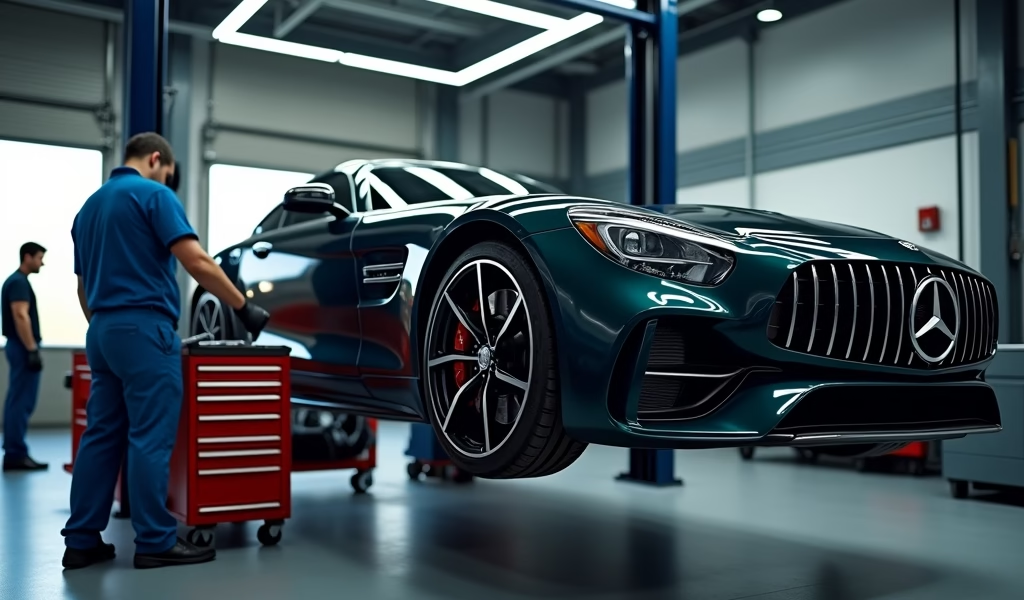
Your tires are the only points of contact between your vehicle and the road, making them absolutely critical for both safety and efficiency. Proper tire maintenance impacts everything from braking distance to fuel economy to ride comfort.
Start with regular pressure checks – at least monthly and before any long trip. Use the pressure recommended on your driver’s door jamb sticker (not the maximum pressure printed on the tire sidewall). Underinflated tires flex excessively, generating heat that accelerates wear while reducing fuel economy by up to 3% according to the EPA.
Rotation is equally important. Front and rear tires wear differently due to steering, braking, and weight distribution. By rotating tires every 5,000-8,000 miles, you’ll ensure even wear patterns that maximize tread life and maintain consistent handling.
Don’t overlook alignment and balancing. Proper alignment prevents your vehicle from pulling to one side and ensures even tread wear, while balancing eliminates vibrations that can damage suspension components and create a rough ride.
When should you replace tires? The industry standard is 2/32″ of remaining tread, but for optimal safety, consider replacement at 4/32″. A simple test: insert a quarter into your tire tread with Washington’s head facing down – if you can see the top of his head, it’s time for new tires.
Air Filter Replacement: Let Your Engine Breathe
Your engine is essentially a sophisticated air pump – it needs to breathe clean air to function efficiently. The air filter is your engine’s first line of defense against dust, debris, and contaminants that would otherwise cause internal damage.
A clogged air filter restricts airflow, forcing your engine to work harder while receiving less oxygen. This imbalance affects the air-fuel mixture, resulting in reduced power, lower fuel efficiency, and increased emissions. In severe cases, it can even trigger check engine lights and cause rough running conditions.
Most manufacturers recommend replacing the air filter every 15,000-30,000 miles, but this varies significantly based on driving conditions. If you frequently drive on dirt roads or in dusty environments, inspect your filter more often – perhaps every 10,000 miles or even sooner.
Air filter replacement is one of the simplest maintenance tasks most owners can handle themselves. Most filters require no tools to access and can be swapped in under five minutes. For about $15-25, you can restore proper airflow and potentially improve fuel efficiency by up to 10% if the old filter was severely restricted.
While checking your engine air filter, don’t forget your cabin air filter, which keeps the air inside your vehicle clean. This filter typically needs replacement every 15,000-25,000 miles and significantly improves interior air quality.
Fluid Checks: Keeping Your Car’s Systems Flowing
Your vehicle relies on a complex network of specialized fluids to operate properly. Each fluid serves a specific purpose, and maintaining proper levels is critical for performance, efficiency, and preventing expensive repairs.
Engine coolant prevents overheating while also protecting against freezing in cold climates. Modern coolants typically last 5 years or 100,000 miles, but levels should be checked monthly. Low coolant is often the first sign of a developing leak that could lead to overheating and severe engine damage if ignored.
Brake fluid transfers the force from your brake pedal to the brake components at each wheel. This hygroscopic fluid absorbs moisture over time, lowering its boiling point and compromising braking performance. Most manufacturers recommend replacement every 2-3 years regardless of mileage.
Transmission fluid lubricates and cools your transmission’s internal components. Unlike engine oil, transmission fluid isn’t consumed during normal operation – a dropping level almost always indicates a leak that needs attention. Many modern transmissions have “lifetime” fluid, but I still recommend inspection every 30,000-60,000 miles.
Power steering fluid enables your power steering system to function with minimal effort. A gradual increase in steering effort or unusual noises when turning typically indicates low fluid or developing problems that should be addressed promptly.
Checking most fluids is simple – look for the appropriate reservoir under the hood, ensure the level is between the minimum and maximum marks, and verify the fluid appears clean. Always use manufacturer-specified fluids – using incorrect types can cause serious system damage.
Regular Engine Tune-ups: The Complete Health Check
While modern vehicles have largely eliminated traditional “tune-ups” with computerized systems managing most functions, periodic comprehensive service remains essential for optimal performance and longevity.
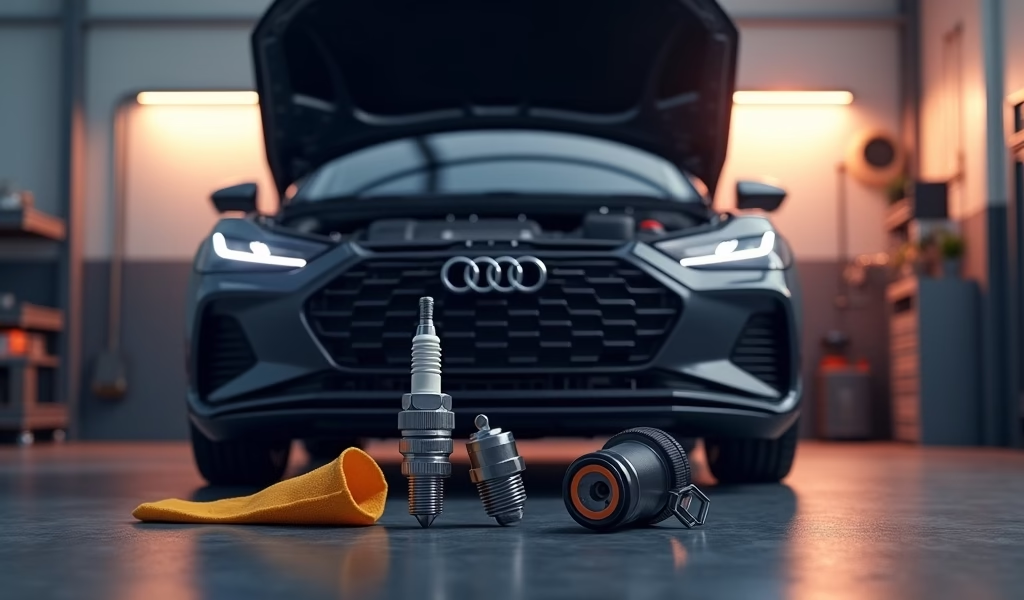
Today’s equivalent of a tune-up typically includes spark plug replacement, fuel system cleaning, computer system checks, and thorough inspection of critical components like belts, hoses, and filters.
Spark plugs create the precisely timed electrical spark that ignites fuel in your engine. As they wear, performance gradually decreases – you might notice rough idling, misfires, decreased fuel economy, or difficulty starting. Most modern plugs last 60,000-100,000 miles thanks to improved materials, but when they fail, replacement restores lost performance.
Fuel system cleaning removes carbon deposits from fuel injectors, intake valves, and combustion chambers. These deposits accumulate naturally over time, restricting fuel flow and disrupting spray patterns. Professional cleaning every 30,000-45,000 miles can restore proper fuel delivery, improving both performance and efficiency.
Computer system checks identify developing issues before they become serious problems. Today’s vehicles have sophisticated onboard diagnostics that track dozens of parameters – professional equipment can access this data to spot irregular patterns that might indicate problems even before dashboard warning lights appear.
Drive belt inspection is particularly important as most modern vehicles use a single serpentine belt to drive multiple accessories. If this belt fails, you’ll immediately lose power steering, alternator function, and cooling capacity. Most belts should be replaced preventatively every 60,000-100,000 miles.
Regular tune-ups typically cost $200-500 depending on vehicle complexity, but this investment prevents far more expensive repairs while maintaining optimal performance and efficiency.
Conclusion
Your vehicle is a complex machine with thousands of parts working in harmony, but maintaining it doesn’t need to be overwhelming. These five fundamental maintenance treatments form the foundation of vehicle care that can help your car reach impressive mileage milestones.
Regular oil changes protect your engine’s internal components from excessive wear and heat. Proper tire care ensures safety, efficiency, and comfort. Clean air filters allow your engine to breathe freely for optimal performance. Monitoring fluid levels prevents system failures before they happen. And comprehensive tune-ups address the smaller items that collectively keep everything running smoothly.
Beyond extending your vehicle’s lifespan, proper maintenance delivers immediate benefits: better fuel economy, more reliable operation, reduced emissions, and that confidence that comes from knowing your vehicle is in top condition.
Remember that maintenance is cumulative – each service builds on the last to keep your vehicle running at its best. A consistent maintenance schedule, whether you perform the work yourself or rely on professional service, is the most effective strategy for maximizing your vehicle’s lifespan and protecting your automotive investment.
Frequently Asked Questions
How often should I change my oil?
Most modern vehicles need oil changes every 5,000-7,500 miles, though some using full synthetic oil can go 10,000 miles. Always follow the specific interval recommended in your owner’s manual.
What happens if I skip regular maintenance?
Skipping maintenance leads to accelerated wear, reduced efficiency, lower reliability, and eventually major component failures. Small maintenance costs today prevent expensive repairs tomorrow.
Can I perform basic maintenance myself?
Many basic maintenance tasks like checking fluids, replacing air filters, and monitoring tire pressure are easy DIY projects. More complex services like brake work or timing belt replacement are better left to professionals.
How do I know when my tires need replacement?
Replace tires when tread depth reaches 4/32″ for optimal safety or 2/32″ at minimum (the legal limit). Use the quarter test: if you can see the top of Washington’s head when inserted in the tread, it’s time for new tires.
What’s the most important maintenance for extending vehicle life?
Regular oil changes are the single most important maintenance task for long engine life. Clean oil prevents excessive wear and heat that would otherwise significantly shorten your engine’s lifespan.