

Overview
Forget the old “100,000-mile death sentence” myth—a well-maintained car with high mileage is often a better bet than a neglected low-mileage vehicle that’s been collecting dust and deteriorating rubber parts. The article outlines seven crucial maintenance practices including regular oil changes, timing belt replacement, transmission care, brake maintenance, cooling system upkeep, suspension alignment, and professional inspections that can extend a vehicle’s life well beyond 200,000 miles.
Table of Contents
- Understanding Mileage in Used Cars
- Maintenance Tip #1: Regular Oil Changes
- Maintenance Tip #2: Timing Belt Replacement
- Maintenance Tip #3: Transmission Care
- Maintenance Tip #4: Brake System Maintenance
- Maintenance Tip #5: Cooling System Upkeep
- Maintenance Tip #6: Suspension and Alignment
- Maintenance Tip #7: Regular Professional Inspections
- Conclusion
- Frequently Asked Questions
Shopping for a used car often feels like navigating a minefield. Among the many factors that make buyers anxious, the odometer reading typically tops the list. But here’s something most folks don’t realize – mileage is just one chapter in a used car’s complete story.
After 25 years turning wrenches and diagnosing vehicles, I’ve seen 200,000-mile cars running smoother than some with half the mileage. The difference? Proper maintenance. A well-maintained high-mileage vehicle will almost always outperform a neglected low-mileage one.
In this guide, we’ll break down what constitutes “good” mileage for a used car and share seven proven maintenance practices that can extend your vehicle’s life by years – or even decades.
Understanding Mileage in Used Cars
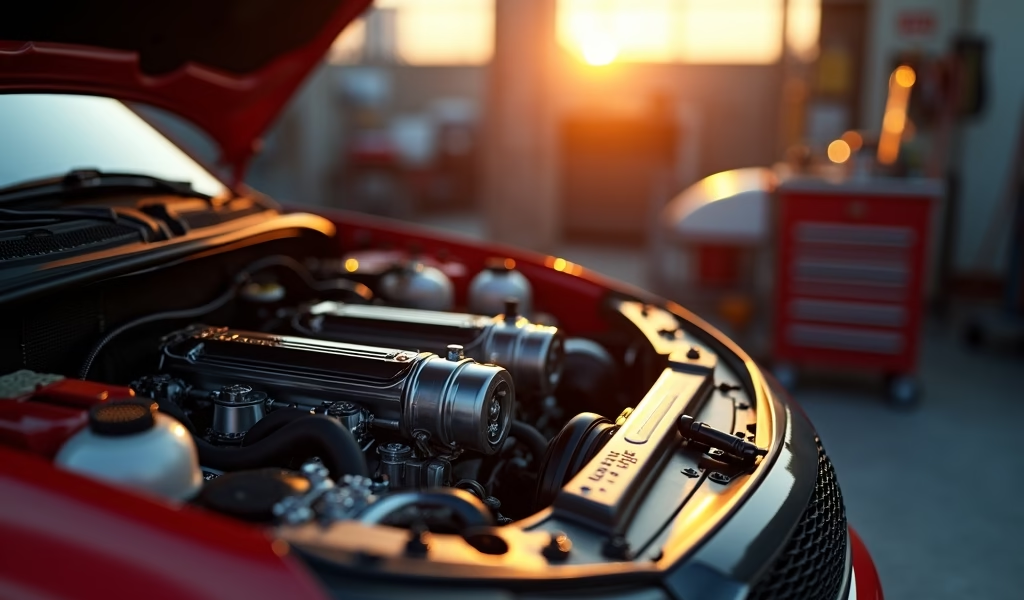
The automotive world once clung to the “100,000-mile rule” – the belief that vehicles begin their mechanical decline after crossing this threshold. I’m happy to tell you this myth has been thoroughly debunked.
Modern vehicles routinely cruise well past 200,000 miles with proper care. According to Consumer Reports, today’s cars are built to last significantly longer than those from previous generations.
When evaluating used car mileage, here’s a practical framework:
- 10,000-12,000 miles per year of age: Excellent
- 12,000-15,000 miles per year of age: Average
- 15,000+ miles per year of age: High
However, here’s where conventional wisdom takes a detour: a 10-year-old car with 80,000 miles isn’t necessarily better than a 5-year-old car with 90,000 miles. Why? Because time affects vehicles regardless of distance traveled.
Rubber components deteriorate, fluids break down, and corrosion wages its slow war even if the car rarely leaves the garage. That’s why when evaluating a used vehicle, you should consider this trio of factors:
- Mileage (how far it’s traveled)
- Age (calendar years since manufacture)
- Maintenance history (the gold standard indicator)
Look beyond the odometer for evidence of care: detailed service records, proof of timely repairs, and consistent maintenance intervals. A higher-mileage car with complete service records often represents less risk than a low-mileage mystery with no documentation.
Maintenance Tip #1: Regular Oil Changes
If engines could speak, their most frequent request would be: “Please change my oil on time!” Engine oil is your vehicle’s lifeblood – it lubricates, cleans, cools, and protects the heart of your car.
The standard recommendation for conventional oil changes is every 3,000-5,000 miles, while synthetic oil can last 7,500-10,000 miles. However, your driving conditions matter tremendously:
- Frequent short trips (less than 10 miles)
- Extreme temperatures
- Stop-and-go traffic
- Towing or hauling heavy loads
Any of these conditions justify more frequent oil changes. The small investment ($30-$80) prevents engine damage that could cost thousands to repair.
When inspecting a potential used car purchase, request oil change receipts or service records. No documentation? Check the oil on the dipstick – if it’s dark black, has a burnt smell, or resembles molasses rather than honey, proceed with caution. This suggests long intervals between oil changes, which accelerates engine wear.
Maintenance Tip #2: Timing Belt Replacement
The timing belt (or chain in some vehicles) is the unsung hero of your engine, coordinating the precise dance between pistons and valves. Unlike a leaky gasket or failing sensor that gives warning signs, a timing belt failure announces itself with catastrophic engine damage and zero warning.
Most manufacturers recommend replacing timing belts between 60,000 and 100,000 miles. This isn’t a “maybe later” maintenance item – it’s a “neglect me and regret it” component.
The math is painfully simple:
- Timing belt replacement: $500-$1,000
- Engine repair after timing belt failure: $2,000-$4,000+
- Complete engine replacement: $4,000-$8,000+
When examining a used car approaching or beyond the 100,000-mile mark, verifying timing belt replacement history is absolutely critical. If the seller can’t provide documentation, factor replacement costs into your purchase decision or negotiate accordingly.
Many newer vehicles use timing chains rather than belts, which typically last the life of the engine. However, don’t assume – check your specific make and model requirements.
Maintenance Tip #3: Transmission Care
If the engine is your car’s heart, the transmission is its central nervous system – complex, essential, and extraordinarily expensive to repair. Yet transmission maintenance often gets neglected until problems emerge.
For automatic transmissions, fluid changes are typically recommended every 30,000-60,000 miles. Some manufacturers claim their transmissions have “lifetime” fluid, but in my professional experience, “lifetime” usually means the lifetime of the warranty, not the vehicle.
Manual transmissions generally need fluid changes every 30,000-60,000 miles as well. The essential maintenance schedule may vary based on your driving habits and vehicle specifications.
Warning signs of transmission issues include:
- Delayed or rough shifting
- Slipping between gears
- Unusual noises (grinding, whining, or humming)
- Illuminated check engine light
- Fluid that smells burnt or appears dark brown
When examining a used car, check transmission fluid color (should be pinkish-red, not brown) and request service records. A transmission replacement can cost $1,500-$4,000 for a rebuilt unit or $4,000-$8,000 for a new one – roughly the same price as a semester of college.
Maintenance Tip #4: Brake System Maintenance
Your vehicle’s braking system is like a parachute – you really want it working properly when you need it. The typical lifespan for brake components varies widely based on driving habits and conditions:
- Brake pads: 30,000-70,000 miles
- Brake rotors: 50,000-70,000 miles
- Brake fluid: Every 2 years or 30,000 miles
City drivers with frequent stops will need brake service far sooner than highway cruisers. Listen for squealing or grinding noises, and be alert to warning signs like a soft or pulsating brake pedal.
When inspecting a used car, look through the wheel spokes at the brake rotor surface – significant grooves or uneven wear indicate neglected maintenance. Check brake fluid clarity too; it should be clear or light amber, not dark or muddy.
Timely brake maintenance isn’t just about safety – it’s economical. Replacing worn pads ($150-$300) prevents damage to more expensive components like rotors ($300-$500) and calipers ($500-$750).
According to the National Highway Traffic Safety Administration, brake failures contribute to approximately 22% of mechanical-failure crashes, emphasizing the importance of this maintenance area.
Maintenance Tip #5: Cooling System Upkeep
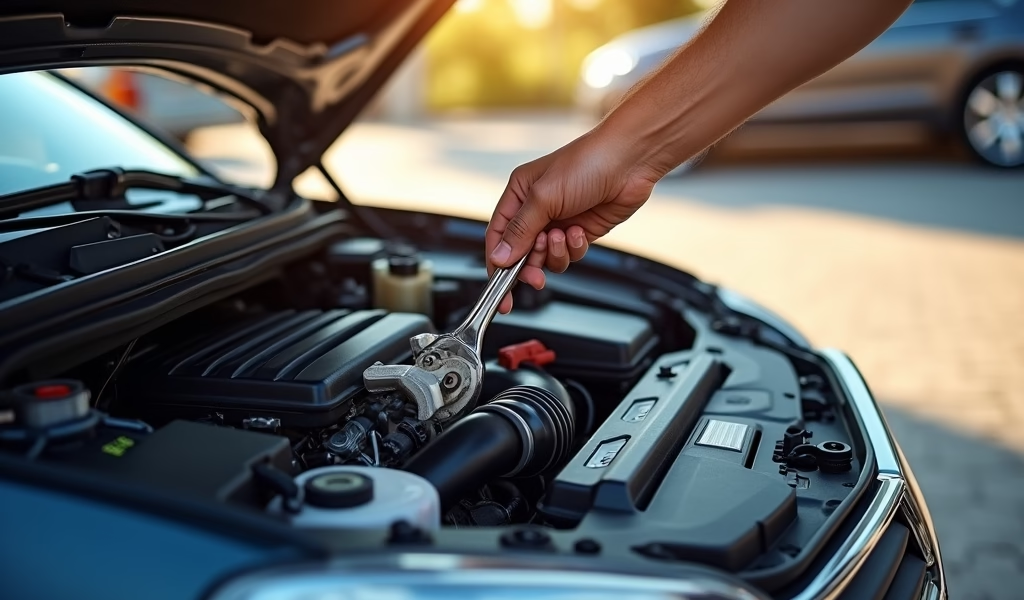
If engines could have nightmares, overheating would be their recurring terror. The cooling system prevents your engine from turning into an expensive paperweight by maintaining optimal operating temperature.
Coolant (or antifreeze) breaks down over time, becoming less effective and potentially corrosive. Most manufacturers recommend coolant flushes every 30,000 miles or 2-5 years. Other cooling system maintenance includes:
- Inspecting hoses for cracks, bulges, or softness
- Checking the water pump for leaks or noise
- Ensuring the radiator is clean and undamaged
- Testing the thermostat for proper operation
For high-mileage vehicles, preventative replacement of cooling system components can be wise insurance against overheating. A $300-$500 investment in cooling system maintenance prevents the $3,000+ catastrophe of major engine damage.
When evaluating a used car, check for coolant leaks (especially under the car after it’s been parked), and verify the coolant isn’t rusty or filled with particulates. Also, watch the temperature gauge during your test drive – it should remain stable in the normal range.
Maintenance Tip #6: Suspension and Alignment
Your suspension system constantly negotiates peace between the road’s chaos and your desire for comfort. Proper alignment affects everything from tire wear to fuel efficiency to handling safety.
Alignment should be checked annually or whenever you notice:
- Uneven tire wear
- Vehicle pulling to one side
- Steering wheel not centered when driving straight
- Vibrations while driving
Suspension components that commonly need attention in higher-mileage vehicles include:
- Shock absorbers/struts (50,000-100,000 miles)
- Control arm bushings (80,000-100,000 miles)
- Ball joints (70,000-150,000 miles)
- Tie rod ends (70,000-100,000 miles)
When test driving a used car, pay attention to how it handles bumps (excessive bouncing suggests worn shocks), unusual noises over rough roads, and whether it tracks straight. A quick alignment costs $50-$150 but can save hundreds in premature tire wear and improve fuel economy by 1-2 mpg.
Maintaining your car’s suspension system not only provides a smoother ride but also ensures optimal handling during emergency maneuvers – potentially saving lives.
Maintenance Tip #7: Regular Professional Inspections
Even the most diligent DIY car owner benefits from professional diagnostic equipment and trained eyes. Regular comprehensive inspections are like annual physicals for your car – catching small issues before they become major problems.
A thorough professional inspection includes:
- Computer diagnostics for error codes
- Visual inspection of components
- Fluid analysis
- Tire and brake evaluation
- Battery and electrical system testing
- Undercarriage inspection for leaks or damage
I recommend comprehensive inspections every 15,000-30,000 miles or annually, whichever comes first. These inspections typically cost $150-$250 but can identify developing issues that could cost thousands if left unchecked.
When buying a used car, investing in a pre-purchase inspection by an independent mechanic (not affiliated with the seller) is perhaps the wisest $100-$200 you’ll spend. Think of it as insurance against expensive surprises.
Conclusion
So what’s “good” mileage for a used car? The answer isn’t simply a number. A well-maintained vehicle with 150,000 miles often represents a better purchase than a neglected one with half the mileage. The maintenance history – that paper trail of care – usually tells the more important story.
Remember these key takeaways:
- Modern vehicles routinely reach 200,000+ miles with proper care
- Regular maintenance according to manufacturer schedules is crucial
- Age can be as important as mileage when evaluating wear
- Documented service history is worth its weight in gold
By following these seven maintenance principles, you can dramatically extend your vehicle’s service life regardless of starting mileage. The secret isn’t finding a low-mileage unicorn – it’s providing consistent, preventative care to whatever vehicle you choose.
After all, in my decades as a mechanic, I’ve learned that cars are a lot like people – it’s not the years in their life that matter most, but the life in their years. And with proper maintenance, your high-mileage vehicle can deliver many more years of reliable service.
Frequently Asked Questions
Is 100,000 miles too much for a used car?
Not at all for most modern vehicles. Many cars today can easily reach 200,000+ miles with proper maintenance, making a well-maintained 100,000-mile vehicle potentially a great value.
Should I avoid high-mileage cars completely?
No, you should focus more on maintenance history than mileage alone. A high-mileage car with complete service records is often a better buy than a low-mileage car with no maintenance history.
What’s more important: age or mileage?
Both factors matter, but in different ways. Low mileage on a very old car can actually indicate problems, as rubber components and fluids deteriorate with time regardless of use.
How can I verify a car’s maintenance history?
Ask for service records, receipts, and maintenance logs from the seller. You can also get a vehicle history report from services like Carfax or AutoCheck, which often include service records from dealerships.
What’s the first maintenance item I should check on a high-mileage car?
Timing belt replacement history should be your first concern if the vehicle has one. A failed timing belt can cause catastrophic engine damage in many engines, and replacement is typically due around 60,000-100,000 miles.