
Overview
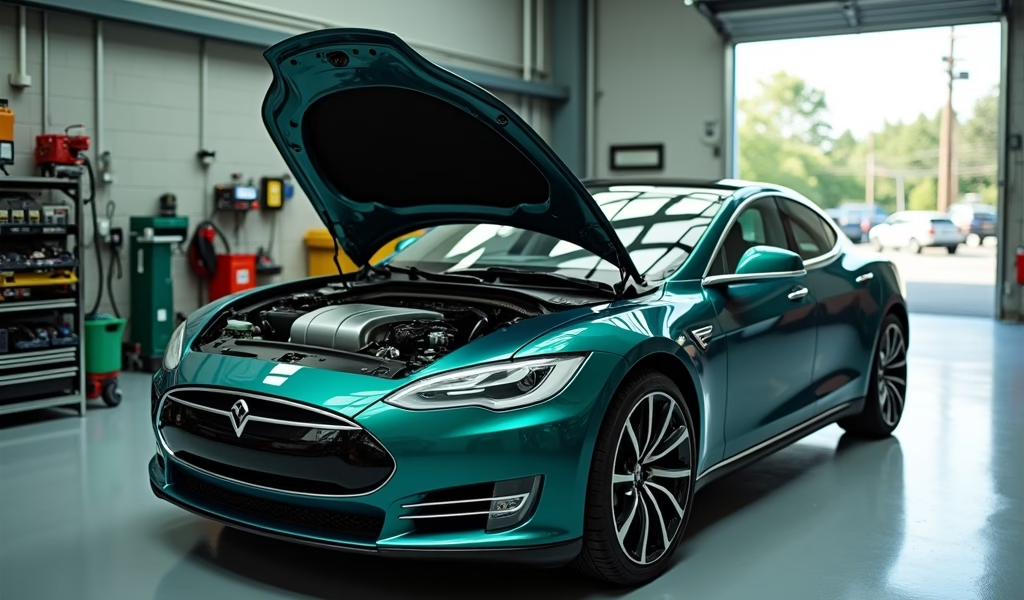
Contrary to popular belief, electric vehicles don’t use engine oil, which is just one of many maintenance perks—who knew avoiding messy oil changes would be such a selling point! While EVs still require some maintenance like brake fluid changes, bearing lubrication, and cooling system care, they offer significantly lower maintenance costs (about half compared to traditional vehicles) and fewer service visits over their lifetime.
Table of Contents
- Do Electric Cars Use Oil?
- How Electric Cars Differ from Internal Combustion Engines
- Components in Electric Vehicles That May Require Lubrication
- 7 Proven Maintenance Hacks for Electric Vehicle Owners
- Common Misconceptions About Electric Vehicle Maintenance
- Cost Comparison: Maintaining Electric vs. Traditional Vehicles
- The Future of Electric Vehicle Maintenance
- Conclusion
- Frequently Asked Questions
Do Electric Cars Use Oil?
The short answer? No, electric cars don’t use engine oil like conventional vehicles do. As someone who’s spent decades under the hood of both traditional and electric vehicles, I can tell you this is one of the most refreshing differences when transitioning to electric vehicle ownership. Traditional combustion engines have hundreds of moving parts that require constant lubrication – pistons, camshafts, valves – all bathing in oil to prevent metal-on-metal contact that would otherwise lead to catastrophic failure.
Electric vehicles, by contrast, operate on a fundamentally different principle. They use battery-powered electric motors with dramatically fewer moving components. An electric motor might have just one moving part – the rotor – compared to the hundreds found in gasoline engines. This radical simplification is why your electric vehicle doesn’t need regular oil changes, which is both a maintenance and environmental win.
But before you celebrate never having to worry about maintenance again, let’s get into the nuances. While EVs don’t require engine oil, they aren’t completely maintenance-free. They still have components that need attention – just different ones than what you’re used to with conventional vehicles. Understanding these differences is key to maximizing the lifespan of your electric ride.
How Electric Cars Differ from Internal Combustion Engines
When I explain electric vehicles to my customers transitioning from gas-powered cars, I like to start with a fundamental truth: electric motors and internal combustion engines are as different as microwaves and gas stoves. Both accomplish similar goals, but they operate on completely different principles.
In a traditional vehicle, the combustion process creates controlled explosions inside cylinders, pushing pistons that convert linear motion to rotational force through the crankshaft. This complex mechanical dance requires extensive lubrication systems. Without oil, these engines would seize up within minutes.
Electric motors, however, generate rotational force using electromagnetic fields rather than explosions. When electricity flows through coils around a fixed stator, it creates magnetic fields that interact with magnets on the rotor, causing it to spin. This elegant simplicity means driving an electric car involves almost no friction between moving metal parts in the propulsion system.
The power delivery is different too. While conventional engines need to build up to their optimal RPM range, electric motors deliver maximum torque instantly. That’s why EVs feel so zippy off the line, even though they might not have the top-end speed of some performance gas vehicles.
From a maintenance perspective, this difference is profound. No more oil changes, no timing belt replacements, no exhaust system repairs, and significantly reduced brake wear thanks to regenerative braking. According to Consumer Reports, EV owners typically spend about half as much on maintenance and repair during the first 200,000 miles compared to gas vehicle owners.
Components in Electric Vehicles That May Require Lubrication
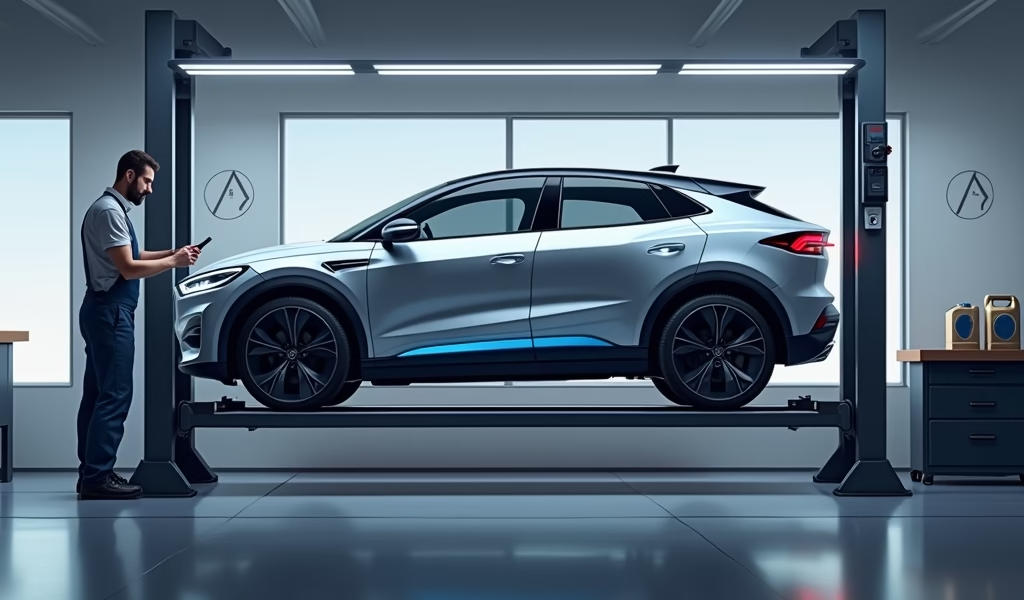
While EVs don’t need engine oil, they’re not entirely free from lubrication requirements. Let’s break down the components that still need some form of lubrication or fluid maintenance:
Transmission Fluid
Many electric vehicles use a single-speed transmission or reduction gear. Unlike the complex transmissions in conventional vehicles, these are much simpler but still require specialized fluid. Some manufacturers design these systems to be sealed for life, while others recommend fluid changes at very extended intervals (often 100,000+ miles).
Bearing Grease
Electric motors contain bearings that allow the rotor to spin freely. These bearings typically come pre-lubricated and sealed from the factory. In quality EVs, they’re designed to last the lifetime of the vehicle without maintenance, though some manufacturers might include bearing inspection in very high-mileage service intervals.
Brake Fluid
This is one area where EVs and conventional vehicles share common ground. Both require hydraulic brake fluid that should be changed periodically (typically every 2-3 years) regardless of mileage. Brake fluid absorbs moisture over time, which can compromise braking performance and safety.
Cooling System Fluid
Electric vehicles have sophisticated cooling systems for their battery packs, power electronics, and sometimes the motors themselves. These systems use specialized coolants that need checking and occasional replacement. The service intervals are typically much longer than in conventional vehicles, but they shouldn’t be ignored.
CV Joint Grease
The constant velocity (CV) joints in the driveshafts of electric vehicles require the same type of grease as in conventional vehicles. However, since these are typically sealed units, they rarely need maintenance unless damaged.
Understanding these requirements helps explain why the common question “do electric cars use oil” isn’t quite as straightforward as it might seem. While they don’t use engine oil, EVs still have specific lubrication needs that owners should be aware of to ensure optimal performance and longevity.
7 Proven Maintenance Hacks for Electric Vehicle Owners
After working on hundreds of EVs, I’ve developed some practical maintenance strategies that help owners keep their vehicles in top condition while minimizing costs. Here are my seven proven maintenance hacks that go beyond the usual advice:
1. Master the Art of Battery Management
Your battery is the heart of your EV, and proper management can significantly extend its life. Avoid routinely charging to 100% or discharging below 20% unless necessary for long trips. Most manufacturers recommend keeping your daily charge between 40-80% for optimal battery health. Some research from the Department of Energy suggests this practice alone can extend battery life by up to 50%.
2. Leverage Scheduled Precondition Charging
Most EVs allow you to schedule charging to complete just before your departure time. This feature does more than ensure a full battery – it warms up the battery pack to its optimal operating temperature while still connected to power. This reduces range loss and battery strain during those first few miles, especially in cold weather.
3. Optimize Regenerative Braking
Use your vehicle’s regenerative braking system strategically. In stop-and-go traffic, maximize regen to extend range and reduce conventional brake wear. On long downhill stretches, strong regenerative braking can actually help cool the battery while recapturing energy. This technique can extend brake pad life to well over 100,000 miles in many cases.
4. Perform DIY Coolant System Inspections
While you don’t need to worry about oil, your EV’s cooling system is crucial. Every few months, visually inspect coolant reservoirs and connecting hoses for any signs of leaks, cracks, or discoloration. Low coolant can lead to reduced performance and potential battery damage – a far more expensive problem than a simple coolant top-off.
5. Maintain Tire Pressure Religiously
This applies to all vehicles, but it’s especially important for EVs where range anxiety can be a concern. Underinflated tires can reduce range by up to 3% for every 1 PSI below recommended pressure. I recommend checking pressures monthly and adjusting for temperature changes across seasons.
6. Clean Battery Cooling Vents
Many EVs have cooling vents that draw air to help regulate battery temperature. These vents can accumulate dust and debris over time, reducing cooling efficiency. Locate these vents (often under seats or in the rear cargo area) and gently clean them with compressed air or a vacuum with a brush attachment quarterly.
7. Implement Seasonal Charging Strategies
Adjust your charging habits seasonally. In extreme heat, charge during cooler evening hours when possible to reduce the combined heat stress on the battery. In winter, take advantage of scheduled charging to complete just before departure, ensuring a warm battery without depleting range to heat it.
These maintenance hacks focus on the unique aspects of electric car ownership, addressing the question of “do electric cars use oil” by shifting attention to what actually matters for EV maintenance. While traditional oil changes are out, these practices will help maximize the performance, range, and lifespan of your electric vehicle.
Common Misconceptions About Electric Vehicle Maintenance
Over the years, I’ve heard plenty of misunderstandings about EV maintenance. Let’s clear up some of the most persistent myths:
Misconception #1: Electric Vehicles Are Completely Maintenance-Free
While EVs certainly require less maintenance than conventional vehicles, they aren’t maintenance-free. They still need regular tire rotations, brake fluid changes, cabin air filter replacements, and cooling system checks. The difference is that these services are typically less frequent and less expensive overall.
Misconception #2: EV Batteries Need Replacement Every Few Years
Modern EV batteries are designed to last the lifetime of the vehicle – often 15-20 years or more. Most manufacturers warranty their batteries for 8-10 years or 100,000+ miles, but real-world data shows many batteries retain 80-90% of their original capacity even after a decade of use. Complete battery replacements are rare, not routine.
Misconception #3: You Can’t Work on EVs Yourself
While high-voltage components should only be serviced by qualified technicians, there are plenty of maintenance tasks EV owners can perform themselves. Tire maintenance, wiper replacements, cabin filter changes, and coolant level checks are all DIY-friendly. The key is understanding what’s safe to access and what requires professional help.
Misconception #4: EVs Don’t Need Brake Service
While regenerative braking significantly reduces wear on brake pads and rotors, the physical braking system still requires maintenance. Brake fluid absorbs moisture over time and needs periodic replacement regardless of pad wear. Additionally, infrequently used brakes can develop surface rust or uneven wear patterns that might require service.
Misconception #5: All Charging Is Equal
Many new EV owners don’t realize that how you charge matters. Frequent DC fast charging can generate more heat and potentially accelerate battery degradation compared to slower Level 2 charging. For daily use, Level 2 home charging is generally better for long-term battery health, while reserving fast charging for road trips and emergencies.
Understanding these misconceptions helps put the “do electric cars use oil” question in proper context. The maintenance paradigm for EVs is fundamentally different, focusing on electrical systems and battery health rather than combustion engine concerns.
Cost Comparison: Maintaining Electric vs. Traditional Vehicles
As someone who’s managed service departments working on both types of vehicles, I’ve seen the financial differences firsthand. Let’s break down the real-world maintenance costs:
Routine Maintenance Savings
The absence of oil changes alone saves EV owners between $50-100 every 3,000-7,500 miles. Over 100,000 miles, this represents $650-$3,000 in savings. Add in the lack of spark plug replacements, transmission services, timing belts, and exhaust system repairs, and the difference becomes substantial.
According to a study by Consumer Reports, EV owners spend about half as much on maintenance and repairs as owners of similar gas-powered vehicles. For a typical mid-size sedan, this translates to roughly $4,600 in savings over the first 100,000 miles.
Brake System Costs
Thanks to regenerative braking, EV brake pads and rotors often last twice as long as those in conventional vehicles. While a complete brake job on a conventional vehicle might cost $500-1,000 every 30,000-70,000 miles, many EV owners report their original brake pads still have plenty of material left at 100,000+ miles.
Cooling System Considerations
EVs do require cooling system maintenance, but the intervals are typically much longer. Where a conventional vehicle might need coolant flushes every 30,000-50,000 miles, many EV manufacturers recommend coolant service only every 100,000-150,000 miles, if at all during normal ownership periods.
The Battery Factor
The elephant in the room for many potential EV buyers is the battery. While replacement costs have dropped dramatically (now often below $150/kWh), a complete pack replacement would still be expensive. However, this concern is largely mitigated by extensive warranties and the increasing rarity of total failures. More commonly, individual modules can be replaced if necessary, often at a fraction of full pack replacement costs.
Total Cost Analysis
When we analyze total ownership costs, including both scheduled maintenance and unscheduled repairs, EVs consistently come out ahead. A typical gas-powered vehicle might require $10,000-12,000 in maintenance and repairs over 150,000 miles, while a comparable EV often needs just $3,000-6,000 of service over the same period.
This cost difference directly relates back to our original question about whether electric cars use oil. The absence of oil is just one aspect of a fundamentally simpler mechanical design that translates to significant maintenance savings throughout the vehicle’s life.
The Future of Electric Vehicle Maintenance
As a technician who’s watched the evolution of automotive technology for decades, I’m fascinated by how EV maintenance is evolving. Here’s what’s on the horizon:
Predictive Maintenance Systems
Newer EVs are incorporating sophisticated diagnostic systems that can predict potential issues before they become problems. Using thousands of sensors and machine learning algorithms, these systems can detect subtle changes in component performance, allowing for truly preventative maintenance rather than reactive repairs.
Over-the-Air Updates
While conventional vehicles require physical servicing for most improvements, EVs can receive substantial upgrades through software updates. These can enhance performance, extend range, improve charging efficiency, and even add entirely new features without a visit to a service center. This capability will continue to expand, further reducing the need for physical maintenance visits.
Modular Design Improvements
Manufacturers are increasingly designing EVs with modular components that can be more easily replaced or upgraded. This approach reduces repair costs and extends vehicle lifespans. For example, some newer EV designs allow for individual battery modules to be replaced rather than entire packs, turning what might have been a $10,000 repair into a $1,500 service.
Specialist Tools and Training
The service industry is rapidly developing specialized tools and procedures specifically for EVs. From battery analysis equipment to high-voltage safety systems, these developments are making EV maintenance safer, more efficient, and less expensive. As a technician, I’ve seen diagnostic capabilities improve dramatically just in the past five years.
The future of EV maintenance looks increasingly streamlined, with longer intervals between service visits and more capability for remote diagnostics and updates. This evolution will further widen the maintenance gap between electric and conventional vehicles, making the “do electric cars use oil” question even more obsolete as the simplicity advantages of EVs continue to expand.
Conclusion
So, do electric cars use oil? The definitive answer is no – at least not in the traditional sense of engine oil for internal combustion engines. This fundamental difference represents just one aspect of a broader maintenance paradigm shift that comes with EV ownership.
Electric vehicles have eliminated not just oil changes but many of the maintenance headaches that conventional vehicle owners have endured for decades. No more timing belt replacements, spark plug changes, exhaust system repairs, or transmission services. The simplicity of the electric motor – often just a single moving part – translates to dramatically reduced maintenance needs and costs.
However, this doesn’t mean EVs are maintenance-free. They still require attention to their unique systems – battery thermal management, high-voltage components, and specialized fluids for their reduction gearboxes and cooling systems. The key difference is that these maintenance tasks are typically less frequent, less expensive, and focused on different components.
As EVs continue to evolve, we’re likely to see even more streamlined maintenance requirements, with longer service intervals and increasing capability for remote diagnostics and software-based improvements. The maintenance gap between electric and conventional vehicles will continue to widen, making the transition to electric increasingly attractive from both convenience and cost perspectives.
For drivers considering the switch to electric, understanding these maintenance differences provides important context. While the upfront cost of EVs remains higher than comparable conventional vehicles, the significant savings in maintenance and fuel costs over the vehicle’s lifetime help offset that initial investment. And for those who value their time, the reduced hours spent on maintenance visits represents yet another form of savings.
The electric vehicle revolution is fundamentally changing not just how we power our transportation, but how we think about vehicle maintenance and reliability. As this technology continues to mature, the question will shift from “do electric cars use oil?” to “remember when cars used to need oil changes?” – a reminder of a maintenance burden that new generations of drivers may never have to experience.
Frequently Asked Questions
Do electric cars require any kind of oil?
Electric cars don’t require engine oil, but they do contain other lubricants for components like reduction gearboxes and bearings. These specialized lubricants typically require minimal maintenance and are designed to last the life of the vehicle in many cases.
How often do electric cars need maintenance?
Electric vehicles typically need basic maintenance (tire rotations, cabin filters, etc.) every 7,500-10,000 miles. Major service intervals are often much longer than conventional vehicles, with some manufacturers only requiring comprehensive inspections every 30,000+ miles.
Can electric cars break down?
Yes, electric cars can experience mechanical or electrical failures, though they statistically break down less often than conventional vehicles. With fewer moving parts and comprehensive thermal management systems, EVs typically demonstrate higher reliability in long-term studies.
Do electric car brakes last longer?
Yes, electric car brakes typically last 2-3 times longer than those in conventional vehicles. Regenerative braking systems reduce reliance on friction brakes, significantly extending the lifespan of brake pads and rotors.
How long do EV batteries really last?
Modern EV batteries typically retain 80-90% of their original capacity after 10 years of normal use. Most manufacturers warranty their batteries for 8-10 years or 100,000+ miles, but real-world data shows they often exceed these figures with proper care.