
Overview
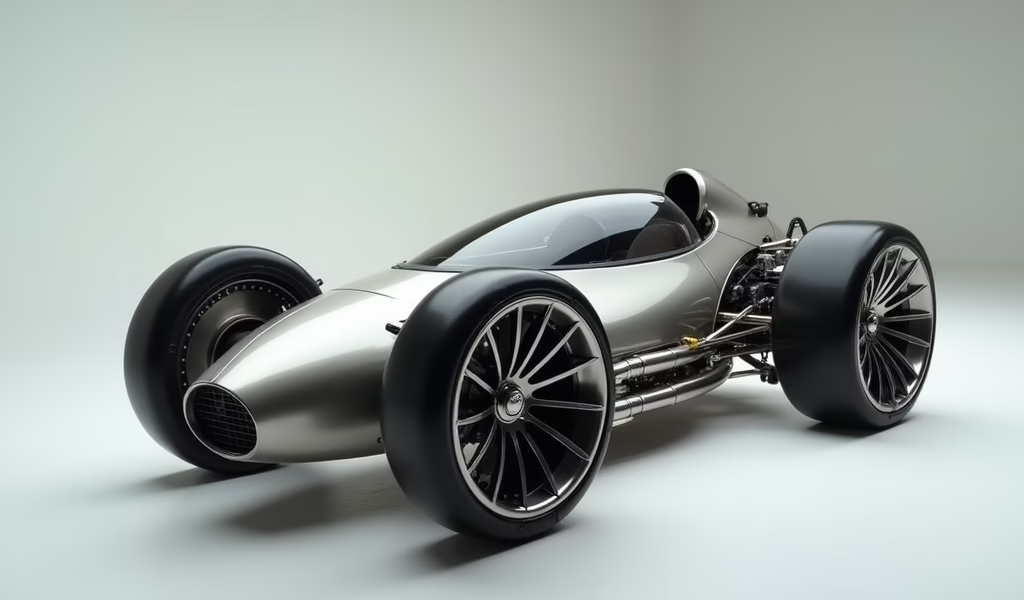
Roll over your competition with knowledge that won’t trap you in mediocrity – this article explores the five best big wheel options for mousetrap cars (CD wheels, vinyl records, wooden wheels, plastic wheels, and foam core) and explains why larger wheels generally improve distance performance through greater circumference and momentum retention. The guide details the unique advantages of each wheel type, provides DIY creation tips, and offers optimization techniques to maximize performance in distance competitions.
Table of Contents
- Understanding Mousetrap Cars: The Basics
- Why Wheel Size Matters in Mousetrap Cars
- Top 5 Big Wheels for Mousetrap Cars
- 1. CD Wheels: The Classic Choice
- 2. Vinyl Records: Vintage Performance
- 3. Wooden Wheels: Customizable Craftsmanship
- 4. Large Plastic Wheels: Lightweight Champions
- 5. Foam Core Wheels: The Balanced Option
- DIY Big Wheel Creation for Mousetrap Cars
- Optimizing Wheel Performance
- Conclusion
- Frequently Asked Questions
Understanding Mousetrap Cars: The Basics
When it comes to mousetrap cars, selecting the right wheels can make the difference between a record-breaking run and a disappointing performance. As someone who’s spent years building and testing these fascinating contraptions, I’ve learned that what are the best big wheels for a mousetrap car depends on several factors including the competition type, track surface, and your specific design goals.
Mousetrap cars operate on a simple principle: the potential energy stored in a mousetrap’s spring converts to kinetic energy when released, propelling the vehicle forward. The wheels are critical in this energy transfer system—they directly impact how efficiently your car uses that stored energy. Big wheels, in particular, offer distinct advantages in distance competitions due to their greater circumference and momentum retention.
Before diving into specific wheel recommendations, it’s worth understanding that mousetrap car competitions typically fall into three categories: distance, speed, or precision. Each category benefits from different wheel characteristics. For distance events, which we’ll focus on in this article, larger wheels generally perform better because they travel further per rotation.
Why Wheel Size Matters in Mousetrap Cars
The physics behind wheel size is fascinating and practical. When comparing two wheels of different diameters rotating at the same angular velocity, the larger wheel covers more ground per rotation. This means that with each turn of the axle, a mousetrap car with bigger wheels travels further than one with smaller wheels—an incredible advantage in distance competitions.
Additionally, larger wheels provide better obstacle clearance. If you’re racing on anything but a perfectly smooth surface, big wheels help your vehicle navigate over small bumps or debris without losing momentum. This quality makes them particularly valuable on real-world surfaces like gymnasium floors or outdoor tracks.
However, there’s an important trade-off to consider. While larger wheels offer greater distance per rotation, they require more torque to get moving initially. This means your mousetrap’s spring must work harder to overcome inertia. Finding the optimal wheel size for performance requires balancing these competing factors—something I’ve spent countless hours experimenting with in my workshop.
Research from physics education journals confirms this relationship. A study published in Science Direct demonstrated that wheel diameter directly correlates with travel distance in simple machines like mousetrap cars, provided sufficient torque is available to initiate movement.
Top 5 Big Wheels for Mousetrap Cars
After years of testing different materials and designs, I’ve identified five outstanding options for big wheels that consistently deliver excellent results in mousetrap car competitions. Each has unique strengths and considerations, which I’ll break down to help you make the best choice for your specific project needs.
These recommendations are based not only on my personal experience but also on feedback from science teachers, competition judges, and fellow enthusiasts who’ve shared their insights over the years. Let’s explore each option in detail.
1. CD Wheels: The Classic Choice
Compact discs have become the go-to material for many mousetrap car builders, and for good reason. These readily available discs measure approximately 4.7 inches (120mm) in diameter, placing them in the sweet spot for many distance competitions. Their standardized size ensures consistency, while their lightweight yet rigid structure offers an excellent power-to-weight ratio.
CDs provide several advantages beyond their ideal size. The center hole fits perfectly on many common axle materials, simplifying construction. Their smooth, flat surface minimizes friction when rotating, and the reflective coating adds a visual appeal that judges and spectators appreciate.
To optimize CD wheels, consider these tips:
- Use rubber bands around the rim to improve traction on smooth surfaces
- Stack two CDs together with adhesive for increased durability
- Add weight to the outer edge using tape or adhesive to increase momentum
- Sand the edges slightly if they appear rough to reduce friction
While CDs work wonderfully in most situations, they can be brittle under extreme stress. I’ve seen many crack during high-torque starts, particularly when used with powerful mousetraps or additional rubber band power. Consider reinforcing them with tape around the edges if you’re pushing the performance envelope.
2. Vinyl Records: Vintage Performance
For those seeking even larger wheel options, vinyl records represent an excellent choice. At approximately 12 inches (305mm) in diameter, these vintage music carriers provide substantial circumference advantages over smaller alternatives. Each rotation covers significantly more distance, making them particularly valuable for long-distance competitions.
Beyond their size, vinyl records offer impressive rigidity while maintaining a reasonable weight. The grooved surface provides natural traction on many surfaces, reducing the need for additional grip materials. Many builders find that 33 RPM records provide the optimal balance of size and weight, though 45s can work well for medium-sized designs.
When working with vinyl records, keep these considerations in mind:
- The center hole typically requires adaptation for standard axles
- Their larger size means greater wind resistance—a factor in outdoor competitions
- The weight may require additional power to overcome initial inertia
- Vintage collectible records can be valuable—use common recordings instead
I’ve personally achieved my greatest distance records using vinyl wheels properly balanced and matched with a strong power system. The key is ensuring your mousetrap mechanism provides sufficient torque to overcome the initial resistance while capitalizing on the momentum these wheels maintain once rolling.
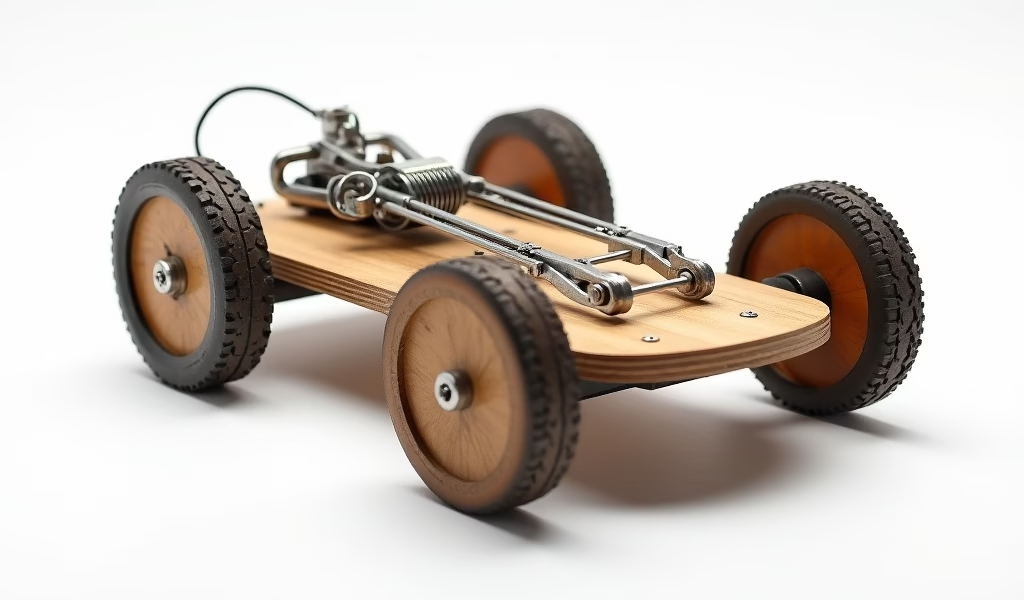
3. Wooden Wheels: Customizable Craftsmanship
For the builder who enjoys working with traditional materials, wooden wheels offer unparalleled customization options. Unlike pre-manufactured alternatives, wooden wheels can be crafted to precise specifications—anywhere from 3 to 12 inches in diameter depending on your needs. This flexibility allows you to fine-tune your design for specific competition requirements.
Woods like balsa provide extreme lightness while maintaining adequate structural integrity. For more durability, hardwoods like birch or maple offer excellent strength-to-weight ratios. The natural grain provides decent traction on most surfaces, though adding a rubber band around the circumference can improve grip when needed.
The craft aspect of wooden wheels brings additional benefits:
- Custom drill the center hole to match your exact axle dimensions
- Shape the profile for reduced air resistance or improved stability
- Apply sealants or finishes to reduce friction and protect the material
- Create wheels with varying thicknesses based on your weight requirements
According to Instructables’ mousetrap car guides, wooden wheels consistently rank among the top performers when properly constructed. The key lies in ensuring they’re perfectly round and balanced—any wobble dramatically reduces efficiency and distance potential.
4. Large Plastic Wheels: Lightweight Champions
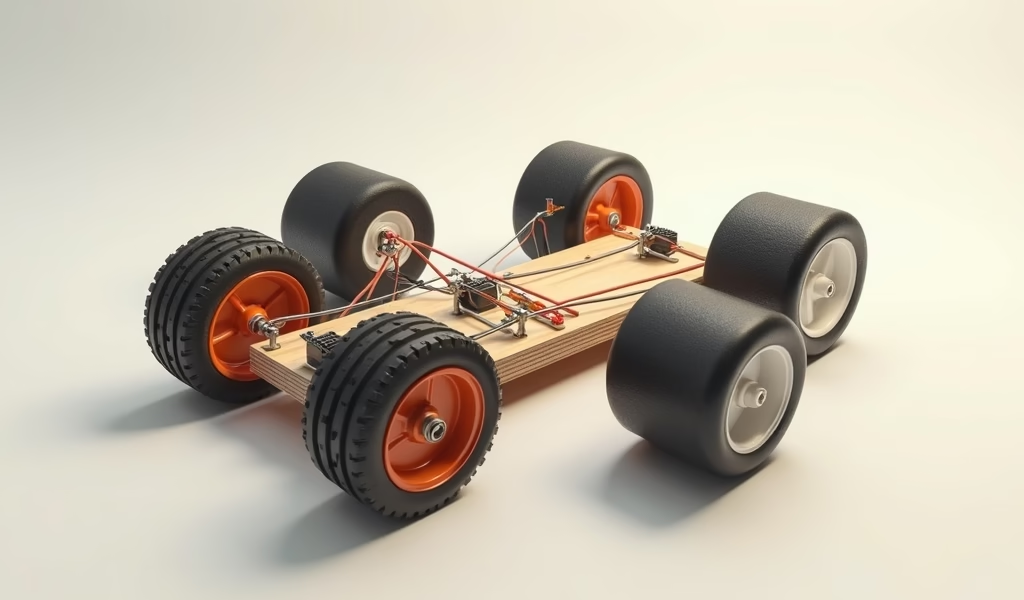
Hobby stores and educational suppliers offer specialized plastic wheels designed specifically for small vehicles like mousetrap cars. These purpose-built components typically range from 3 to 6 inches in diameter and are engineered with performance in mind. Their lightweight construction minimizes inertia concerns while maintaining structural integrity.
The primary advantage of these wheels is their consistent manufacturing quality. Unlike homemade alternatives, commercial plastic wheels are perfectly balanced with precise center holes that minimize wobble and friction. Many come with rubber O-rings or treaded edges that provide excellent traction without modification.
When selecting plastic wheels, consider these factors:
- Look for hollow designs that reduce weight without sacrificing strength
- Choose models with ball bearings when possible for reduced rotational friction
- Consider sets that include bushings to ensure proper fit on axles
- Verify diameter measurements match your design calculations
My experience with K’NEX and similar plastic wheels has been consistently positive, especially in classroom settings where reliability matters. While they may lack the extreme diameter of vinyl records, their optimized design often compensates through reduced friction and consistent performance.
5. Foam Core Wheels: The Balanced Option
Foam core board—that staple of science fair displays—makes an excellent wheel material when properly prepared. By cutting circles from this lightweight yet rigid material, you can create wheels in virtually any diameter from 4 to 10 inches. The foam sandwich construction provides surprising strength while keeping weight to an absolute minimum.
The unique properties of foam core create several advantages for mousetrap car builders:
- Exceptional lightness reduces initial inertia challenges
- The material cuts easily with basic tools for custom sizing
- The semi-rough texture provides natural grip without additions
- The material absorbs minor vibrations, improving ride smoothness
To create effective foam core wheels, I recommend using a compass to mark perfect circles, then cutting with a sharp craft knife. Reinforce the center hole with cardboard or plastic washers to prevent the axle from tearing through the material. For extended durability, apply thin tape around the outer edge to protect against wear.
In my classroom demonstrations, foam core wheels consistently surprise students with their performance. Despite their humble origins, these wheels often outperform more expensive alternatives in distance tests, particularly when the vehicle needs to overcome initial inertia limitations.
DIY Big Wheel Creation for Mousetrap Cars
Beyond the five recommended wheel types, creating custom wheels allows for ultimate performance optimization. The process isn’t complicated but requires attention to detail. Start by determining your ideal diameter based on your car’s design and competition goals—generally between 4-8 inches for most applications.
Materials selection is crucial. Consider alternatives like corrugated plastic (coroplast), thin plywood, or even repurposed container lids. The key characteristics to prioritize are:
- Consistent thickness throughout the material
- Rigidity that prevents flexing under load
- Lightweight composition to minimize inertia challenges
- Durability that withstands multiple runs and testing
The cutting process demands precision. Use a compass to mark perfect circles, then cut carefully with appropriate tools for your material. For most materials, drilling the center hole is best done with a drill press to ensure it’s perfectly centered and perpendicular to the wheel surface. Even minor misalignments can introduce wobble that dramatically reduces efficiency.
Consider creating a simple jig to test wheel roundness and balance. A straight axle through the center should allow the wheel to roll smoothly without wobbling or favoring one side. Take time to sand edges smooth and ensure the wheel runs true before installation.
Optimizing Wheel Performance
Regardless of which big wheel type you select, certain optimization techniques can maximize their performance. First, consider the bearing system. Even the best wheels perform poorly with high-friction axles. Consider using small metal tubes as bushings or investing in miniature ball bearings for critical wheel positions.
Alignment plays a crucial role in efficiency. Ensure wheels run perfectly parallel to each other and perpendicular to the direction of travel. Misaligned wheels create dragging friction that rapidly depletes your energy reserve. Use squares and careful measurements during assembly to verify proper geometry.
Balancing larger wheels becomes increasingly important as diameter grows. Uneven weight distribution causes vibration and energy loss. Test each wheel by placing it on a perfectly horizontal, smooth axle—it should remain stationary in any position rather than rotating to a “heavy” side.
Finally, consider environmental factors. Humidity changes can affect certain materials (particularly wood and foam core), altering their performance characteristics. If possible, build and test under conditions similar to your competition environment for most accurate results.
The TeachEngineering curriculum database offers excellent resources on reducing friction and optimizing wheel performance for science competitions that align perfectly with these recommendations.
Conclusion
When determining what are the best big wheels for a mousetrap car, there isn’t a one-size-fits-all answer. Your specific competition goals, building skills, and available materials should guide your selection process. CD wheels offer accessibility and consistency, vinyl records provide maximum diameter advantage, wooden wheels allow complete customization, plastic wheels deliver reliable performance, and foam core creates an excellent weight-to-strength ratio.
The key to success lies in understanding the fundamental physics at play: larger wheels travel further per rotation but require more initial torque. Finding your optimal balance between these factors through testing and refinement will yield the best results. Remember that wheel selection represents just one component of a successful mousetrap car design—axle friction, weight distribution, and power delivery mechanism all contribute to overall performance.
I encourage you to experiment with different wheel types, perhaps even within the same vehicle design, to determine which works best for your specific application. Document your results carefully, changing only one variable at a time, to build a knowledge base that improves your designs. The scientific process, after all, remains our best tool for engineering success.
Frequently Asked Questions
What diameter is ideal for mousetrap car wheels?
For distance competitions, wheels between 4-8 inches diameter typically offer the best balance of travel distance and torque requirements. Larger wheels (6-8 inches) excel on smooth surfaces when power isn’t limited.
Can I use different sized wheels on front and back?
Yes, many successful designs use larger wheels in the back for drive power and smaller wheels in front for steering stability. This configuration can optimize both acceleration and distance.
How do I prevent wheel wobble in my mousetrap car?
Ensure wheels are perfectly round, center holes are precisely drilled, and axles are straight and properly secured. Use bushings or bearings to maintain consistent wheel alignment during operation.
Are heavier or lighter wheels better for distance?
Lighter wheels require less energy to accelerate but carry less momentum. For maximum distance, moderately lightweight wheels with perimeter-weighted rims typically perform best by balancing these factors.
How can I improve traction on my mousetrap car wheels?
Add rubber bands around the wheel circumference or apply rubber cement in a thin layer on the contact surface. For commercial plastic wheels, look for options with rubber O-rings or textured edges already incorporated.