
Overview
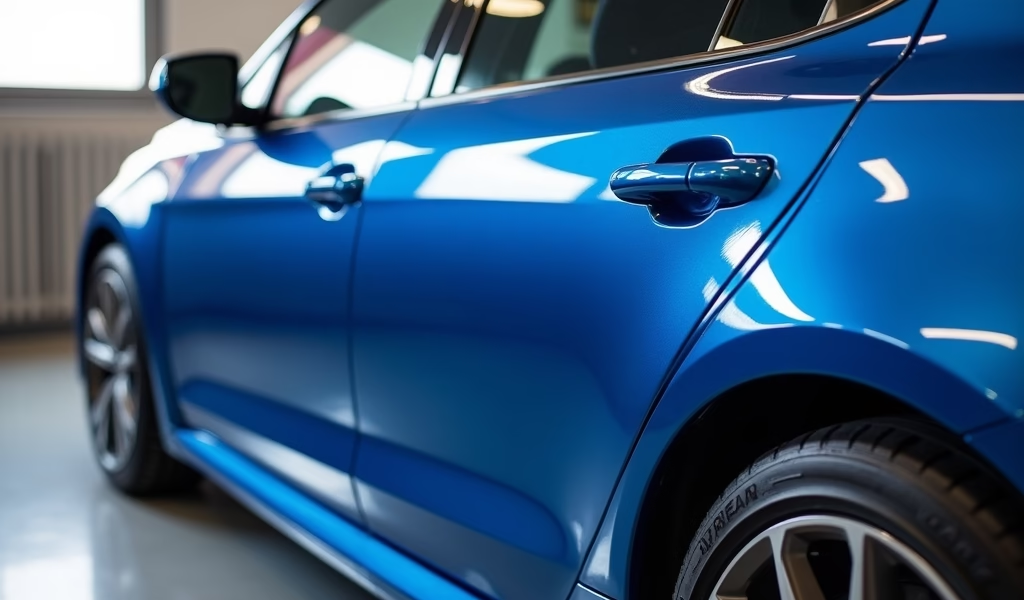
Your car’s clear coat is like that friend who takes a bullet for you but never brags about it—an invisible shield protecting your paint from UV rays, chemicals, and that revenge-seeking pigeon outside the office. Proper maintenance through correct washing techniques, timely scratch repair, appropriate protection products (wax, sealant, or ceramic coating), UV shielding strategies, and professional restoration when needed will extend your clear coat’s life, preserving both your vehicle’s appearance and its value.
Table of Contents
- Understanding Clear Coat: Your Car’s Invisible Shield
- Proper Washing Techniques: The Foundation of Clear Coat Care
- Fixing Minor Clear Coat Scratches: DIY Approach
- Protection Options: Wax, Sealant, or Ceramic Coating?
- UV Protection: Shielding Your Clear Coat from Sun Damage
- Professional Clear Coat Restoration: When DIY Won’t Cut It
- Conclusion: Preserving Your Car’s First Line of Defense
- Frequently Asked Questions
Understanding Clear Coat: Your Car’s Invisible Shield
That glossy shine on your vehicle isn’t just for looks—it’s a crucial protective layer called clear coat. As an automotive technician with 20 years of experience, I can tell you this transparent top coat is your paint’s best friend. It shields the colored base coat from UV rays, road chemicals, bird droppings, and environmental contaminants that would otherwise quickly damage your vehicle’s appearance.
Think of clear coat as your car’s first line of defense. When it fails, your paint becomes vulnerable to fading, oxidation, and peeling. The good news? With proper care and timely intervention, you can maintain this protective layer and keep your car looking showroom-fresh for years.
Clear coat technology has evolved significantly since its widespread adoption in the 1980s. Today’s formulations offer superior protection, but they still require proper maintenance. Let’s explore how to care for this essential but often overlooked component of your vehicle’s finish.
Proper Washing Techniques: The Foundation of Clear Coat Care
The single most important thing you can do to preserve your clear coat is washing your vehicle correctly. Many car owners unknowingly damage their finish with improper washing techniques.
First, forget about dish soap. It strips away protective waxes and can actually accelerate clear coat damage. Instead, use a pH-balanced car wash shampoo specifically designed for automotive finishes. These products effectively clean without harming your protective layers.
For best results, adopt the two-bucket method:
- Fill one bucket with soapy water and another with clean rinse water
- Use a microfiber wash mitt (never sponges or abrasive materials)
- Work from top to bottom, rinsing your mitt in the clean water before reloading with soap
- Dry with a clean microfiber towel or chamois using gentle, straight motions
Washing frequency matters too. In normal conditions, every two weeks is ideal. However, if your vehicle is exposed to harsh elements like road salt, industrial fallout, or tree sap, you’ll want to wash more frequently. These contaminants can etch into your clear coat if left too long—especially bird droppings, which contain acids that begin damaging your finish almost immediately.
The timing of your wash matters as well. Avoid washing in direct sunlight when your car’s surface is hot. The heat will cause the soap and water to dry quickly, leaving water spots and soap residue that can damage your clear coat over time. Early morning or evening washes are best, or find a shaded area to work in.
Fixing Minor Clear Coat Scratches: DIY Approach
Minor clear coat scratches are a fact of life, but they don’t always require professional intervention. The trick is determining whether you’re dealing with a surface-level scratch or something deeper.
Here’s a simple test: run your fingernail over the scratch. If your nail catches in the groove, you’re likely dealing with a deeper scratch that may require professional attention. If not, you can probably handle it yourself with the right products and techniques.
For DIY-friendly clear coat scratches, follow these steps:
- Thoroughly clean and dry the affected area
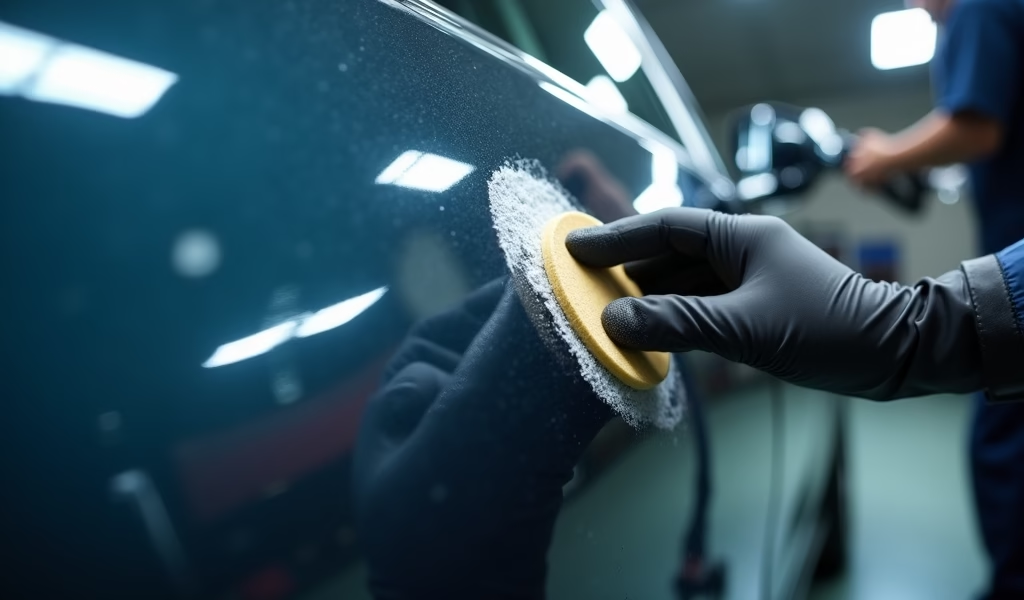
- Apply a small amount of automotive polishing compound to a foam applicator pad
- Work the compound into the scratched area using moderate pressure and overlapping circular motions
- Wipe away residue with a clean microfiber towel and inspect the results
- Follow up with a quality wax or sealant to protect the newly corrected area
For best results, consider products like Meguiar’s Ultra-Finishing Polish for light scratches or 3M Scratch Remover for slightly deeper clear coat imperfections. If you’re working on larger areas, a dual-action polisher can save time and effort, but hand application works fine for small spots.
Remember that polishing removes a microscopic layer of your clear coat to level out the scratch, so don’t overdo it. Each vehicle has a finite amount of clear coat—typically between 1.5-2.0 mils (thousandths of an inch). Excessive polishing can thin this layer too much, potentially causing more problems down the road.
Protection Options: Wax, Sealant, or Ceramic Coating?
Once your clear coat is clean and corrected, protecting it should be your next priority. The market offers three main options, each with distinct advantages and limitations.
Carnauba wax provides that deep, warm shine car enthusiasts love. It’s relatively easy to apply and forgiving of technique, making it perfect for beginners. The downside? Protection typically lasts only 1-2 months, requiring frequent reapplication. Quality carnauba products cost between $15-40 per container.
Synthetic sealants offer a more clinical, reflective finish and significantly longer protection—typically 4-6 months per application. They’re slightly more particular about application conditions but still manageable for most DIYers. Expect to pay $20-60 for a good synthetic sealant.
Ceramic coatings represent the premium option, forming a semi-permanent bond with your clear coat that can last 1-5 years. They offer superior chemical resistance, extreme hydrophobic properties, and enhanced scratch resistance. The trade-off? Professional application can cost $500-1,500, while DIY kits ($50-150) require meticulous preparation and application in controlled environments.
For most drivers, I recommend starting with a quality synthetic sealant like Jescar Power Lock Plus, which offers an excellent balance of protection, durability, and ease of application. Apply it every 4-6 months as part of your regular vehicle maintenance routine.
If you’re particularly dedicated to your vehicle’s appearance or frequently drive in harsh conditions, consider professional ceramic coating. The upfront investment pays dividends through reduced maintenance and superior protection over several years.
UV Protection: Shielding Your Clear Coat from Sun Damage
Ultraviolet radiation is your clear coat’s most persistent enemy. Over time, UV exposure breaks down the chemical bonds in your clear coat, causing it to fade, oxidize, and eventually fail. This damage is cumulative and irreversible without professional intervention.
The most effective UV protection strategy is smart parking habits:
- Whenever possible, park in covered or indoor spaces
- If garage parking isn’t available, seek shaded areas
- When no shade is available, consider using a quality car cover
- For long-term parking, position your vehicle so the most vulnerable surfaces (hood, roof, trunk) face away from direct sunlight
If you regularly park outdoors, invest in a UV-resistant car cover. Look for covers specifically designed for your climate—breathable materials for humid regions or waterproof options for rainy areas. A good car cover costs between $100-300, but this investment can prevent thousands in clear coat restoration down the road.
Some protection products also include UV inhibitors. Many synthetic sealants and all quality ceramic coatings provide UV protection as part of their formula. Even a basic wax offers some UV defense, though it needs more frequent reapplication to maintain effectiveness.
According to research published in Progress in Organic Coatings, vehicles in high-sun regions like Arizona or Florida can experience significant clear coat degradation in as little as 2-3 years without proper protection. Even in moderate climates, unprotected clear coat typically shows noticeable degradation within 5-7 years.
Professional Clear Coat Restoration: When DIY Won’t Cut It
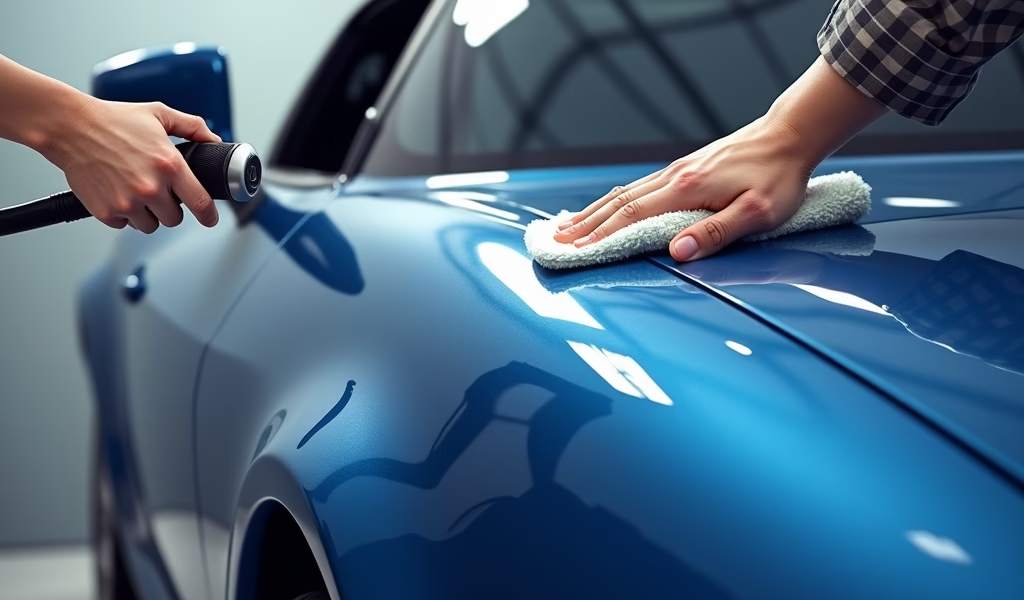
Despite our best efforts, sometimes clear coat damage progresses beyond the point of DIY repair. When you notice widespread haziness, peeling edges, or areas where the clear coat has completely failed, it’s time to consult a professional.
Professional restoration typically follows one of two approaches:
- Spot repair: For isolated damage areas, technicians can blend new clear coat into the existing finish
- Panel or full vehicle respray: For extensive damage, completely stripping and reapplying clear coat may be necessary
Cost expectations vary widely based on damage extent and your location. Spot repairs typically run $200-500 per panel, while full clear coat restoration can cost $1,000-3,000. While this might seem steep, compare it to the $3,000-10,000 price tag for a complete respray or the significant hit to resale value from damaged clear coat.
When selecting a professional, prioritize specialists in clear coat restoration rather than general body shops. Request before/after photos of similar work, check reviews specifically mentioning clear coat repairs, and ensure they offer some warranty on their service. The Detailing Wiki offers guidance on identifying quality restoration services and what questions to ask potential providers.
Remember that even professional restoration requires proper maintenance afterward. Following your technician’s care instructions is crucial to maximizing the lifespan of your restored finish.
Conclusion: Preserving Your Car’s First Line of Defense
Your vehicle’s clear coat may be invisible, but its importance can’t be overstated. This thin layer stands between your paint and everything the environment throws at it. By implementing proper washing techniques, addressing minor damage promptly, applying appropriate protection products, minimizing UV exposure, and knowing when to seek professional help, you can significantly extend its lifespan.
Clear coat care isn’t just about aesthetics—though a well-maintained finish certainly turns heads. It’s about preserving your vehicle’s value and structural integrity. When clear coat fails, the underlying paint becomes vulnerable to moisture intrusion, which can eventually lead to corrosion issues that compromise safety and require costly repairs.
The most successful clear coat maintenance follows a preventative approach rather than a reactive one. Regular care requires minimal time and expense compared to major restoration. By incorporating these five proven tips into your vehicle care routine, you’ll maintain that showroom shine and protect your investment for years to come.
Remember, your car’s appearance is often its first impression. With these techniques in your maintenance arsenal, you’ll keep that impression positive while protecting the vehicle you depend on daily.
Frequently Asked Questions
How can I tell if my clear coat is failing?
Early signs include a hazy or cloudy appearance, white patches, or areas where the finish feels rough instead of smooth. As damage progresses, you’ll notice flaking, peeling edges, or sections where the clear coat has separated from the color coat underneath.
Can I repair clear coat with spray cans?
DIY aerosol clear coat can work for very small areas but rarely matches the quality or durability of professional application. For spots smaller than a quarter, carefully applied aerosol clear coat can provide temporary protection until professional repair is possible.
How often should I wax my car to protect the clear coat?
For traditional carnauba wax, apply every 1-2 months for optimal protection. Synthetic sealants typically require application every 4-6 months, while ceramic coatings can last 1-5 years depending on the product and application quality.
Will clear coat eventually fail no matter what I do?
Even with perfect maintenance, clear coat has a finite lifespan due to UV exposure and environmental factors. However, proper care can extend its life from the typical 5-7 years to 10-15 years or more in moderate climates.
Is it worth fixing clear coat damage before selling my car?
Yes, clear coat repair typically offers a strong return on investment when selling. Vehicles with clear coat damage often face value reductions of $500-2,000 depending on severity, while professional repair usually costs less than this devaluation.