

Overview
Like unwanted souvenirs from your car’s water adventures, those pesky water spots aren’t just eyesores—they’re mineral deposits that can actually etch into your paint if left untreated. This guide presents five effective removal methods (vinegar solution, clay bar treatment, commercial removers, polishing compound, and baking soda paste), along with prevention strategies to keep your car’s finish spotless and protected.
Table of Contents
- Understanding Water Marks on Cars
- Quick Fix #1: Vinegar Solution
- Quick Fix #2: Clay Bar Treatment
- Quick Fix #3: Commercial Water Spot Removers
- Quick Fix #4: Polishing Compound
- Quick Fix #5: DIY Baking Soda Paste
- Prevention Tips for Water Marks
- Conclusion
- Frequently Asked Questions
Water marks on your car’s paintwork aren’t just unsightly—they can actually damage your vehicle’s finish if left untreated. Those innocent-looking spots form when mineral-laden water evaporates, leaving behind deposits that can etch into your clear coat over time. After 20 years working with vehicles, I’ve seen how these seemingly minor blemishes can lead to costly paint corrections when ignored.
The good news? You don’t need professional equipment or expensive services to tackle these stubborn spots. I’ll walk you through five proven methods that can restore your car’s shine using products you likely already have at home or can easily purchase.
Understanding Water Marks on Cars
Before we dive into solutions, let’s get clear on what we’re dealing with. Water marks typically fall into three categories:
- Hard water spots: Caused by tap water containing calcium, magnesium, and other minerals that leave deposits as the water dries
- Rain spots: Even rainwater contains airborne contaminants that can leave residue behind
- Mineral deposits: The most stubborn type that forms over time, chemically bonding to your clear coat
The science behind these spots is pretty simple. When water evaporates, it leaves behind whatever minerals or contaminants it contained. Think of it like making coffee—when the water evaporates, the coffee residue remains. On your car, these mineral deposits can actually act like tiny magnifying glasses, intensifying UV damage and potentially etching into your paint.
Regular washing alone often isn’t enough because once these minerals bond to your paint, they need specific treatment. And here’s the kicker—the longer they sit, the harder they become to remove. That’s why it’s crucial to detail your car regularly rather than waiting until problems become visible.
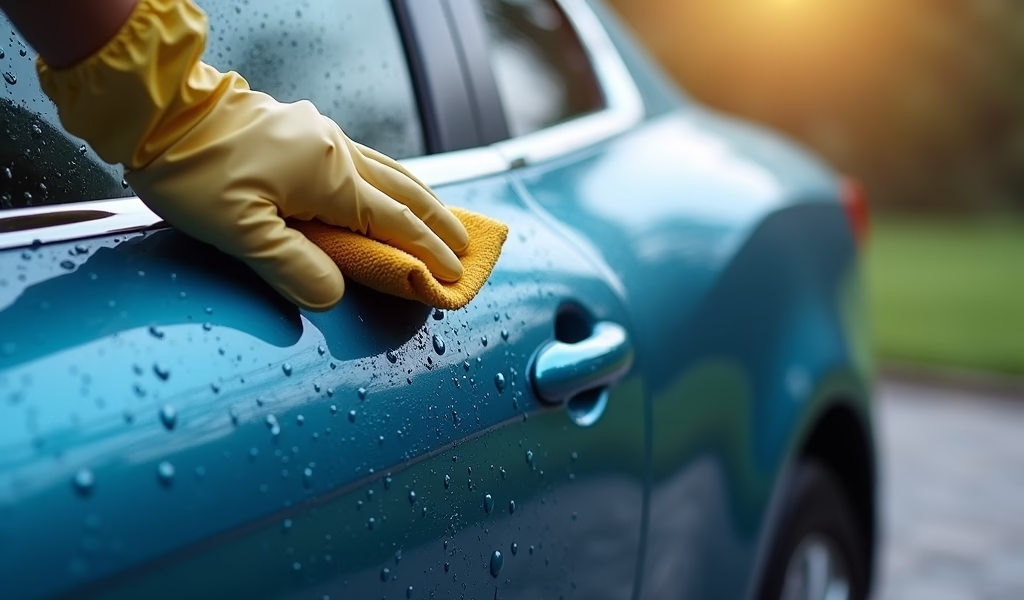
Quick Fix #1: Vinegar Solution
When it comes to fresh water spots, sometimes your pantry holds the perfect solution. Vinegar’s acidic properties make it remarkably effective against alkaline mineral deposits without damaging your paint (when used correctly).
Here’s what you’ll need:
- Distilled white vinegar
- Warm water
- Spray bottle
- Microfiber towels
Follow these steps for best results:
- Mix equal parts distilled white vinegar and warm water in a spray bottle
- Spray directly onto the affected areas (work in the shade, not direct sunlight)
- Let it sit for 1-2 minutes—don’t let it dry!
- Gently wipe with a microfiber towel using circular motions
- Rinse thoroughly with clean water and dry immediately
This method works wonders on light water spots, particularly those that haven’t had time to fully etch into your clear coat. The vinegar’s acidity neutralizes alkaline mineral deposits, breaking their bond with your paint.
Word of caution: never leave vinegar solution sitting on your paint for extended periods. It’s effective but should be used with care. I’ve seen folks go overboard and end up with dull spots because they let the vinegar sit too long. Just like cooking—timing matters!
Quick Fix #2: Clay Bar Treatment
When vinegar doesn’t cut it, a clay bar treatment might be your next best move. Clay bars are like magic erasers for your car’s paint—they safely pull embedded contaminants from your paintwork through gentle abrasion.
For this method, you’ll need:
- Automotive clay bar
- Clay lubricant or detailing spray
- Clean microfiber towels
- Wax or sealant for after-treatment
Here’s the process I follow:
- Wash and dry your car thoroughly first
- Spray lubricant generously on a small section (about 2×2 feet)
- Gently glide the clay bar back and forth using light pressure
- When the surface feels smooth and you meet less resistance, that section is clean
- Wipe away residue with a clean microfiber towel
- Apply wax or sealant afterward to protect your freshly cleaned surface
Clay bars work by capturing contaminants that washing alone can’t remove. It’s like how a pencil eraser picks up graphite—the clay grabs onto the mineral deposits and lifts them away from your paint surface.
One critical mistake to avoid: never drop your clay bar on the ground! Once contaminated with grit or dirt, it can scratch your paint. If you drop it, toss it and start with a fresh piece. Consider it cheap insurance against expensive paint correction down the road.
Consumer Reports studies have shown clay bar treatments to be among the most effective non-abrasive methods for removing stubborn contaminants from automotive paint.
Quick Fix #3: Commercial Water Spot Removers
Sometimes you need specialized tools for specialized problems. When DIY solutions fall short, commercial water spot removers offer formulations specifically designed to dissolve and remove mineral deposits without damaging your paint.
Some top-performing products include:
- CarPro Spotless Water Spot Remover
- Meguiar’s Water Spot Remover
- Chemical Guys Water Spot Remover
Application is straightforward but should be done with care:
- Ensure your vehicle’s surface is cool and out of direct sunlight
- Apply the product according to manufacturer directions
- Let it dwell for the recommended time (usually 1-3 minutes)
- Wipe off with a clean microfiber towel using medium pressure
- Buff to a shine with a separate dry towel
What sets commercial removers apart is their pH-balanced formulations designed to dissolve mineral deposits while preserving your clear coat. Many contain surfactants that break the bond between the minerals and your paint, coupled with lubricants that prevent scratching during removal.
These products typically cost between $10-25 but can save hundreds in potential paint correction. I consider them essential for any vehicle maintenance kit, especially if you live in areas with hard water or frequent rain.
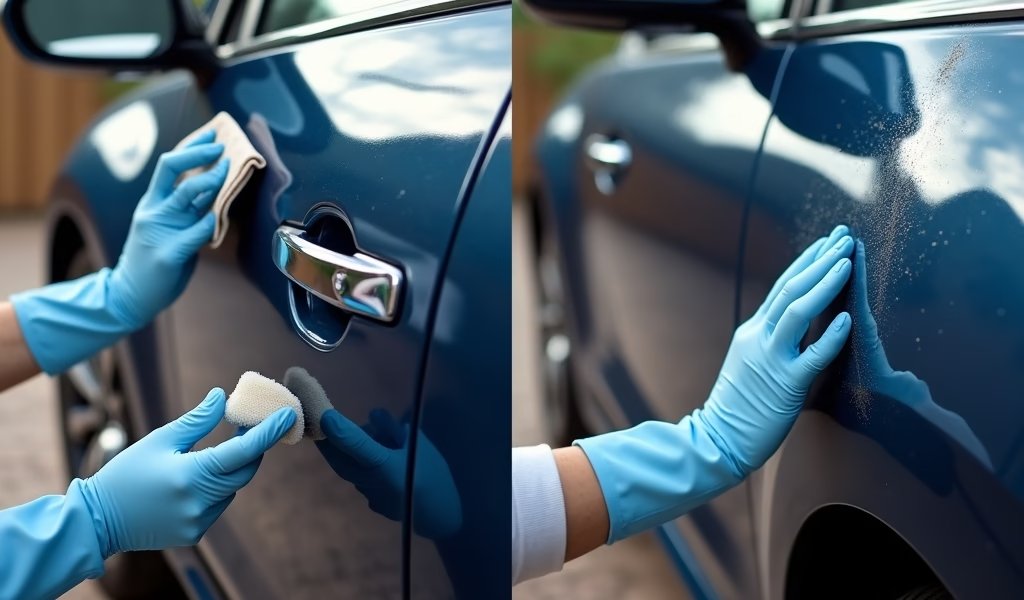
Quick Fix #4: Polishing Compound
When water spots have etched into your clear coat, it’s time for the heavy artillery: polishing compound. This method is more aggressive and should be your go-to for stubborn spots that resist other treatments.
Here’s what you’ll need:
- Automotive polishing compound (medium to fine grade)
- Applicator pad or dual-action polisher
- Microfiber towels
- Car wax (for after-treatment)
Follow this technique for best results:
- Wash and thoroughly dry the affected area
- Apply a small amount of polish to your applicator pad or polisher
- Work in small 2×2 foot sections using overlapping circular motions
- Apply medium pressure initially, then lighter pressure as you finish
- Wipe away residue with a clean microfiber towel
- Apply car wax to restore protection
Polishing works by removing a microscopic layer of your clear coat—essentially leveling the surface to eliminate the etched spots. It’s similar to sanding a rough piece of wood; you’re physically removing the damaged area to reveal the smooth surface underneath.
A word of caution: polishing removes material from your clear coat, so don’t overdo it. Think of your clear coat as having a limited number of “lives”—each polishing session uses one up. For most modern vehicles, you’ll have plenty to spare, but excessive polishing can eventually thin your clear coat. Use this method judiciously and follow with a quality wax to restore protection.
According to NHTSA guidelines, maintaining proper visibility through clean windows and preserved paint is actually considered a safety issue as well as an aesthetic one.
Quick Fix #5: DIY Baking Soda Paste
For those who prefer gentle, household solutions, a baking soda paste offers an effective middle ground between vinegar and commercial products. The mild abrasiveness makes it perfect for light to moderate water spots without risking damage to your paint.
Here’s a simple recipe:
- 3 tablespoons baking soda
- 1 tablespoon water
- Mix to form a toothpaste-like consistency
Application method:
- Dampen the affected surface with clean water
- Apply the paste with a soft, damp cloth in circular motions
- Use gentle pressure—let the paste do the work
- Rinse thoroughly and dry completely
- Apply wax to protect the surface
Baking soda works through mild mechanical abrasion combined with a slightly alkaline pH that helps neutralize acidic deposits. It’s like using a soft-bristled toothbrush instead of a wire brush—effective but gentle.
This method shines for spot treatments and smaller areas. While it requires a bit more elbow grease than commercial products, it gives you precise control over the cleaning process. I’ve found it particularly effective on windshield water spots where you want to avoid harsh chemicals near rubber seals and trim pieces.
Prevention Tips for Water Marks
As any experienced mechanic will tell you, prevention trumps correction every time. Incorporating these habits can dramatically reduce water spot formation:
Regular Protection
Apply a quality car wax or sealant every 2-3 months. This creates a hydrophobic barrier that causes water to bead up and roll off rather than sitting and evaporating on your paint. Think of it as an umbrella for your paint—the water never gets a chance to leave its mark.
Ceramic coatings offer even longer-lasting protection (1-5 years) and exceptional water repellency. They’re pricier up front but provide superior long-term defense against water spots and other contaminants.
Drying Techniques
Never let your car air-dry after washing or rain. Keep microfiber drying towels in your trunk for unexpected showers. Those few minutes spent drying can save hours of spot removal later.
When washing at home, consider using a blower or compressed air for hard-to-reach areas like grilles, mirrors, and between panels where water likes to hide and emerge later.
Water Quality Management
If you wash at home, consider investing in a water filtration system or deionizer attachment for your hose. These remove minerals before they hit your paint. For under $100, you can eliminate a major source of water spots.
For the budget-conscious, a final rinse with distilled water can prevent mineral deposits. It’s an extra step that pays dividends in preserved finish.
Making these practices part of your essential car maintenance routine will keep water spots from forming in the first place. As we say in the shop, “An ounce of prevention saves hours of correction.”
Conclusion
Water marks may seem like a minor nuisance, but they can seriously impact your vehicle’s appearance and value when left untreated. The good news is that with these five proven methods, you have options for every situation—from light spots to stubborn etched-in mineral deposits.
For fresh spots, start with the gentler approaches like vinegar solution or baking soda paste. Moderate spots typically respond well to clay bar treatments or commercial removers. When facing deeply etched spots, polishing compound provides the necessary firepower to restore your finish.
Remember that consistent maintenance is your best defense. Regular washing with proper drying, periodic waxing, and protective coatings create a shield against water spots before they can form. These habits don’t just preserve your car’s appearance—they protect your investment.
With these techniques in your arsenal, you’re well-equipped to keep your vehicle looking its best, regardless of what the weather throws at it. After all, a clean, well-maintained car isn’t just about appearances—it’s about preserving value and taking pride in what you drive.
Frequently Asked Questions
Can water spots permanently damage car paint?
Yes, if left untreated for extended periods, the minerals in water spots can etch into your clear coat and cause permanent damage. Early treatment is always the best approach.
How often should I wax my car to prevent water spots?
Apply a quality wax every 2-3 months for optimal protection against water spots. If you live in areas with hard water or frequent rain, consider waxing more frequently.
Will regular car soap remove water spots?
Regular car soap typically won’t remove established water spots. It’s effective for preventing new spots when used properly but lacks the chemistry to break down existing mineral deposits.
Can I use WD-40 to remove water spots?
While WD-40 can temporarily remove water spots, it’s not recommended for car paint as it doesn’t address the mineral deposits and can leave its own residue. Stick to automotive-specific products for lasting results.
Why do water spots appear worse on black or dark-colored cars?
Dark-colored cars show water spots more prominently because the white/gray mineral deposits create stronger visual contrast against dark surfaces. The spots aren’t actually worse—they’re just more visible.