
Overview
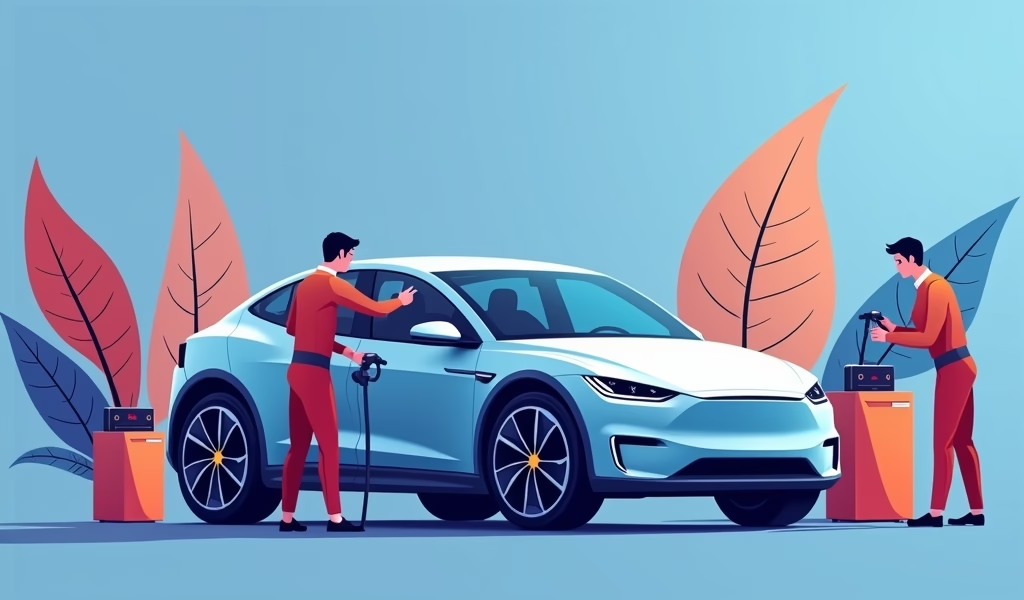
Electric vehicles require less maintenance than gas cars but still need attention in seven key areas: battery care (keep it 20-80%), tire maintenance (they wear faster due to EV weight), brake systems (they last longer but need different care), cooling systems, software updates, cabin climate systems, and professional inspections. While you’ll never again experience the joy of paying $75 for someone to drain and replace a smelly fluid from your car, proper EV maintenance focuses on monitoring systems rather than replacing worn components, ultimately saving money while maximizing performance, range, and resale value.
Table of Contents
- Introduction
- Battery Care and Monitoring: Your EV’s Lifeline
- Tire Maintenance: More Critical Than You Think
- Brake System: Less Wear, Different Care
- Cooling System: Keeping Your EV’s Temperature Just Right
- Software Updates: Your Car Needs Them Too
- Cabin Air and Climate Systems: Comfort vs. Range
- Professional Inspections: When to Call in the Experts
- Conclusion: Simpler Maintenance for a Smarter Ride
- Frequently Asked Questions
Introduction
The electric vehicle landscape is changing fast, with global sales jumping 40% in 2023 alone. As a certified EV technician who’s worked on everything from Teslas to Nissan Leafs, I’ve seen firsthand how drivers new to the electric world are often unsure about maintenance needs.
Here’s the good news – your new EV requires significantly less maintenance than traditional combustion vehicles. No more oil changes, spark plugs, or timing belts to worry about. The simplified drivetrain of an electric vehicle eliminates dozens of potential failure points.
But different doesn’t mean zero. Electric vehicles still need regular care, just in different areas. This guide covers the seven essential maintenance areas every EV owner should understand to maximize battery life, performance, and resale value.
Battery Care and Monitoring: Your EV’s Lifeline
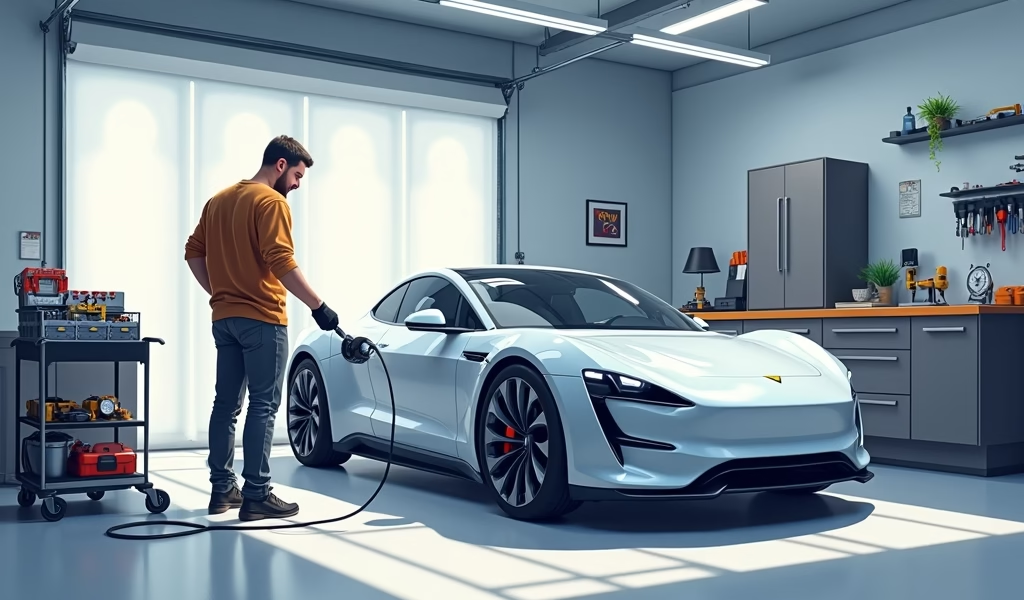
Your battery pack is the most valuable component in your electric car, often representing 30-40% of the vehicle’s total cost. Proper care can extend its life by years.
Modern EVs come equipped with sophisticated battery management systems that monitor cell health, temperature, and charging status. Take time to understand your specific vehicle’s monitoring tools through the dashboard display or companion app.
For everyday charging, aim to keep your battery between 20-80% capacity. This “Goldilocks zone” reduces stress on the cells and extends overall battery life. According to Battery University research, regularly charging to 100% or depleting below 20% accelerates capacity loss over time.
When it comes to charging speeds, slower is generally better for battery health. Level 2 home charging (240V) offers the optimal balance between convenience and battery preservation. While DC fast charging is perfect for road trips, using it daily can increase battery degradation rates by up to 10-15% over five years.
Temperature management matters too. Extreme heat and cold are your battery’s enemies. When possible:
- Park in shaded areas during summer months
- Use a garage during winter when available
- Precondition the battery before driving in extreme temperatures
- Allow the battery to cool down after fast charging before driving again
Tire Maintenance: More Critical Than You Think
Electric vehicles put unique demands on tires due to their instant torque and heavier weight. I’ve seen countless EV owners surprised by faster tire wear compared to their previous gas vehicles.
The additional weight from battery packs (often 800-1,000 pounds more than comparable gas cars) creates more friction and road contact. Meanwhile, the instant torque delivery causes increased wear on the tread.
Rotate your tires every 6,000-8,000 miles or as recommended by your manufacturer. Some EVs have staggered tire setups (different sizes front/rear), which limits rotation patterns – check your owner’s manual for specifics.
Proper inflation is even more critical for electric cars. Underinflated tires can reduce your range by 3-5% due to increased rolling resistance. Many EVs recommend higher tire pressures than conventional cars – don’t be surprised to see recommendations of 42-45 PSI versus the 32-35 PSI you might be accustomed to.
When replacement time comes, consider tires specifically designed for electric vehicles. These specialized tires typically offer:
- Lower rolling resistance for better efficiency and range
- Reinforced sidewalls to handle the additional weight
- Noise reduction technology (important since EVs are quieter overall)
- Tread patterns designed to handle higher torque loads
Brake System: Less Wear, Different Care
Here’s where owning an electric car becomes truly advantageous. Thanks to regenerative braking, your mechanical brakes will likely last two to three times longer than in a conventional vehicle.
Regenerative braking uses the electric motor to slow the car, converting kinetic energy back into electricity to recharge the battery. This means your friction brakes engage far less frequently – particularly if you’ve mastered the art of one-pedal driving that many EVs offer.
However, this reduced use creates a different maintenance challenge. Brake components that sit unused for long periods can develop surface rust and, in extreme cases, the calipers can even seize. To prevent this:
- Occasionally drive using minimal regenerative braking (if your vehicle allows adjustment)
- Apply firmer brake pressure during the last few feet when stopping, engaging the friction brakes
- Listen for unusual noises like grinding or squealing, which might indicate corrosion issues
Brake fluid still requires regular changes, typically every 2-3 years, regardless of mileage. Brake fluid is hygroscopic, meaning it absorbs moisture from the air over time. This happens even with minimal brake use and can lead to reduced braking effectiveness and component corrosion.
Have your brake system inspected annually by a technician familiar with EVs. They’ll check for caliper movement, pad thickness, rotor condition, and signs of corrosion that might not be obvious during regular driving.
Cooling System: Keeping Your EV’s Temperature Just Right
Electric vehicles may not have radiators in the traditional sense, but they employ sophisticated cooling systems to regulate battery and motor temperatures. This is crucial for both performance and longevity.
Most modern EVs use liquid cooling that circulates through the battery pack, motors, and power electronics. While these systems are generally sealed and maintenance-free for several years, they’re not immune to issues.
Check coolant levels according to your manufacturer’s schedule – typically every 2-3 years. Unlike conventional cars, many EVs use specialized coolants with specific electrical properties and corrosion inhibitors designed for battery protection.
Warning signs of cooling system issues include:
- Reduced power output, especially during hot weather or fast charging
- Battery temperature warnings on your dashboard
- Decreased range without other obvious causes
- Unusual noises from the cooling pump or fans
Some EVs have separate cooling circuits for the battery and power electronics, while others use a unified system. Understand which type your vehicle employs, as service procedures differ significantly.
Never attempt to open or service high-voltage cooling components yourself – these systems operate at dangerous voltage levels and require specialized training and equipment. Always consult an EV-certified technician for cooling system service.
Software Updates: Your Car Needs Them Too
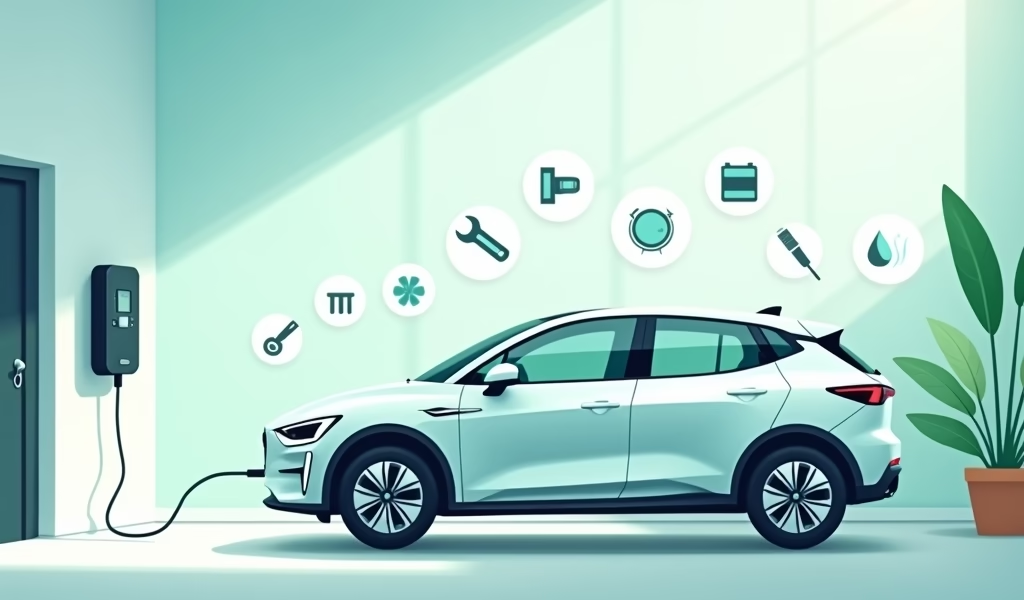
One of the most overlooked maintenance items for electric vehicles is also one of the simplest: keeping your car’s software current. Your EV has more computing power than the space shuttles that went to the moon, and those systems need regular updates.
Software updates can improve efficiency, fix bugs, add features, and even increase range by optimizing how the vehicle uses power. I’ve seen vehicles gain 5-10% more range through nothing more than a software update that improved power management algorithms.
Most EVs receive updates in one of two ways:
- Over-the-air (OTA) updates that download automatically when connected to WiFi
- Dealer-installed updates that require a service appointment
If your vehicle offers OTA updates, ensure it regularly connects to a strong WiFi network, particularly if you park in a garage or carport with potentially weak signal. Some manufacturers recommend connecting to WiFi at least once weekly to check for available updates.
For vehicles requiring dealer updates, stay informed through your manufacturer’s app or customer portal. Many brands now send push notifications when important updates become available.
Before installing updates, especially major ones that might take 30-60 minutes, make sure your vehicle is plugged in and has adequate charge. Some updates can drain the 12V battery if performed without being connected to power.
Cabin Air and Climate Systems: Comfort vs. Range
Your comfort systems affect more than just how pleasant your drive is – they directly impact your vehicle’s range. Heating and cooling can reduce driving range by up to 30% in extreme temperatures.
Start with the basics: replace your cabin air filter according to the maintenance schedule, typically every 12-24 months. A clogged filter forces the climate system to work harder, consuming more precious battery power.
To maximize efficiency while staying comfortable:
- Use seat heaters and steering wheel heaters instead of cabin heat when possible (they use far less energy)
- Pre-condition the cabin while still plugged in to grid power
- Use the “Eco” climate setting many EVs offer, which balances comfort and efficiency
- Consider using the recirculation setting to maintain temperature once the cabin is comfortable
Many new EV owners don’t realize that heat pumps, available in some electric models, are significantly more efficient than resistive heaters. If you live in a cold climate and are shopping for an EV, prioritize models with heat pump technology. According to Department of Energy research, heat pumps can be 3-4 times more efficient than resistive heating.
When driving an electric car in extreme weather, plan for reduced range. Adjust your charging strategy and route planning accordingly, especially for longer trips during winter months.
Professional Inspections: When to Call in the Experts
While EVs require less maintenance overall, they still benefit from professional attention. Annual inspections by qualified technicians can catch potential issues before they become serious problems.
When selecting a service provider, ensure they have specific EV training and certification. Working on electric vehicles requires understanding high-voltage safety protocols and specialized diagnostic equipment. Your neighborhood quick-lube shop likely isn’t equipped for proper EV service.
A comprehensive annual inspection should include:
- Battery health analysis and cell balancing check
- Cooling system pressure testing and fluid analysis
- High-voltage system insulation testing
- 12V battery condition assessment (yes, EVs still have a 12V battery!)
- Suspension components and alignment verification
- Brake system inspection, including caliper movement
- Software update verification
Keep detailed maintenance records, preferably digital ones backed up to cloud storage. These records are crucial for warranty claims and significantly impact resale value. Most manufacturers require documentation of proper maintenance to honor battery warranty claims, which can represent thousands of dollars in potential repair costs.
Establish a relationship with a service center that specializes in your specific EV brand. The learning curve for technicians varies considerably between manufacturers, and brand-specific experience matters when diagnosing complex issues.
Conclusion: Simpler Maintenance for a Smarter Ride
Maintaining an electric vehicle might seem foreign at first, but it’s actually more straightforward than conventional car care once you understand the differences. With fewer moving parts, no oil changes, and regenerative braking, your maintenance schedule becomes more about monitoring systems than replacing worn components.
By focusing on these seven key areas, you’ll maximize your EV’s performance, range, and resale value while minimizing unexpected issues. The upfront time investment to understand these systems pays dividends in reduced maintenance costs and improved vehicle longevity.
The transition to electric driving represents more than just a change in fuel – it’s a different relationship with your vehicle. As EV technology continues to evolve, staying informed about best practices ensures you’ll get the most from your investment.
If you’re still deciding whether an electric car makes sense for your lifestyle, these simplified maintenance requirements might just tip the scales in favor of going electric. After all, spending less time at repair shops and more time enjoying the road is something every driver can appreciate.
Frequently Asked Questions
How often do electric cars need maintenance?
Electric cars typically require service every 12 months or 12,000-15,000 miles, primarily focusing on tire rotation, brake inspection, and cabin filter replacement. This is significantly less frequent than the 3-month/3,000-mile interval many gas vehicle owners are accustomed to following.
Do electric cars need oil changes?
No, electric cars don’t need oil changes since they don’t have internal combustion engines with moving parts requiring lubrication. The electric motor and battery systems operate without engine oil.
How long do EV batteries typically last?
Most modern EV batteries are designed to last 10-15 years or 100,000-200,000 miles before degrading to approximately 70-80% of their original capacity. Proper charging habits and temperature management can significantly extend battery lifespan.
Are electric cars more expensive to maintain than gas cars?
Electric cars are typically 30-50% less expensive to maintain over their lifetime compared to gas vehicles. The savings come from eliminating oil changes, transmission service, spark plugs, timing belts, and exhaust system repairs.
What’s the most common maintenance issue with electric vehicles?
Tire wear is the most common maintenance issue with electric vehicles due to their heavier weight and instant torque delivery. Many EV owners report replacing tires 20-30% more frequently than they did with comparable gas vehicles.