

Overview
Tire pressure monitor apps work with sensors to provide real-time information about tire pressure and temperature, helping drivers prevent blowouts, extend tire life, and improve fuel economy. These apps range from simple monitoring tools to sophisticated systems with predictive capabilities, offering an accessible safety upgrade that transforms smartphones into valuable diagnostic tools for proper tire maintenance.
Table of Contents
- Understanding Tire Pressure: Why It Matters
- What Are Tire Pressure Monitor Apps?
- How Tire Pressure Monitor Apps Work
- Benefits of Using Tire Pressure Monitor Apps
- Top Tire Pressure Monitor Apps Worth Downloading
- How to Select the Right TPMS App for Your Needs
- Installation and Setup Guide
- Common Issues and Troubleshooting Tips
- The Future of Tire Pressure Monitoring Technology
- Conclusion
- Frequently Asked Questions
Understanding Tire Pressure: Why It Matters
When it comes to vehicle safety, tire pressure might not be the first thing that comes to mind, but it should definitely be near the top of your list. As a mechanic who’s seen countless preventable blowouts, I can tell you that maintaining proper tire pressure is one of the simplest yet most effective ways to ensure your safety on the road.
Underinflated tires don’t just wear out faster—they’re dangerous. When a tire doesn’t have enough air, its sidewalls flex more than they should, generating excessive heat. This heat build-up weakens the tire structure over time, potentially leading to a sudden and catastrophic blowout. On the flip side, overinflated tires reduce your contact patch with the road, decreasing traction and making your ride harsher.
Even a tire that’s just 10% underinflated can reduce its lifespan by up to 15%. And according to the National Highway Traffic Safety Administration, improper tire pressure contributes to thousands of accidents annually. It’s not just about safety, either—properly inflated tires can improve your fuel economy by up to 3%, which adds up to significant savings over time.
The challenge? Tire pressure fluctuates constantly. For every 10°F change in temperature, your tire pressure changes by about 1 PSI. Add in the natural air loss that occurs (about 1-2 PSI per month) and the occasional nail or screw in your tire, and you’ve got a recipe for potentially dangerous pressure levels if you’re not vigilant.
This is exactly why tire pressure monitor apps have become such valuable tools for today’s drivers—they take the guesswork out of tire maintenance and give you real-time information about one of your vehicle’s most critical safety components.
What Are Tire Pressure Monitor Apps?
Tire pressure monitor apps (TPMS apps) are smartphone applications designed to work with special sensors that monitor the pressure and sometimes temperature of your tires in real-time. Think of them as the modern evolution of those pocket tire pressure gauges that used to be a staple in every glove compartment—except these are much more advanced and convenient.
Unlike the factory-installed TPMS systems that have been mandatory in new vehicles since 2007 (which typically only alert you when pressure is dangerously low), aftermarket TPMS apps provide detailed, specific pressure readings for each tire. Many also track temperature, another crucial factor in predicting potential tire issues before they become dangerous.
Most tire pressure monitor apps work with external sensors that attach directly to your tire valve stems or mount inside the tire. These sensors continuously measure the pressure and transmit this data via Bluetooth or other wireless technologies to your smartphone. The app then displays this information in an easy-to-understand format, often with color-coded warnings when pressures fall outside your preset safe ranges.
The beauty of these apps is that they transform your smartphone into a sophisticated tire monitoring system that would have cost hundreds or even thousands of dollars just a few years ago. Now, for the price of a couple of tire rotations, you can have constant awareness of your tire conditions whether you’re driving a brand new luxury SUV or a twenty-year-old economy car.
How Tire Pressure Monitor Apps Work
Under the hood, tire pressure monitor apps rely on a fascinating blend of hardware and software that work together to keep you informed about your tire condition. Let’s break down this technology in simple terms.
Most aftermarket TPMS setups involve three key components: sensors, a receiver or gateway, and your smartphone running the app. The sensors are small devices that either replace your existing valve stem caps or mount inside your tires. These sensors contain pressure gauges, temperature monitors, and tiny radio transmitters.
The external cap-style sensors are easier to install—you simply screw them onto your valve stems like regular caps. Internal sensors offer more accuracy and are less prone to theft or damage, but require professional installation during tire mounting or replacement.
As you drive, these sensors constantly measure the air pressure inside each tire. Most systems take readings every few seconds while in motion, and at less frequent intervals when the vehicle is parked to conserve battery life. The sensors transmit this data using low-energy Bluetooth, RF signals, or other wireless protocols.
Some simpler systems send this data directly to your smartphone, while more advanced setups use a gateway device (usually plugged into your OBD-II port or powered by your car’s 12V outlet) that receives signals from the sensors and relays them to your phone. This gateway approach generally provides better range and more reliable connections.
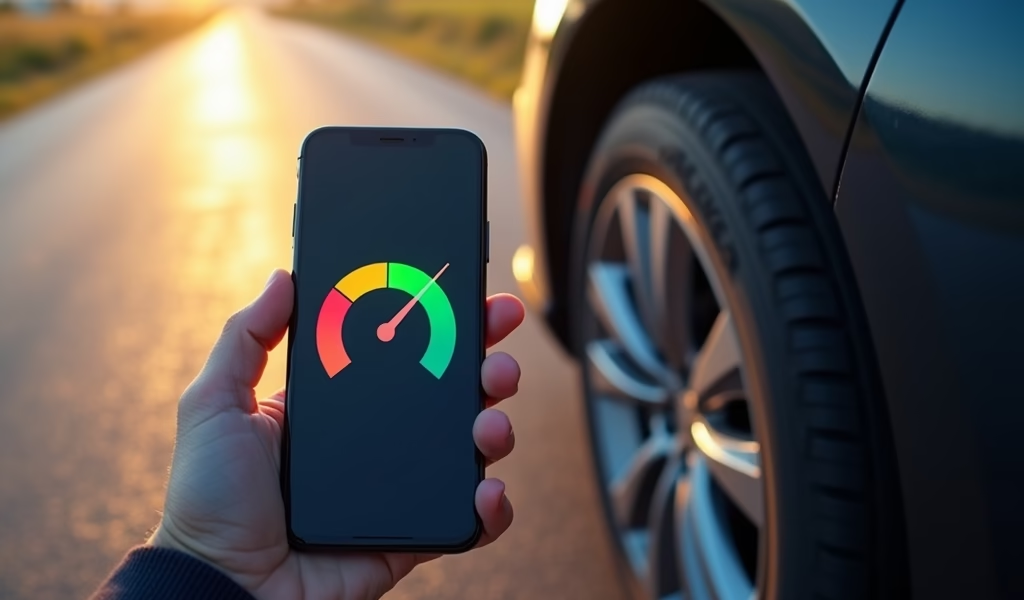
The smartphone app ties everything together, translating raw pressure and temperature data into useful information. Good TPMS apps don’t just display numbers—they interpret this data, alerting you to potential problems through color-coded warnings, push notifications, and sometimes even audible alarms when pressure drops below safe levels.
Advanced apps go beyond simple monitoring. They might track pressure changes over time, predict leaks before they become dangerous, estimate how tire pressure is affecting your fuel economy, or even integrate with navigation apps to help you find the nearest service station if you need to add air.
Benefits of Using Tire Pressure Monitor Apps
After 15 years working on vehicles, I’ve seen firsthand how proper tire maintenance can make a world of difference. Tire pressure monitor apps offer several concrete benefits that can save you money, time, and potentially your life.
First and foremost is the enhanced safety factor. Blowouts don’t usually happen without warning—they’re typically the culmination of sustained underinflation or overheating. TPMS apps detect these warning signs early, giving you time to address the issue before catastrophic failure occurs. This early warning system is particularly valuable during long road trips or when carrying heavy loads, situations where tire stress is already elevated.
From an economic standpoint, properly inflated tires last significantly longer. The U.S. Department of Energy estimates that proper inflation can extend tire life by 4,700 miles on average. When you consider that a set of quality tires can easily cost $600-1,000, extending their life by 15-20% represents considerable savings.
Fuel economy improvements are another tangible benefit. Underinflated tires create more rolling resistance, forcing your engine to work harder and burn more fuel. Even a modest improvement of 1-2 mpg adds up to hundreds of dollars annually for the average driver.
Beyond the financial benefits, TPMS apps offer peace of mind. There’s something reassuring about glancing at your phone and seeing four green indicators confirming your tires are in good shape before setting off on a family vacation or sending your teenage driver out on their own.
For performance-oriented drivers, these apps provide data that can help optimize handling and grip. Tracking tire pressure and temperature patterns during spirited driving or track days can yield insights for improving lap times or enhancing the driving experience.
Finally, TPMS apps simplify maintenance. Instead of crawling around with a gauge at gas stations, you can check all four tires with a quick glance at your phone. Many apps also keep historical records, helping you identify slow leaks or problematic tires that might otherwise go unnoticed.
Top Tire Pressure Monitor Apps Worth Downloading
With dozens of TPMS apps available across both iOS and Android platforms, choosing the right one can feel overwhelming. Based on my experience and feedback from numerous clients, here are some standout options worth considering:
ZUS Smart Vehicle Health Monitor offers one of the most user-friendly interfaces I’ve encountered. It’s particularly good for non-technical users who want simplicity without sacrificing functionality. The app pairs with their proprietary sensors and provides clear, color-coded readouts. What sets ZUS apart is its smart algorithms that learn your driving patterns and provide more personalized alerts over time.
FOBO Tire Plus represents the premium end of the market. While more expensive than some competitors, it delivers exceptional reliability and range. The sensors are theft-resistant, and the system includes a separate in-car monitor that works independently of your phone—meaning you’re protected even if your phone battery dies. Their cloud backup feature also means you can monitor multiple vehicles from different phones, making it ideal for families.
TireMinder has become a favorite among RV owners and those who tow regularly. It can monitor up to 22 tires simultaneously (perfect for motorhomes with trailers) and offers the best range of any system I’ve tested—up to 400 feet. The app includes specialized features for larger vehicles, like axle load calculation and high-temperature warnings that are critical when towing heavy loads.
BLE TPMS stands out as the most budget-friendly option that still delivers reliable performance. What it lacks in fancy features, it makes up for in simplicity and value. The sensors are compact, easy to install, and have impressively long battery life. The app is basic but intuitive, making this an excellent entry point for TPMS beginners.
Sensor AID deserves mention for its exceptional compatibility with both external and OEM sensors. If your vehicle already has a built-in TPMS system, Sensor AID can often read and interpret this data, enhancing your factory system’s capabilities without requiring additional hardware. Its diagnostic features are also best-in-class for identifying specific tire problems.
For professional drivers or those who take their data seriously, Tire-SafeGuard offers the most comprehensive analytics. It tracks pressure and temperature changes over time, allowing you to spot trends and predict issues before they develop. The export capabilities let you analyze your data in spreadsheets or share it with your mechanic.
How to Select the Right TPMS App for Your Needs
Choosing the ideal tire pressure monitor app isn’t just about downloading the highest-rated option—it’s about finding the right match for your specific driving habits and requirements. Here’s my practical advice for making that selection:
Start by considering your vehicle type. Do you drive a standard passenger car, an RV, a motorcycle, or perhaps you manage a small fleet? Some apps are optimized for specific vehicle categories. If you drive an RV or tow frequently, prioritize apps with long-range capabilities and support for multiple tires. Motorcycle riders should look for systems with sensors specifically designed to withstand higher vibration and exposure to the elements.
Next, evaluate your technical comfort level. Some systems require more setup and offer deep customization options that tech-savvy users will appreciate, while others focus on simplicity with more automated features. Be honest about how much configuration you’re willing to deal with—the best system is ultimately the one you’ll actually use.
Consider your typical driving patterns. Do you make lots of short trips around town, or are you frequently on long highway journeys? Long-distance drivers benefit more from systems with better alert options and historical tracking to spot slow leaks. Urban drivers might prioritize quick-glance interfaces that are safer to check during stop-and-go traffic.
Compatibility matters too. Check whether the app works well with your specific smartphone model and operating system. Some apps offer better experiences on iOS than Android or vice versa. Read recent reviews from users with devices similar to yours.
Don’t overlook sensor battery life and replacement options. External sensors typically have batteries that last 1-2 years, while internal sensors may last 5-7 years but require professional installation when batteries die. Consider the long-term costs of battery replacement when evaluating the initial price.
Finally, think about any special features that might be particularly valuable to you. Do you need integration with other vehicle diagnostic tools? Are you interested in data export capabilities? Would you benefit from sharing tire data between multiple drivers of the same vehicle? These specialized features often distinguish otherwise similar apps.
Installation and Setup Guide
Installing a tire pressure monitoring system might seem daunting at first, but most modern setups are designed to be user-friendly. Here’s a step-by-step guide that applies to most external sensor systems:
Before you begin, make sure your tires are properly inflated to the manufacturer’s recommended pressure (usually found on a sticker inside the driver’s door jamb, not the maximum pressure printed on the tire sidewall). This gives your new system an accurate baseline.
Download and install your chosen TPMS app from your device’s app store. Most apps will guide you through the initial setup process, which typically includes creating an account and entering information about your vehicle, including the recommended pressure ranges.
If your system uses a gateway or receiver device, install it according to the manufacturer’s instructions. This usually involves plugging it into your OBD-II port (located under your dashboard) or your vehicle’s 12V power outlet. Some systems may require you to mount a small receiver box somewhere inside your vehicle.
Next comes sensor installation. For external sensors that replace your valve stem caps, you’ll want to:
- Identify which sensor corresponds to which wheel position (they’re usually marked)
- Remove your existing valve caps one at a time
- Screw on the sensors finger-tight—avoid using tools as overtightening can damage the sensors
- Follow the app instructions to pair each sensor with your phone
If you’ve opted for internal sensors, I recommend professional installation during your next tire service. While it’s possible to install them yourself with the right tools, the risk of damaging expensive sensors or your tires makes professional mounting worth the extra cost.
Once installed, most apps require you to drive for a short distance (usually about 5-10 minutes) for the sensors to “wake up” and begin transmitting data. This initial drive helps the system establish baseline readings and verify all connections are working properly.
Take some time to customize your alert thresholds. While the app will suggest defaults based on your vehicle information, you might want to adjust these based on your specific needs. For instance, if you frequently carry heavy loads, you might set higher minimum pressure thresholds for your rear tires.
Finally, test the system by deliberately releasing a small amount of air from one tire (reducing it by about 5 PSI). This should trigger an alert on your app, confirming everything is working as expected. Just remember to reinflate the tire afterward!
Common Issues and Troubleshooting Tips
Even the best TPMS apps occasionally encounter problems. Here are solutions to the issues I see most frequently in my shop:
If one or more sensors aren’t connecting or showing readings, first check the obvious: is your Bluetooth enabled? Are you within range? Most systems require you to be within about 30 feet of your vehicle. Try restarting both your phone and the app, as simple connectivity glitches often resolve themselves this way.
For external sensors that suddenly stop working, check if they’ve been overtightened or loosened. Sometimes they need to be removed and reattached to establish proper contact with the valve stem. Also inspect for physical damage—these sensors are exposed to road debris and weather conditions that can affect performance.
If you’re getting inconsistent or wildly fluctuating readings, this often indicates a battery issue in the sensor. Most external sensors use small watch-type batteries that typically last 1-2 years depending on usage. Sudden reading fluctuations, especially after the system has been working fine, are the most common sign that it’s time for a battery replacement.
False alarms can be frustrating. If you’re getting pressure warnings despite having properly inflated tires, try recalibrating the system. Most apps have a calibration function that resets the baseline readings. Temperature changes between day and night can also trigger false alarms if your thresholds are set too narrowly—consider widening your acceptable pressure range slightly.
For connection problems with the gateway or receiver, check that it’s securely plugged in. OBD-II connections can loosen over time due to vehicle vibration. If your system uses a 12V power adapter, try using a different outlet to rule out a faulty power source.
Smartphone compatibility issues occasionally arise after operating system updates. If your previously working app starts misbehaving after your phone updates, check the app store for a corresponding app update. Developers usually release patches quickly after major OS updates, but there can be a brief window of incompatibility.
Finally, if you experience completely inaccurate readings, verify your sensors are installed in the correct positions. Mixing up front and rear or left and right sensors can cause confusion, especially in vehicles with different recommended pressures for different axles.
The Future of Tire Pressure Monitoring Technology
The tire pressure monitoring space is evolving rapidly, and what we’re seeing today is just the beginning. Based on industry trends and emerging technologies, here’s where I believe TPMS apps are headed in the coming years.
Integration with broader vehicle health systems is perhaps the most immediate trend. Rather than standalone apps, expect to see TPMS functionality incorporated into comprehensive vehicle management platforms that also monitor engine parameters, track maintenance schedules, and even help diagnose other mechanical issues. This holistic approach provides a more complete picture of vehicle health.
Advanced predictive analytics will transform these apps from simple monitoring tools into preventative maintenance advisors. Using machine learning algorithms, next-generation apps will analyze patterns in your pressure and temperature data to predict not just when you need air, but when a tire might be developing internal damage or approaching the end of its useful life.
Enhanced sensor technology is another exciting development area. New sensors currently in development will be able to detect tread depth and tire wear patterns, not just pressure and temperature. Some prototypes can even detect road conditions and adjust pressure recommendations based on whether you’re driving on dry pavement, snow, or off-road surfaces.
Automotive manufacturers are also taking notice of the popularity of aftermarket TPMS solutions. We’ll likely see more sophisticated factory-installed systems that provide the detailed information current aftermarket apps offer, with deeper integration into vehicle systems. Some luxury vehicles are already beginning to adjust suspension settings automatically based on tire pressure readings.
Perhaps most revolutionary will be the integration with autonomous driving systems. As self-driving technology advances, tire monitoring will become a critical safety component, with vehicles capable of self-diagnosing tire issues and either adjusting driving behavior accordingly or routing to service facilities without driver intervention.
For electric vehicles, specialized TPMS apps will help optimize range by monitoring how tire pressure affects energy consumption. Since EVs are particularly sensitive to rolling resistance, maintaining optimal pressure becomes even more crucial for maximizing battery range.
All these advancements point toward a future where tire failures become increasingly rare events, as monitoring technology catches potential issues long before they become dangerous. The days of unexpected blowouts may soon be relegated to history, replaced by smart systems that ensure optimal tire performance at all times.
Conclusion
Tire pressure monitor apps represent one of the most accessible and effective safety upgrades available to today’s drivers. For a relatively modest investment, these systems provide real-time awareness of a critical vehicle component that’s all too easy to neglect until problems arise.
Throughout this guide, we’ve explored how these apps work, their considerable benefits, and how to choose the right one for your specific needs. From preventing dangerous blowouts to extending tire life and improving fuel economy, the advantages are clear and substantial.
What makes TPMS apps particularly valuable is their accessibility—they don’t require mechanical expertise or expensive equipment to use effectively. With a user-friendly interface on the smartphone you already carry, maintaining proper tire pressure becomes almost effortless rather than a chore easily forgotten.
As we look toward future developments in this technology, it’s clear that tire monitoring will become increasingly sophisticated, providing even more comprehensive protection against tire-related problems. But even today’s systems offer protection that would have seemed remarkable just a decade ago.
The bottom line is simple: if you care about safety, vehicle longevity, and efficiency, a quality tire pressure monitoring app is one of the smartest additions you can make to your driving experience. It’s an investment that pays dividends with every mile you drive, giving you both peace of mind and tangible savings over time.
Frequently Asked Questions
Do TPMS apps work with all vehicles?
Yes, most TPMS apps work with any vehicle that has pneumatic tires. The external sensors attach to standard valve stems found on virtually all cars, trucks, RVs, and motorcycles.
How accurate are tire pressure monitoring apps compared to traditional gauges?
Quality TPMS sensors are typically accurate within 1-2 PSI, comparable to good handheld gauges. Some premium systems offer even greater precision, within 0.5 PSI.
Can I use TPMS apps if my vehicle already has a built-in system?
Absolutely. Aftermarket TPMS apps often provide more detailed information and customizable alerts than factory systems. Some apps can even interface with and enhance your vehicle’s built-in TPMS.
How long do the sensor batteries typically last?
External sensor batteries typically last 1-2 years with normal use. Internal sensors have longer-lasting batteries, usually 5-7 years, but require professional replacement.
Will extreme weather affect TPMS app performance?
Most modern sensors function reliably in temperatures from -40°F to 185°F. Very extreme conditions may temporarily affect accuracy or transmission range, but readings should normalize once conditions moderate.