

Overview
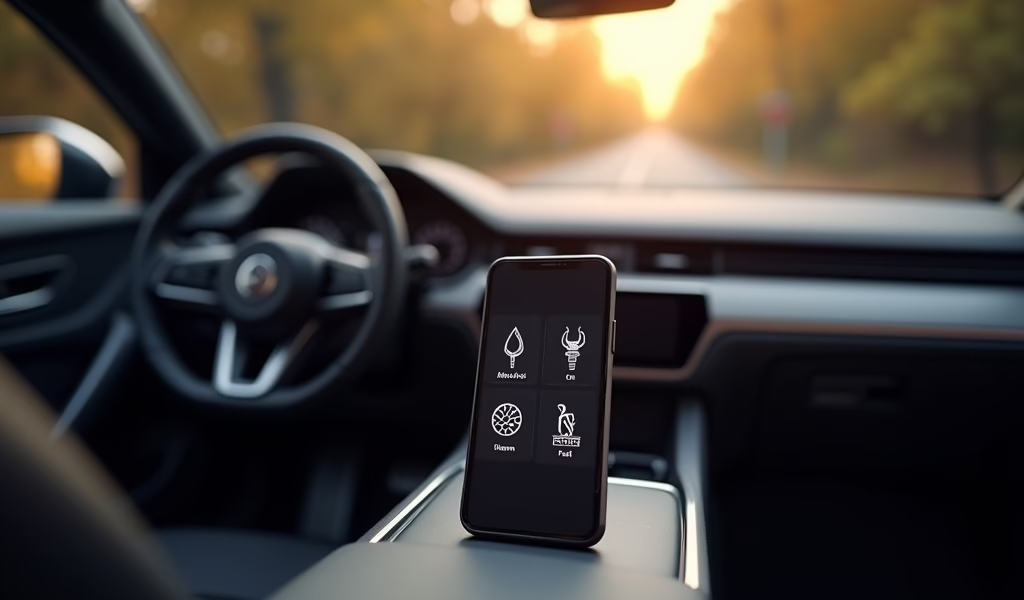
Modern driving assistant apps transform car maintenance by providing users with personalized maintenance scheduling, fuel efficiency tracking, diagnostic capabilities, tire health monitoring, and driving behavior analysis. These digital tools empower drivers to extend vehicle life, reduce repair costs, and make informed decisions about vehicle care without advanced technical knowledge.
Table of Contents
- The Digital Revolution in Car Care
- Never Miss Another Oil Change: Maintenance Scheduling Made Simple
- Fill Up Less Often: Fuel Efficiency Monitoring That Saves Real Money
- Become Your Own Diagnostician: Problem Detection Before Breakdowns
- Pressure Perfect: Tire Health Monitoring for Safety and Savings
- Drive Smarter, Not Harder: Driving Behavior Analysis for Vehicle Longevity
- The Road Ahead: Embracing Your Digital Mechanic’s Assistant
- Frequently Asked Questions
The Digital Revolution in Car Care
Remember fumbling with that grimy service booklet in your glove compartment, trying to figure out when your last oil change was? Or staring blankly at a dashboard warning light, wondering if it meant immediate danger or just another sensor quirk? Those days are rapidly becoming history, thanks to driving assistant apps that have revolutionized how we care for our vehicles.
As a master technician with 20+ years under my belt, I’ve witnessed this transformation firsthand. What used to require a trip to the shop can now often be handled with a few taps on your smartphone. These digital assistants have democratized vehicle maintenance knowledge in ways we couldn’t have imagined even a decade ago.
Today’s cars are essentially computers on wheels, with dozens of integrated systems constantly collecting data. Modern driving assistant apps harness this information, translating it into actionable insights that help extend your vehicle’s life and potentially save you thousands in unnecessary repairs.
The beauty of these apps isn’t just convenience—it’s empowerment. They bridge the knowledge gap between professional mechanics and everyday drivers, helping you make informed decisions about your vehicle’s health. Let’s explore five game-changing ways these digital tools can transform your approach to car care.
Never Miss Another Oil Change: Maintenance Scheduling Made Simple
Consistent maintenance is the cornerstone of vehicle longevity, yet it’s often the first casualty of our busy lives. How many times have you realized you’re thousands of miles overdue for service? This is where maintenance tracking apps deliver their most immediate value.
Apps like CARFAX Car Care, MyCarfax, and Drivvo create personalized maintenance schedules based on your specific make, model, and driving patterns. Instead of relying on the old “every 3,000 miles” rule (which is outdated for most modern vehicles anyway), these apps provide tailored recommendations that align with your manufacturer’s specifications.
These digital assistants do more than send timely reminders—they create a comprehensive service history for your vehicle. This documentation proves invaluable when selling your car, as it demonstrates your commitment to proper care. According to a study by Carfax, vehicles with complete maintenance records can command up to 10% higher resale values.
The real magic happens when these apps integrate with your car’s onboard diagnostics. Many newer vehicles allow these applications to read actual mileage data, enabling even more precise service timing based on your real driving habits rather than calendar estimates. This precision helps you avoid both premature maintenance (wasting money) and delayed service (risking damage).
For those who manage multiple vehicles—whether for a family or small business—these apps centralize maintenance tracking in one convenient location. No more juggling different schedules or trying to remember which vehicle needs attention next. Everything from oil changes to tire rotations stays organized and accessible right from your phone.

Fill Up Less Often: Fuel Efficiency Monitoring That Saves Real Money
With fuel prices constantly fluctuating, getting the most from every gallon isn’t just environmentally responsible—it’s economically essential. Modern fuel tracking apps transform casual observations about mileage into actionable intelligence about your vehicle’s efficiency.
Apps like Fuelio, GasBuddy, and Drivvo do much more than log your fill-ups. They create detailed reports showing your real-world MPG, fuel cost per mile, and efficiency trends over time. This data reveals patterns that might otherwise go unnoticed—like gradually declining fuel economy that could indicate developing mechanical issues.
The best of these apps connect your driving habits directly to fuel consumption. That heavy foot on the accelerator? You’ll see exactly how much it’s costing you at the pump. The app might reveal that your highway commute at 80 mph burns significantly more fuel than the same trip at 65 mph, allowing you to make informed decisions about your driving style.
Many fuel tracking apps now incorporate wireless radar detector integration, helping you maintain legal speeds while optimizing fuel efficiency. This combination of technologies encourages more mindful driving habits that benefit both your wallet and the environment.
Some apps even analyze your trips to identify the most fuel-efficient routes for your regular commutes. By accounting for factors like traffic patterns, elevation changes, and stop frequency, they can guide you to paths that might be slightly longer in distance but significantly more economical in fuel consumption.
The savings add up quickly. My customers who diligently track and optimize their fuel usage typically report 10-15% reductions in annual fuel costs—which can translate to hundreds of dollars saved each year simply by making more informed choices about how and where they drive.
Become Your Own Diagnostician: Problem Detection Before Breakdowns
Perhaps the most impressive leap in car care technology involves turning your smartphone into a sophisticated diagnostic tool. With an inexpensive OBD-II scanner that plugs into your vehicle’s diagnostic port, apps like FIXD, Torque Pro, and OBD Auto Doctor can decipher those mysterious check engine lights that used to mean an immediate trip to the shop.
These tools translate cryptic error codes into plain English, transforming “P0420” from an anxiety-inducing mystery into “Catalyst System Efficiency Below Threshold”—information you can actually understand and use. Many apps even provide severity assessments, potential causes, and estimated repair costs based on your specific vehicle.
Early detection is key to preventing cascading failures. A minor sensor issue caught early might be an inexpensive fix, but allowed to persist, it can lead to catalytic converter failure—turning a $100 repair into a $1,500 ordeal. Diagnostic apps give you this critical early warning system right in your pocket.
As a mechanic, I’ve seen countless customers save substantial money by using these apps to identify simple issues they can fix themselves. From loose gas caps triggering check engine lights to oxygen sensors needing replacement, many common problems are within the capabilities of moderately handy car owners with the right guidance.
Even when you do need professional service, these apps put you in a stronger position. Walking into a shop with specific diagnostic information helps ensure you receive appropriate service without unnecessary upsells. According to the Consumer Reports Auto Repair Survey, customers who arrive with diagnostic information typically pay less for the same repairs.
The technology continues advancing rapidly. The newest generation of diagnostic apps can monitor dozens of vehicle parameters in real-time, alerting you to abnormal conditions before they trigger warning lights. Some can even predict potential failures based on subtle changes in engine performance data—almost like having a master technician constantly monitoring your vehicle’s vital signs.
Pressure Perfect: Tire Health Monitoring for Safety and Savings
Tires represent your only physical connection to the road, yet they’re among the most neglected components on most vehicles. Improper tire maintenance not only creates safety risks but also costs you money through reduced fuel efficiency and premature replacement. Driving assistant apps have transformed tire care from occasional guesswork to precision management.
Modern tire maintenance apps like TireTek, FOBO Tire Plus, and features within comprehensive car care apps make monitoring tire pressure nearly effortless. Many integrate with Bluetooth-enabled pressure sensors that replace standard valve caps, providing real-time readings directly to your phone without even having to bend down with a gauge.
Beyond just pressure, advanced apps track tread depth, wear patterns, and rotation schedules based on your driving habits. Some even factor in seasonal temperature changes to recommend appropriate pressure adjustments as weather conditions shift—something that’s especially important for drivers in regions with dramatic seasonal temperature swings.
The financial benefits are substantial. Properly inflated tires can improve fuel economy by up to 3%, while correctly rotated tires often last 20% longer before needing replacement. For a typical driver, this can mean savings of $300-500 over the life of a set of tires—more than enough to justify the minimal investment in monitoring technology.
Safety benefits may be even more compelling. Tire-related accidents cause approximately 11,000 crashes annually in the U.S., according to NHTSA data. Many of these could be prevented with proper tire maintenance—exactly what these apps are designed to encourage and simplify.
Some of the most innovative tire apps now incorporate radar detector with GPS functionality, helping you maintain appropriate speeds for tire longevity while navigating unfamiliar areas. This integration represents the growing trend toward comprehensive driving assistance systems that address multiple aspects of vehicle care simultaneously.
Drive Smarter, Not Harder: Driving Behavior Analysis for Vehicle Longevity
Your driving style has a profound impact on virtually every component of your vehicle. Those jackrabbit starts from traffic lights? They’re slowly killing your transmission. That habit of riding your brakes downhill? It’s dramatically shortening their lifespan. Driving behavior analysis apps make these connections visible, helping you develop habits that extend your vehicle’s life.
Apps like Dash, DriveWell, and features within many insurance company apps use your smartphone’s accelerometer and GPS to analyze driving patterns. They create comprehensive pictures of how your habits behind the wheel affect your vehicle’s health, often providing scores and suggestions for improvement.
These digital driving coaches provide feedback on specific behaviors that increase wear and tear. Hard acceleration, abrupt braking, and aggressive cornering all contribute to premature component failure. Seeing the direct connection between these habits and vehicle longevity often motivates lasting behavioral changes.
The most sophisticated apps estimate the financial impact of your driving style, showing how smoother driving translates into fewer repairs and replacement parts. Many users report reducing maintenance costs by 10-15% simply by modifying the driving behaviors highlighted by these apps—savings that compound with every year of vehicle ownership.
Some driving behavior apps integrate with radar detector app compatible systems to help maintain legal speeds while encouraging smooth driving habits. This combination provides a comprehensive approach to both driver safety and vehicle preservation.
Beyond extending the life of mechanical components, gentler driving significantly reduces stress on your vehicle’s electrical systems and sensors—components that can be surprisingly expensive to replace. As cars become increasingly electronic, the value of protecting these systems through appropriate driving habits only increases.
The Road Ahead: Embracing Your Digital Mechanic’s Assistant
Throughout my career as a mechanic, I’ve seen countless vehicles prematurely retired due to neglect that could have been prevented with better information and timely care. Driving assistant apps provide exactly that—turning maintenance from a mysterious burden into an accessible routine that anyone can master.
These digital tools represent a democratization of automotive knowledge. What once required years of training and experience is now available to anyone with a smartphone. While they won’t replace the hands-on skills of a trained technician for complex repairs, they provide the essential awareness needed to keep your vehicle healthy and know when professional intervention is truly necessary.
The financial case for embracing these technologies is compelling. Most of these apps are either free or cost less than a single oil change, yet their potential to prevent major repairs, improve efficiency, and extend vehicle life represents thousands of dollars in value over your car’s lifetime. It’s perhaps the highest return-on-investment available in vehicle care.
As vehicles continue growing more sophisticated, with dozens of integrated electronic systems, these digital assistants will only become more essential. They’re not just conveniences—they’re becoming necessary bridges between increasingly complex automobiles and the people who drive them.
The future of car care isn’t about replacing the human element—it’s about enhancing it with technology that makes vehicle ownership simpler, more affordable, and more transparent. By embracing these digital mechanics’ assistants today, you’re not just maintaining your current vehicle more effectively; you’re developing the knowledge and habits that will serve you throughout a lifetime of more economical, safer driving.
Your car takes care of you every day on the road. With these apps in hand, returning the favor has never been easier.
Frequently Asked Questions
What’s the best driving assistant app for beginners?
For newcomers to vehicle maintenance apps, CARFAX Car Care offers an intuitive interface with excellent maintenance tracking features. It’s free and requires minimal technical knowledge to set up and use effectively.
Do I need special hardware to use diagnostic features in these apps?
Yes, most diagnostic features require an OBD-II scanner that plugs into your vehicle’s diagnostic port and communicates with your phone via Bluetooth. These scanners are widely available online for $20-$100 depending on capabilities.
Can driving assistant apps really save me money?
Absolutely—regular users typically report annual savings of $300-600 through improved maintenance timing, better fuel economy, and prevented repairs. The return on investment is substantial compared to the low cost of most apps.
Will these apps work with older vehicles?
Most maintenance tracking and fuel monitoring apps work with any vehicle regardless of age. Diagnostic features require an OBD-II port, which became standard in US vehicles in 1996 and slightly later in other countries.
Are driving assistant apps difficult to set up?
Most modern driving assistant apps feature straightforward setup processes requiring basic information about your vehicle. The initial setup typically takes 5-10 minutes, with some diagnostic apps requiring an additional step to connect hardware.