
Overview
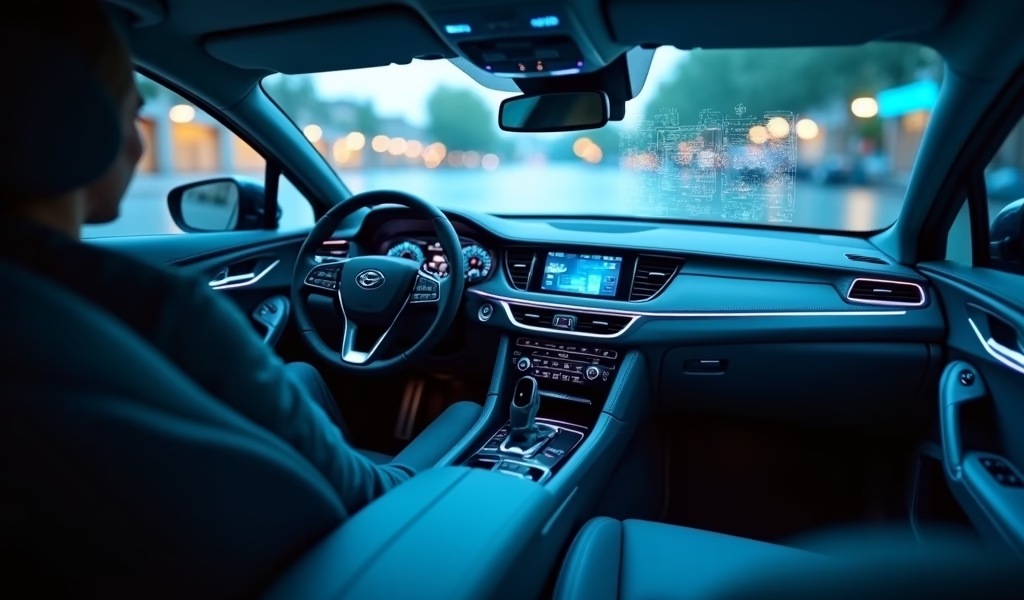
This article explores five essential categories of driving apps that help car owners maintain and troubleshoot their vehicles: diagnostic apps that decode engine issues, maintenance tracking apps that remind you of service needs, fuel efficiency apps that save money at the pump, roadside assistance apps for emergencies, and parking/navigation apps that streamline the entire driving experience. These digital tools empower drivers with knowledge and convenience, potentially saving time and money while extending vehicle lifespan through better maintenance and driving habits.
Table of Contents
- Understanding Top Driving Apps for Car Fixes
- Diagnostic Apps: Your Mobile Mechanic
- Maintenance Tracking Apps: Never Miss a Service Again
- Fuel Efficiency Apps: Save Money at the Pump
- Roadside Assistance Apps: Help When You Need It Most
- Parking and Navigation Apps: Getting There Hassle-Free
- Conclusion: Embracing Technology for Better Driving
- Frequently Asked Questions
Understanding Top Driving Apps for Car Fixes
The world of top driving apps has revolutionized how we maintain and troubleshoot our vehicles. As a professional mechanic with over 15 years in the garage, I’ve witnessed this digital transformation firsthand. These days, your smartphone can be just as valuable as a wrench when it comes to keeping your car in peak condition.
Remember when you needed to visit a mechanic for even the simplest diagnostic check? Those days are fading into the rearview mirror. Modern driving apps now empower you to identify issues, track maintenance, and even make minor fixes without always needing professional help.
The beauty of these technological tools is that they put knowledge directly in your hands. They translate complicated vehicle systems into understandable information, helping you make informed decisions about your car’s health. Additionally, they can save you significant time and money by preventing small issues from becoming major repairs.
In this comprehensive guide, we’ll explore five essential categories of top driving apps that every car owner should consider downloading. From diagnostic tools that decode those mysterious engine lights to apps that help you find the cheapest fuel in your area, we’ve got you covered. Let’s get under the hood of these digital assistants that are changing how we care for our vehicles.
Diagnostic Apps: Your Mobile Mechanic
When that dreaded check engine light illuminates your dashboard, your heart sinks a little, doesn’t it? Before panic sets in, consider that diagnostic apps can now tell you exactly what’s happening inside your vehicle’s complex systems.
These apps work by connecting to your car’s OBD-II port (On-Board Diagnostics), usually located under the dashboard. Most vehicles manufactured after 1996 have this port, making them compatible with these digital diagnostic tools. You’ll need an OBD-II adapter that pairs with your phone via Bluetooth or Wi-Fi, but the investment is worthwhile.
Once connected, these top driving apps can read error codes from your car’s computer system and translate them into plain English. Instead of cryptic codes like “P0300” or “P0420,” you’ll get clear explanations like “Random/Multiple Cylinder Misfire Detected” or “Catalyst System Efficiency Below Threshold.”
Some of the best diagnostic apps include:
- FIXD: Offers real-time monitoring and explains problems in simple terms
- Torque Pro: Provides detailed performance metrics and can clear check engine lights
- OBD Auto Doctor: Features comprehensive vehicle diagnostics with user-friendly interfaces
These apps don’t just identify problems—they often suggest potential solutions and estimate repair costs. This knowledge gives you confidence when talking to mechanics and helps prevent unnecessary repairs. As Consumer Reports found, car owners who use diagnostic apps often save between $100-300 per year on maintenance costs.
The most sophisticated diagnostic apps even offer predictive maintenance alerts, notifying you of potential issues before they become serious problems. This proactive approach to car care can extend your vehicle’s lifespan significantly. In fact, regular diagnostic checks can improve fuel efficiency by up to 4% by ensuring optimal engine performance.
Maintenance Tracking Apps: Never Miss a Service Again
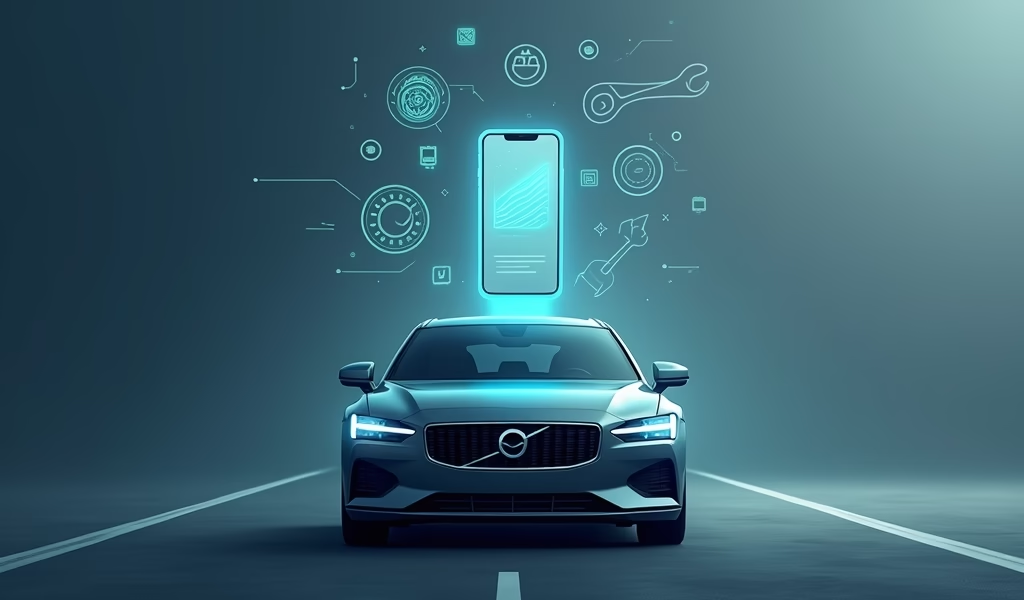
We’ve all been there—realizing we’re several thousand miles overdue for an oil change or completely forgetting when we last rotated the tires. Maintenance tracking apps solve this common problem by keeping a detailed service history of your vehicle at your fingertips.
These top driving apps serve as your personal vehicle maintenance secretary. They remind you when it’s time for routine services based on your specific vehicle make, model, and driving habits. Rather than relying on those little sticker reminders from your last oil change (that often fall off or fade), your phone will notify you when maintenance is due.
Most maintenance tracking apps allow you to:
- Log all maintenance and repairs with dates, mileage, and costs
- Set custom reminders for future service needs
- Store important documents like repair receipts and warranty information
- Track fuel economy and expenses over time
Apps like AUTOsist, Car Maintenance Reminder, and aCar stand out for their intuitive interfaces and comprehensive tracking capabilities. Many offer cloud backup, ensuring your maintenance history isn’t lost if you change phones. Some even generate maintenance reports that can increase your car’s resale value by documenting your diligent care.
Perhaps the most valuable aspect of these apps is how they prevent small issues from becoming expensive disasters. Regular maintenance extends engine life and improves safety. Skipping oil changes, for instance, can reduce engine lifespan by 50% according to AAA automotive researchers. Similarly, neglecting brake fluid changes can compromise your braking system’s effectiveness over time.
These apps become even more useful for families with multiple vehicles or small business owners managing fleets. Instead of juggling different maintenance schedules in your head, the app centralizes everything, sending timely reminders when any vehicle needs attention. It’s like having a personal assistant dedicated solely to your automotive needs.
Fuel Efficiency Apps: Save Money at the Pump
With fuel prices constantly fluctuating, finding ways to maximize your vehicle’s efficiency has never been more important. Fuel efficiency apps help you tackle this challenge from multiple angles, potentially saving hundreds of dollars annually.
These top driving apps typically fall into two categories: those that help you find the cheapest fuel prices in your area, and those that analyze your driving habits to improve fuel economy. The most comprehensive options combine both approaches.
Price-finding apps like GasBuddy and Waze update in real-time based on user contributions, showing you where to find the most affordable fuel nearby. The savings add up quickly—even a difference of 10 cents per gallon can save over $100 annually for the average driver.
Even more impactful are the apps that monitor your driving behavior. These connect to your vehicle’s systems (often through the same OBD-II port used by diagnostic apps) and provide insights into how your driving affects fuel consumption. They might identify:
- Aggressive acceleration patterns that waste fuel
- Optimal speed ranges for your specific vehicle
- Excessive idling habits that drain your tank
- Routes with better fuel economy potential
Dash, Fuelio, and Drivvo are excellent options in this category. Users report fuel efficiency improvements of 5-20% after adjusting their driving habits based on app recommendations. That translates to substantial savings over time—potentially hundreds of dollars annually.
Some of these apps also include maintenance reminders specifically focused on fuel efficiency, such as proper tire inflation checks and air filter replacements. A properly inflated tire can improve gas mileage by up to 3%, while a clean air filter can boost fuel economy by 10%. These seemingly small factors compound to create significant savings.
Beyond the financial benefits, using these apps contributes to environmental sustainability by reducing your carbon footprint. Many provide estimates of CO2 emissions saved through more efficient driving, adding an eco-friendly dimension to your fuel-saving efforts. Using compatible radar detector apps alongside these tools can help avoid speeding, which also improves fuel economy.
Roadside Assistance Apps: Help When You Need It Most
Even with the best maintenance routine, emergencies happen. That’s when roadside assistance apps become invaluable, offering peace of mind and quick solutions when you’re stranded on the side of the road.
These top driving apps connect you with nearby service providers who can help with common roadside problems like dead batteries, flat tires, lockouts, and towing needs. Unlike traditional roadside assistance services that might keep you waiting for hours, these apps use GPS technology to find the closest available help, often reducing wait times significantly.
Some standout features of the best roadside assistance apps include:
- Real-time tracking of your help’s arrival
- Clear upfront pricing without surprise fees
- The ability to share your exact location even if you’re unfamiliar with the area
- In-app communication with service providers
Apps like AAA Mobile, Honk, and Urgent.ly have revolutionized emergency roadside assistance. Instead of making multiple calls and struggling to describe your location, these apps streamline the process into a few taps. Many allow you to pay through the app as well, eliminating the need for cash transactions on the roadside.
What’s particularly valuable about these services is their on-demand nature—you don’t necessarily need an annual membership (though some offer this option). Pay-as-you-go models mean you only pay when you actually need help, which can be more economical for many drivers.
Beyond just connecting you with tow trucks, many of these apps include features for minor roadside fixes. They might offer step-by-step instructions for changing a flat tire or jumping a battery, helping you handle simple issues yourself when professional help isn’t immediately available. According to J.D. Power research, drivers who use roadside assistance apps report higher satisfaction with their emergency experiences compared to traditional call centers.

Parking and Navigation Apps: Getting There Hassle-Free
The journey doesn’t end when you reach your destination—you still need to park. Parking and navigation apps round out our essential top driving apps collection by making the entire driving experience smoother from start to finish.
Modern navigation has evolved far beyond simply providing directions. Today’s advanced apps offer real-time traffic updates, road hazard warnings, and route optimization based on current conditions. They can even suggest the most fuel-efficient routes, connecting nicely with the fuel efficiency apps mentioned earlier.
The parking aspect is where these apps truly shine in urban environments. Features typically include:
- Real-time parking availability in garages and street parking
- Comparative pricing to find the most affordable option
- Ability to reserve and pay for parking spots in advance
- Reminders for meter expiration
- Return-to-car navigation to help find your parked vehicle
ParkMobile, SpotHero, and Waze (which combines navigation with parking assistance) exemplify the best of these solutions. The time saved is substantial—drivers spend an average of 17 hours per year searching for parking spots, according to transportation analytics firm INRIX. These apps can reduce that significantly.
Beyond convenience, these apps can also help reduce the stress associated with driving in congested areas. Knowing exactly where you’re going to park before arriving at your destination eliminates the anxiety of circling blocks looking for a spot, particularly in unfamiliar locations.
For electric vehicle owners, specialized apps like PlugShare and ChargePoint offer similar functionality for finding charging stations, making the transition to electric vehicles more practical. They show real-time availability of charging stations and compatibility with your specific vehicle model.
The integration capabilities of these apps continue to expand. Many now work with your vehicle’s infotainment system or connect to smart home devices, allowing you to send destinations to your car before leaving home or receiving parking reminders on your smart speaker. This interconnected ecosystem makes the entire driving experience more seamless than ever before.
Conclusion: Embracing Technology for Better Driving
The landscape of top driving apps has transformed how we interact with our vehicles. From diagnosing problems to finding parking, these digital tools empower car owners with knowledge and convenience previously unavailable. As a mechanic who’s spent years helping people understand their cars, I’m genuinely impressed by how these apps democratize automotive knowledge.
The five categories we’ve explored—diagnostic, maintenance tracking, fuel efficiency, roadside assistance, and parking/navigation apps—form a comprehensive digital toolkit for modern drivers. Together, they address nearly every aspect of vehicle ownership, from routine maintenance to emergency situations.
What’s particularly valuable is how these apps work together as an ecosystem. Your diagnostic app might identify an issue, your maintenance tracker reminds you when to address it, your fuel efficiency app confirms the repair improved performance, your roadside assistance provides backup if needed, and your navigation app gets you to the repair shop efficiently.
While these digital tools are powerful, they don’t replace skilled mechanics or proper maintenance—rather, they complement professional services by making you a more informed car owner. They bridge the knowledge gap between automotive professionals and everyday drivers, fostering better communication and more transparent service experiences.
As automotive technology continues to evolve, so too will these apps. We’re already seeing integration with voice assistants, augmented reality features for visualizing repairs, and machine learning algorithms that predict vehicle issues before they occur. The future promises even more sophisticated tools to enhance our driving experience.
I encourage you to explore these top driving apps based on your specific needs. Start with one category that addresses your most pressing concern, then gradually build your digital toolkit. Your car—and your wallet—will thank you for embracing these technological advances that make vehicle ownership simpler, more economical, and less stressful.
Frequently Asked Questions
Do I need special hardware to use car diagnostic apps?
Yes, most diagnostic apps require an OBD-II scanner that plugs into your car’s OBD port and connects to your phone via Bluetooth or Wi-Fi. These adapters typically cost between $15-100 depending on their capabilities.
Are maintenance tracking apps accurate for all vehicle makes and models?
Most quality maintenance apps have extensive databases covering virtually all consumer vehicles. However, always verify the recommended maintenance intervals with your vehicle’s owner manual, especially for specialty or luxury vehicles.
How much money can fuel efficiency apps really save me?
Regular users report savings of 5-15% on fuel costs, which translates to $100-400 annually for the average driver. Your actual savings will depend on your driving habits and how consistently you follow the app’s recommendations.
Do roadside assistance apps work in rural areas?
Coverage varies by app and location. Apps like AAA typically have better rural coverage, while newer services might be limited to urban and suburban areas. Always check coverage maps before relying exclusively on an app for emergency situations.
Can these driving apps access my personal data?
Most apps collect some data about your driving habits and vehicle performance. Review each app’s privacy policy before installation and look for options to limit data sharing if privacy is a concern.