

Overview
This article provides a systematic approach to diagnosing and fixing a car that won’t start, covering five key areas: battery issues (the most common cause), starter system problems, fuel system operation, ignition system failures, and computer/sensor malfunctions. It emphasizes methodical troubleshooting starting with the simplest causes first, explaining that many no-start situations can be resolved without professional help through proper diagnosis and basic maintenance.
Table of Contents
- Understanding the No-Start Situation
- Check Your Battery First
- Inspect the Starter System
- Verify Fuel System Operation
- Examine the Ignition System
- Diagnose Sensor and Computer Issues
- Conclusion
- Frequently Asked Questions
Understanding the No-Start Situation
We’ve all been there—rushing to an important meeting, late for picking up the kids, or heading out for a weekend getaway when suddenly, your car decides it’s not going anywhere. That sinking feeling in your stomach is all too familiar when you turn the key and nothing happens.
As a mechanic with over 15 years of experience, I can tell you that a car that won’t start is one of the most common issues I see daily. The good news? Many no-start situations can be diagnosed and often fixed without calling a tow truck or spending hundreds at the repair shop.
In this guide, I’ll walk you through the five most effective tips on how to troubleshoot your car engine when it refuses to start. We’ll start with the basics and work our way through more complex issues, giving you the knowledge to potentially get back on the road without professional help.
The key to successfully fixing a car that won’t start is approaching the problem methodically. Just like a doctor wouldn’t prescribe medication before understanding symptoms, we need to properly diagnose before attempting repairs.
Check Your Battery First
When a car won’t start, the battery is the primary suspect in about 50% of cases. It’s the heart of your vehicle’s electrical system, and without sufficient charge, nothing else can function properly.
Signs your battery might be the culprit include:
- Clicking noise when turning the key
- Dim or flickering dashboard lights
- Headlights that appear weak
- Electrical components that work slowly or intermittently
- Complete silence when turning the key (often indicates a totally dead battery)
First, inspect your battery terminals for corrosion—that white, powdery substance that builds up. This corrosion acts like an insulator, preventing proper electrical flow. Clean it off using a mixture of baking soda and water with an old toothbrush, then rinse and dry thoroughly.
Next, check if the battery connections are tight. Loose connections can mimic a dead battery. Simply wiggle the terminals—they shouldn’t move at all. If they do, tighten them with a wrench.
For a more definitive test, learning how to test car battery voltage with a multimeter can save you time and money. A healthy battery should read about 12.6 volts when the engine is off. During cranking, it shouldn’t drop below 10 volts.
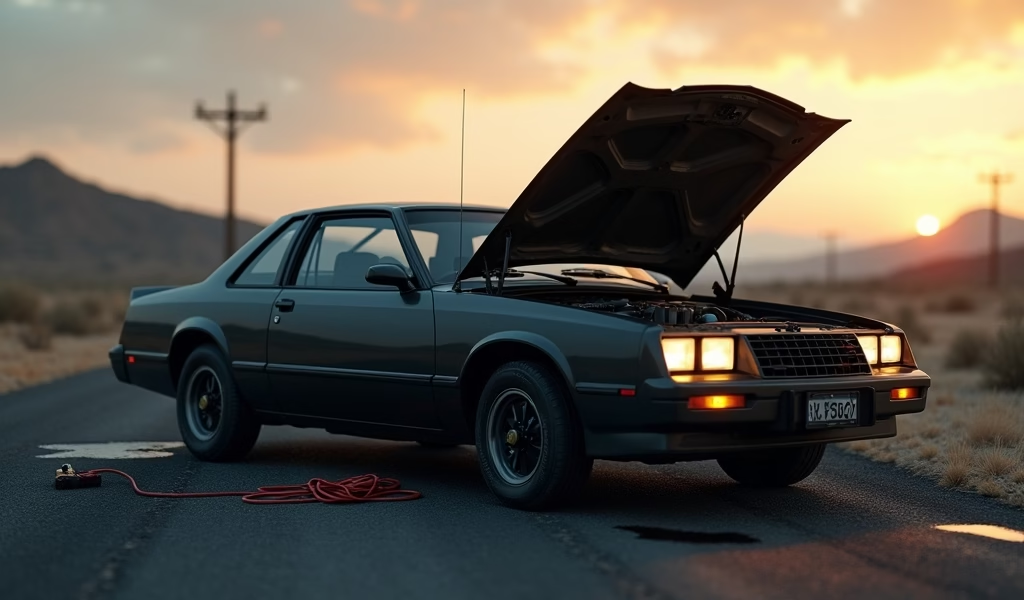
If your battery is indeed low, you can attempt a jump start. Remember the correct sequence: connect positive to positive, negative to the dead car’s engine block (not the negative terminal), start the donor vehicle, then try starting yours. After a successful jump, drive for at least 20 minutes to recharge your battery.
Keep in mind that most car batteries last 3-5 years. If yours is approaching that age, consider replacement before it leaves you stranded. According to the American Automobile Association, battery failures are among the top reasons for roadside assistance calls, especially during extreme temperatures.
Inspect the Starter System
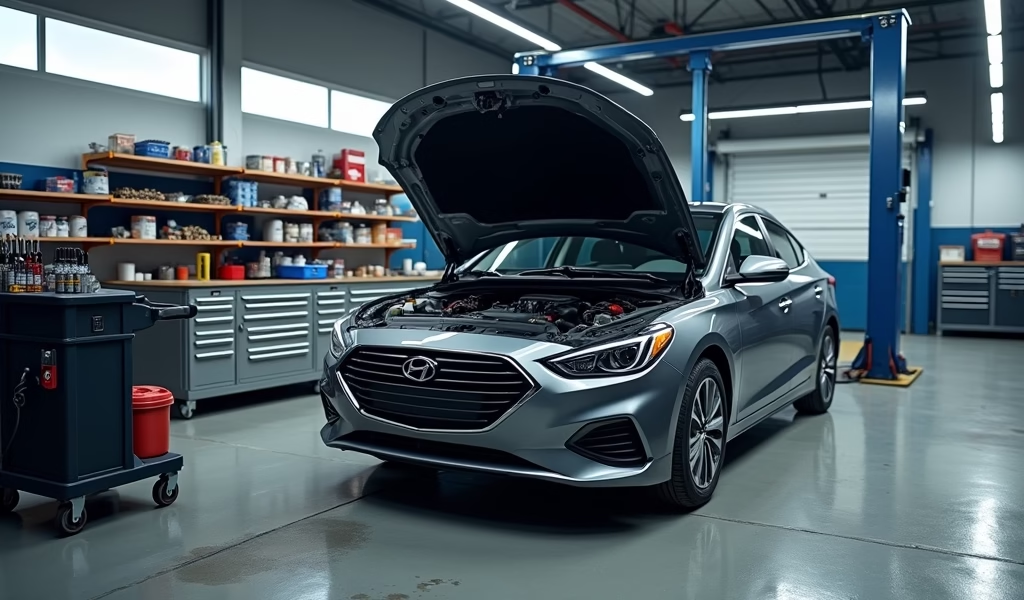
If your battery checks out but the engine still won’t turn over, the starter system might be your next suspect. Think of the starter as the motor that cranks your engine to life—without it, your car stays silent.
When you turn the key and hear a single loud click, that’s often the starter solenoid attempting to engage but failing. Multiple rapid clicks usually indicate the solenoid is getting power but not enough to fully engage. A grinding noise suggests worn starter gears that aren’t meshing properly with your engine’s flywheel.
To test your starter, try this simple trick: With the key in the ignition position (ready to start), gently tap the starter motor with a metal tool like a wrench. Have someone else turn the key while you do this. If your car starts after tapping, your starter motor is likely failing and needs replacement.
Locate your starter motor where the engine meets the transmission—it’s typically the size of a soup can with electrical connections. Check that all wires leading to it are secure and free from damage.
For the more technically inclined, you can test voltage at the starter while cranking. You should see battery voltage (around 12 volts) at the starter’s main terminal. If voltage is present during cranking but nothing happens, your starter has likely failed internally.
Replacing a starter is moderately difficult for DIYers but might save you $200-300 in labor costs. If you’re not comfortable with this repair, most professional shops can complete it in 1-2 hours at a cost of $400-600 including parts.
Verify Fuel System Operation
Without fuel, your engine is just an expensive paperweight. Even with a good battery and starter, your car needs properly delivered fuel to run. This is especially important when diagnosing a car that cranks but won’t start.
First, check the obvious—does your car have gas? While fuel gauges are generally reliable, they can fail. When in doubt, add a gallon of fresh fuel.
Next, listen for the fuel pump when you turn the key to the “on” position without cranking. You should hear a brief whirring or humming sound lasting 2-3 seconds. This is your fuel pump pressurizing the system. No sound could indicate a pump failure.
Fuel system issues typically manifest in these ways:
- Engine cranks normally but won’t start (fuel not reaching the engine)
- Engine starts but immediately dies (insufficient fuel pressure)
- Engine runs rough or stalls when warm (fuel delivery inconsistency)
- Difficulty starting after sitting overnight (fuel pressure bleed-off)
Modern fuel systems are pressurized and need about 30-60 PSI depending on your vehicle. Without proper pressure, fuel injectors can’t atomize fuel correctly, resulting in hard starting or no start conditions.
If your vehicle has sat unused for months with old fuel, you may have fuel system contamination. Modern ethanol-blend fuels can deteriorate in as little as 30 days, leading to gummed-up fuel components. Fuel stabilizer is cheap insurance against this when storing vehicles.
For suspected fuel delivery problems, check your vehicle’s fuel filter. Most manufacturers recommend changing it every 30,000-50,000 miles, but many owners forget this important maintenance item. A clogged filter can starve your engine of fuel just as effectively as an empty tank.
The U.S. Department of Energy notes that proper fuel system maintenance not only prevents no-start conditions but can improve fuel economy by up to 4%—saving you money every time you drive.
Examine the Ignition System
Even with fuel and a strong starting system, your engine needs a spark to ignite the air-fuel mixture. The ignition system creates and delivers this crucial spark, and when it fails, your engine simply won’t run.
Modern ignition systems have evolved beyond the distributor caps and rotors of yesteryear, but the principles remain the same. Your vehicle needs to generate a high-voltage spark and deliver it to each cylinder at precisely the right moment.
Start by checking your spark plugs, which can tell you a lot about your engine’s condition. Remove one plug (after the engine cools) and examine it. A healthy plug has light tan or grayish deposits. Black, sooty plugs indicate a rich fuel mixture, while white, chalky plugs suggest the engine is running too hot.
To test for spark, remove a spark plug, reconnect it to its wire or coil, and ground it against a metal part of the engine while having someone crank the engine. You should see a bright blue spark jump the gap. No spark suggests problems with the ignition coils, control module, or crankshaft position sensor.
In modern vehicles, ignition coils commonly fail after 60,000-100,000 miles. Many newer cars use one coil per cylinder (coil-on-plug design), allowing individual cylinders to have ignition failures. Symptoms include rough idle, misfires, or stalling.
If your vehicle uses conventional spark plug wires, inspect them for cracks, burns, or carbon tracking. These high-voltage pathways can deteriorate over time, allowing spark to escape before reaching the plugs. Quality wires typically last 60,000-100,000 miles.
For vehicles with push-button start, don’t overlook your key fob battery. A dead fob battery can prevent starting even if everything else is functional. Most fobs contain a physical key for emergencies, and many vehicles allow you to place the fob directly against the start button when its battery is weak.
Diagnose Sensor and Computer Issues
Modern vehicles are essentially computers on wheels, relying on dozens of sensors to make split-second decisions about engine operation. When these sensors fail or provide incorrect data, your car may refuse to start as a safety precaution.
The most common sensor issues that prevent starting include:
- Crankshaft position sensor failures (engine won’t know when to fire spark plugs)
- Camshaft position sensor problems (disrupts injection timing)
- Mass airflow sensor contamination (causes improper fuel mixture)
- Throttle position sensor failures (affects idle and starting)
- Security system malfunctions (immobilizer preventing start)
Your check engine light is your first clue to sensor problems. If it’s illuminated, use an OBD-II scanner to read the trouble codes. Basic scanners cost $30-50 and connect to the diagnostic port usually located under the dashboard on the driver’s side.
Some vehicles have security systems that can prevent starting if they detect tampering or incorrect key codes. If your security light stays on or flashes rapidly, your immobilizer system may be preventing the start. Check your owner’s manual for reset procedures.
Occasionally, your car’s computer (ECU) may simply need a reset. Disconnecting the negative battery terminal for 10-15 minutes can clear temporary electronic glitches, similar to rebooting your smartphone. Just be prepared to reset your radio presets and clock afterward.
For persistent electronic issues, particularly after battery replacement or disconnection, some vehicles require a specific relearn procedure. This might involve a specific sequence of key turns or pedal movements to reset the throttle position sensor or security system.
According to Consumer Reports, computer and sensor issues account for a growing percentage of vehicle reliability problems as cars become more technologically advanced.
Conclusion
When facing a car that won’t start, remember that patience and a methodical approach are your best tools. Start with the most common and easily fixed issues—the battery and connections—before moving on to more complex systems.
Most no-start conditions can be resolved with basic tools and knowledge, potentially saving you hundreds in towing and diagnostic fees. Even if you ultimately need professional help, understanding these five key areas will help you communicate more effectively with your mechanic and potentially avoid unnecessary repairs.
Prevention remains the best strategy. Regular maintenance, including battery checks, timely spark plug replacements, and fuel system cleanings can dramatically reduce your chances of experiencing a no-start situation. Think of it as an investment in reliability and peace of mind.
Remember that modern vehicles are sophisticated machines with multiple interdependent systems. Sometimes what seems like a serious problem has a simple solution. By following the tips outlined in this guide, you’ve gained valuable knowledge that empowers you to handle one of motoring’s most frustrating situations—the car that refuses to start.
Next time you turn the key and hear silence, you’ll approach the situation with confidence rather than panic. And that might just be the difference between being late for that important meeting and arriving right on time.
Frequently Asked Questions
What’s the most common reason a car won’t start?
Battery issues account for approximately 50% of all no-start situations. A dead, weak, or corroded battery is usually the first thing to check.
Can a car not start even if the lights and radio work?
Yes, dashboard lights and radio require minimal power compared to the starter motor. Your battery might have enough charge for accessories but not enough for starting.
How do I know if it’s my starter or battery causing the problem?
If you hear nothing when turning the key, suspect the battery. If you hear a clicking sound but no engine cranking, it’s likely the starter.
Will a car start with a bad fuel pump?
No, a vehicle with a completely failed fuel pump typically cranks normally but won’t start. The engine needs fuel pressure to run.
How often should I replace my battery to prevent no-start issues?
Most car batteries last 3-5 years depending on climate and driving habits. Consider proactive replacement at the 4-year mark to prevent unexpected failures.
Pingback: How to Jump Start a Car: 7 Proven Tips - knowsyourcar.com
Pingback: Cars That Start S: Ultimate Tips to Prevent Engine Stalling - knowsyourcar.com