
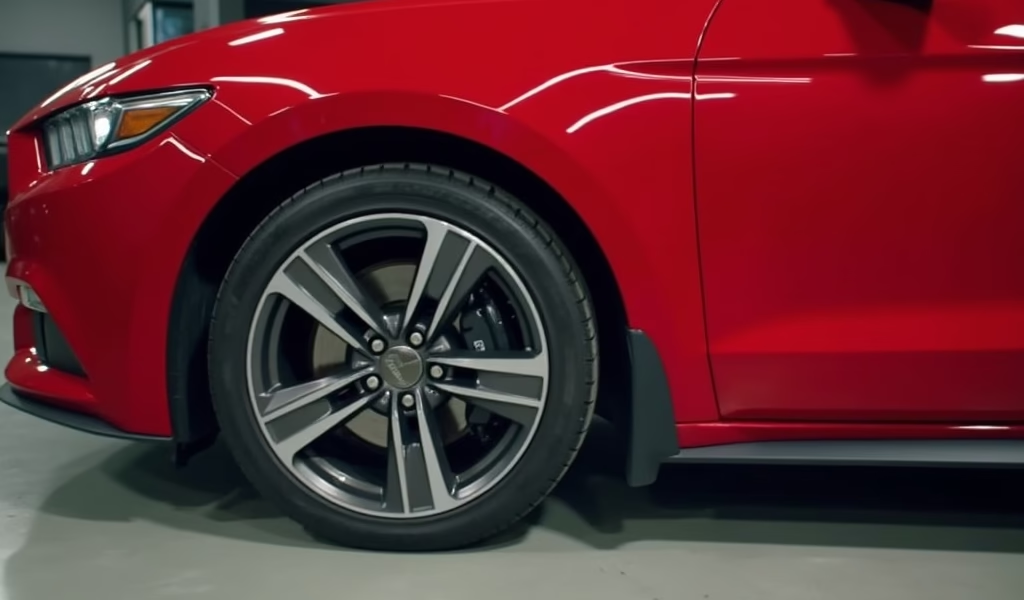
Overview
This step-by-step guide teaches car owners how to replace their own brake pads, covering everything from recognizing when pads need changing to proper installation techniques and breaking-in procedures. The article emphasizes that changing brake pads is an accessible DIY project that can save hundreds of dollars while providing greater control over vehicle maintenance quality and safety.
Table of Contents
- Introduction
- When to Change Your Brake Pads
- Tools and Materials You’ll Need
- Safety First: Precautions Before Starting
- Preparation Steps
- Step-by-Step Brake Pad Replacement Guide
- Breaking in Your New Brake Pads
- Troubleshooting Common Issues
- Brake Maintenance Tips
- Conclusion
- Frequently Asked Questions
Introduction
Ever heard that hair-raising screech when you tap your brakes? Or noticed your car taking its sweet time to stop? Your brake pads are waving red flags, practically begging for attention. I’ve seen countless drivers pale with worry when these symptoms appear, afraid of the mechanic’s bill that might follow.
But here’s the truth—changing brake pads isn’t the mechanical monster many imagine. It’s actually one of the most approachable DIY car projects that can save you hundreds of dollars. As a mechanic who’s guided many terrified car owners through their first brake job, I promise you can handle this.
I’ll walk you through changing your brake pads like we’re in my garage together—no confusing jargon, just straightforward steps that’ll have you feeling like a pro. By the end, you’ll wonder why you ever feared this fundamental fix.
Let’s turn that brake pad panic into pride as you master this essential skill. Your wallet (and your future self when you hear that first squeal again) will thank you profusely!
When to Change Your Brake Pads
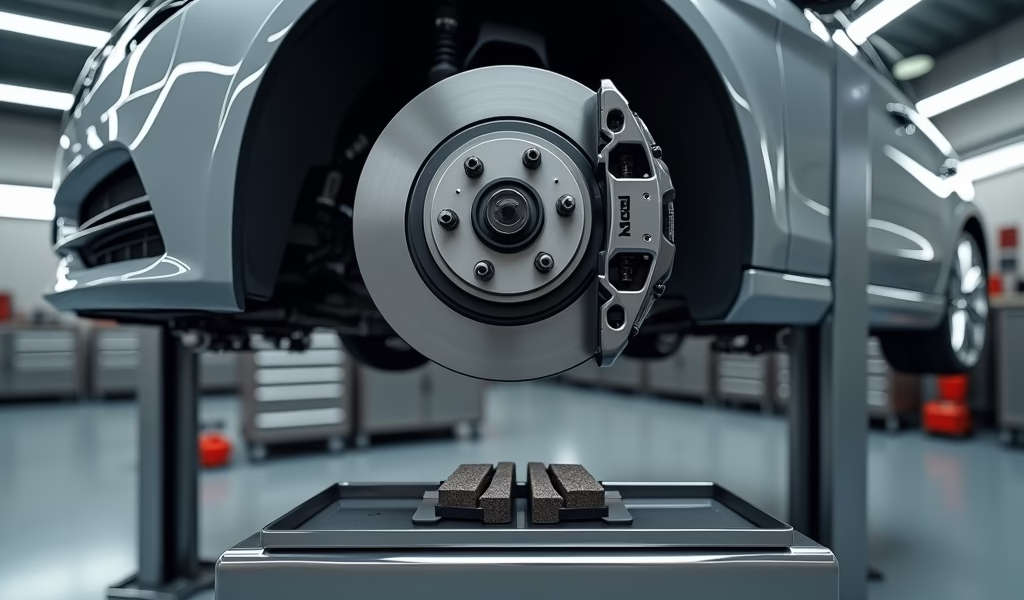
Your brakes don’t have a flashing “replace me” sign, but they do send clear signals when they’re running thin. Think of brake pads as the shoes of your car—they’ll show wear before completely falling apart.
The most obvious cry for help is that banshee-like squealing when you press the brake pedal. This isn’t your car being dramatic—most brake pads come with built-in wear indicators that scrape against the rotor when the pad material thins, creating that unmistakable soundtrack of neglect.
Visual inspection can tell you volumes. Peeking through your wheel spokes, you should see at least ¼ inch of pad material. Anything less is dancing with danger. According to NHTSA safety recommendations, brake pads below 3mm thickness should be replaced immediately.
Pay attention to performance changes too. If your car feels like it’s sledding on ice when you brake, takes longer to stop, or pulls to one side, your pads are waving white flags of surrender. And that pulsating brake pedal? It’s practically morse code for “help me now!”
Most manufacturers suggest replacement every 30,000 to 70,000 miles, but this varies wildly based on your driving style. City drivers constantly tapping brakes will wear pads faster than highway cruisers. Your brake maintenance schedule should reflect your real-world driving habits.
When you start hearing metal-on-metal grinding, you’ve waited too long. You’re now damaging rotors, calipers, and your bank account. Don’t be that driver!
Tools and Materials You’ll Need
Tackling your first brake job doesn’t require a mechanic’s lifetime collection of tools. Let’s gather what you’ll need for this Saturday project—think of it as assembling ingredients before cooking a satisfying meal of self-sufficiency.
For tools, you’ll want:
- Floor jack (your car’s emergency jack works in a pinch, but isn’t ideal)
- Jack stands (non-negotiable for safety—your life is worth more than the $30 these cost)
- Lug wrench or socket set (to remove wheels)
- C-clamp or caliper piston tool (to compress the caliper piston)
- Wrench set (typically 12-15mm for most vehicles)
- Flathead screwdriver (for prying and removing clips)
- Wire or bungee cord (to hang the caliper while working)
For materials, gather:
- Replacement brake pads (specific to your vehicle’s make and model)
- Brake lubricant/anti-seize compound (prevents squeaking and seizing)
- Brake cleaner spray (makes everything work better)
- Disposable gloves (brake dust contains nasty stuff)
- Shop rags or paper towels (for inevitable messes)
I always recommend having a mechanic’s flashlight handy too—dark wheel wells and shadow-filled calipers hide important details. A wire brush for cleaning mounting brackets won’t go amiss either.
Don’t skimp on quality when buying brake pads. The few extra dollars for premium pads pay off in longer life and better performance. The friendly folks at your local parts store can help match the perfect pads to your vehicle—just provide your make, model, and year.
All these items together will cost substantially less than what a shop would charge for labor alone. Plus, these tools become yours for future projects—the gift that keeps on giving!
Safety First: Precautions Before Starting
Before we dive under your vehicle, let’s be crystal clear: brake work demands respect. Think of your brake system as the parachute of your car—you want to get this right the first time. I’ve seen the consequences of careless brake work, and I wouldn’t wish them on anyone.
First and foremost, always work with a completely cool vehicle. Brakes transform motion into heat, and they get scorching hot. I once brushed against a rotor just minutes after driving and still have the scar as a souvenir. Give your car at least an hour after driving before starting.
Jack safety isn’t a suggestion—it’s life or death. Cars are deceptively heavy, and improvised jack setups kill people every year. Always use proper jack stands placed on solid frame points (check your owner’s manual for locations). Once the car is raised, give it a solid shake test before putting any part of yourself underneath.
Brake dust contains asbestos and other particulates you definitely don’t want in your lungs. Work in a well-ventilated area, avoid using compressed air to clean components, and wash your hands thoroughly afterward. Those disposable gloves I mentioned? They’re not just to keep your manicure intact.
If you’re working on rear brakes, be aware that many vehicles have separate parking brake mechanisms that can complicate the job. Consult your service manual if you’re unsure about disengaging these systems.
Never, ever drive a vehicle with only partial brake work completed. Finish one side completely before moving to the next, and always replace pads in complete axle sets (both front wheels or both rear wheels). Mixing new and old pads creates dangerous braking imbalances.
Remember—rushing brake work is like rushing surgery. Take your time, double-check everything, and if something doesn’t seem right, stop and consult a professional. Your safety is worth more than bragging rights.
Preparation Steps
Success in brake pad replacement, like any worthy endeavor, begins with proper preparation. I’ve seen countless DIYers scramble midway through a job because they skipped these crucial first steps. Let’s not let that be you!
Start by purchasing the correct brake pads for your specific vehicle—this isn’t a one-size-fits-all situation. Your local auto parts store can match pads using your vehicle information, or you can find the part number in your owner’s manual. While you’re shopping, grab that brake lubricant I mentioned earlier—it’s cheap insurance against annoying squeaks.
Pick your workspace carefully. You need a flat, solid surface with enough room to move around the vehicle. Your garage floor or a level driveway works beautifully. Working on an incline or uneven ground is flirting with disaster.
Before jacking anything up, loosen (but don’t remove) the lug nuts while the wheel is still on the ground. They’re often tightened to Herculean specifications, and you’ll need the stability of terra firma to break them loose. Consider this your first victory in the process!
Now’s also the time to check your service manual for any vehicle-specific quirks. Some cars have special procedures for caliper retraction or particular torque specifications. Forewarned is forearmed, as they say.
Mentally divide your project into manageable chunks. I suggest working on one wheel at a time, completing the entire process before moving to the next. This approach keeps you from getting overwhelmed and ensures you’re never driving with an incomplete brake system.
Finally, block the wheels you’re not working on with wheel chocks, bricks, or whatever’s handy. Engage the parking brake if you’re working on front brakes (release it for rear brakes). Belt, suspenders, and more suspenders when it comes to keeping that car stable.
With everything ready, take a breath. You’re about to join the ranks of self-sufficient car owners who’ve mastered one of the most practical skills in vehicle maintenance. Let’s make it happen!
Step-by-Step Brake Pad Replacement Guide
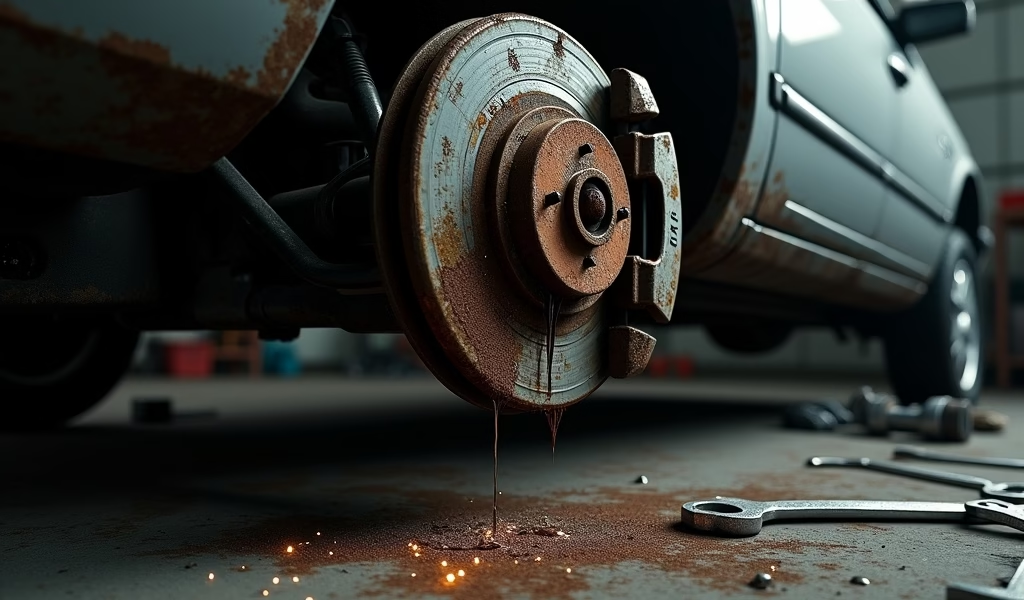
Now for the main event—transforming you from brake pad novice to confident DIY mechanic. I’ll break this down into bite-sized steps that build on each other, creating a foolproof path to fresh, squeak-free stops.
1. Jack Up the Vehicle and Secure It
Position your jack at the designated lifting point (check your manual) and raise the car high enough to remove the wheel easily. Immediately secure it with jack stands placed at proper support points. Give the vehicle a firm shake to confirm stability—this is not a step to rush or skip.
2. Remove the Wheel
Take off those lug nuts you loosened earlier and remove the wheel. I like to place it flat underneath the car’s frame as an extra safety measure (though never rely solely on this). Your brake assembly is now exposed in all its glory.
3. Locate and Examine the Brake Assembly
Take a moment to familiarize yourself with what you’re seeing. The caliper is the clamp-like component that hugs the rotor (the shiny disc). Inside this assembly live your brake pads and the piston that presses them against the rotor when you brake.
4. Remove the Caliper
You’ll see bolts (usually two) securing the caliper to its bracket. Remove these with the appropriate wrench—typically 12-15mm, though it varies by vehicle. Some calipers slide off after removing just the bottom bolt.
Once unbolted, gently pry the caliper away using a flathead screwdriver if needed. Don’t let it hang freely by the brake line! Suspend it from the coil spring or strut using your wire or bungee cord. Dangling can damage the brake hose—a much bigger problem than what you started with.
5. Remove the Old Brake Pads
With the caliper out of the way, the old pads should slide right out. Pay close attention to how they’re positioned and any anti-rattle clips or hardware—you’ll need to install the new ones exactly the same way. Take photos with your phone if you’re worried about remembering.
6. Inspect the Rotor
While everything’s apart, examine your rotor surface. Light scoring is normal, but deep grooves, significant rust, or visible warping means the rotors need replacement too. If they look good, you can proceed with just the pad replacement.
7. Compress the Caliper Piston
Here’s where your C-clamp or caliper tool comes in. The piston inside the caliper must be pushed back to make room for the new, thicker brake pads. Place the old pad against the piston to distribute pressure evenly, then slowly compress it back into its bore.
For rear brakes with parking brake integration, you may need to twist the piston back using a special tool rather than just pushing it. This is where that service manual comes in handy.
8. Prepare and Install New Pads
Apply a thin layer of brake lubricant to the backs of the new pads and any contact points where metal meets metal—but never on the friction surface that touches the rotor! This prevents squeaking and ensures smooth operation.
Install the new pads in the same position as the ones you removed, including any shims or anti-rattle clips. They should fit snugly but not require force. If you’re struggling, something’s misaligned.
9. Reinstall the Caliper
Carefully position the caliper over the new pads and reinstall the bolts, tightening to the manufacturer’s specifications. If the caliper seems too tight to fit over the new pads, you may need to compress the piston further.
10. Replace the Wheel and Lower the Vehicle
Put the wheel back on, hand-tighten all lug nuts, then lower the vehicle. Once the car is on the ground, tighten the lug nuts in a star pattern to ensure even pressure. Use your full strength—loose wheels cause accidents.
Repeat this process for each wheel that needs new brake pads. Always replace pads in axle pairs (both front or both rear) for balanced braking.
Before hitting the road, pump the brake pedal several times while the car is still parked. The pedal will likely feel soft at first, then firm up as the system pressurizes. If the pedal remains soft or goes to the floor, stop and troubleshoot—you may have air in the system.
Congratulations—you’ve just completed one of the most valuable car maintenance skills! The next step is properly breaking in those new pads to ensure long life and optimal performance.
Breaking in Your New Brake Pads
Don’t skip this crucial final act! Properly breaking in (or “bedding”) your new brake pads is like seasoning a cast iron pan—it sets the foundation for everything that follows. I’ve seen perfectly installed pads fail prematurely because this step was rushed or skipped entirely.
Fresh from the box, your brake pads have a smooth surface that needs to conform to your rotors for optimal performance. This break-in process transfers a thin, even layer of pad material onto the rotor surface, creating a perfect match between the two components.
Find a stretch of open road with minimal traffic—an empty parking lot or quiet industrial area works perfectly. Accelerate to about 35 mph, then apply moderate brake pressure to slow to about 5 mph without coming to a complete stop. The key is moderate, consistent pressure—not panic-stop hard.
Repeat this process 5-7 times, allowing about 30 seconds of gentle driving between stops to let the brakes cool. You’re creating gradual heat cycles that help material transfer without overheating.
Next, perform 2-3 slightly harder stops from 45 mph down to 5 mph, again with cooling periods between each. You might notice a distinctive smell—that’s normal as the pad material bonds with the rotor surface.
Finally, drive normally for about 5-10 minutes without using the brakes much to allow everything to cool down completely. During your first 200-300 miles, avoid hard or panic stops when possible as the pads continue to fully seat.
This methodical process prevents glazing (when pad material overheats and hardens into a shiny, less effective surface) and ensures even material transfer. Your reward? Longer pad life, better stopping power, and freedom from that annoying squeal that makes everyone stare at stoplights.
Remember, different pad compounds may have specific break-in requirements. Check the instructions that came with your pads for manufacturer recommendations—premium pads often come with detailed break-in procedures tailored to their formulation.
Troubleshooting Common Issues
Even mechanics who’ve changed thousands of brake pads occasionally hit snags. Let’s troubleshoot some common hiccups you might encounter during or after your brake job.
If you’re hearing squeaking or grinding after installation, don’t panic! First check that anti-rattle clips and hardware are properly installed—these little pieces make a big difference. Next, verify your pads are correctly oriented (some have specific inner and outer positions). Finally, ensure you applied brake lubricant to all metal-to-metal contact points, but not on the friction surfaces.
Is your brake pedal feeling spongy or soft? You might have air in the hydraulic system. If you didn’t open the brake lines during your pad replacement, try firmly pumping the pedal several times with the engine off. If that doesn’t resolve it, you may need to bleed your brakes—a separate procedure worth learning, but one for another day.
For a pulling sensation when braking, check that your caliper bolts are properly tightened. Uneven tension can cause the caliper to apply uneven pressure. Also inspect the caliper slides for smooth movement—sticky slides can cause one pad to engage more than the other.
If your piston was difficult to compress, the caliper itself might be failing. Look for evidence of brake fluid leaks or rust around the piston seal. Rebuilding or replacing calipers is a more advanced job, but catching these issues early prevents more expensive problems later.
Sometimes new pads can be temporarily noisy, especially high-performance or ceramic compounds. This often resolves after the proper break-in procedure. If noise persists beyond 500 miles, consider whether you chose the right pad compound for your driving style.
For any issue that feels safety-critical or beyond your comfort zone, don’t hesitate to consult a professional. Good mechanics respect DIYers and are often willing to offer advice or a second opinion. Your safety is always worth more than the pride of solving every problem yourself.
Brake Maintenance Tips
Now that you’ve mastered changing brake pads, let’s talk about making them last. I’ve seen drivers squeeze 80,000+ miles from quality pads through smart habits, while others burn through pads in 20,000 miles of aggressive driving.
First, adopt the gentle art of anticipatory driving. Watch traffic patterns ahead and ease off the gas early rather than braking hard at the last moment. Each gentle stop preserves microscopic amounts of pad material that add up to thousands of extra miles.
Keep an ear out for the return of that telltale squeal. Catching wear early means you’re just replacing pads, not dealing with damaged rotors too. A quick visual inspection during routine oil changes can spot thinning pads before they become problematic.
Brake fluid is often forgotten in maintenance routines, but it’s the lifeblood of your stopping system. This hygroscopic fluid absorbs moisture over time, lowering its boiling point and potentially causing corrosion inside. Consider changing it every 2-3 years regardless of mileage.
If you live where roads are salted in winter, pay extra attention to brake maintenance. Salt accelerates corrosion of caliper slides and hardware. A seasonal inspection and re-lubrication of these components can prevent sticking calipers that wear pads unevenly.
When parking for extended periods (especially in humid climates), try to avoid engaging the parking brake if possible. Park in gear or chock the wheels instead. This prevents the pads from “freezing” to the rotors through surface corrosion, which can tear pad material when you first drive again.
Finally, consider investing in higher-quality pads next time. The price difference between economy and premium pads is often just $20-30, but premium formulations can offer substantially longer life and better performance. The labor (yours) is the same either way, so maximize the interval between jobs!
Conclusion
You’ve just crossed the threshold from “car owner” to “car maintainer”—a transformation that will save you hundreds, potentially thousands of dollars over your driving lifetime. Changing brake pads might seem like a small victory, but it represents something much bigger: taking control of your vehicle’s destiny instead of hoping for the best at the repair shop.
Remember how intimidating this seemed before we started? Yet here you are, armed with knowledge that demystifies one of the most common maintenance tasks. This is just the beginning—each DIY skill builds confidence for the next challenge.
Beyond the financial savings (typically $250-500 per axle), you’ve gained something even more valuable: peace of mind. You now understand how your braking system works, can spot problems early, and know exactly what quality work looks like. No more wondering if you’re being upsold unnecessary services or worrying about whether the job was done right.
Keep building your skills, keep your tools organized for next time, and take pride in joining the community of self-sufficient drivers who’ve mastered the art of brake maintenance. Your safer, more economical driving future starts now!
Want more empowering car maintenance tips delivered straight to your inbox? Sign up for our monthly newsletter filled with easy-to-follow guides that will extend your car’s life and save you money. No mechanical experience required—just a willingness to learn!
Frequently Asked Questions
How often should brake pads be replaced?
Most brake pads need replacement every 30,000-70,000 miles, depending on driving conditions and habits. City driving with frequent stops wears pads faster than highway cruising.
Can I replace just one side’s brake pads?
No, always replace brake pads in axle pairs (both front or both rear) to maintain balanced braking. Mismatched pad thickness causes uneven braking that can pull your vehicle to one side.
How do I know if I need to replace rotors too?
Rotors need replacement if they have deep grooves, significant bluing from heat, visible cracks, or measure below the minimum thickness specification. Many mechanics recommend replacing or at least resurfacing rotors with every second pad replacement.
What’s the difference between ceramic and semi-metallic brake pads?
Ceramic pads are quieter and produce less dust but cost more and may not perform as well under extreme conditions. Semi-metallic pads offer better heat dissipation and stopping power for performance driving but can be noisier.
Do I need to bleed the brakes when changing pads?
Typically no, unless you open the hydraulic system or notice a spongy pedal after installation. Simply compressing the caliper piston during pad replacement doesn’t introduce air into the system that would require bleeding.
Pingback: Electric Brake Adjustment: 5 Proven Fixes for Maximum Safety - knowsyourcar.com