

Overview
The article explains five critical vehicle sensors—oxygen, mass airflow, throttle position, coolant temperature, and crankshaft position sensors—detailing their functions, failure symptoms, and DIY maintenance approaches. These sensors form a car’s nervous system, monitoring conditions to optimize performance and fuel efficiency, with the article providing troubleshooting guidance to help drivers save money on repairs and maintain vehicle health.
Table of Contents
- Understanding Vehicle Sensors in Modern Cars
- 1. Oxygen Sensor: The Emissions Guardian
- 2. Mass Airflow Sensor: The Engine’s Breathing Monitor
- 3. Throttle Position Sensor: The Power Controller
- 4. Coolant Temperature Sensor: Your Engine’s Thermostat
- 5. Crankshaft Position Sensor: The Engine’s Timing Maestro
- DIY Sensor Maintenance and Troubleshooting
- When to Replace Your Vehicle Sensors
- Conclusion: Becoming Sensor-Savvy
- Frequently Asked Questions
Understanding Vehicle Sensors in Modern Cars
Today’s vehicles are marvels of modern technology, with the 5 essential sensors in your vehicle working tirelessly behind the scenes. Think of these sensors as your car’s nervous system—constantly monitoring, evaluating, and adjusting to keep everything running smoothly. As a mechanic who’s spent decades under hoods of all makes and models, I’ve seen firsthand how these small electronic components make an enormous difference in performance, fuel economy, and reliability.
Remember when cars were purely mechanical beasts? Those days are long gone. Now, even a “simple” car contains dozens of sensors feeding information to your vehicle’s computer—the Engine Control Unit (ECU). The beauty of understanding these sensors isn’t just about satisfying your curiosity; it’s about empowering yourself to save money and time when troubleshooting issues.
The good news? You don’t need an engineering degree to understand these components. With some basic knowledge and the right approach, you can perform simple diagnostics and even some replacements yourself. In this guide, we’ll explore the five most critical sensors, explain what they do in plain English, and show you how to maintain them for maximum vehicle performance and longevity.
Many vehicle problems that bring cars into my shop are sensor-related, and online car diagnostics can help identify these issues before they become expensive repairs. Let’s get our hands a little dirty and demystify these essential components together.
1. Oxygen Sensor: The Emissions Guardian
If there’s one sensor I see failing more than any other, it’s the humble oxygen sensor (O2 sensor). Located in your exhaust system, this little device has a massive job: measuring how much unburned oxygen is in your exhaust gases. Why does this matter? Because this measurement tells your car’s computer whether your engine is running rich (too much fuel) or lean (too little fuel).
When your O2 sensor works correctly, your engine maintains the perfect air-fuel ratio—about 14.7 parts air to 1 part fuel. This sweet spot maximizes both performance and fuel economy while minimizing harmful emissions. In fact, according to EPA research, a properly functioning O2 sensor can improve fuel efficiency by up to 15%.
Most modern vehicles have multiple oxygen sensors. You’ll typically find one before the catalytic converter (upstream) and one after it (downstream). The upstream sensor helps control the fuel mixture, while the downstream one monitors your catalytic converter’s efficiency.
Common symptoms of a failing oxygen sensor include:
- Check engine light illumination (often the first sign)
- Rough idling or engine hesitation
- Decreased fuel efficiency
- Failed emissions tests
- Black exhaust smoke or rotten egg smell
DIY replacement is relatively straightforward on most vehicles. You’ll need an oxygen sensor socket (a specialized tool that protects the sensor during removal) and anti-seize compound for installation. Before replacing, though, consider using a scan tool to confirm the diagnosis—sometimes what appears to be an O2 sensor problem might be caused by something else in the fuel system.

2. Mass Airflow Sensor: The Engine’s Breathing Monitor
Imagine trying to run a marathon while breathing through a straw. That’s what happens when your Mass Airflow Sensor (MAF) isn’t working correctly. This crucial sensor measures the amount and density of air entering your engine, allowing the computer to calculate precisely how much fuel to inject for optimal combustion.
Located between your air filter and throttle body, the MAF sensor typically uses a heated wire or film to measure airflow. As air passes over this element, it cools it down—the more air flowing, the more cooling occurs. The sensor measures this temperature change and converts it into an electrical signal your engine computer can understand.
In my years working on vehicles, I’ve seen MAF sensors cause all sorts of mysterious problems that leave drivers scratching their heads. When this sensor gets dirty or fails, your engine can stumble, stall, hesitate during acceleration, or run rough. You might also notice poor fuel economy or difficulty starting.
The good news is that MAF sensor maintenance is something you can easily handle yourself. Often, a simple cleaning is all that’s needed to restore proper function. Here’s how:
- Locate the sensor (typically connected to the air intake tube)
- Carefully disconnect it (make sure the engine is off and cool)
- Spray it with specialized MAF sensor cleaner (never use regular cleaners!)
- Allow it to dry completely before reinstallation
- Reconnect and secure all clamps and connections
For DIY enthusiasts interested in remote car monitoring systems, many modern options can alert you to MAF sensor issues before they cause drivability problems. Remember, a clean air filter also helps protect your MAF sensor, so maintain regular air filter changes as part of your preventative maintenance schedule.
3. Throttle Position Sensor: The Power Controller
Ever notice how your car seems to “know” exactly how much power to deliver when you press the gas pedal? That’s your Throttle Position Sensor (TPS) at work. This unassuming component tells your car’s computer exactly how far you’ve pressed the accelerator, allowing it to adjust fuel delivery and ignition timing accordingly.
The TPS is typically mounted on the throttle body and contains a variable resistor that changes its electrical resistance as the throttle opens and closes. Think of it as your engine’s power request interpreter—translating your foot movements into precise fuel and timing adjustments.
When this sensor begins to fail, you’ll notice some distinct symptoms. The engine might surge at steady speeds, idle roughly, or hesitate during acceleration. You might also experience stalling or difficulty starting. These symptoms can sometimes mimic transmission problems, leading to unnecessary repairs if misdiagnosed.
Testing a throttle position sensor often requires a multimeter to check its resistance values, though some advanced DIYers use secure car telemetry systems to monitor sensor performance. If you’re comfortable with basic electrical testing, here’s a simple procedure:
- Locate the TPS on your throttle body
- With the ignition on but engine off, measure voltage between specific pins (consult your vehicle’s service manual for exact specifications)
- Slowly open the throttle while watching voltage changes
- Look for smooth, consistent voltage increases without drops or spikes
Replacement difficulty varies by vehicle model. On some cars, it’s a simple 15-minute job requiring basic tools. On others, you might need to remove multiple components to gain access. When replacing, always ensure you’ve got the exact replacement part for your specific vehicle make and model.
4. Coolant Temperature Sensor: Your Engine’s Thermostat
If your engine were a person, the Coolant Temperature Sensor (CTS) would be its thermometer. This small but mighty sensor monitors your engine coolant’s temperature and reports this vital information to your car’s computer. Based on this data, the ECU adjusts fuel injection, ignition timing, and cooling fan operation to maintain optimal engine temperature.
Located on the engine block or cylinder head, typically near the thermostat housing, the CTS is a thermistor—a resistor whose resistance changes with temperature. When cold, it has high resistance; as it warms, resistance decreases. Your car’s computer interprets these resistance changes to determine engine temperature.
According to research from automotive engineering experts, proper engine temperature is critical not just for performance but for emissions control and fuel efficiency. An engine running too cold increases emissions and wastes fuel, while one running too hot risks serious damage.
Common symptoms of a failing coolant temperature sensor include:
- Poor fuel economy (engine runs rich when cold)
- Black smoke from exhaust
- Overheating or fans that never turn on
- Hard starting when the engine is warm
- Temperature gauge reading incorrectly
DIY replacement is generally straightforward but messy—you’ll need to drain some coolant first. Always make sure the engine is completely cool before starting this job. The sensor typically has a single electrical connector and threads into the engine like a bolt. Use thread sealant compatible with coolant systems when installing the new sensor, and don’t forget to properly refill and bleed your cooling system afterward.
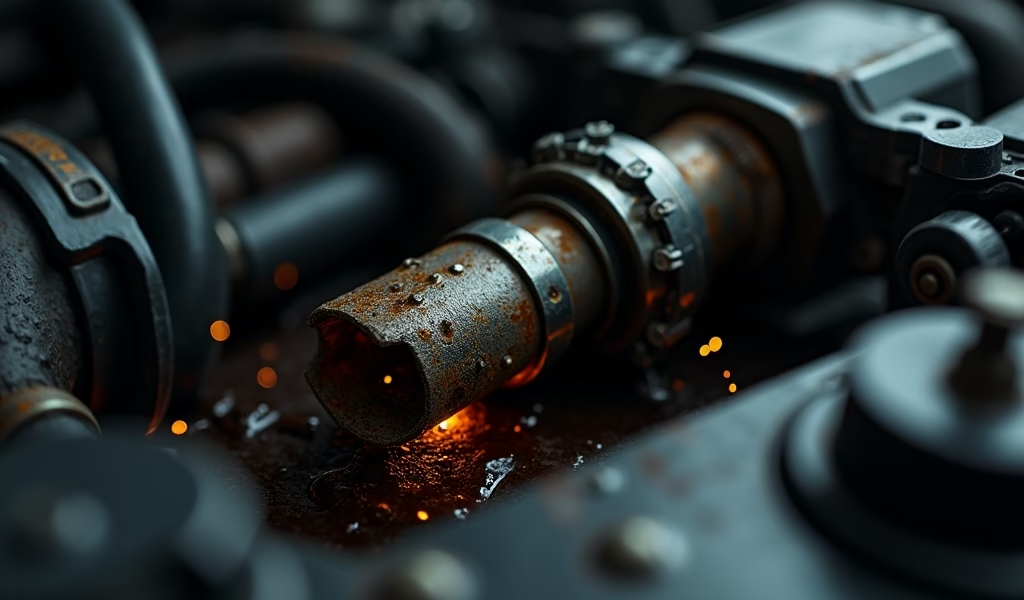
5. Crankshaft Position Sensor: The Engine’s Timing Maestro
If there’s one sensor that can leave you stranded without warning, it’s the Crankshaft Position Sensor (CPS). This critical component monitors the position and rotational speed of your crankshaft, providing essential timing information to your engine’s computer. Without this data, your ECU doesn’t know when to fire the spark plugs or inject fuel—rendering your vehicle completely inoperable.
Located near the main pulley at the front of the engine or near the flywheel/flexplate at the rear, the CPS typically uses magnetic induction to generate pulse signals as the crankshaft rotates. These signals create a precise timing reference for the engine management system.
What makes this sensor particularly tricky is that it often fails suddenly and completely. You might be driving along just fine one moment, and the next—nothing. The engine simply shuts off. Other times, failure is intermittent, causing random stalling and starting issues that can be maddeningly difficult to diagnose.
Signs of a failing crankshaft position sensor include:
- Engine suddenly cutting out while driving
- Intermittent starting problems or complete no-start conditions
- Engine misfires or rough running
- Check engine light with specific trouble codes (typically P0335, P0336, P0337, P0338, or P0339)
- Vehicle jerks or hesitates during acceleration
Replacing a crankshaft position sensor ranges from very easy to moderately difficult, depending on location and accessibility. On some vehicles, it’s right there in the open; on others, you might need to remove multiple components for access. Always consult a service manual for your specific vehicle. Remember to disconnect the battery before beginning work, and ensure the new sensor is exactly the right part for your engine.
DIY Sensor Maintenance and Troubleshooting
As someone who’s spent decades helping people save money on car repairs, I can tell you that sensor maintenance doesn’t have to be intimidating. With some basic tools and knowledge, you can handle many sensor-related tasks yourself. The key is knowing when to tackle a job and when to seek professional help.
Your most valuable tool for sensor diagnosis is an OBD-II scanner. These devices have become remarkably affordable, with basic models starting around $30. When your check engine light illuminates, the scanner retrieves trouble codes that point to specific sensors or systems. But remember—a trouble code isn’t a definitive diagnosis; it’s a starting point for investigation.
For effective sensor troubleshooting, follow this systematic approach:
- Scan for trouble codes and research their meaning for your specific vehicle
- Check for technical service bulletins (TSBs) related to your issue
- Inspect the sensor and its wiring for obvious damage
- Test the sensor using appropriate tools (multimeter, scan tool, etc.)
- Clean connections before replacing components
- Verify the fix by clearing codes and road testing
One of the most common mistakes I see DIYers make is replacing parts based on guesswork rather than testing. This “parts cannon” approach rarely fixes the underlying problem and wastes money. Instead, invest time in proper diagnosis. Many auto parts stores offer free code scanning services if you don’t own a scanner.
Remember that environmental factors significantly affect sensor performance. Heat, vibration, moisture, and oil contamination are the four horsemen of sensor apocalypse. When replacing sensors, always check for signs of these issues to prevent premature failure of the new component.
When to Replace Your Vehicle Sensors
Knowing when to replace sensors rather than clean or repair them is crucial for maintaining your vehicle’s performance and reliability. While sensors don’t have specific replacement intervals like oil or filters, they do eventually wear out or fail due to exposure to heat, vibration, and contaminants.
Most sensors will last the lifetime of the vehicle or at least 100,000 miles under normal conditions. However, driving environment, maintenance habits, and manufacturing quality all influence sensor longevity. For example, oxygen sensors typically need replacement every 60,000-100,000 miles, while other sensors might never need replacement during your ownership.
Here are my guidelines for determining when replacement is necessary:
- The check engine light persists after cleaning/testing the sensor
- You’ve verified the sensor is faulty through proper testing
- The sensor shows physical damage (cracks, corrosion, contamination)
- The vehicle exhibits consistent symptoms even after other maintenance
- The sensor is known to be at the end of its expected service life
When purchasing replacement sensors, quality matters significantly. While aftermarket sensors can save you money, some vehicles respond better to OEM (Original Equipment Manufacturer) parts. I generally recommend OEM sensors for luxury vehicles and complex systems, while quality aftermarket sensors often work perfectly in less sensitive applications.
Remember that sensor replacement often requires relearning or adaptation procedures. Modern vehicles need time to “learn” the characteristics of new sensors. Don’t be alarmed if your vehicle doesn’t immediately perform perfectly after sensor replacement. It may take several drive cycles (typically 50-100 miles of varied driving) before your vehicle’s computer fully adapts to the new component.
Conclusion: Becoming Sensor-Savvy
Understanding the 5 essential sensors in your vehicle empowers you to take control of your car’s health in ways previous generations of drivers never could. These small electronic components—the oxygen sensor, mass airflow sensor, throttle position sensor, coolant temperature sensor, and crankshaft position sensor—form the backbone of your vehicle’s nervous system. They constantly monitor conditions and help your car’s computer make thousands of adjustments every second for optimal performance.
By learning to recognize the warning signs of sensor problems, you can address issues before they escalate into expensive repairs or leave you stranded. The DIY approach to sensor maintenance isn’t about avoiding professional help altogether—it’s about knowing when you can handle a problem yourself and when you need a technician’s expertise.
Remember that proper diagnosis always comes before parts replacement. Using the right tools and resources, you can save hundreds or even thousands of dollars over your vehicle’s lifetime by handling simple sensor maintenance and replacement tasks yourself. And even when you do need professional help, you’ll be a more informed customer who can better communicate with your mechanic.
As automotive technology continues to advance, sensors will only become more numerous and sophisticated in our vehicles. The fundamental knowledge you’ve gained from this guide will serve you well regardless of what you drive—from older models to the latest high-tech vehicles. The relationship between you and your car has never been more interactive, and understanding these essential sensors is your key to keeping that relationship healthy for many miles to come.
Frequently Asked Questions
How do I know if my oxygen sensor is failing?
Watch for decreased fuel efficiency, rough idling, and an illuminated check engine light. Your vehicle may also fail emissions tests or produce black exhaust smoke when the oxygen sensor begins to fail.
Can I drive with a bad MAF sensor?
Yes, but it’s not recommended for extended periods as it can cause poor performance, stalling, and potential engine damage. Your vehicle will typically run in a “limp mode” with diminished power and efficiency.
How much does it typically cost to replace a throttle position sensor?
The part itself usually costs between $75-200, while professional installation adds another $50-150 depending on your vehicle model. DIY replacement can save significant labor costs if you’re comfortable with basic automotive repairs.
Will a faulty coolant temperature sensor cause overheating?
Yes, it can prevent cooling fans from activating at the right time or cause improper fuel mixture. This sensor failure can lead to overheating, especially in hot weather or during extended drives.
How often should vehicle sensors be replaced?
Most sensors don’t have a scheduled replacement interval and can last the lifetime of the vehicle. Oxygen sensors are the exception, typically needing replacement every 60,000-100,000 miles depending on your vehicle manufacturer’s recommendations.
Pingback: Car Telemetry Data: What It Tells You! - knowsyourcar.com
Pingback: Car alarm sensitivity: stop false alarms & save money - knowsyourcar.com