

Overview
This guide explains car electrical systems, covering batteries, alternators, starters, circuits, and diagnostic approaches, emphasizing how these components work together to power vehicle operations. It provides practical troubleshooting tips for common issues like dead batteries, lighting problems, and parasitic drains, helping car owners save money and prevent breakdowns through better understanding of their vehicle’s electrical components.
Table of Contents
- Introduction to Car Electrical Systems
- Battery Basics: Your Car’s Powerhouse
- The Charging System: Keeping Everything Powered
- Starting System: Getting Your Engine Running
- Understanding Vehicle Electrical Circuits
- Fuses, Relays and Protection Devices
- Lighting and Accessory Systems
- Essential Diagnostic Tools for Beginners
- Troubleshooting Common Electrical Problems
- Conclusion
- Frequently Asked Questions
Introduction to Car Electrical Systems
Ever turned your key only to hear that disappointing click instead of your engine roaring to life? Or watched your headlights mysteriously dim at a stoplight? These automotive head-scratchers usually lead back to one crucial system – your car’s electrical network.
Today’s vehicles rely on electricity for practically everything. It’s not just about starting the engine anymore; it’s the invisible force powering your heated seats, navigation system, and those essential safety features that keep you protected on the road.
Learning car electrical system basics isn’t just for mechanics – it’s knowledge that can save you time, money, and the frustration of unexpected breakdowns. Think of it as learning to speak your car’s language. Once you understand the fundamentals, your vehicle will practically tell you what’s wrong before small issues become major problems.
I’ve spent over two decades working under the hood, and I’m here to walk you through everything you need to know about your car’s electrical system – in plain, everyday language. No engineering degree required! We’ll cover the battery, starting system, circuits, protection devices, lighting, and the basic diagnostic tools that should be in every car owner’s toolkit.
Let’s demystify your car’s electrical system together, one component at a time.
Battery Basics: Your Car’s Powerhouse
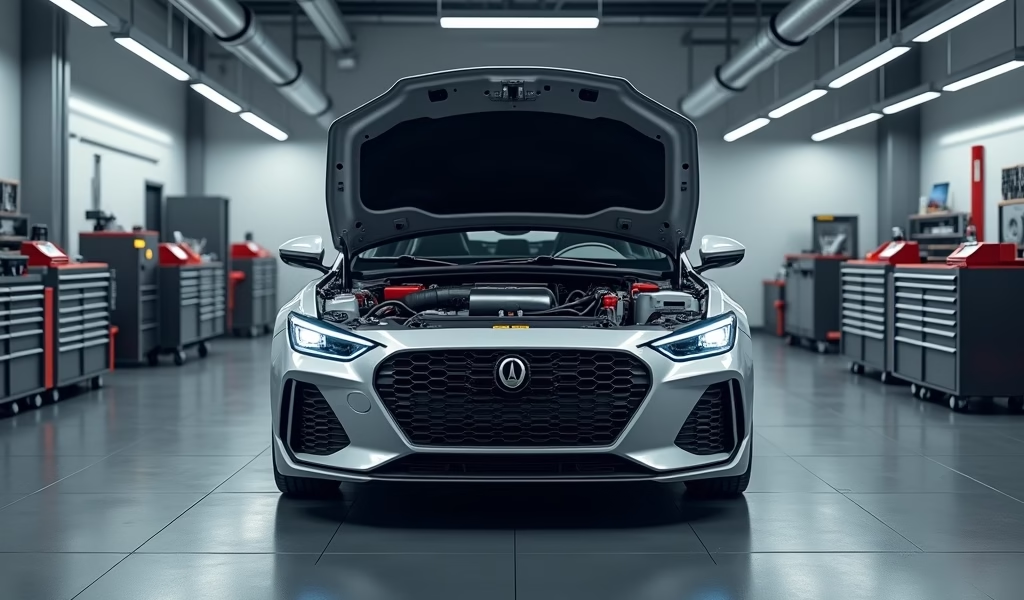
Think of your car battery as the heart of your electrical system. This unassuming box stores chemical energy and converts it into electrical energy that powers everything from your starter motor to your radio when the engine isn’t running.
Inside that plastic case, lead plates sit in sulfuric acid, creating a chemical reaction that produces electrons. These electrons flow through your car’s electrical system as 12-volt power – the standard for most vehicles on the road today.
Types of Car Batteries
Not all batteries are created equal, and choosing the right one matters. Here’s a quick rundown of what you’ll find in the market:
- Conventional lead-acid batteries: The traditional option that’s been around for decades. They’re affordable but require occasional maintenance.
- AGM (Absorbed Glass Mat): These premium batteries use fiberglass mats to hold the electrolyte. They’re spill-proof, maintenance-free, and perfect for vehicles with high electrical demands.
- Gel cell batteries: Using silica to gel the electrolyte, these specialized batteries resist vibration and work well in extreme temperatures.
- Lithium-ion batteries: Common in electric and hybrid vehicles, these lightweight powerhouses pack more energy but come with a higher price tag.
Your choice should depend on your climate, driving habits, and vehicle requirements. Living somewhere with blazing summers or frigid winters? Consider an AGM battery that handles temperature extremes better than conventional options. Driving a car loaded with power-hungry accessories? You’ll want a battery with higher reserve capacity.
Replacing your battery isn’t just about matching the size. According to Department of Energy research, choosing the right battery type for your specific driving conditions can extend its life by up to 50%.
Most drivers get about 3-5 years from a battery, though this varies widely based on use. If your car regularly sits unused for long periods or only makes short trips, your battery might not fully recharge between drives, shortening its lifespan considerably.
When it’s time for a new one, replacing your car battery is one of the more straightforward maintenance tasks you can tackle yourself. Just remember to disconnect the negative terminal first and reconnect it last to avoid sparks.
The Charging System: Keeping Everything Powered
Once your engine is running, the alternator takes over as the electrical system’s primary power source. This modest-looking component is actually an engineering marvel that transforms mechanical energy from your spinning engine into electrical energy.
The alternator performs three crucial jobs:
- Recharges the battery after starting
- Powers all electrical components while you’re driving
- Regulates voltage to protect sensitive electronics
Inside the alternator, a belt connected to your engine spins a rotor surrounded by copper windings. This creates a magnetic field that generates electricity – similar to how hydroelectric dams work, but much smaller and running on gasoline instead of water.
A properly functioning charging system maintains your battery at around 12.6 volts when the engine is off, and between 13.7-14.7 volts when running. This slight “overcharging” is intentional – it ensures your battery stays topped up even when powering multiple systems.
If you’ve ever had a mechanic “test your battery” and declare your alternator bad, this is why: they’re checking the entire charging system. A perfectly good battery won’t help if your alternator can’t keep it charged.
The health of your alternator directly impacts your battery life. In fact, understanding car battery types and their relationship with your alternator can prevent many common electrical issues. A failing alternator will gradually drain your battery until one day, you’re stranded with no warning.
Warning signs of alternator trouble include dimming headlights, dashboard warning lights, strange electrical behavior (like power windows moving slowly), and that distinctive burning smell from an overworked component.
Starting System: Getting Your Engine Running
The starting system performs one critical function – transforming electrical energy into mechanical force to crank your engine until it fires up and runs on its own. Let’s break down the key players:
The Starter Motor
Your starter motor is essentially a high-torque electric motor with a single purpose: to spin your engine’s flywheel fast enough to begin the combustion process. When you turn the key or push the start button, this powerful motor draws a massive amount of current – up to 300 amps – to overcome the compression in your engine’s cylinders.
That’s roughly 30 times the current needed to run your headlights! This extreme power demand explains why a battery that seems fine for running accessories might still fail to start your car on a cold morning.
The Starter Solenoid
The solenoid acts as both an electrical relay and a mechanical actuator. When activated, it performs two functions simultaneously:
- Closes a high-current electrical circuit to power the starter motor
- Physically pushes the starter drive gear forward to engage with your engine’s flywheel
That clicking sound you hear when your battery is weak? That’s the solenoid trying to engage but lacking enough power to complete the process. It’s like trying to throw a heavy punch when you’re exhausted – you can start the motion, but there’s not enough energy to follow through.
The Ignition Switch
Whether it’s a traditional key or a modern push-button, your ignition switch is the command center that coordinates the starting process. It controls multiple circuits in a specific sequence:
- OFF: All major electrical systems disconnected
- ACCESSORY: Powers your radio and accessories without engine operation
- ON/RUN: Activates fuel system and electronic controls
- START: Temporarily engages the starter (returns to RUN when released)
Modern vehicles add layers of security to this system, with immobilizers that require specific transponder signals from your key before allowing the engine to start – a major reason why replacement keys are so expensive these days.
When it comes to installing a car battery properly, the connection to your starting system is critical. Poor terminal connections can prevent sufficient current flow, leading to starting problems even with a perfectly good battery and starter.
Understanding Vehicle Electrical Circuits
Your car contains hundreds of individual electrical circuits, but they all follow the same basic principle: electricity must flow in a complete loop from the power source, through whatever’s being powered, and back to the source.
Think of your car’s electrical system like water flowing through pipes. The electricity (water) flows from the battery (reservoir), through wires (pipes), powers components like lights or motors (waterwheels), and returns to the battery to complete the circuit.
Voltage, Current, and Resistance
These three electrical properties are the foundation of understanding any electrical system:
- Voltage (V): The electrical “pressure” that pushes electricity through circuits, measured in volts. Your car’s system operates primarily on 12 volts.
- Current (I): The flow of electricity measured in amperes (amps). Different components require different amounts of current – from a fraction of an amp for dashboard lights to hundreds for starting motors.
- Resistance (R): The opposition to current flow measured in ohms. Everything from wires to components has some resistance.
These three factors are related by Ohm’s Law: Voltage = Current × Resistance (V = I × R). This relationship explains why a loose connection (increased resistance) can cause components to work poorly or not at all – the voltage remains the same, but current flow decreases.
When troubleshooting electrical problems, corrosion often increases resistance at connections. That’s why cleaning battery terminals sometimes magically fixes multiple electrical gremlins throughout your vehicle.
Circuit Protection
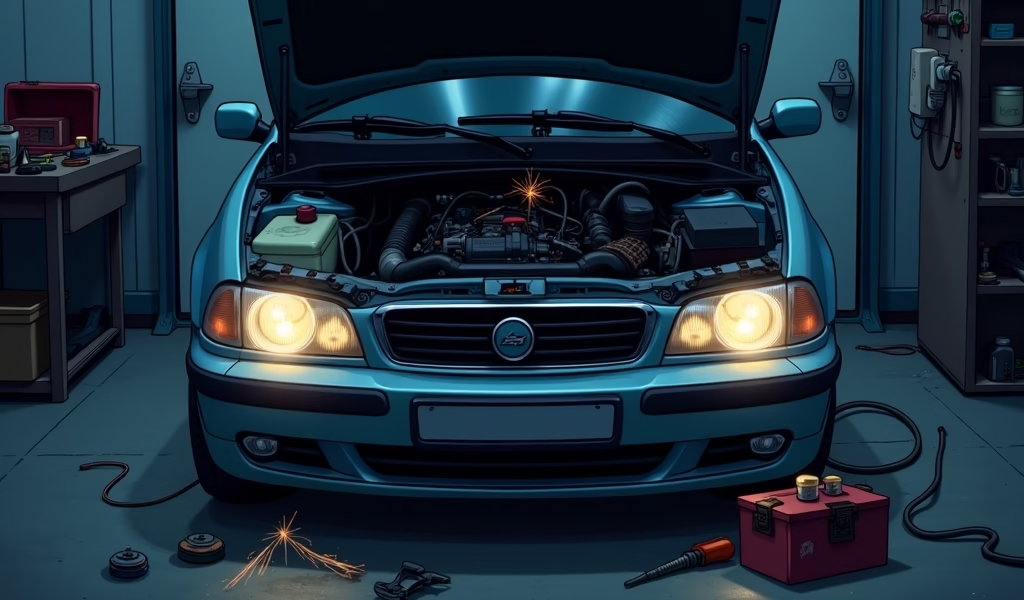
Every circuit in your car needs protection against excessive current flow. Without fuses, circuit breakers, or fusible links, a short circuit could melt wiring and potentially cause fires.
These protection devices are designed to fail safely when current exceeds their rating. Think of them as the weak links in a chain – they break first to protect the more valuable components.
According to the National Highway Traffic Safety Administration, electrical system failures contribute to thousands of vehicle fires annually, highlighting why proper circuit protection is so important.
Fuses, Relays and Protection Devices
Fuses are the unsung heroes of your car’s electrical system. These sacrificial components are designed to fail safely when too much current flows through a circuit, preventing fires or damage to expensive components.
A fuse is simply a metal strip that melts when current exceeds its rating. This breaks the circuit and stops electricity flow, much like a circuit breaker in your home but designed for one-time use.
Types of Fuses and How to Check Them
Modern vehicles typically use blade-type fuses in various sizes and colors, with the color and number indicating the amperage rating. When a system stops working, checking the fuse should be your first diagnostic step:
- Locate your fuse boxes (usually under the dashboard and in the engine compartment)
- Use the diagram on the fuse box cover to find the right fuse
- Remove the suspect fuse using fuse pullers (often included in the fuse box)
- Hold it up to the light – if the metal strip inside is broken, the fuse is blown
- Replace with a fuse of EXACTLY the same amperage rating
Never substitute a higher-rated fuse, as this defeats the safety purpose and can lead to electrical fires. If a replacement fuse immediately blows again, there’s a short circuit that needs professional attention.
Relays: The Electrical Middlemen
Relays are essentially remote-controlled switches that allow small currents to control much larger ones. They’re used extensively in systems like headlights, fuel pumps, and cooling fans.
When you flip your headlight switch, for example, it sends a small current to a relay, which then connects the main power circuit to your headlights. This allows small dashboard switches to control high-powered systems safely.
A failing relay often causes intermittent problems – a system works sometimes but not others. The quick test? Many relays are identical, so swapping with another non-essential system can help diagnose the issue.
Other Protection Components
Beyond fuses and relays, your car might use:
- Circuit breakers: These automatically reset after cooling down
- Fusible links: Special wires that act as fuses but handle higher currents
- Electronic control modules: Computers that monitor and shut down systems when abnormal conditions are detected
These devices work together to create multiple layers of protection for your vehicle’s electrical system.
Lighting and Accessory Systems
Your car’s lighting systems combine safety requirements with convenience features. From headlights that help you see at night to turn signals that communicate your intentions, these systems are essential for safe driving.
Exterior Lighting
Modern vehicles use several lighting technologies:
- Halogen: Traditional technology using a filament in halogen gas
- HID (High-Intensity Discharge): Creates light by arcing electricity between two electrodes
- LED: Light-Emitting Diodes that use semiconductor technology for efficient, long-lasting light
Each headlight circuit typically includes a relay to handle the high current demand and a fuse for protection. When headlights fail, the problem is often a blown bulb, bad relay, or corroded socket rather than something more complex.
Turn signals operate through a flasher unit (often electronic in modern cars) that interrupts the circuit at regular intervals. When a turn signal flashes too quickly, it usually indicates a bulb is burnt out.
Interior and Accessory Systems
From power windows to heated seats, modern vehicles are packed with electrical accessories that make driving more comfortable. Most operate through a similar electrical pathway:
- Power from the battery/alternator
- Through a fuse or circuit breaker
- To a switch (manual or electronic)
- To the component (motor, heating element, etc.)
- Back to ground
When accessories fail, tracing this pathway helps identify the culprit. Is the fuse good? Does the switch have power? Can you hear the motor trying to work?
Window regulators combine electric motors with mechanical linkages to raise and lower glass. When they fail, listen for the motor running without the window moving (mechanical failure) or complete silence (electrical issue).
Door locks use small actuators (solenoids) to move locking mechanisms. Their frequent use makes them common failure points, especially in older vehicles.
Essential Diagnostic Tools for Beginners
You don’t need a garage full of expensive equipment to diagnose basic electrical issues. A few affordable tools will handle most common problems:
Digital Multimeter: Your Electrical Detective
A digital multimeter is the Swiss Army knife of electrical diagnostics. This affordable tool (good ones start around $30) can measure:
- Voltage: To check battery condition and circuit operation
- Resistance: To test continuity and component function
- Current: To measure actual power consumption
For basic battery testing, set your multimeter to DC voltage (usually 20V range), connect the red probe to the positive terminal and black to negative. A healthy battery will show around 12.6 volts when the engine is off.
With the engine running, those numbers should jump to 13.7-14.7 volts, indicating your charging system is working properly.
Test Light: Quick Circuit Checker
A test light is even simpler – it’s a probe with a light bulb or LED that illuminates when it detects power. Connect the clip to a good ground, touch the probe to a circuit, and if the light glows, you have power.
This quick-check tool is perfect for:
- Verifying power at fuses
- Checking for power at switches and connectors
- Finding breaks in circuits
The main advantage? Speed. You can check dozens of connection points in minutes without changing multimeter settings.
Essential Electrical Repair Tools
Beyond diagnostic equipment, you’ll need:
- Wire strippers: For removing insulation without damaging the conductor
- Crimping tool: For attaching terminals properly
- Terminal assortment: Various connectors for different applications
- Electrical tape and heat shrink tubing: For insulating connections
- Fuse puller: Makes fuse removal easy without damage
Quality matters with these tools – cheap crimpers can create connections that fail over time, especially with vibration and temperature changes in automotive environments.
Troubleshooting Common Electrical Problems
When electrical gremlins strike, a methodical approach will save you time and frustration. Here’s how to tackle the most common issues:
Dead Battery and Starting Problems
When your car won’t start, follow this diagnostic sequence:
- Check battery terminals: Loose or corroded connections prevent power flow
- Test battery voltage: Should be at least 12.4 volts
- Try jump-starting: If successful, your battery is likely the culprit
- Listen for clicking: A single click often indicates starter problems; rapid clicking suggests low battery power
- Check starter connections: Ensure all wires are tight and corrosion-free
Remember that extreme temperatures significantly impact battery performance. A battery that works fine in summer might fail in winter without warning.
Lighting and Accessory Issues
For problems with lights, windows, or other accessories:
- Start with the fuse: Check the appropriate fuse using your owner’s manual
- Inspect bulbs: For lighting issues, a visual check often reveals burnouts
- Test the switch: Use your multimeter to check for power at the switch and output when activated
- Check the ground connection: Poor grounds cause many intermittent problems
For flickering lights, look for loose connections or a failing alternator. Dimming headlights when you use other accessories often points to charging system issues.
Parasitic Drains
If your battery keeps dying overnight, you likely have a parasitic drain – something drawing power when the vehicle is off. Modern cars normally draw a small amount of current for memory functions, but excessive drain will flatten your battery.
The diagnosis requires an ammeter connected in series with the battery negative cable. Normal drain is typically under 50 milliamps. Anything higher warrants investigation, usually by pulling fuses one by one until the drain decreases.
Common culprits include trunk lights, glove box lights, or aftermarket accessories that remain powered even when the vehicle is off.
Conclusion
Understanding your car’s electrical system doesn’t require an engineering degree – just some basic knowledge of how electricity works and the components involved. The electrical system is like your car’s nervous system, sending signals and power where they’re needed to keep everything running smoothly.
By learning these fundamentals, you’ve armed yourself with knowledge that can save you time, money, and the frustration of unexpected breakdowns. You’ll be able to perform basic diagnostics, communicate more effectively with mechanics, and make informed decisions about repairs.
Remember that safety always comes first when working with electrical systems. Always disconnect the battery before working on circuits, use proper tools, and don’t hesitate to seek professional help for complex issues.
The next time you turn your key and hear that sweet sound of your engine starting without hesitation, you’ll have a deeper appreciation for the complex electrical symphony that makes it possible. And when something does go wrong, you’ll approach the problem with confidence rather than confusion.
Keep learning, stay curious, and never stop exploring the fascinating systems that make your car the amazing machine it is!
Frequently Asked Questions
How often should I replace my car battery?
Most car batteries last 3-5 years depending on climate and driving habits. Have your battery tested annually after the three-year mark to avoid unexpected failures.
What causes most electrical problems in cars?
The majority of electrical issues stem from poor connections, corrosion, or blown fuses rather than failed components. Always check connections and fuses first before replacing parts.
Why do my lights dim when I turn on the air conditioner?
This indicates your alternator is struggling to meet the combined electrical demand. Have your charging system tested as this could signal a failing alternator.
Can I jump-start a car with a completely dead battery?
Yes, but it may take a few minutes of connection time before attempting to start. Allow the donor vehicle to run and charge the dead battery for 5-10 minutes for best results.
What’s the difference between a fuse and a relay?
A fuse is a protective device that breaks a circuit when current exceeds safe levels. A relay is an electrically operated switch that uses a small current to control a larger one, allowing low-current switches to operate high-power systems.
Pingback: how to test car battery voltage DIY Tips - knowsyourcar.com
Pingback: How to Replace a Car Fuse: 7 Proven Tips - knowsyourcar.com
Pingback: Trailer Light Wiring: 7 Proven Fixes to Stop Flickering - knowsyourcar.com
Pingback: Relay testing procedure: avoid expensive car repair bills - knowsyourcar.com
Pingback: Firmware update notification: avoid costly car repairs - knowsyourcar.com
Pingback: Switch operation verification to prevent costly breakdowns - knowsyourcar.com
Pingback: Technician Training Program to Avoid Costly Repairs - knowsyourcar.com