
Overview
This DIY guide provides a seven-step process for changing your vehicle’s brake pads, including required tools, safety precautions, and detailed instructions from preparation to final testing. The article emphasizes that replacing brake pads is an approachable car repair that can save hundreds of dollars while ensuring proper installation of this critical safety component.
Table of Contents
- What You’ll Need: Tools and Materials
- Step 1: Preparation and Safety First
- Step 2: Remove the Wheels
- Step 3: Locate and Examine the Brake Caliper
- Step 4: Remove the Old Brake Pads
- Step 5: Prepare the Caliper for New Pads
- Step 6: Install the New Brake Pads
- Step 7: Finish the Job
- Troubleshooting Common Issues
- Conclusion
- Frequently Asked Questions
That squealing noise when you hit the brakes isn’t your car singing – it’s crying for help. Worn brake pads not only create that cringe-worthy sound but can seriously compromise your safety on the road. While many drivers instinctively head to their mechanic at the first sign of brake trouble, replacing brake pads is actually one of the most approachable DIY car repairs you can tackle.
I’ve been changing brake pads for over 20 years, and I’m here to tell you that with some basic tools and a bit of patience, you can save yourself hundreds of dollars while ensuring this critical safety component is installed correctly. The satisfaction of completing this job yourself? That’s just the cherry on top.
Let’s walk through the process of how to change brake pads in seven straightforward steps that even first-time DIYers can follow. This comprehensive brake maintenance guide will give you the confidence to tackle this essential repair yourself.
What You’ll Need: Tools and Materials
Before getting your hands dirty, gather everything you’ll need. There’s nothing worse than being elbow-deep in brake dust only to realize you’re missing a crucial tool.
Tools:
- Floor jack and jack stands (never rely on just the jack!)
- Lug wrench
- C-clamp or caliper piston tool
- Socket set and wrenches
- Screwdrivers (flathead and Phillips)
- Wire brush
- Turkey baster (for removing brake fluid if needed)
Materials:
- New brake pads (specific to your vehicle make and model)
- Brake grease (silicone-based)
- Brake cleaner spray
- Brake fluid (check your owner’s manual for the correct type)
- Clean rags
Safety Equipment:
- Safety glasses
- Mechanic gloves
- Wheel chocks
Having quality tools doesn’t just make the job easier—it makes it safer. According to a study from the National Highway Traffic Safety Administration, improper maintenance causes thousands of accidents each year, many related to brake failures.
Step 1: Preparation and Safety First
Let’s be clear: skimping on safety precautions when working under a 3,000+ pound vehicle is not an option. This isn’t about being overcautious—it’s about going home in one piece.
Park your vehicle on a flat, level surface. Put the car in gear (or “Park” for automatics) and engage the parking brake. For extra security, place wheel chocks on the opposite side of the car from where you’ll be working.
Before lifting the car, loosen (but don’t remove) the lug nuts on the wheels you’ll be removing. This is much easier while the car is still on the ground providing resistance.
Using your owner’s manual, locate the proper jacking points. Position the jack correctly and lift the vehicle until the wheel is off the ground. Immediately secure it with jack stands placed under appropriate support points on the frame. Lower the car slightly onto the stands.
Give the vehicle a gentle shake test to ensure it’s stable before crawling underneath. Your life literally depends on this step, so take your time and do it right.
Step 2: Remove the Wheels
With your vehicle safely elevated and supported, remove the loosened lug nuts. I recommend placing them in a small container or following a specific pattern so they don’t roll away into the automotive black hole that seems to exist in every garage.
Carefully pull the wheel straight toward you. Set it flat on the ground, out of your working area but somewhere it won’t roll away or become a tripping hazard.
If you’re changing brake pads on multiple wheels, I strongly suggest working on one wheel at a time. This prevents confusion and mixing up position-specific parts, especially if you’re new to brake work.
Step 3: Locate and Examine the Brake Caliper
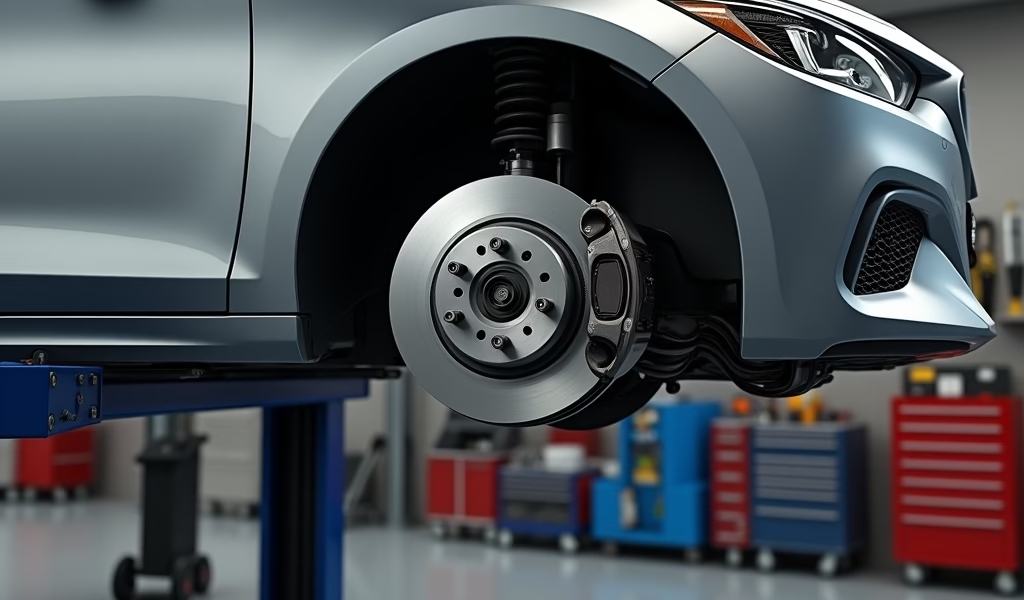
With the wheel off, you can now see your brake assembly. The caliper is the clamp-like component that hugs the rotor (the shiny disc). It’s responsible for squeezing the brake pads against the rotor when you hit the brakes.
Take a moment for visual inspection. Look for:
- Excessive rust or scoring on the rotor
- Leaking brake fluid around the caliper or lines
- Damaged rubber boots on the caliper
- Uneven pad wear
This inspection might reveal other issues that need addressing. According to Car and Driver research, most brake pads should last between 30,000 and 70,000 miles, but factors like driving habits and environment can significantly impact their lifespan.
Step 4: Remove the Old Brake Pads
Now for the meat of the operation. Locate the caliper bolts—typically found on the inside of the caliper, with one at the top and one at the bottom. These bolts secure the caliper to its bracket.
Remove these bolts using the appropriate socket or wrench. The caliper should now lift off, though it may require gentle persuasion if it’s been in place for a while.
Important: Never disconnect the brake line! Instead, support the caliper with wire or a bungee cord from a suitable suspension point to prevent stress on the brake hose.
With the caliper suspended safely out of the way, you can now remove the old brake pads. They may be held in with clips, pins, or simply sit in grooves in the caliper bracket. Pay attention to how they’re positioned—your new pads will need to go in exactly the same way.
While you’re here, examine the rotor surface. Light scoring is normal, but deep grooves, significant rust, or visible warping means the rotor should be replaced or resurfaced. Complete brake replacement may be necessary if you spot severe rotor damage.
Step 5: Prepare the Caliper for New Pads
Before installing the new pads, you’ll need to compress the caliper piston. This piston naturally extends as brake pads wear down, so it needs to be pushed back to accommodate the thickness of the new pads.
Place an old brake pad against the piston, then use a C-clamp or caliper tool to slowly and evenly push the piston back into its bore. If your vehicle has rear disc brakes, the pistons may need to be twisted as they’re compressed—a special caliper tool makes this easier.
While the caliper is still detached, clean it thoroughly with brake cleaner, paying special attention to the sliding points. Apply a small amount of brake grease to:
- The backs of the new brake pads (where they contact the piston and caliper)
- The caliper slider pins
- Any metal-to-metal contact points
Be careful not to get any grease on the friction surface of the pads or the rotor—this will compromise braking performance and could lead to dangerous brake failure.
Step 6: Install the New Brake Pads
With preparation complete, it’s time for the main event. Place the new pads into position, ensuring they’re oriented correctly. Many pads are marked “inside” and “outside” or have wear indicators that must be positioned properly.
Replace any anti-rattle clips or hardware that came with your new pads, following the same configuration as the original setup. These small components play a crucial role in preventing annoying brake noise.
Carefully position the caliper over the new pads and rotor, then reinstall and tighten the caliper bolts to the manufacturer’s specified torque. Over-tightening can damage threads while under-tightening can lead to dangerous loosening during driving.
Quality matters when it comes to brake pads replacement. While budget options exist, investing in premium brake pads often means better stopping power, less noise, and longer life.
Step 7: Finish the Job
With the new pads and reassembled caliper in place, it’s time to bring this operation to a close. Reinstall the wheel, hand-tightening all lug nuts in a star or cross pattern to ensure even seating.
Lower the vehicle slightly so the tire makes contact with the ground but doesn’t bear the car’s full weight yet. Now tighten the lug nuts to the recommended torque specification in the same star pattern. This two-stage tightening process helps prevent warped rotors and ensures the wheel is properly seated.
Once all wheels are reinstalled and properly torqued, completely lower the vehicle and remove the jack stands and wheel chocks.
Before taking your vehicle for a spin, pump the brake pedal several times while the car is stationary. The pedal might initially feel soft as the pistons and pads adjust to their new positions. Continue pumping until you feel firm resistance.
Finally, you’ll need to “bed in” your new brake pads—a process that transfers a thin layer of pad material onto the rotors for optimal performance. Find a safe, low-traffic area and perform a series of moderate stops from about 30 mph, allowing 30 seconds between stops for cooling. This helps the pads seat properly and prevents glazing.
Troubleshooting Common Issues
Even experienced mechanics occasionally encounter issues after a brake job. Here are some common problems and solutions:
Squeaking or grinding after installation:
- Ensure anti-rattle clips are properly installed
- Check that brake pads are correctly positioned
- Verify that all sliding points were properly lubricated
- Make sure no grease contaminated the friction surfaces
Soft brake pedal:
- Continue pumping the pedal to build pressure
- Check for air in the brake lines (may require bleeding)
- Ensure the caliper piston was properly seated
Uneven wear on your old pads:
- Consider having your alignment checked
- Inspect suspension components for wear
- Check for stuck caliper slides or pistons
Conclusion
Congratulations! You’ve successfully completed one of the most valuable DIY car maintenance skills in your automotive arsenal. Not only have you saved potentially hundreds of dollars in labor costs, but you’ve also gained intimate knowledge of one of your vehicle’s most critical safety systems.
I recommend inspecting your brake pads every 10,000 miles and replacing them when they reach about 3-4mm in thickness. Your stopping power is not something to compromise on—when in doubt, replace your pads sooner rather than later.
By mastering how to change brake pads, you’ve taken a significant step toward becoming a more self-sufficient vehicle owner. The sense of accomplishment from completing your own brake job is almost as satisfying as the smooth, confident braking you’ll experience with your new pads.
Keep your tools handy and your knowledge growing—your car (and your wallet) will thank you for it!
Frequently Asked Questions
How often should brake pads be replaced?
Most brake pads last between 30,000-70,000 miles, but this varies based on driving habits and conditions. Replace them when they reach 3-4mm thickness or if you hear squealing/grinding noises.
Can I just replace the brake pads on one side?
Always replace brake pads in pairs (both wheels on the same axle). Replacing just one side creates uneven braking force that can be dangerous and lead to pulling during braking.
How much money can I save by changing my own brake pads?
You can save anywhere from $150-$300 per axle by doing the job yourself. The parts typically cost $30-$75 per axle while labor at a shop adds $120-$250.
What’s the difference between ceramic and semi-metallic brake pads?
Ceramic pads are quieter, produce less dust, and are gentler on rotors, but cost more and may not perform as well under extreme conditions. Semi-metallic pads offer better braking performance, especially when hot, but can be noisier and wear rotors faster.
Do I need to bleed the brakes when changing pads?
Usually not, unless you’ve opened the hydraulic system or suspect air in the lines. If the brake pedal feels spongy after installation, bleeding may be necessary.
Pingback: How to Change Brake Pads: Step-by-Step Guide - knowsyourcar.com