
Overview
This article guides drivers on interpreting car dashboard symbols, explaining the color-coded warning system (red for immediate dangers, yellow for caution, green/blue for information) and detailing critical warnings that require immediate attention versus routine maintenance indicators. It provides practical advice on responding to warning lights and emphasizes how understanding these symbols empowers drivers to maintain vehicle safety, prevent costly repairs, and drive with confidence.
Table of Contents
- Deciphering Your Dashboard: The Modern Driver’s Challenge
- Warning vs. Information Symbols: Knowing the Difference
- Critical Warning Symbols You Should Never Ignore
- Maintenance Reminder Symbols: Keeping Your Car in Top Shape
- Information Indicators: Your Car’s Status Updates
- Modern Dashboard Features and Advanced Systems
- What to Do When a Warning Light Appears
- Conclusion: Becoming Fluent in Your Car’s Language
- Frequently Asked Questions
Deciphering Your Dashboard: The Modern Driver’s Challenge
Remember when you first sat behind the wheel of your car? That dashboard with its constellation of cryptic symbols probably felt as foreign as ancient hieroglyphics. Learning how to read car dashboard symbols isn’t just helpful—it’s essential for every driver’s safety and wallet. Just as sailors once navigated by the stars, today’s drivers must navigate by understanding these illuminated guides on their instrument panels.
Your car’s dashboard is essentially its communication center—a silent partner trying to tell you important information about what’s happening under the hood. Think of these symbols as your vehicle’s own language; when you become fluent in it, you’ll never be caught off guard by preventable mechanical issues again.
The average American driver encounters about 20 different dashboard symbols regularly, yet AAA reports that 1 in 3 drivers can’t identify what a low tire pressure warning light means. This knowledge gap can lead to everything from decreased fuel efficiency to dangerous driving conditions.
In this comprehensive guide, we’ll decode these mysterious glyphs that light up your dashboard. From the mundane to the “pull-over-immediately” urgent, you’ll learn to differentiate between symbols that merely suggest a routine check-up and those that warn of imminent danger—like the difference between a friendly wave and a distress signal.
Warning vs. Information Symbols: Knowing the Difference
Just as traffic lights use different colors to convey different messages, your dashboard employs a similar color-coding system. This isn’t arbitrary—it’s an international language designed to quickly communicate the severity of what your car is experiencing.
Red warnings are the equivalent of Paul Revere’s midnight ride—they announce immediate danger and require prompt attention. These alerts signal conditions that could damage your vehicle or compromise your safety. When you see a red symbol illuminate, it’s usually best to safely pull over as soon as possible.
Yellow or amber lights serve as caution flags on your dashboard racetrack. They don’t necessarily mean “stop everything,” but rather “be aware and get this checked soon.” Think of them as your car clearing its throat before a more serious conversation.
Green and blue indicators are simply informational—like a friendly text message letting you know your high beams are on or your turn signal is blinking. They require no action and simply confirm that certain systems are operating.
Understanding this color hierarchy is the first step in becoming literate in car dashboard communication. It helps prioritize your response when symbols illuminate, preventing both unnecessary panic and dangerous complacency.

Critical Warning Symbols You Should Never Ignore
Some dashboard warnings demand your immediate attention—like that insistent knock on your door at 3 AM. Ignoring these critical alerts is akin to disregarding the smoke detector in your home: the consequences could be both dangerous and expensive.
The engine warning light—often depicted as an engine outline or the words “CHECK ENGINE”—is perhaps the most notorious. Like the canary in a coal mine, this light can indicate problems ranging from a loose gas cap to serious engine misfires. When this illuminates, it’s wise to have your vehicle checked promptly by a professional who can run a diagnostic scan.
The oil pressure warning symbol—typically shaped like an oil can or oil lamp—deserves particular reverence. This isn’t merely suggesting you need an oil change; it’s warning that your engine may not be receiving proper lubrication. Continuing to drive could lead to a mechanical version of the Titanic’s fate—catastrophic and expensive failure.
The temperature warning light—usually shown as a thermometer in liquid—signals your engine is overheating. Like a fever in the human body, an overheating engine demands immediate attention. Pull over safely, turn off your engine, and allow it to cool before investigating or seeking help.
The brake system warning light might display as “BRAKE” or a circle with exclamation point. This could indicate anything from your parking brake being engaged to a serious issue with your anti-lock braking system. Either way, your ability to stop effectively might be compromised—a situation as serious as riding a bicycle with cut brake lines.
The battery alert—shaped like a battery—illuminates when your electrical system isn’t charging properly. Ignore this, and you might find yourself stranded like a sailor on a deserted island, unable to restart your vehicle after turning it off.
When these critical warnings appear, consider them non-negotiable demands for attention. The small inconvenience of addressing them promptly pales in comparison to the potential consequences of neglect.
Maintenance Reminder Symbols: Keeping Your Car in Top Shape
Not all dashboard symbols are harbingers of doom. Some are more like friendly reminders from a conscientious neighbor—gentle nudges that help you maintain your vehicle’s health before problems escalate. Understanding these maintenance indicators is like knowing preventative healthcare for your automobile.
The tire pressure monitoring system (TPMS) light—resembling a tire cross-section with an exclamation point—is among the most common maintenance reminders. Like checking your blood pressure, monitoring tire pressure is fundamental preventative care. Properly inflated tires improve safety, handling, and fuel economy—a win-win-win scenario.
The oil change reminder might appear as an oil can or “MAINTENANCE REQUIRED.” Unlike the oil pressure warning, this simply indicates it’s time for routine service—the automotive equivalent of a regular dental cleaning. Modern vehicles calculate this based on mileage and driving conditions rather than a simple odometer reading.
The windshield washer fluid indicator—showing a windshield with spray—is perhaps the most straightforward maintenance light. It simply indicates your washer fluid reservoir needs replenishing, much like refilling your water bottle before a long hike. This is typically an easy do-it-yourself task that requires no special skills.
The air filter reminder—often displayed as a filter icon—suggests your engine isn’t breathing as efficiently as it could. Just as you’d change your home’s air filters regularly, your car’s filters need periodic replacement to maintain performance and efficiency.
These maintenance symbols are your vehicle’s way of practicing preventative medicine. Heeding these gentle reminders can help you avoid the more serious warning lights we discussed earlier and extend your car’s lifespan substantially. As Benjamin Franklin might say if he were a mechanic: “An ounce of maintenance is worth a pound of repair.”
Information Indicators: Your Car’s Status Updates
Beyond warnings and maintenance reminders, your dashboard hosts a variety of information indicators—think of these as your car’s status updates or tweets. They don’t require action; they simply keep you informed about various systems’ operations. Understanding these symbols helps you become more attuned to your vehicle’s normal functioning.
The high beam indicator—typically a blue symbol with horizontal rays—simply confirms your headlights are in high beam mode. Like being reminded you’re wearing your formal clothes, it’s information you should know when interacting with others—in this case, oncoming drivers who would appreciate you dimming those lights.
Turn signal indicators—those rhythmically blinking arrows—confirm your intention to change direction. They sometimes blink faster when a bulb needs replacing, a subtle diagnostic feature that’s been part of automotive design since the days of Eisenhower.
The cruise control indicator illuminates to confirm you’ve engaged your vehicle’s speed maintenance system. This system, which maintains a constant speed without your foot on the accelerator, has been making long highway drives more comfortable since it became commonplace in the 1970s.
The door ajar symbol—often showing an overhead view of your car with an open door—alerts you when you haven’t completely closed a door, trunk, or hood. It’s the automotive equivalent of your mother reminding you to zip up your coat before heading out into the cold.
The seat belt reminder—depicted as a person wearing a seat belt—serves as a gentle but persistent nudge to buckle up. This simple device, perhaps the most important safety innovation in automotive history, reduces fatal injuries by approximately 45% according to the National Highway Traffic Safety Administration.
These information indicators create a complete picture of your vehicle’s operational state. While they don’t require immediate action like warning lights, they contribute to your overall awareness as a driver—much like keeping an eye on weather conditions before a journey.
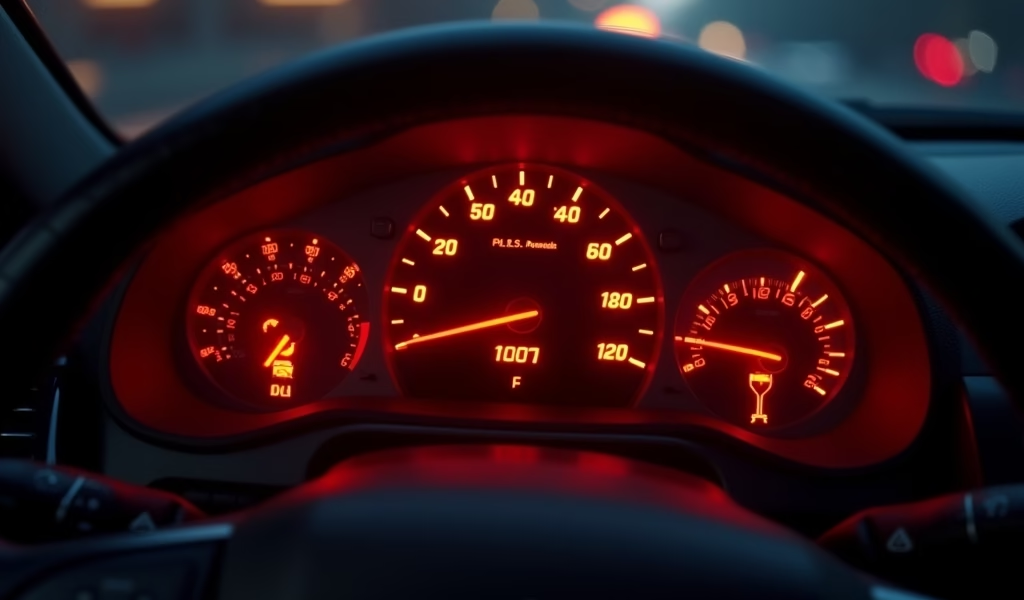
Modern Dashboard Features and Advanced Systems
As cars have evolved from basic transportation to sophisticated computing platforms on wheels, dashboards have transformed accordingly. Modern vehicles display symbols that would have seemed like science fiction to drivers of the 1950s, much like smartphones would have bewildered telephone operators of that era.
Advanced driver assistance systems (ADAS) have introduced a whole new vocabulary of dashboard symbols. Lane departure warnings, blind spot monitoring, and forward collision alerts each have their own unique indicators. These systems act like extra sets of eyes on the road, but understanding their dashboard symbols is crucial to interpreting their messages correctly.
Hybrid and electric vehicles present their own unique set of indicators. Battery charge states, power flow diagrams, and regenerative braking indicators provide vital information for maximizing range and efficiency. Learning to read these symbols is like understanding the fuel gauge in a conventional car—essential knowledge for avoiding being stranded.
Infotainment system notifications have also migrated to the dashboard in many vehicles. Bluetooth connectivity, smartphone integration, and even social media alerts might appear in your instrument cluster. While convenient, these can also be distractions if not managed properly.
The shift toward digital displays has allowed for more dynamic and customizable dashboards. Many newer vehicles allow drivers to choose what information appears and how it’s presented—similar to arranging apps on a smartphone home screen. This flexibility is convenient but requires some initial learning to configure optimally for your driving style.
As learning car maintenance basics becomes increasingly important, understanding these advanced dashboard features is becoming a fundamental aspect of driver education. The dashboard symbols in today’s vehicles reflect our technological era—more information-rich but requiring more interpretation than their simpler ancestors.
What to Do When a Warning Light Appears
Even armed with knowledge about dashboard symbols, the moment one illuminates unexpectedly can trigger anxiety similar to hearing an unusual noise in your home at night. Having a systematic approach to these situations can transform panic into productive action.
First, assess the urgency based on the color and symbol. Red warnings generally require immediate attention, while yellow or amber typically allow for a more measured response. If a red warning appears, consider safely pulling over at the earliest opportunity—much like you would exit a building when a fire alarm sounds.
Consult your owner’s manual—that often-neglected tome in your glove compartment is the definitive guide to your specific vehicle’s dashboard symbols. Like a dictionary for a foreign language, it can provide crucial translations when you’re uncertain about a symbol’s meaning.
For warning lights related to mechanical systems, evaluate whether it’s safe to continue driving. Some issues, like low oil pressure or overheating, can cause catastrophic damage if ignored even briefly. Others, like a check engine light without accompanying drivability issues, might allow for a careful journey to a repair facility.
Consider using an OBD-II scanner for diagnostic trouble codes when the check engine light appears. These affordable devices can help you reset a car’s check engine light after identifying the underlying issue, potentially saving an unnecessary trip to the mechanic for minor problems.
When in doubt, consult a professional. Modern vehicles are complex systems with interconnected components. What seems like a simple warning might be a symptom of a more complex issue—similar to how a headache could be just a headache, or a sign of something requiring medical attention.
Remember that some warning lights, particularly the check engine light, will remain illuminated even after the issue is resolved until the system is reset. This doesn’t necessarily mean the problem persists—just that your car’s computer needs confirmation that the repair was successful.
Approaching dashboard warnings with this systematic process transforms them from mysterious glyphs into useful communications from your vehicle. It’s the difference between hearing a strange noise in your house and recognizing it as the familiar sound of your refrigerator’s ice maker.
Conclusion: Becoming Fluent in Your Car’s Language
Mastering how to read car dashboard symbols is like learning a new language—one that allows you to communicate directly with your vehicle. This automotive literacy empowers you as a driver, potentially saving you from dangerous situations, unexpected breakdowns, and costly repairs that could have been prevented with early intervention.
Just as the explorers of old learned to read the stars to navigate unfamiliar territories, today’s drivers must become adept at interpreting these illuminated guides on their instrument panels. The symbols may have evolved from the simple gauges of early automobiles to the sophisticated digital displays of modern vehicles, but their purpose remains the same: to keep you informed about your car’s condition and needs.
Remember that your dashboard isn’t trying to confuse or alarm you—it’s designed to communicate essential information in the most efficient way possible. Approaching these symbols with confidence rather than anxiety transforms your relationship with your vehicle from one of uncertainty to understanding.
Take some time to familiarize yourself with your specific vehicle’s dashboard symbols before you need to interpret them in a high-pressure situation. Like any language, fluency comes with practice and exposure. A quick review of your owner’s manual can prevent that moment of panic when an unfamiliar light suddenly appears.
By becoming fluent in your car’s unique dialect of lights and symbols, you transform from a passive passenger to an active partner in your vehicle’s maintenance and operation. It’s a small investment of time that pays significant dividends in safety, reliability, and peace of mind every time you take the wheel.
Frequently Asked Questions
What does a flashing check engine light mean versus a steady one?
A flashing check engine light indicates a severe problem that could damage your catalytic converter if you continue driving. A steady light suggests a less urgent issue that should still be checked soon.
Can I drive with the battery warning light on?
It’s not recommended to drive with the battery light on as your car is running solely on battery power that will eventually deplete. You may be able to reach a nearby service station, but the vehicle could stall without warning.
What should I do if multiple warning lights come on simultaneously?
Multiple warning lights often indicate an electrical system issue or serious mechanical problem. Pull over safely, turn off the engine, and call for roadside assistance rather than risking further damage.
How long can I drive with the low tire pressure light on?
While you can drive short distances with the low tire pressure light on, you should check and adjust your tire pressure as soon as possible. Underinflated tires reduce fuel efficiency and can lead to dangerous blowouts, especially at highway speeds.
Are dashboard symbols universal across all car makes and models?
While many common symbols are standardized, variations exist between manufacturers and even between different models from the same company. Always refer to your specific vehicle’s owner’s manual for definitive information about your dashboard symbols.