

Overview
Like a dedicated guardian of your road trips, the Subaru Tribeca’s 5EAT transmission requires vigilant maintenance despite Subaru’s optimistic “lifetime fluid” claims—with experts recommending fluid changes every 30,000 miles to avoid common valve body failures, torque converter issues, and solenoid problems that typically emerge between 80,000-120,000 miles. Recognizing early warning signs like delayed engagement, unusual shifting patterns, or fluid leaks can save owners thousands in repair costs, potentially transforming a $500 solenoid replacement into a preventive victory rather than facing a $4,000 transmission rebuild down the road.
Table of Contents
- Understanding the Tribeca Transmission
- Common Transmission Problems
- Warning Signs to Watch For
- Proper Maintenance Schedule
- DIY vs. Professional Service
- Transmission Repair Costs
- Extending Transmission Life
- Conclusion
- Frequently Asked Questions
Understanding the Tribeca Transmission
The Subaru Tribeca, produced from 2006 to 2014, came equipped with a 5-speed automatic transmission that paired with Subaru’s signature all-wheel-drive system. As someone who’s rebuilt dozens of these units, I can tell you they’re impressive pieces of engineering – when they work correctly.
This transmission, known as the 5EAT (5-speed Electronic Automatic Transmission), was designed to handle the substantial weight and torque demands of Subaru’s largest SUV offering. Unlike transmissions in smaller Subaru models, the Tribeca’s unit needs to manage more stress while delivering smooth power to all four wheels.
The 5EAT features a complex valve body, multiple solenoids, and electronic controls that work together to provide the right gear at the right time. Early models (2006-2007) were paired with a 3.0L engine, while later models (2008-2014) used the more powerful 3.6L engine, with slight transmission adjustments to handle the increased torque.
What makes this transmission unique is its integration with Subaru’s transfer case system, which distributes power between the front and rear wheels. This connection means transmission issues can sometimes affect your all-wheel-drive performance as well.
Common Transmission Problems

After working on countless Tribeca transmissions, I’ve noticed several recurring issues that plague these otherwise reliable vehicles. Understanding these common problems can help you catch them early, potentially saving thousands in repair costs.
Valve body issues are perhaps the most prevalent Tribeca transmission problem. The valve body controls hydraulic fluid flow throughout the transmission, and when it begins to wear, you’ll notice erratic shifting, particularly between 2nd and 3rd gears. This typically starts showing up around the 80,000-mile mark, especially in vehicles driven in stop-and-go traffic.
Torque converter failure is another frequent culprit. The converter is responsible for transferring engine power to the transmission, and when it starts failing, you’ll feel shuddering during acceleration – almost like driving over rumble strips. This is particularly common in 2006-2008 models and can eventually lead to complete transmission failure if ignored.
Solenoid problems plague many Tribecas as they age. These electronic components control when and how the transmission shifts, and when they begin failing, your transmission might refuse to engage certain gears or shift erratically. According to CarComplaints.com data, this issue tends to emerge between 90,000 and 120,000 miles.
Fluid leaks develop frequently around the pan gasket and cooler lines. The Tribeca’s tight engine compartment means these components experience significant heat cycling, causing seals to degrade faster than you might expect. Even small leaks can eventually lead to low fluid levels and transmission damage.
Overheating is particularly troublesome in the Tribeca due to its compact engine bay and high-stress driving conditions. When the transmission fluid overheats repeatedly, it breaks down, causing accelerated wear on internal components. This is especially common when towing or driving in mountainous terrain.
Warning Signs to Watch For
In my years working on Subaru transmissions, I’ve found that most catastrophic failures give plenty of warning signs before leaving you stranded. Here are the key symptoms that should prompt immediate attention:
- Delayed engagement when shifting from Park to Drive or Reverse (especially when cold)
- Hesitation or “slipping” feeling during acceleration
- Unusual noises like whining, buzzing, or clunking during shifts
- Burning smell after driving, particularly after hill climbs or towing
- Check engine light with transmission-related codes (P0700-P0799)
- Fluid leaks under the vehicle (red or brown spots)
- Erratic shifting or skipping gears
The most commonly overlooked warning sign is a subtle change in how the transmission shifts when cold. Many Tribeca owners tell me they noticed their vehicle hesitating slightly when first put into gear in the morning, but they dismissed it as normal behavior. Unfortunately, this early symptom often precedes more serious problems by just a few thousand miles.
Pay particular attention to how your Tribeca handles the 3-4 shift under moderate acceleration. This shift point is typically the first to show issues with the valve body, and catching it early can mean the difference between a $600 solenoid replacement and a $4,000 transmission rebuild.
Another telling sign is transmission fluid condition. Healthy Tribeca transmission fluid should be bright red and have a slightly sweet smell. If your fluid looks dark brown or black, or smells burnt, your transmission is already suffering from excessive heat damage.
Proper Maintenance Schedule
Despite what you might have heard about “lifetime” transmission fluid, proper maintenance is crucial for your Tribeca’s transmission longevity. Here’s what I recommend to my customers for maximum transmission life:
- Transmission fluid and filter change: Every 30,000 miles (or every 2 years, whichever comes first)
- Transmission cooler flush: Every 60,000 miles
- External transmission inspection for leaks: Annually
- Transfer case and differential fluid service: Every 60,000 miles
- Transmission mount inspection: Every 30,000 miles
The most critical maintenance item is the fluid change. Subaru officially recommended longer intervals (or none at all in some cases), but real-world experience shows these recommendations are far too optimistic. The 5EAT transmission in your Tribeca works hard, and the fluid breaks down much faster than Subaru suggests.
Always insist on genuine Subaru ATF-HP transmission fluid or a high-quality equivalent like Valvoline MaxLife ATF. Using the wrong fluid type is a recipe for transmission damage, as the 5EAT has specific friction requirements that many generic fluids don’t meet.
The transmission service interval should be shortened to every 15,000-20,000 miles if you regularly tow, drive in mountainous areas, or frequently sit in heavy traffic. These conditions cause higher fluid temperatures that accelerate fluid breakdown.
Remember that preventive maintenance might seem expensive at around $250-300 per service, but it’s a fraction of what you’ll pay for a transmission rebuild. As the saying goes in our shop: “You can pay a little now or a lot later.”
DIY vs. Professional Service
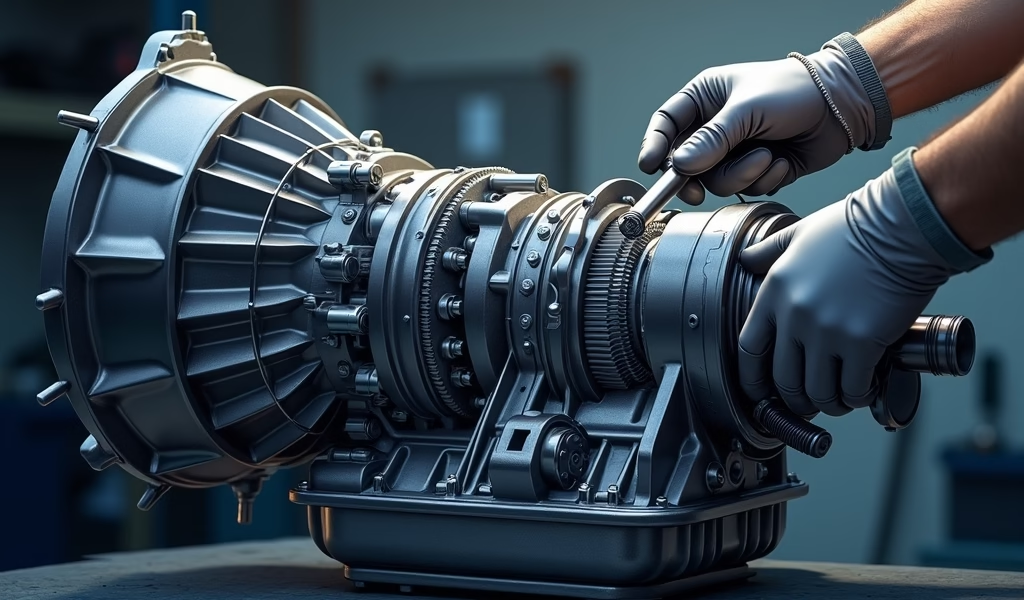
For the mechanically inclined, some Tribeca transmission maintenance can be handled at home. Checking fluid level and condition is relatively straightforward once you locate the transmission dipstick (hint: it’s tucked behind the air intake assembly on the driver’s side).
If you’re comfortable working on your vehicle, a basic transmission fluid change is possible with some patience and the right tools. You’ll need a drain pan, a funnel, the correct amount of ATF-HP fluid, and basic hand tools. The process involves removing the drain plug, replacing the filter, and carefully refilling with exactly the right amount of fluid.
However, there are several reasons why professional service might be the better choice:
- The Tribeca lacks a traditional drain plug, making complete fluid exchange difficult without specialized equipment
- Professional shops can perform a transmission flush that replaces nearly 100% of the fluid (DIY methods typically only replace 40-60%)
- Proper disposal of used transmission fluid requires special handling
- Accurate fluid level checking requires the transmission to be at operating temperature and the vehicle to be level
- Overfilling or underfilling by even a small amount can cause transmission problems
If you decide to tackle this job yourself, consider purchasing a shop manual or following detailed video tutorials from reputable mechanics. The Eric The Car Guy YouTube channel offers excellent guidance for DIY transmission service.
For anything beyond basic maintenance – like diagnosing shifting problems or replacing solenoids – I strongly recommend finding a qualified professional. Transmission work requires specialized knowledge and tools, and mistakes can be costly.
Transmission Repair Costs
Let’s talk about what you might expect to pay for Tribeca transmission work. These figures are based on national averages, so your local costs may vary somewhat:
- Transmission fluid and filter change: $200-300
- Solenoid replacement: $400-700
- Valve body replacement/rebuild: $800-1,200
- Torque converter replacement: $1,000-1,500
- Complete transmission rebuild: $3,500-4,500
- Remanufactured transmission installation: $4,000-5,000
The wide range in pricing reflects the difference between independent transmission shops and dealerships. Typically, dealers charge 20-30% more for the same service, though they may have better access to genuine Subaru parts.
It’s worth noting that complete transmission failure is rarely a sudden event – it’s usually the end result of ignored warning signs or deferred maintenance. Addressing problems early can often save thousands. For example, replacing a failing shift solenoid for $500 might prevent a $4,000 rebuild six months down the road.
When getting quotes for transmission work, be wary of prices that seem too good to be true. Quality transmission rebuilds require numerous new parts and several hours of skilled labor. Shops offering rebuilds for significantly less than $3,000 are likely cutting corners that will affect reliability.
Always ask about warranty coverage when having major transmission work done. A reputable shop should offer at least a 12-month/12,000-mile warranty on rebuilds, with some offering up to 3 years of coverage.
Extending Transmission Life
Beyond regular maintenance, there are several driving habits and preventive measures that can significantly extend your Tribeca’s transmission life:
- Allow your transmission to warm up. In cold weather, let your engine idle for 30-60 seconds before driving, and avoid hard acceleration until the vehicle is fully warmed up.
- Come to a complete stop before shifting between Drive and Reverse. The “rolling shift” habit puts excessive stress on transmission components.
- Use your parking brake on hills instead of relying solely on the transmission’s parking pawl.
- Consider installing an auxiliary transmission cooler if you frequently tow or drive in hot climates. Keeping fluid temperatures lower dramatically extends component life.
- Avoid prolonged towing beyond Subaru’s recommended limits (2,000-3,500 pounds depending on model year).
If you’re planning to keep your Tribeca for the long term, consider a proactive valve body rebuild around the 100,000-mile mark, even if you’re not experiencing problems. This preventive step costs around $800-1,000 but often prevents much more expensive repairs later.
When driving in mountainous terrain, use the manual shift mode to select lower gears for descents rather than riding your brakes. This reduces transmission fluid temperature and provides better engine braking.
Finally, remember that how you respond to initial symptoms matters tremendously. At the first sign of shifting irregularities, have your vehicle checked by a qualified technician. Continuing to drive with transmission problems almost always leads to more extensive damage.
Conclusion
The Subaru Tribeca is a capable, comfortable SUV with a lot to offer families and adventure-seekers alike. Its transmission, while generally reliable when properly maintained, represents one of the most expensive potential repair items in the vehicle’s lifespan.
By understanding the common problems, recognizing early warning signs, and following a more aggressive maintenance schedule than Subaru recommends, you can dramatically reduce your risk of expensive transmission failures. Remember that most catastrophic transmission problems don’t happen overnight – they develop gradually, giving attentive owners plenty of opportunity to address issues before they become expensive disasters.
Whether you choose DIY maintenance or professional service, the key is consistency and attention to detail. Your Tribeca’s transmission will reward your care with many years of trouble-free operation, keeping your adventures on track and your repair budget intact.
When in doubt, consult with a transmission specialist who has specific experience with Subaru vehicles. The investment in proper diagnosis and maintenance will pay dividends in the form of a more reliable vehicle and the peace of mind that comes with it.
Frequently Asked Questions
How long do Subaru Tribeca transmissions typically last?
With proper maintenance, a Tribeca transmission should last 150,000-200,000 miles. Regular fluid changes every 30,000 miles are the single most important factor in achieving maximum lifespan.
What does a transmission fluid change cost for a Subaru Tribeca?
A proper transmission fluid and filter service typically costs $200-300 at an independent shop. Dealerships may charge $300-400 for the same service.
Can I tow with my Subaru Tribeca without damaging the transmission?
Yes, but stay within Subaru’s recommended limits of 2,000-3,500 pounds depending on your model year. Consider installing an auxiliary transmission cooler for regular towing.
What’s the most common transmission problem in the Tribeca?
Valve body issues are the most frequent problem, typically manifesting as erratic shifting between gears. This usually becomes noticeable between 80,000-120,000 miles.
Is it worth fixing a Tribeca transmission or should I sell the vehicle?
If your Tribeca is in otherwise good condition with under 150,000 miles, a transmission repair is usually worthwhile. Compare the $3,500-4,500 repair cost against your vehicle’s value and potential replacement costs.