
Overview
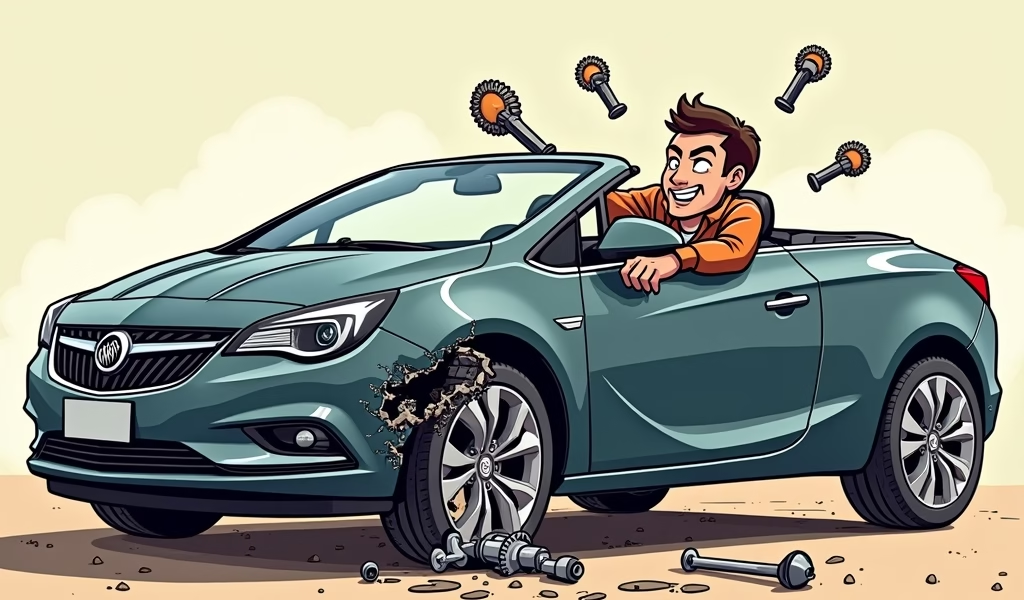
Despite Buick’s claim of “lifetime” transmission fluid, the Cascada’s 6T45 six-speed automatic transmission requires regular fluid changes every 60,000 miles and attentive care to avoid common problems like hard shifting, delayed engagement, and eventual failure. Early detection of warning signs—including fluid condition, unusual vibrations, and subtle hesitations—can save thousands in repairs, with options ranging from minor fixes ($300-800) to complete transmission replacement ($3,500-5,500) depending on the severity of the issue.
Table of Contents
- Understanding Buick Cascada Transmission
- Common Transmission Problems
- Warning Signs You Shouldn’t Ignore
- Causes of Transmission Failures
- Preventative Maintenance: Extending Transmission Life
- Repair vs. Replacement: Making the Right Choice
- Cost Breakdown: What to Expect
- DIY vs. Professional Transmission Service
- Conclusion
- Frequently Asked Questions
Understanding Buick Cascada Transmission
The Buick Cascada comes equipped with a 6T45 six-speed automatic transmission. This system balances performance and fuel economy while handling the convertible’s 1.6-liter turbocharged engine output of 200 horsepower. Unlike manual transmissions, this automatic unit uses complex hydraulics and electronic controls to change gears without driver intervention.
What makes this transmission unique is its adaptive learning technology. The system actually monitors your driving habits and adjusts shift patterns accordingly. This explains why two identical Cascadas might shift differently—they’ve adapted to different drivers.
The transmission fluid serves three critical functions: lubricating moving parts, cooling internal components, and transmitting hydraulic pressure to activate gear changes. Factory-filled with DEXRON VI fluid, the system requires specific chemistry to function properly.
While Buick labels this a “lifetime” transmission fluid, real-world experience shows this claim is optimistic. Most transmission specialists recommend changing the fluid every 60,000 miles to prevent premature wear—especially in vehicles experiencing the stop-and-go conditions common to city driving.
Common Transmission Problems
After working on countless Buick Cascadas, I’ve noticed several recurring transmission issues that tend to emerge as these vehicles age:
Hard shifting between gears presents as the most common complaint. Owners describe jarring, abrupt shifts—particularly between first and second gear or when downshifting. This isn’t just uncomfortable; it indicates internal valve body issues or solenoid problems that will worsen without attention.
Delayed engagement when shifting from park to drive frustrates many drivers. You put the car in drive, press the gas, and…nothing happens for a second or two. This hesitation isn’t just annoying—it can be dangerous when pulling into traffic and indicates potential pressure regulation problems.
Fluid leaks typically occur around the pan gasket, axle seals, or cooler lines. Look for reddish-brown fluid spots on your driveway, particularly after overnight parking. Even small leaks deserve attention as they can lead to low fluid levels and accelerated wear.
Unusual noises signal different problems depending on their character. Whining often indicates low fluid or pump issues. Grinding suggests worn gear teeth, while clunking during shifts points to worn internal components or mount problems.
Electronic issues manifest through check engine lights with codes like P0711 (temperature sensor), P0700 (control system malfunction), or P0715 (speed sensor circuit problems). These warnings should never be ignored, as they often appear before mechanical damage occurs.
Warning Signs You Shouldn’t Ignore
After 25 years working on transmissions, I’ve learned that catching problems early saves thousands in repairs. Pay attention to these early warning signs in your Cascada:
Subtle hesitations or “slipping” sensations when accelerating or changing gears often appear first. You might feel the engine revving higher than normal before the gear engages—a sign that clutch materials are beginning to wear or hydraulic pressure is leaking internally.
Transmission fluid condition tells a crucial story. Check your dipstick (with the engine running and warmed up). The fluid should be bright red or pink with a slightly sweet smell. Dark brown or black fluid with a burnt smell indicates overheating and requires immediate attention.
Unusual vibrations at specific speeds might indicate transmission mount problems or internal wear. If the vibration changes when shifting gears, the transmission is likely the culprit rather than wheels or suspension components.
New sounds in neutral often precede major failures by weeks or months. A humming or buzzing in neutral frequently indicates worn bearings or pump problems that will worsen over time.
Drive habit impacts are significant. Frequent short trips where the transmission never fully warms up, aggressive acceleration, and “riding” the brake at stoplights all accelerate wear. By contrast, highway driving with minimal stops generally extends transmission life.
Temperature warnings deserve immediate attention. If your dashboard displays “TRANSMISSION HOT” or “SERVICE TRANSMISSION SOON,” pull over when safe and let the vehicle cool down. Continuing to drive with an overheating transmission can cause catastrophic damage in minutes.
Causes of Transmission Failures
Understanding why transmissions fail helps you prevent problems. For the Cascada, several underlying factors contribute to transmission vulnerability:
Design limitations affect primarily 2016-2018 models. These early Cascadas sometimes experience premature wear of the valve body, solenoids, and torque converter lockup clutch. The valve body—which directs hydraulic fluid flow—has proven particularly problematic, with passages that can become clogged with debris.
Software calibration issues plagued some models. The transmission control module (TCM) software determines shift timing and firmness. Early calibrations sometimes caused unnecessary hard shifts or delayed responses. NHTSA documentation shows Buick released several software updates to address these concerns.
Cooling system limitations exist due to the Cascada’s convertible design. The transmission cooling system receives less airflow in certain areas because of the convertible top mechanism and reinforcement structures. This restricted cooling capacity means the fluid reaches higher temperatures more quickly than in sedan models with similar transmissions.
Fluid degradation occurs more rapidly than many owners realize. While Buick officially claims “lifetime” fluid, real-world experience shows the fluid begins losing protective properties around 60,000-80,000 miles. Heat cycles, moisture contamination, and normal wear particles reduce its effectiveness in protecting components.
Driving habits significantly impact transmission longevity. Frequent short trips prevent the transmission from reaching optimal operating temperature. Similarly, aggressive driving, especially in stop-and-go traffic, accelerates wear on clutch materials and other friction components.
Preventative Maintenance: Extending Transmission Life
The single best way to prevent transmission problems in your Cascada is through proactive maintenance. Here’s what works:
Regular fluid changes every 60,000 miles provide the best protection, regardless of manufacturer recommendations. This service should include dropping the pan, replacing the filter, cleaning the magnet, and refilling with the correct DEXRON VI fluid. Expect to pay $250-400 at an independent shop—far less than transmission repairs.
Transmission cooling system maintenance prevents overheating. The transmission cooler (typically integrated with the radiator) can become partially blocked with debris. Have the cooling system inspected during regular service, and consider flushing the cooler lines if you’ve experienced any overheating warnings.
Proper driving technique significantly impacts transmission longevity. Allow your Cascada to fully warm up before demanding driving, particularly in cold weather. Avoid holding the car on hills using just the throttle and brake (use the parking brake instead). Come to complete stops before shifting between reverse and drive.
Consider an auxiliary transmission cooler if you live in hot climates or frequently drive in hilly terrain. For around $200-300 installed, this additional cooling capacity can significantly extend transmission life by keeping fluid temperatures in the optimal range.
Address minor issues promptly before they escalate. That occasional hard shift might seem minor, but it often indicates the beginning of a control problem that will worsen over time. Early intervention typically costs far less than waiting for complete failure.
Repair vs. Replacement: Making the Right Choice
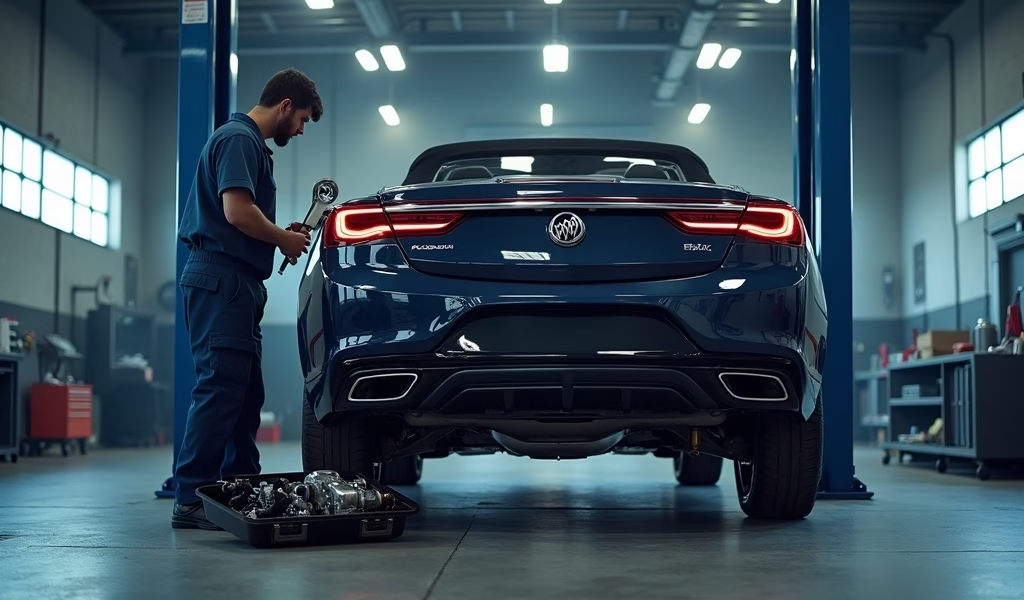
When facing transmission problems, you’ll need to decide between repair and replacement. Here’s how to make that choice:
Minor repairs make sense when issues are caught early. External components like solenoids, speed sensors, or mounts can be replaced individually for $300-800. Similarly, a valve body replacement ($1,200-1,800) might solve shifting problems without requiring full transmission replacement.
Consider transmission replacement when you experience multiple failures of the same component, severe slipping between gears, or when metal debris appears in the transmission pan. These symptoms indicate significant internal damage that partial repairs won’t adequately address.
The economic evaluation should weigh your Cascada’s value against repair costs. As a general rule, complete transmission replacement rarely makes financial sense if the cost exceeds 40% of the vehicle’s current market value. For a Cascada worth $15,000, think carefully before investing more than $6,000 in transmission work.
When replacement becomes necessary, you’ll choose between remanufactured and new transmissions. Remanufactured units ($3,200-4,200 installed) are completely disassembled, inspected, and rebuilt with new wear components. They typically include 2-3 year warranties and represent the best value for most owners.
New factory transmissions ($4,500-5,500 installed) come with longer warranties but may not justify the additional cost for vehicles already past their warranty period. For most Cascada owners, a quality remanufactured transmission provides the best balance of reliability and value.
Cost Breakdown: What to Expect
Transmission work isn’t cheap, but understanding costs helps you budget appropriately:
Diagnostic fees typically range from $75-150, though many shops apply this toward subsequent repairs. Professional diagnosis includes computer scanning, road testing, and fluid inspection—all essential for accurate troubleshooting.
Minor repairs and fluid services generally cost between $300-800, including:
- Transmission fluid change with filter: $250-400
- External solenoid replacement: $350-550
- Transmission mount replacement: $300-450
- Cooler line repair: $200-350
Major repairs ranging from $1,500-3,000 include:
- Valve body replacement: $1,200-1,800
- Torque converter replacement: $1,500-2,200
- Complete rebuild (reusing your existing transmission case): $2,500-3,000
Complete transmission replacement costs between $3,500-5,500 depending on whether you choose remanufactured or new, and whether you use an independent shop or dealership. This typically includes a 2-3 year warranty.
For newer Cascadas, extended warranty options might be worth considering. Manufacturer extended warranties covering the powertrain (including transmission) typically cost $1,800-2,500 and can provide coverage up to 100,000 miles. Consumer Reports research suggests carefully evaluating the cost-benefit of these plans.
DIY vs. Professional Transmission Service
Some maintenance tasks suit DIY-minded owners, while others demand professional expertise:
DIY-friendly tasks include checking fluid level and condition, inspecting for external leaks, and potentially changing the transmission fluid and filter if you have moderate mechanical experience. The fluid/filter change requires basic hand tools, a drain pan, a torque wrench, and approximately 3-4 hours for a first-timer.
Required tools for basic transmission maintenance include metric socket sets, torque wrench, transmission fluid pump, and a proper disposal container for old fluid. You’ll need access to flat, level workspace and adequate clearance to get underneath the vehicle safely.
Professional intervention becomes necessary for any internal transmission work, electronic diagnosis, or programming. Modern transmissions involve complex hydraulic, mechanical, and electronic systems requiring specialized tools and expertise. Improper repairs can cause catastrophic transmission failure.
When seeking professional help, look for shops specializing in transmissions rather than general repair facilities. Ask about their experience specifically with Buick transmissions, warranty terms, and whether they perform their own rebuilds or outsource to a remanufacturing facility.
A quality transmission shop should be willing to show you the damaged parts they’ve replaced and explain what failed and why. This transparency builds trust and helps you understand exactly what work was performed on your vehicle.
Conclusion
While the Buick Cascada offers an enjoyable convertible driving experience, its transmission requires attentive care to avoid costly repairs. The key takeaways for Cascada owners are straightforward: maintain proper fluid levels with the correct specification fluid, change the fluid and filter every 60,000 miles despite “lifetime” claims, address minor issues promptly, and drive conscientiously.
For those planning long-term ownership, consider proactive measures like an auxiliary transmission cooler if you live in hot climates or frequently drive in hilly terrain. Keep thorough maintenance records, as these not only help you track service intervals but enhance resale value by demonstrating proper care.
Remember that most catastrophic transmission failures don’t happen suddenly—they develop gradually over thousands of miles, giving attentive owners plenty of warning signs. By staying alert to subtle changes in how your Cascada drives and addressing small issues before they become major problems, you’ll enjoy many more trouble-free miles with the top down.
Frequently Asked Questions
How often should I change the transmission fluid in my Buick Cascada?
Change the transmission fluid every 50,000-60,000 miles, regardless of Buick’s “lifetime fluid” claim. This interval is particularly important for vehicles driven in hot climates or primarily in stop-and-go traffic.
What are the first signs of transmission problems in a Cascada?
Early warning signs include hesitation when shifting from park to drive, occasional hard shifts between gears, and subtle slipping sensations during acceleration. Strange noises during shifting or when in neutral also indicate developing issues.
Is there a recall for Buick Cascada transmission problems?
No official recall exists specifically for Cascada transmissions, but Buick has issued several Technical Service Bulletins addressing shift quality and control module programming. Your dealer can check if any apply to your specific VIN.
What’s the typical cost to replace a Buick Cascada transmission?
Expect to pay $3,200-4,200 for a remanufactured transmission installed or $4,500-5,500 for a new factory unit. Independent transmission shops typically offer better pricing than dealerships for comparable quality.
Can I drive with a slipping transmission?
Driving with a slipping transmission is not recommended as it can quickly lead to catastrophic failure. A transmission that slips occasionally might completely fail within a few hundred miles if the underlying issue isn’t addressed.