
Overview
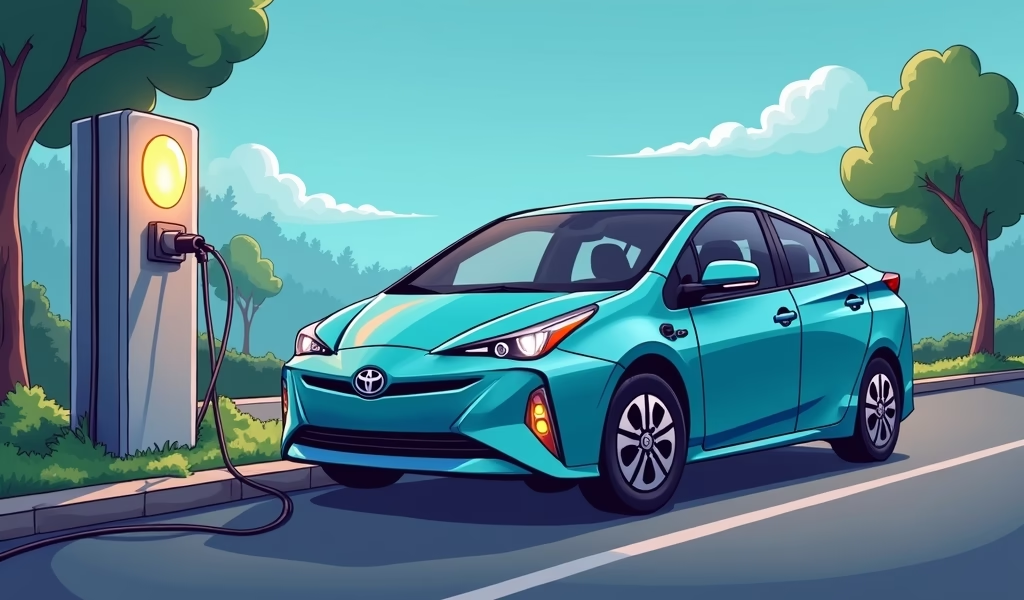
Just like forgetting to change your oil can lead to engine trouble, neglecting your Toyota Prius Prime’s charging system can result in expensive repairs and diminished performance. This guide provides essential knowledge on maintaining your charging system through proper techniques, preventative maintenance, troubleshooting common issues, and cost-saving strategies that will extend your hybrid’s lifespan and optimize its efficiency.
Table of Contents
- Understanding Toyota Prius Prime Charging
- Common Charging Issues and Their Causes
- Preventative Maintenance for Your Charging System
- Best Charging Practices for Longevity
- Troubleshooting Tips for Charging Problems
- When to Seek Professional Help
- Cost-Saving Strategies for Prius Prime Owners
- Conclusion
- Frequently Asked Questions
Understanding Toyota Prius Prime Charging
The Toyota Prius Prime represents one of the most efficient plug-in hybrid vehicles on the market today, but proper Toyota Prius Prime charging is essential to maintain its performance and avoid expensive repairs down the road. As someone who’s worked on these sophisticated vehicles for over a decade, I can tell you that understanding the charging system is your first line of defense against potential issues.
The Prius Prime comes equipped with an 8.8 kWh lithium-ion battery pack (13.6 kWh in newer models) that allows for approximately 25-40 miles of all-electric range. This battery is the heart of your vehicle’s efficiency system, working in tandem with the gasoline engine to deliver that impressive fuel economy you bought the car for.
Charging your Prius Prime is straightforward but requires attention to detail. The vehicle comes with a standard 120V charging cable (Level 1) that plugs into any household outlet, fully charging the battery in about 5.5 hours. For faster charging, a 240V outlet (Level 2) can reduce this time to approximately 2 hours. This flexibility is convenient, but each charging method comes with its own set of considerations.
What many owners don’t realize is that the charging system comprises multiple components that can wear or malfunction over time. The onboard charger, charging port, battery management system, and even the cables themselves are all potential points of failure. Regular monitoring of these components through the vehicle’s diagnostic system can help identify potential issues before they become major problems.
Toyota has addressed some common charging issues through technical service bulletins over the years. Staying informed about these updates can save you from unexpected repairs and ensure your vehicle maintains optimal performance throughout its lifespan.
Common Charging Issues and Their Causes
After years of working on Prius Prime vehicles, I’ve seen patterns emerge in the charging problems that owners typically encounter. Understanding these common issues can help you identify and address them early, potentially saving thousands in repair costs.
The most frequent complaint I hear is about charging failure or intermittent charging. This often manifests as the car refusing to accept a charge or suddenly stopping mid-charge. In many cases, this stems from a faulty charging cable connection or damaged charging port. Inspecting these components regularly for corrosion, bent pins, or physical damage can prevent these issues from developing.
Another common problem is slow charging or reduced capacity. If your Prius Prime takes longer than usual to charge or doesn’t reach its full electric range, several factors could be at play. Battery degradation is natural over time, but premature capacity loss often results from extreme temperature exposure or consistently letting the battery drain completely before recharging.
Error messages during charging shouldn’t be ignored. The most common ones include:
- Charging System Malfunction
- Check Charging System
- Charging Equipment Problem
- Charging Connector Issue
These messages typically indicate problems with the onboard charger, internal wiring, or the battery management system. When these warnings appear, consulting your owner’s manual and scheduling a diagnostic check can prevent minor issues from escalating into major repairs.
Ground fault issues, though less common, can be particularly concerning. These occur when the charging circuit detects an electrical leakage and automatically shuts down to prevent possible electrocution or fire hazards. They’re often caused by moisture intrusion or damaged insulation in the charging equipment. According to a NHTSA safety report, addressing these ground fault issues promptly is critical for both vehicle longevity and owner safety.
Preventative Maintenance for Your Charging System
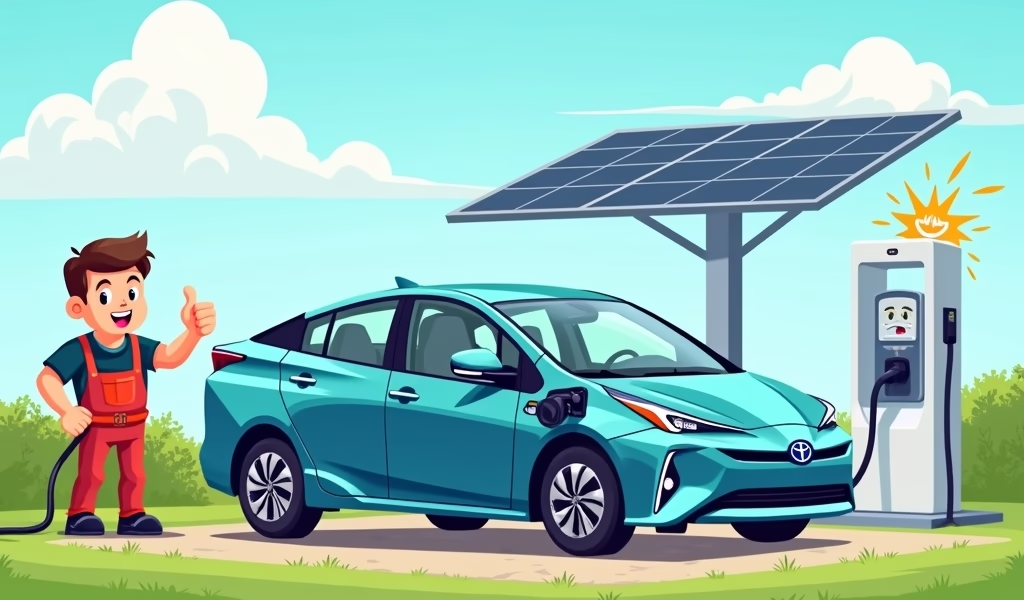
Let me share something that’ll save you a headache down the road: preventative maintenance is your best friend when it comes to Toyota Prius Prime charging systems. Just like changing your oil regularly keeps your engine happy, a few simple maintenance practices can dramatically extend the life of your charging components.
First and foremost, keep your charging port clean. It sounds simple, but you’d be surprised how many charging issues stem from dirt, debris, or moisture in the port. I recommend inspecting and gently cleaning the port with compressed air or a soft, dry cloth monthly. Avoid liquid cleaners that might cause corrosion or electrical shorts.
Your charging cable deserves attention too. Regularly inspect it for any signs of wear, fraying, or damage – especially at the connection points. Store it properly when not in use, avoiding sharp bends or exposure to extreme temperatures. A damaged cable not only risks charging failures but can also pose safety hazards.
The battery management system (BMS) is the brain behind your Prius Prime’s charging operation. Keeping its software updated is crucial for optimal performance. Toyota occasionally releases firmware update notifications to address known issues or improve efficiency. Check with your dealer annually to ensure you’re running the latest version.
Here’s a preventative maintenance schedule I recommend to my customers:
- Monthly: Visual inspection of charging port and cable
- Quarterly: Deep cleaning of charging port
- Bi-annually: Full charging system diagnostic check
- Annually: Software update verification
Environmental factors play a significant role in your charging system’s health. Extreme heat or cold can stress components and accelerate wear. Whenever possible, charge your vehicle in temperature-controlled environments or use a charging port cover in harsh weather conditions. This simple step can add years to your charging system’s lifespan.
Remember that your vehicle’s 12V auxiliary battery also affects charging performance. This battery powers the systems that control the main hybrid battery charging. Having it tested annually can prevent mysterious charging failures that often baffle owners. According to research from the U.S. Department of Energy, proper maintenance of auxiliary systems significantly improves overall electric vehicle reliability.
Best Charging Practices for Longevity
After seeing hundreds of Prius Primes in my shop, I’ve noticed that how you charge matters almost as much as maintaining the charging system itself. Let me walk you through some best practices that will keep your Toyota Prius Prime charging system in top condition for years to come.
Contrary to what some believe, keeping your Prius Prime’s battery at 100% charge all the time isn’t ideal for long-term battery health. Lithium-ion batteries prefer a charge level between 20% and 80% for everyday use. This “Goldilocks zone” minimizes stress on the battery cells and slows capacity degradation. For daily driving, consider setting your charging limit to 80% if your home charger allows it.
Charge timing also matters more than you might think. If possible, schedule your charging for the coolest parts of the day, especially in summer. Charging generates heat, and adding that to already high ambient temperatures can accelerate battery wear. Many Prius Prime owners use the vehicle’s built-in timer function to charge during overnight hours when temperatures drop.
The charging speed decision – Level 1 (120V) vs. Level 2 (240V) – has implications beyond convenience. While Level 2 charging is faster, the lower stress of Level 1 charging can be gentler on your battery in the long run. If you don’t need the quicker charge times, consider sticking with Level 1 for everyday use and reserving Level 2 for when you’re in a hurry.
Avoid letting your battery sit at extremely low charge levels for extended periods. This can lead to battery cell damage that’s irreversible. If you’re going away for more than a few days, leave your Prius Prime with a charge level around 50% – this is the sweet spot for battery storage according to most module programming update guidelines from Toyota.
Develop a consistent charging routine. Batteries generally prefer predictable use patterns rather than wildly varying charging behaviors. Try to establish regular charging times and similar depth-of-discharge patterns when possible. Your battery’s management system will thank you by providing more accurate range estimates and longer overall life.
During extreme weather conditions, use climate pre-conditioning while still connected to the charger. This allows the vehicle to reach comfortable temperatures using grid power rather than battery power, preserving your electric range. It also helps regulate battery temperature, which is crucial for charging efficiency and longevity.
Troubleshooting Tips for Charging Problems
Even with the best maintenance and charging practices, you might occasionally encounter issues with your Toyota Prius Prime charging. Don’t worry – many common problems have simple solutions you can try before heading to the dealership.
When your Prius Prime won’t charge, start with the basics. Check that the charging cable is firmly connected at both the vehicle and power source. It sounds obvious, but loose connections are one of the most common causes of charging failures. Next, verify that power is available at the outlet by testing it with another device. Circuit breakers can trip, especially when multiple high-draw appliances share the same circuit.
If your charging indicator lights behave abnormally (flashing when they shouldn’t or showing unexpected colors), consult your owner’s manual for the specific meaning. These lights are your vehicle’s way of communicating what’s happening in the charging process. A flashing red light, for instance, often indicates a ground fault that might be resolved by simply unplugging, waiting 30 seconds, and reconnecting.
For intermittent charging issues, try using a different charging location or cable if available. This helps determine whether the problem lies with your vehicle or the charging equipment. Environmental factors like extreme temperatures or precipitation can also cause temporary charging disruptions. Moving your vehicle to a more moderate environment might resolve these weather-related issues.
The vehicle’s touchscreen display often provides valuable error codes or messages when charging problems occur. Write these down exactly as they appear – they’ll be extremely helpful if you need to consult a technician. Many codes have specific meanings that can point directly to the component causing the problem.
If you encounter repeated charging failures, try performing a system reset. This often resolves software-related issues:
- Turn off the vehicle completely
- Disconnect the 12V auxiliary battery for 10 minutes (consult your manual for location)
- Reconnect the battery and start the vehicle
- Attempt charging again after the system has fully booted
For persistent problems with charging speed or efficiency, check your vehicle’s energy information screens for battery health indicators. Gradual capacity loss is normal, but sudden changes could indicate a problem with the battery management system or individual cells. The Toyota Prius Prime has sophisticated monitoring systems that can often identify battery health issues before they become critical.
When to Seek Professional Help
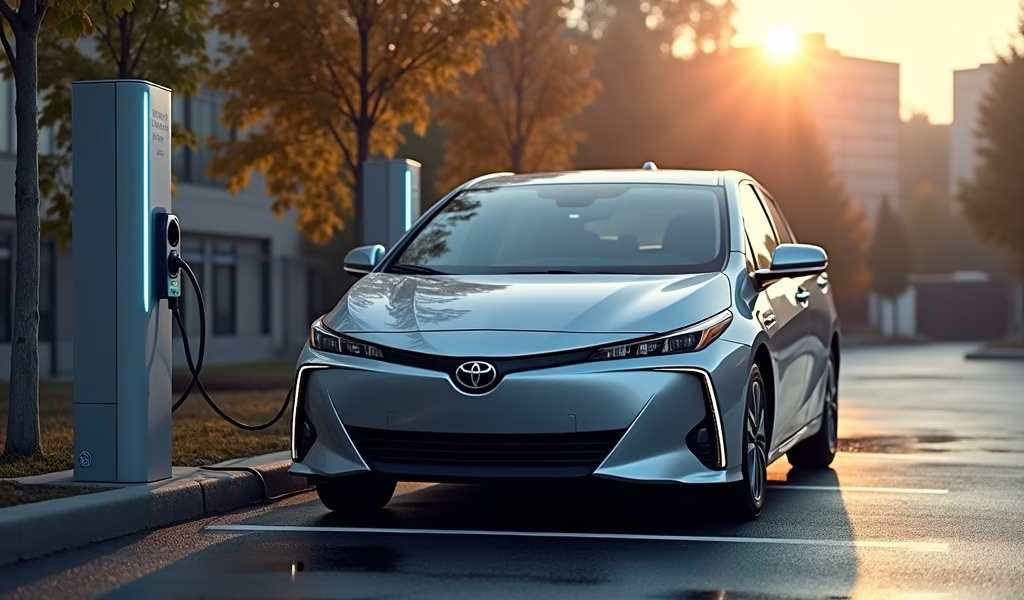
While I’m all for empowering Toyota Prius Prime owners to handle basic maintenance and troubleshooting, there comes a point when calling in a professional is the wisest move. Recognizing when you’ve reached that point can save you time, frustration, and often money in the long run.
If you’ve tried the troubleshooting steps mentioned earlier and your charging problems persist, it’s time to consult a qualified technician. The high-voltage systems in your Prius Prime require specialized training and equipment to diagnose and repair safely. According to a Consumer Reports study, attempting DIY repairs on hybrid battery systems can lead to costly damage and potential safety hazards.
Certain symptoms should trigger an immediate call to a professional. These include unusual noises during charging (buzzing, clicking, or popping sounds), burning odors, visible damage to charging components, or warning lights that don’t reset after troubleshooting attempts. These signs often indicate electrical problems that could worsen if not addressed promptly.
Battery performance issues also warrant professional attention. If you notice a significant decrease in electric range (more than 20% from when the vehicle was new), frequent switching to gas power even with a “full” battery, or wildly inconsistent range estimates, your battery system likely needs professional evaluation. Modern diagnostic equipment can identify which cells are underperforming and whether reconditioning or replacement is necessary.
When selecting a service provider, not all shops are created equal when it comes to hybrid vehicles. I strongly recommend choosing either:
- Toyota dealership service departments with hybrid-certified technicians
- Independent shops with specific hybrid/EV certifications and experience
- Specialists who focus exclusively on hybrid and electric vehicles
Before authorizing repairs, ask about warranty coverage. The Prius Prime’s hybrid components (including the battery and charging system) typically carry an 8-year/100,000-mile warranty, with some states mandating even longer coverage. Even out of warranty, Toyota occasionally offers “goodwill” repairs for known issues, so it’s worth inquiring about assistance programs.
Keep detailed records of all charging issues, including dates, circumstances, error messages, and any troubleshooting you’ve attempted. This information is invaluable to technicians and can significantly reduce diagnostic time and costs. It also creates a documented history that may help identify patterns or support warranty claims.
Cost-Saving Strategies for Prius Prime Owners
Let’s talk dollars and sense. While the Toyota Prius Prime is designed to save you money on fuel, unexpected charging system repairs can quickly offset those savings. I’ve developed some practical strategies to help you minimize these costs while maximizing the longevity of your vehicle’s charging system.
First, consider investing in a high-quality charging cable. The standard cable that comes with your Prius Prime works fine, but aftermarket cables with better weather resistance and durability can prevent premature failures. Look for UL-certified options with robust strain relief at connection points. A $100-200 investment now can prevent $500+ in repairs later.
Protecting your charging port from the elements pays dividends. A simple charging port cover costs around $15-30 but can prevent moisture and debris intrusion that leads to corrosion and connectivity problems. These small protective devices are particularly valuable if you frequently charge outdoors or in dusty environments.
Consider having preventative diagnostics performed during regular service visits rather than waiting for problems to appear. Many service centers offer hybrid system health checks for $50-100 that can identify potential issues before they become major repairs. This proactive approach typically costs far less than reactive repairs.
If you’re technically inclined, investing in an OBD-II scanner with hybrid system capabilities allows you to monitor your vehicle’s charging performance and battery health at home. Models compatible with the Prius Prime range from $100-300 but can pay for themselves by providing early warning of developing issues.
When repairs are necessary, explore all your options. While dealership service provides manufacturer-trained technicians, independent shops specializing in hybrids often offer comparable service at lower rates. For out-of-warranty repairs, ask about using quality remanufactured parts, which can cut costs by 30-50% while still providing reliable performance.
Energy costs for charging vary widely by location and time of use. Many utility companies offer special EV charging rates during off-peak hours that can be significantly lower than standard electricity rates. Programming your Prius Prime to charge during these off-peak windows can reduce your per-mile electricity costs by as much as 50%.
Finally, don’t underestimate the value of community knowledge. Online forums dedicated to Prius Prime owners contain wealth of real-world experiences and cost-saving tips. Sites like PriusChat have dedicated sections where owners share service costs, DIY maintenance procedures, and even negotiation strategies for repairs.
Conclusion
Proper Toyota Prius Prime charging practices aren’t just about keeping your vehicle running – they’re about protecting your investment and avoiding costly repairs down the road. Throughout this guide, we’ve explored the intricacies of the Prius Prime’s charging system and provided practical advice based on real-world experience.
The key takeaways are clear: understand your charging system, follow best practices, perform regular maintenance, troubleshoot minor issues promptly, know when to seek professional help, and implement cost-saving strategies where possible. By following these guidelines, you’ll maximize both the lifespan of your vehicle’s charging system and your overall ownership experience.
Remember that your Prius Prime represents sophisticated technology designed to provide years of efficient, low-emission transportation. Treating its charging system with informed care is one of the most important things you can do as an owner. The small investments of time and attention outlined in this article can prevent major expenses later.
As hybrid technology continues to evolve, staying informed about updates, service bulletins, and best practices remains important. Consider bookmarking trusted resources and checking periodically for new information specific to your model year. Your Prius Prime is designed to be a long-term companion on the road – with proper charging habits, it will remain a reliable and economical choice for many years to come.
Frequently Asked Questions
How long does it take to fully charge a Toyota Prius Prime?
With a standard 120V outlet (Level 1), a full charge takes approximately 5.5 hours. Using a 240V outlet (Level 2) reduces charging time to about 2-2.5 hours.
Can I use public charging stations with my Prius Prime?
Yes, the Prius Prime is compatible with J1772 connectors found at most public Level 2 charging stations. Simply plug in and follow the station’s instructions to begin charging.
How often should I charge my Prius Prime?
For optimal battery health, charge when the battery level drops to 20-30% rather than letting it deplete completely. Regular, consistent charging patterns are better for long-term battery life than sporadic deep discharges.
Will charging my Prius Prime in cold weather damage the battery?
Cold weather charging won’t damage the battery but may temporarily reduce efficiency and range. When possible, store and charge your vehicle in a garage during extreme cold to maintain optimal performance.
How can I tell if my Prius Prime is charging correctly?
The charging indicator lights on the dashboard should illuminate steadily (not flashing) and the vehicle’s display should show estimated charging completion time. You can also check charging status remotely using the Toyota app.