
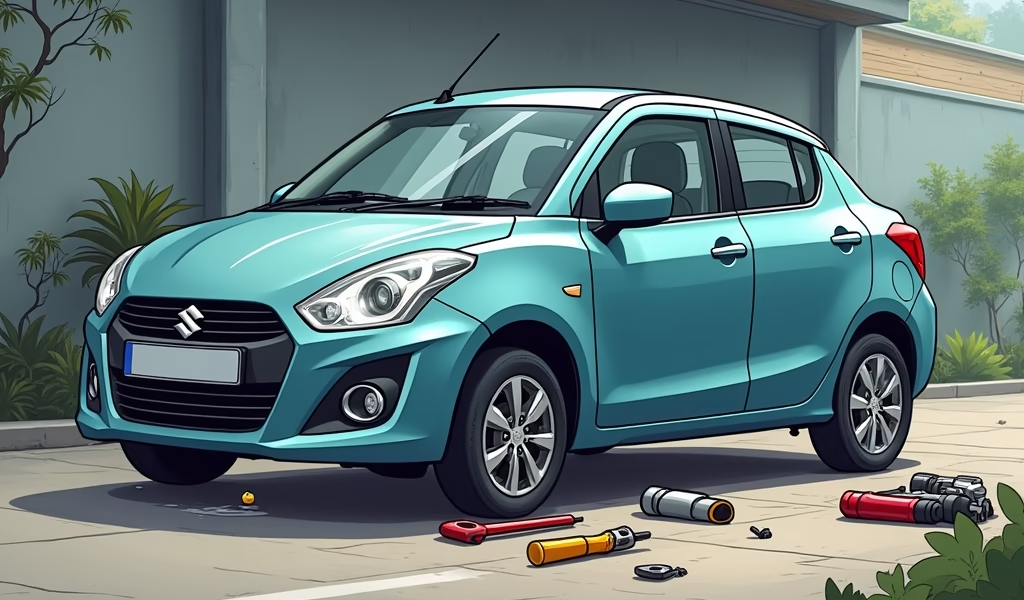
Overview
The Suzuki Kizashi’s transmission, particularly the CVT models, requires vigilant maintenance with fluid changes every 30,000 miles—contrary to Suzuki’s original “lifetime fluid” claims—to avoid costly repairs ranging from $300 for minor fixes to $4,500 for complete replacement. Regular maintenance costing around $1,000 over the vehicle’s lifetime can prevent transmission failures that typically surface between 80,000-120,000 miles, a particularly crucial consideration given the scarcity of parts since Suzuki’s exit from the U.S. market.
Table of Contents
- Understanding Suzuki Kizashi Transmission
- Common Warning Signs of Transmission Problems
- Why Kizashi Transmissions Fail
- Preventative Maintenance to Avoid Costly Repairs
- DIY vs. Professional Transmission Service
- Repair Options When Problems Arise
- Cost Comparison: Maintenance vs. Repair
- Conclusion
- Frequently Asked Questions
Understanding Suzuki Kizashi Transmission
Let’s talk about what makes the Suzuki Kizashi’s transmission tick. These cars, produced from 2009 to 2014, came with either a Continuously Variable Transmission (CVT) or a 6-speed manual. Most North American models rolled off the line with the CVT option.
The CVT works differently than your traditional automatic transmission. Instead of fixed gears, it uses a belt and pulley system that continuously adjusts to give you optimal power and efficiency. This design creates that smooth driving experience without the distinct shifting feeling you get in conventional automatics.
Here’s the thing about the Kizashi’s transmission – it’s becoming increasingly difficult to find parts since Suzuki exited the U.S. market. What might be a simple fix in a Honda or Toyota can quickly turn into an expensive headache for Kizashi owners.
The CVT models tend to develop issues more frequently than their manual counterparts. The transmission service interval is particularly important with these vehicles, despite Suzuki’s original claims of “lifetime” fluid in some models.
Think of your Kizashi’s transmission as the middleman between your engine’s power and your wheels. When it works right, you don’t even notice it. When problems develop, you’ll feel it immediately in how the car drives.

Common Warning Signs of Transmission Problems
Catching transmission problems early can save you thousands in repair costs. Your Kizashi will usually give you several warning signs before a catastrophic failure occurs.
Unusual noises are often the first red flag. Listen for whining sounds that increase with speed, grinding during acceleration, or buzzing from under the floor. These often indicate worn bearings or internal damage that needs attention.
Do you notice a burning smell after driving, especially after climbing hills or in stop-and-go traffic? That’s your transmission fluid overheating – a serious warning sign of internal friction generating excessive heat.
Hesitation or jerking during acceleration is particularly common in Kizashi CVTs. Owners describe this as a “rubber band effect” where the engine revs but power doesn’t seem to reach the wheels right away. This isn’t normal and shouldn’t be ignored.
Slipping gears feels like your engine is revving without corresponding acceleration. In CVT models, you might experience sudden, unexpected changes in engine RPM without changing your throttle input. This dangerous condition reduces your control and can rapidly get worse.
The check engine light is another obvious indicator. Common transmission-related codes in the Kizashi include P0730 (incorrect gear ratio) and P0740 (torque converter clutch circuit malfunction). Even a basic code reader from an auto parts store can help identify these issues.
If your Kizashi takes more than a second to engage when shifting from park to drive or reverse, this delayed engagement often points to low fluid levels or worn internal components. Don’t ignore these subtle signs – they’re your early warning system.
Why Kizashi Transmissions Fail
Understanding why transmissions fail helps you prevent problems before they empty your wallet. The Kizashi has several specific vulnerabilities worth knowing about.
Some model years, particularly 2010-2012 Kizashis, suffered from manufacturing defects in the CVT’s valve body and solenoid pack. These components control fluid flow and pressure within the transmission, and when they fail, shifting becomes erratic and eventual transmission failure follows.
The most common cause of premature transmission failure is inadequate maintenance. Suzuki’s marketing claim of “lifetime fluid” led many owners to neglect regular transmission fluid changes. In reality, CVT fluid breaks down over time and needs replacement every 30,000 miles – not the 60,000+ miles Suzuki originally recommended.
Your driving habits can significantly impact transmission longevity. Frequent short trips prevent the transmission from reaching proper operating temperature. Aggressive driving, particularly rapid acceleration and sudden stops, puts tremendous stress on CVT components. Overloading beyond recommended capacity also strains the system.
Environmental factors play a bigger role than most people realize. Extreme temperatures affect transmission operation dramatically. Hot climates accelerate fluid breakdown, while cold temperatures can cause shifting issues until the fluid warms up. Living in mountainous terrain or areas with heavy traffic also increases transmission wear.
According to transmission repair specialists, with proper maintenance, a Suzuki Kizashi transmission should last between 100,000 and 150,000 miles. However, many owners report problems beginning around 80,000 miles, particularly with CVT models.
Preventative Maintenance to Avoid Costly Repairs
An ounce of prevention is worth a pound of cure – especially when we’re talking about transmission repairs that can cost thousands. Here’s how to keep your Kizashi’s transmission healthy for the long haul.
First and foremost, change that transmission fluid regularly. For CVT-equipped Kizashis, I recommend every 30,000 miles – that’s half of what Suzuki originally suggested. Manual transmissions need fresh gear oil every 50,000 miles. Severe conditions like extreme temperatures or heavy towing call for even more frequent changes.
Always use the correct fluid specification. For CVT models, you need Suzuki CVT Fluid Green 1 or an exact equivalent – nothing else will do. Using the wrong fluid can cause immediate damage. Manual transmissions require GL-4 75W-90 gear oil, not automatic transmission fluid.
Keep your cooling system in top shape, as engine coolant temperature affects transmission fluid temperature. Replace coolant on schedule and verify your radiator fans work correctly. If you live somewhere that regularly sees triple-digit temperatures, consider adding an auxiliary transmission cooler for extra protection.
Adjust your driving habits to extend transmission life:
- Allow your vehicle to warm up for 30-60 seconds before driving in cold weather
- Avoid aggressive acceleration, especially from a stop
- Shift to neutral when stopped at long lights to reduce load
- Avoid “riding the brakes” in stop-and-go traffic
Address minor issues promptly. A $20 solenoid replacement today might prevent a $4,000 transmission replacement tomorrow. Don’t ignore strange noises, shifting oddities, or warning lights – these early indicators rarely fix themselves.
The transfer case maintenance schedule should also be followed if you have an AWD Kizashi model, as these components work together with your transmission.
DIY vs. Professional Transmission Service
Some transmission maintenance tasks are DIY-friendly, while others definitely require professional expertise. Let’s break down what you can handle yourself and when to call in the pros.
Owners with basic mechanical skills can handle transmission fluid changes on manual Kizashi models. You’ll need a drain pan, the correct fluid, and basic hand tools. For a thorough job, plan on 1-2 hours and about $50-70 in materials.
CVT fluid changes are trickier. The Kizashi doesn’t have a traditional dipstick, and checking fluid levels requires specialized tools and precise temperature measurements. An incorrect fluid level – either too high or too low – can damage the transmission. Unless you’re very confident in your abilities, I’d leave CVT service to the professionals.
For any internal transmission repairs, electronic diagnosis, or when symptoms are intermittent, definitely seek professional help. Amateur internal transmission repairs often lead to bigger problems and voided warranty coverage.
Finding a transmission specialist familiar with Suzuki vehicles takes some research. Look for shops specializing in Japanese imports or CVTs specifically. Check online reviews, ask for recommendations in Suzuki owner forums, and verify any shop’s experience with Kizashi transmissions before committing your car to their care.
If you’re having clutch adjustment frequency questions with a manual Kizashi, this is also best handled by a professional who understands the specific needs of these vehicles.
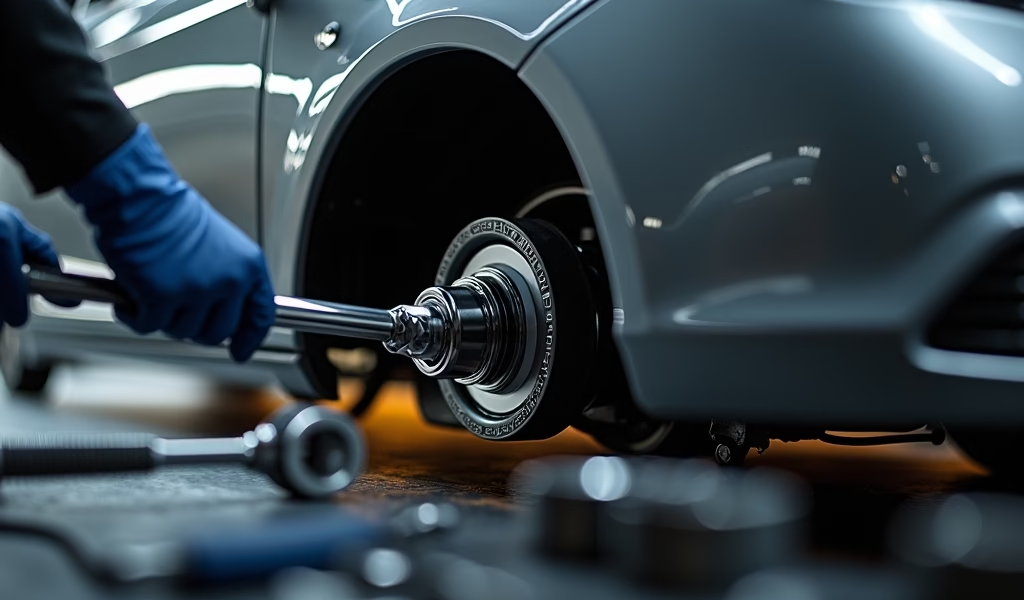
Repair Options When Problems Arise
Sometimes, despite your best efforts, transmission issues develop. When they do, you have several repair options to consider.
For minor issues like solenoid failures or fluid leaks, targeted repairs make the most sense. These focused fixes address specific problems without the expense of major transmission work. Expect to pay $300-$800 for these smaller repairs.
If your Kizashi needs more extensive work, you’ll need to decide between rebuilding the existing transmission or replacing it entirely. A rebuild involves disassembling your transmission, replacing worn parts, and reassembling it – often with upgraded components to address known weak points. This typically costs $2,500-$3,500 but preserves your original unit.
Replacement options include remanufactured, used, or (rarely) new transmissions. Remanufactured units offer the best balance of cost and reliability, typically running $3,000-$4,500 installed. These transmissions are completely disassembled at a factory, with all wear items replaced to meet original specifications.
Used transmissions from salvage yards present a lower upfront cost ($1,500-$2,500 installed) but higher risk, as their condition and remaining life are unknown. I only recommend this option for older Kizashis with high mileage where investing in a remanufactured unit might not make financial sense.
New transmissions are rarely available for the Kizashi since Suzuki’s exit from the U.S. market. If you do find one, expect to pay $5,000-$6,500 plus installation.
According to reliability data and owner reports, transmission issues tend to surface between 80,000-120,000 miles in the Kizashi. This timing often puts owners in a difficult position – the car still has value, but the repair cost might approach half the vehicle’s worth.
Cost Comparison: Maintenance vs. Repair
Let’s put this in perspective with some real numbers. Regular maintenance costs a fraction of what major repairs do. Here’s the breakdown:
Preventative maintenance over 100,000 miles:
- CVT fluid changes (every 30,000 miles): $150-250 each × 3 services = $450-750 total
- Transmission cooler installation (optional): $300-500 one-time cost
- Basic transmission inspection during regular service: $0-100
Total preventative cost: $750-1,350 over the life of the vehicle
Compare that to repair costs:
- Minor repair (solenoid replacement): $300-500
- Moderate repair (valve body replacement): $800-1,200
- Major repair (rebuild): $2,500-3,500
- Complete replacement: $3,000-4,500
The math is clear – spending around $1,000 on preventative maintenance over the life of your Kizashi could save you $4,000+ in major repair costs. That’s the difference between an unexpected financial emergency and planned, manageable maintenance expenses.
Even if you’ve inherited a Kizashi with unknown maintenance history, starting proper care immediately can help extend the remaining life of the transmission. A transmission fluid change with the correct fluid is always the best first step, even for higher-mileage vehicles.
Research from Consumer Reports shows that regular fluid maintenance is the single most effective way to extend transmission life across all vehicle makes and models.
Conclusion
Owning a Suzuki Kizashi means being especially vigilant about transmission health. With Suzuki’s departure from the U.S. market, parts and specialized service have become more challenging to find, making prevention even more important than cure.
The key for every Kizashi owner is to maintain proper fluid levels with the correct specification fluid, address minor issues before they escalate, and find a trusted transmission specialist familiar with these vehicles. Don’t wait until you’re stranded on the side of the road to think about transmission maintenance.
With proactive care and timely intervention when problems first appear, your Kizashi’s transmission can provide reliable service well beyond the average lifespan. The investment in preventative maintenance pays dividends by avoiding the major expense of transmission replacement and the inconvenience of unexpected breakdowns.
Remember that every mile you drive with old transmission fluid or while ignoring warning signs is potentially shortening your transmission’s life. Take care of your Kizashi, and it will continue to deliver that sporty, comfortable driving experience that made it stand out in Suzuki’s lineup.
By following the advice in this guide, you’re taking control of your vehicle’s health and your financial future. That’s a win-win that every car owner can appreciate.
Frequently Asked Questions
How often should I change the transmission fluid in my Suzuki Kizashi?
For CVT models, every 30,000 miles is recommended despite Suzuki’s longer interval recommendations. Manual transmissions should have fluid changes every 50,000 miles.
What are the first signs of transmission failure in a Kizashi?
Hesitation during acceleration, unusual noises (whining or grinding), and delayed engagement when shifting into drive or reverse. Don’t ignore these warning signs, as they rarely resolve on their own.
Can I tow with my Kizashi without damaging the transmission?
The Kizashi wasn’t designed for heavy towing. If you must tow, limit weight to under 1,000 pounds and consider installing a transmission cooler.
Is it worth fixing a Kizashi transmission if it fails completely?
It depends on the vehicle’s overall condition and value. If your Kizashi is otherwise in good shape with under 150,000 miles, a remanufactured transmission is often worth the investment.
Why are Kizashi transmissions more problematic than other Suzuki models?
The Kizashi uses a more complex CVT design than earlier Suzuki models, and parts have become scarce since Suzuki left the U.S. market. Their “lifetime fluid” marketing claim also led many owners to neglect proper maintenance.