

Overview
Just like that check engine light you’ve been ignoring, your Mitsubishi 3000GT’s transmission requires vigilant attention through regular fluid changes, early warning sign detection, and appropriate servicing to avoid wallet-emptying repairs. The article provides a complete maintenance roadmap for both manual and automatic transmissions, covering common issues like synchronizer wear and transfer case failures, while offering practical DIY maintenance tips and professional servicing guidance to keep this iconic 90s sports car performing at its best.
Table of Contents
- Understanding the Mitsubishi 3000GT Transmission
- Common Transmission Issues in the 3000GT
- Maintenance Essentials for Longevity
- Fluid Checks and Changes: The Lifeblood of Your Transmission
- Early Warning Signs of Transmission Trouble
- DIY Maintenance Tips for the Weekend Mechanic
- When to Seek Professional Servicing
- Transmission Performance Upgrades: Worth It?
- Conclusion
- Frequently Asked Questions
Understanding the Mitsubishi 3000GT Transmission
The Mitsubishi 3000GT transmission system stands as one of the most sophisticated components of this iconic 90s sports car. Whether you’re driving the snappy 5-speed manual or the smooth-shifting 4-speed automatic, understanding your 3000GT’s transmission is crucial for preventing those heart-stopping breakdowns that can empty your wallet faster than you can say “repair bill.”
These transmissions were engineering marvels for their time, especially in the VR-4 models with their complex all-wheel-drive system. The Getrag-manufactured 5-speed manual transmissions found in the twin-turbo variants are particularly noteworthy for their robust design, though they do have their quirks and vulnerabilities that every owner should know about.
What makes the Mitsubishi 3000GT transmission unique is how it integrates with the car’s other advanced systems. In the VR-4 models, the transmission connects to a transfer case that distributes power to all four wheels. This complexity means more potential failure points, but also contributes to the car’s legendary performance capabilities when properly maintained.
Common Transmission Issues in the 3000GT
The 3000GT’s transmissions, while well-engineered, have several known issues that owners should watch for. The manual transmission, especially in earlier models, can develop synchronizer wear, leading to difficult shifts between certain gears—typically second and third. You might notice grinding or resistance when changing gears, which is your first clue that something’s amiss.
For automatic transmission models, the most common complaints involve harsh shifting and occasional slipping between gears. This is often related to deteriorating clutch packs or valve body issues. Many owners report that their automatic transmissions start exhibiting these symptoms around the 100,000-mile mark, though this varies widely based on driving habits and maintenance history.
Another critical issue specific to the VR-4 models is transfer case failure. Since the transfer case is integral to the transmission system, problems here directly affect transmission performance. Watch for unusual noises when cornering or accelerating, as these could indicate transfer case bearing wear.
Input shaft bearing failure is perhaps the most dreaded issue for manual transmission 3000GTs. When these bearings begin to fail, you’ll hear an unmistakable whining noise that increases with speed but decreases when you press the clutch. Catching this early can save you from a complete transmission rebuild.
Maintenance Essentials for Longevity
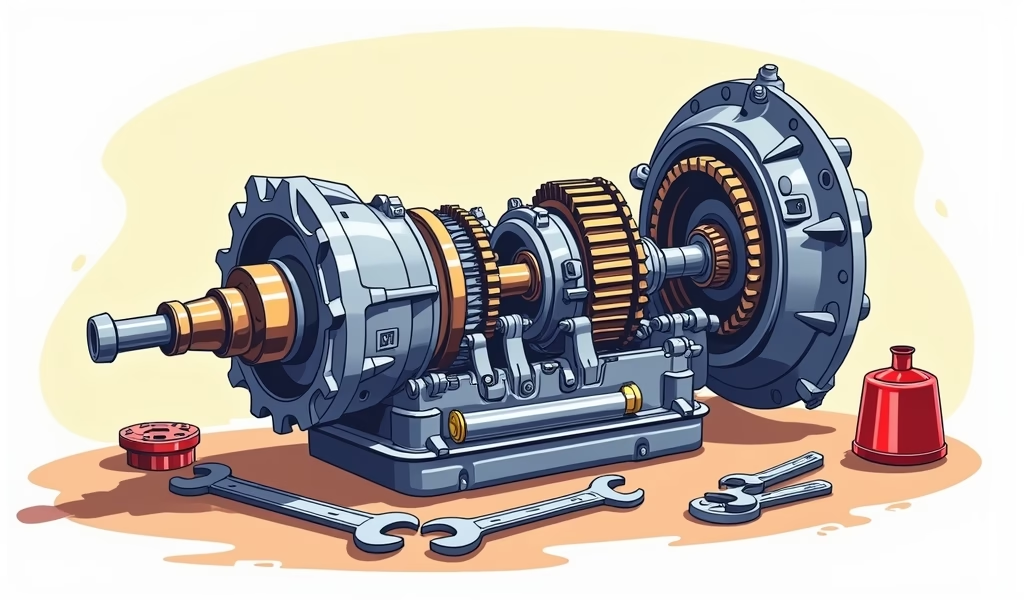
Keeping your Mitsubishi 3000GT transmission healthy isn’t rocket science, but it does require diligence. Regular maintenance is your best defense against catastrophic failures. First and foremost, establish a consistent transmission service interval and stick to it religiously.
For manual transmissions, experts recommend changing the transmission oil every 30,000 miles or two years, whichever comes first. This interval should be shortened to 20,000 miles for heavily modified cars or those used in track days. Don’t cut corners on fluid quality either—Mitsubishi’s own transmission fluid or high-quality equivalents like Redline MT-90 are worth every penny.
Automatic transmission owners should be even more vigilant with fluid changes. A good rule of thumb is every 24,000 miles or two years. Remember that the traditional “lifetime fluid” claim is largely a myth, especially for a performance vehicle like the 3000GT.
Beyond fluid changes, pay attention to your clutch condition in manual models. Typical clutch life varies widely, but many owners report getting 60,000-80,000 miles before replacement is needed. Proper clutch adjustment frequency can extend this lifespan significantly.
For both transmission types, don’t forget about the often-neglected shift linkage. Lubricating these components annually can prevent notchy shifting and reduce wear on the transmission’s internal components. A simple spray of lithium grease can make a world of difference here.
Fluid Checks and Changes: The Lifeblood of Your Transmission
Transmission fluid isn’t just a lubricant—it’s a complex hydraulic medium that transfers power, cools components, and prevents wear. For the Mitsubishi 3000GT transmission, using the correct fluid is absolutely critical. The manual transmission requires GL-4 rated gear oil, while the automatic needs Mitsubishi Diamond ATF or an equivalent like Valvoline MaxLife.
Checking your manual transmission fluid level is straightforward but often overlooked. With the car on level ground, remove the fill plug on the side of the transmission case. If fluid seeps out, you’re good to go. If not, you’ll need to add fluid until it just starts to drip out. This simple check, performed quarterly, can catch leaks before they become serious.
For automatic transmissions, the process is more involved and requires checking the fluid while the engine is running and at operating temperature. The dipstick should show fluid at the “hot” mark, and the color should be a transparent red. If you see brown or black fluid with a burnt smell, you’re already overdue for a change.
When changing automatic transmission fluid, consider a complete flush rather than just a drain and fill. The torque converter holds a significant amount of old fluid that won’t be removed with a simple drain. A professional flush service can replace nearly 100% of the fluid, giving your transmission a fresh start. According to transmission experts at AA1Car, this comprehensive service can double the life of automatic transmissions in performance vehicles.
Here’s a quick reference guide for 3000GT transmission fluid services:
- Manual Transmission: 30,000 miles/2 years (GL-4 rated 75W-90 gear oil)
- Automatic Transmission: 24,000 miles/2 years (Diamond ATF or equivalent)
- Transfer Case (VR-4): 30,000 miles/2 years (Hypoid gear oil)
Early Warning Signs of Transmission Trouble
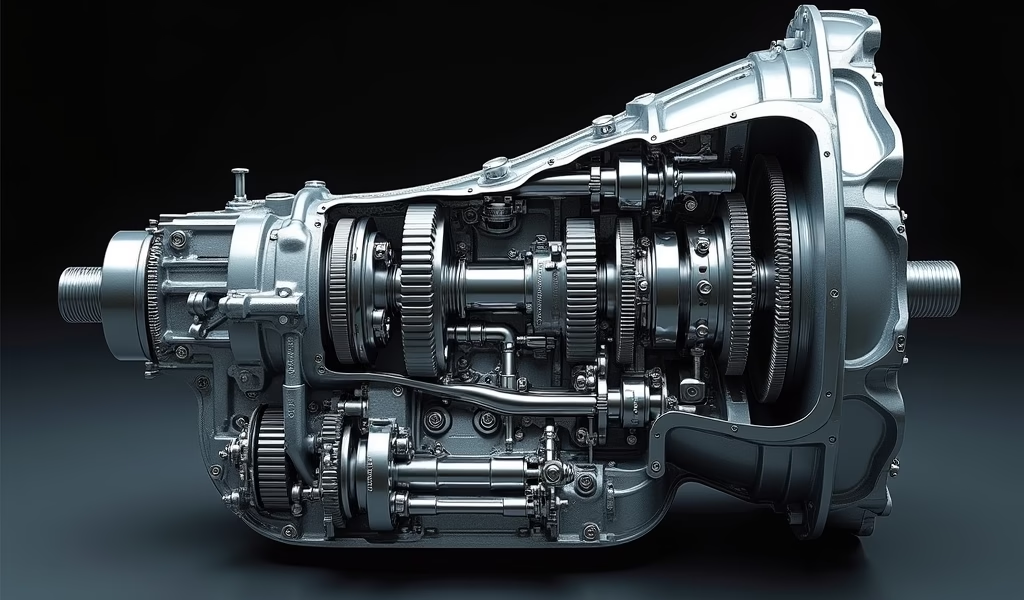
The key to avoiding catastrophic Mitsubishi 3000GT transmission failures is recognizing the subtle hints your car gives before major problems develop. Think of these as your transmission’s way of whispering “help me” before it starts screaming.
For manual transmissions, one of the earliest warning signs is increased resistance when shifting into certain gears. This is typically most noticeable when the transmission is cold. If second gear becomes particularly difficult to engage in the morning, but improves as the car warms up, your synchros are likely beginning to wear.
Another tell-tale sign specific to the 3000GT is a slight rattle or buzz from the transmission tunnel when the clutch is engaged and you’re at idle. This often indicates that the input shaft bearings are starting to wear—an issue you want to address before it escalates to complete failure.
Automatic transmission owners should be vigilant for momentary hesitation when shifting from park to drive, or subtle jerks during gear changes. These symptoms often appear intermittently at first, making them easy to dismiss. Don’t. These are the first indicators of valve body issues or clutch pack wear.
Fluid leaks, while obvious, deserve mention because they’re so critical. The 3000GT’s transmission is particularly susceptible to leakage at the output shaft seal and, in the VR-4, where the transfer case connects. Even small damp spots warrant immediate attention, as they rarely resolve themselves and always worsen over time.
Finally, any change in transmission noise deserves investigation. The healthy hum of your 3000GT’s transmission should be familiar to you. New whines, clunks, or grinding sounds are never normal and should prompt immediate diagnostic attention. According to Motor Magazine’s transmission diagnostics guide, up to 70% of serious transmission failures are preceded by abnormal noises that were ignored.
DIY Maintenance Tips for the Weekend Mechanic
You don’t need a professional mechanic’s license to keep your Mitsubishi 3000GT transmission in fighting shape. Several key maintenance tasks are perfectly suited for the weekend warrior with basic tools and a willingness to get a little dirty.
First, let’s talk about transmission fluid changes. For the manual transmission, you’ll need a 24mm socket for the drain and fill plugs, a drain pan, and about 2.5 quarts of the correct gear oil. The procedure is straightforward: remove the drain plug, let it empty completely, replace the drain plug, then fill through the fill hole until fluid just begins to seep out. The whole process shouldn’t take more than an hour.
Adjusting your clutch free play is another simple task that yields big benefits. The 3000GT has a hydraulic clutch, but the pedal height and free play can still be adjusted. Aim for about 1/2 inch of free play at the pedal. Too little, and you risk premature throw-out bearing wear; too much, and you might not be fully disengaging the clutch when shifting.
For those feeling more ambitious, inspecting and lubricating the shift linkage can transform a notchy shifting experience into a smooth one. Access the linkage through the center console (some disassembly required) and use a high-quality lithium grease on all pivot points. While you’re there, check for worn bushings that might need replacement.
Automatic transmission owners can perform a fluid and filter service. While not as comprehensive as a professional flush, changing the pan gasket and filter along with the accessible fluid can still provide significant benefits. Just remember that you’ll only be replacing about 40-60% of the total fluid with this method.
Here’s a simple checklist for DIY transmission maintenance:
- Check fluid levels monthly (both transmission types)
- Inspect for leaks during oil changes
- Change transmission fluid according to schedule
- Lubricate shift linkage annually
- Adjust clutch free play as needed (manual only)
- Inspect CV boots and axle seals twice yearly
When to Seek Professional Servicing
While DIY maintenance is admirable and cost-effective, some Mitsubishi 3000GT transmission issues demand professional intervention. Recognizing when you’re in over your head can save you from turning a fixable problem into a complete transmission replacement.
If you’re experiencing grinding when shifting that doesn’t improve with fresh fluid, it’s time to consult a professional. This likely indicates synchronizer wear that requires transmission disassembly—not a job for most home mechanics. Similarly, any persistent whining or bearing noise demands expert diagnosis before catastrophic failure occurs.
For automatic transmissions, erratic shifting behavior, slipping gears, or delayed engagement usually points to internal hydraulic or clutch pack issues. These require specialized diagnostic equipment and expertise to address correctly. Don’t risk a $4,000+ transmission replacement by attempting complex internal repairs without proper tools and knowledge.
When selecting a shop for transmission work, seek specialists familiar with the Mitsubishi 3000GT specifically. General transmission shops may be competent, but the unique aspects of the 3000GT’s system—especially in the VR-4—benefit from model-specific experience. Online forums and owner’s clubs can be excellent resources for finding recommended specialists in your area.
Be prepared for the reality of costs when professional servicing is needed. A complete rebuild of a 3000GT manual transmission typically ranges from $1,800-$2,500, while automatic rebuilds often exceed $3,000. Transfer case rebuilds for VR-4 models add another $1,000-$1,500 to the bill. While steep, these costs pale in comparison to the value of keeping your 3000GT on the road with proper transmission function.
Transmission Performance Upgrades: Worth It?
Many Mitsubishi 3000GT owners wonder if transmission upgrades are a worthwhile investment, especially those looking to increase power beyond factory specifications. The answer depends largely on your performance goals and budget.
For manual transmission owners, one of the most cost-effective upgrades is switching to a higher quality synthetic transmission fluid. Products like Redline MT-90 or Motul Gear 300 offer superior protection and often improve shift quality, especially in colder climates. This simple change costs under $100 but provides tangible benefits.
If you’re pushing serious power in your VR-4, consider upgrading the clutch assembly. The stock unit is adequate for near-factory power levels, but begins to slip once you exceed about 350 wheel horsepower. Aftermarket clutches from companies like South Bend or Exedy offer increased clamping force without sacrificing too much drivability.
For those really looking to bullet-proof their manual transmission, companies like Shepherd Transmissions offer upgraded gear sets with stronger materials and improved design. These typically cost $2,500-$3,500 plus installation but can handle significant power increases and aggressive driving. They’re particularly worth considering if you’re already facing a rebuild scenario.
Automatic transmission options are more limited but still exist. Performance valve body recalibration can sharpen shift response and hold gears longer under acceleration. Upgraded torque converters with higher stall speeds can improve off-the-line performance for modified cars.
Regardless of which transmission type you have, if you’re modifying your 3000GT for significantly increased power, budget for transmission upgrades as part of your build plan. According to MotorTrend’s performance transmission guide, transmission failures are among the most common issues when vehicles are modified for increased power without corresponding drivetrain upgrades.
Conclusion
The Mitsubishi 3000GT transmission system represents a critical component that can make or break your ownership experience with this legendary sports car. By understanding its unique characteristics, recognizing early warning signs, and implementing both preventative and reactive maintenance strategies, you can significantly extend its lifespan and avoid those heart-stopping repair bills.
Remember that consistency is key—regular fluid changes, prompt attention to minor issues, and respectful driving habits will pay dividends in transmission longevity. For those willing to invest in proper care, the reward is thousands of miles of trouble-free enjoyment of one of the most technologically advanced sports cars of its era.
Whether you’re preserving a stock example or building a high-performance monster, your 3000GT’s transmission deserves careful attention. The knowledge shared in this guide represents not just theory but hard-won experience from countless owners who’ve learned these lessons—sometimes the expensive way.
Treat your Mitsubishi 3000GT transmission right, and it will return the favor with years of spirited driving and the distinctive mechanical harmony that makes these machines so special. After all, keeping these increasingly rare vehicles on the road isn’t just about personal enjoyment—it’s about preserving an important chapter in automotive history.
Frequently Asked Questions
How long does a Mitsubishi 3000GT transmission typically last?
With proper maintenance, the manual transmission can last 150,000+ miles, while automatics typically reach 120,000 miles before requiring major service. Regular fluid changes and prompt attention to minor issues are key to maximizing lifespan.
Is it difficult to find replacement parts for 3000GT transmissions?
Certain transmission components, particularly for VR-4 models, have become increasingly scarce in the new parts market. Many owners rely on specialist rebuilders who maintain parts inventories or source components from donor vehicles.
Can I upgrade my non-VR-4 3000GT transmission to handle more power?
Yes, the FWD transmission can be upgraded with aftermarket clutches and internal reinforcements for moderate power increases. However, the non-VR-4 transmission has inherent limitations that make it less suitable for high-horsepower applications than its VR-4 counterpart.
What’s the most common cause of 3000GT automatic transmission failure?
Overheating due to neglected fluid changes is the primary killer of automatic transmissions in the 3000GT. The complex hydraulic systems are particularly sensitive to degraded fluid that loses its lubricating and cooling properties.
Can I convert my automatic 3000GT to manual transmission?
Yes, manual conversion is possible though complex, requiring the transmission, pedal assembly, shifter components, and ECU modifications. The project typically costs $3,000-$5,000 in parts plus labor and is most practical when the automatic transmission already needs replacement.