
Overview
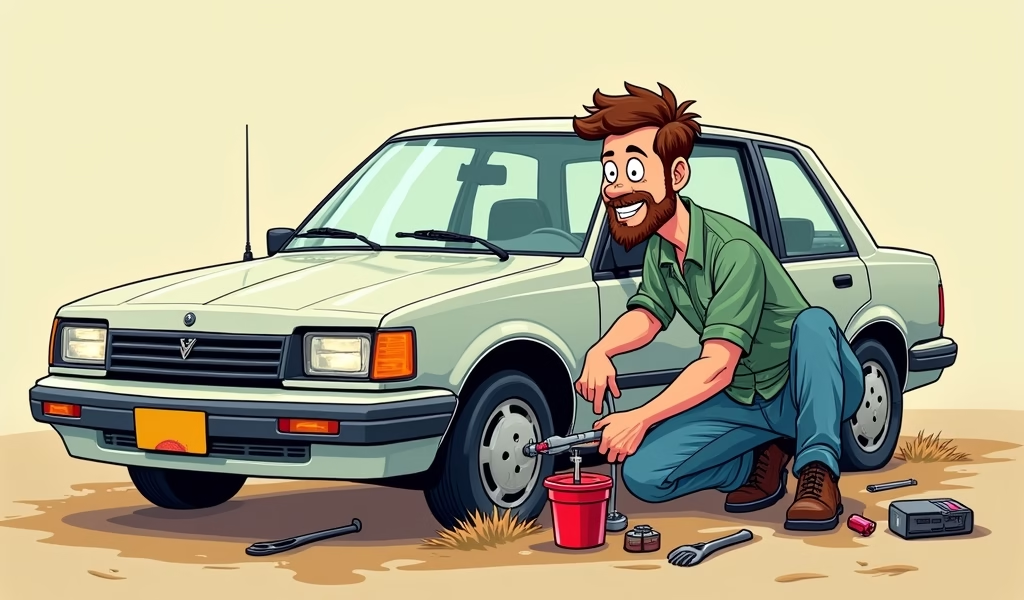
That red puddle under your Oldsmobile Aurora isn’t just unsightly—it’s your transmission crying out for help before minor leaks become major expenses. The article provides detailed guidance on identifying leak sources, understanding repair options ranging from DIY-friendly pan gasket replacements to professional rebuilds, and implementing preventative maintenance strategies to extend transmission life and avoid costly failures.
Table of Contents
- Spotting Transmission Leaks in Your Oldsmobile Aurora
- Understanding Your Oldsmobile Aurora’s Transmission System
- Common Leak Locations in Aurora Transmissions
- Diagnosing Transmission Leaks Like a Pro
- Consequences of Ignoring Transmission Leaks
- DIY Fixes vs. Professional Repairs
- Preventative Maintenance to Avoid Leaks
- Cost Breakdown for Aurora Transmission Repairs
- Extending Your Aurora’s Transmission Life
- Conclusion
- Frequently Asked Questions
Spotting Transmission Leaks in Your Oldsmobile Aurora
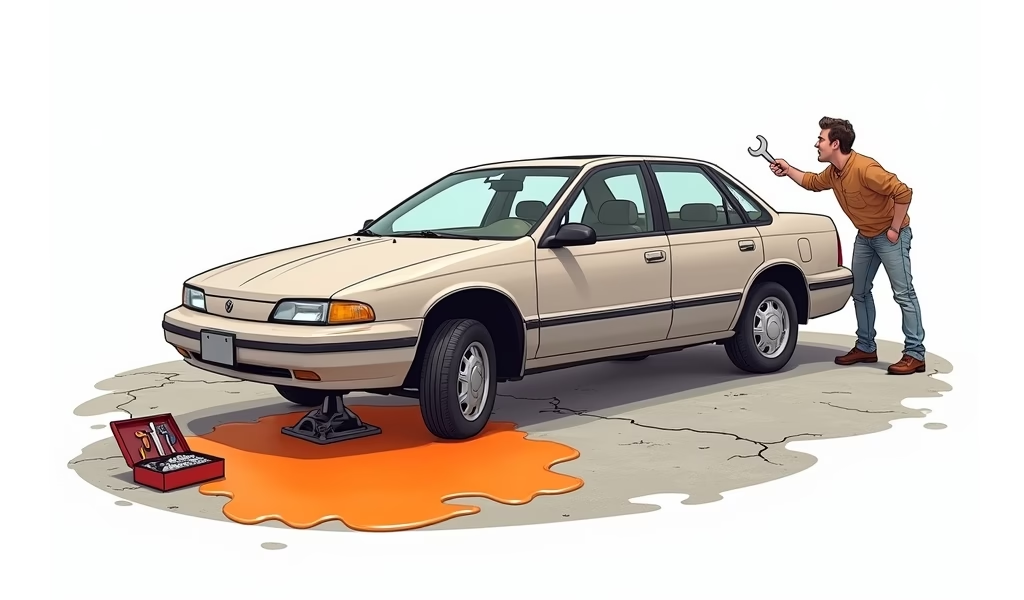
Walking up to your beloved Oldsmobile Aurora only to discover that telltale red puddle underneath is enough to make any car owner’s heart sink. I’ve been there, and I understand the immediate anxiety about your Oldsmobile Aurora transmission and the potential repair costs ahead.
Transmission fluid leaks in these luxury sedans deserve prompt attention. The good news? Early detection can save you thousands in repairs and prevent catastrophic damage to your Aurora’s sophisticated 4T80-E transmission.
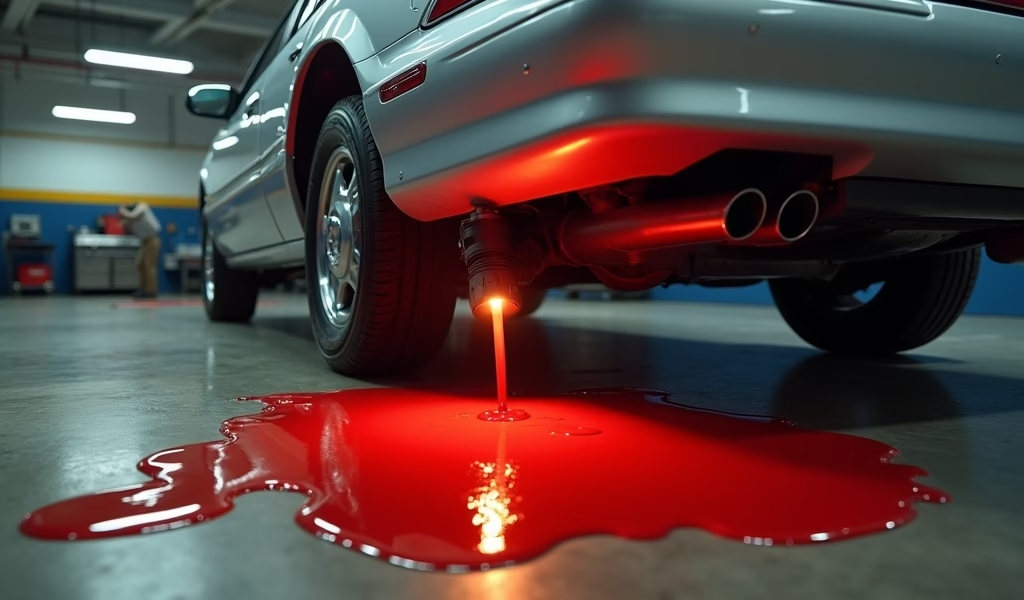
The first sign is typically that distinctive red fluid puddle. Unlike engine oil (which is amber to dark brown) or coolant (green or orange), transmission fluid has a translucent red appearance and a slightly sweet smell. Fresh fluid is bright red, while older fluid darkens to a deeper red or brown.
Beyond the obvious puddle, watch for performance changes. If your Aurora hesitates when shifting from park to drive, struggles between gears, or revs higher than normal before shifting, your transmission fluid may be low due to a leak. These symptoms often appear before you notice fluid on your driveway.
Let’s tackle this issue head-on to keep your Aurora running smoothly without breaking the bank.
Understanding Your Oldsmobile Aurora’s Transmission System
The Oldsmobile Aurora comes equipped with GM’s robust 4T80-E transmission—a heavy-duty, electronically controlled four-speed automatic specifically designed for high-powered applications like the Aurora’s Northstar V8 engine. This isn’t your average transmission; it’s engineered to handle substantial torque while delivering the smooth shifting expected in a luxury vehicle.
At its core, your Aurora’s transmission contains hundreds of precisely machined parts working in harmony. The entire system depends on clean, adequate transmission fluid to function properly. This specialized fluid serves three crucial roles: lubricating moving parts, cooling the transmission during operation, and providing hydraulic pressure needed for shifting gears.
Your Aurora’s transmission fluid circulates through a closed system that includes the torque converter, valve body, planetary gear sets, and a series of channels and passages. The fluid also travels through external cooler lines to the radiator where excess heat dissipates before returning to the transmission.
The 4T80-E transmission in your Aurora relies on a complex electronic control system that constantly adjusts shift points based on your driving style, vehicle speed, and engine load. This transmission service interval depends on maintaining proper fluid levels and quality—which is why leaks can quickly compromise performance.
Understanding this system helps explain why even small leaks deserve immediate attention. When fluid escapes, the entire delicate balance of the transmission is compromised, potentially leading to expensive damage.
Common Leak Locations in Aurora Transmissions
In my years working on Oldsmobile Auroras, I’ve found several predictable leak points that owners should be familiar with. Knowing these vulnerable areas helps you spot problems early and communicate effectively with your mechanic.
The transmission pan gasket is often the first to fail, especially in Auroras with over 80,000 miles. This rubber gasket sits between the transmission case and the removable pan on the bottom of your transmission. Age, heat cycles, and exposure to road debris cause it to harden and shrink, creating leak paths—particularly at the corners.
Transmission cooler lines represent another common failure point. These metal lines carry hot fluid from your transmission to the radiator for cooling. They’re vulnerable to corrosion (especially in regions using road salt) and can develop pinhole leaks or fail at connection points. According to a study by Car Care Council, 25% of vehicles inspected had leaking fluids, with transmission leaks being among the most common.
The front pump seal where the torque converter connects to the transmission is another trouble spot. This seal endures constant motion and heat, making it prone to wear over time. When it fails, fluid typically appears at the junction between your engine and transmission.
Input and output shaft seals contain fluid where the transmission connects to other drivetrain components. These dynamic seals experience considerable stress from the Northstar V8’s torque output.
Less commonly, the transmission case itself can develop cracks, especially after impact damage or in vehicles that have overheated repeatedly. This is the most serious type of leak and often requires complete transmission replacement.
Diagnosing Transmission Leaks Like a Pro
When hunting down a transmission leak in your Aurora, think like a detective. Start with a clean undercarriage—if your vehicle is dirty, consider getting an underbody wash or cleaning the suspected area with degreaser and water. This creates a clean slate for identifying fresh leaks.
Park your clean Aurora overnight on light-colored cardboard or clean concrete. By morning, any leaking fluid will be visible, and its position will help identify the source. Front-of-transmission puddles often indicate pump or converter seal issues, while center spots typically point to pan gasket problems.
To confirm it’s transmission fluid, check the color and texture. Dab some on a white paper towel—transmission fluid leaves a distinctive red stain and has a slick feel between your fingers. It also has a slightly sweet smell compared to the petroleum odor of engine oil.
Check your Aurora’s transmission fluid level while the engine is running and warmed up. Low fluid with no visible external leak might indicate internal transmission issues. Proper level should be in the “HOT” range on the dipstick after the car has reached operating temperature.
Pay attention to when leaks occur. Some seals only leak when the system is under pressure (while driving) but appear dry when parked. Others leak continuously. This timing provides valuable diagnostic information for your mechanic.
If you’re still uncertain, consider a professional dye test. This involves adding a special UV-reactive dye to your transmission fluid, driving the vehicle, then inspecting with a UV light to precisely pinpoint leak sources—even tiny ones that might otherwise go undetected.
Consequences of Ignoring Transmission Leaks
I’ve seen too many Aurora owners ignore small transmission leaks only to face catastrophic failures weeks later. Let me be clear: there’s no such thing as a “small” transmission leak that you can safely ignore. Here’s why immediate attention is crucial.
First, understand that your Aurora’s transmission is designed to operate with a specific fluid volume. Even being a quart low can significantly impact performance and accelerate wear. Your transmission relies on fluid pressure to engage clutches and bands—when fluid is low, these engagements become delayed or harsh.
As fluid levels drop, heat becomes your transmission’s worst enemy. The remaining fluid overheats because there’s less of it to absorb and dissipate heat. This accelerates fluid breakdown, turns the nice red fluid dark brown, and reduces its lubricating properties. According to the Automatic Transmission Rebuilders Association, operating with low fluid is the leading cause of premature transmission failure.
The progression of damage is predictable and increasingly expensive. What starts as a $150 pan gasket repair can quickly escalate to a $3,000+ transmission rebuild if metal-on-metal contact occurs inside your transmission due to inadequate lubrication.
Beyond the mechanical damage, low transmission fluid affects your Aurora’s drivability and safety. You might experience unpredictable shifting, inability to engage certain gears, or even complete transmission lockup—potentially leaving you stranded in dangerous traffic situations.
Perhaps most frustrating is that serious internal damage often occurs before obvious symptoms appear. By the time your Aurora starts showing clear shifting problems, internal damage may already require major repairs.
DIY Fixes vs. Professional Repairs
Some Aurora transmission leaks are perfect candidates for DIY repair, while others demand professional expertise. Let’s break down which is which so you can make informed decisions.
Transmission pan gasket replacement falls firmly in the DIY-friendly category for those with basic mechanical skills. You’ll need a drain pan, gasket scraper, torque wrench, and about 3 hours of time. The parts cost roughly $30 for the gasket and filter, plus 7-8 quarts of DEXRON-III fluid at about $7 per quart.
The procedure involves draining the fluid, removing the pan, cleaning mating surfaces, replacing the filter, installing the new gasket, and refilling with fresh fluid. Just be careful not to overtighten the pan bolts—the proper torque is typically 10-12 ft-lbs for these aluminum transmissions.
External seal leaks around shift linkages or speed sensors are also manageable for DIYers. These typically involve removing a small component, replacing an O-ring or seal, and reinstalling—no internal transmission work required.
However, I strongly advise against DIY repairs for pump seals, converter seals, or anything requiring transmission removal. These jobs require specialized tools, proper lifting equipment, and detailed knowledge of the 4T80-E transmission internals. A mistake during reassembly can cause immediate transmission failure.
If your Aurora needs a transmission rebuild or replacement, this is definitely professional territory. The complexity of modern automatic transmissions makes them challenging even for experienced mechanics without specialized training.
When selecting a professional, look beyond general repair shops. Find a transmission specialist familiar with the 4T80-E transmission used in the Aurora. Ask potential shops if they’ve worked specifically on Oldsmobile Aurora transmissions before—their familiarity with common issues can save you money and prevent repeat problems.
Preventative Maintenance to Avoid Leaks
An ounce of prevention is worth a pound of cure—especially with your Aurora’s transmission. Following a proactive maintenance schedule can significantly extend your transmission’s life and help avoid those dreaded leaks in the first place.
Regular fluid checks should become second nature. Make it a habit to check your transmission fluid level every other time you get gas. The procedure is simple: With the engine running and warmed up, shift through all gears, then back to park, and check the dipstick. The fluid should be in the “HOT” range and maintain its reddish color.
Fluid changes are your best defense against seal deterioration. While many technical service bulletin recommendations suggest 100,000-mile intervals, I recommend changing your Aurora’s transmission fluid every 30,000-50,000 miles. Fresh fluid contains conditioners that keep seals pliable and prevent leaks from developing.
Use only the correct fluid specification. Your Aurora requires DEXRON-III or compatible fluid—not universal or “multi-vehicle” formulations. Using the wrong fluid accelerates seal wear and can damage valve bodies. The few dollars saved on cheaper fluid isn’t worth the risk to your transmission.
Consider a cooling system upgrade if you live in a hot climate or use your Aurora for towing. Excessive heat is the number one killer of transmissions and their seals. An auxiliary transmission cooler costs about $100-150 plus installation and can dramatically extend seal life.
For high-mileage Auroras (over 100,000 miles), consider a transmission service that includes pan removal, filter replacement, and a complete fluid exchange rather than just a drain and fill. This removes accumulated debris that can clog passages and accelerate wear on seals and gaskets.
Finally, address minor leaks promptly before they become major issues. That slightly damp transmission pan might only need the bolts torqued to specification—a five-minute fix that could prevent a major leak from developing.
Cost Breakdown for Aurora Transmission Repairs
Let’s talk dollars and cents—what can you expect to pay for various Aurora transmission repairs? I’ll break down typical costs so you can budget appropriately and recognize fair pricing when you see it.
For minor repairs like transmission pan gasket replacement, expect to pay $200-350 at an independent shop. This includes parts (gasket and filter) and labor. Dealerships typically charge $300-450 for the same service due to higher labor rates. If you’re doing it yourself, parts will run about $50-70 total including fluid.
Transmission cooler line repairs vary based on the extent of damage. Simple connection repairs might cost $150-250, while complete line replacement runs $250-450 including parts and labor. These repairs require specialized tools to properly flare and connect the high-pressure lines.
Front seal replacement (where the torque converter meets the transmission) is more involved, requiring transmission removal. This typically costs $800-1,200 at independent shops and $1,000-1,500 at dealerships. The parts are inexpensive (usually under $50), but labor is extensive.
Complete transmission rebuilds for the Aurora’s 4T80-E transmission typically range from $2,200-3,200 at transmission specialty shops. This includes disassembly, replacement of worn components, new seals and gaskets throughout, and reassembly. Dealership rebuilds often exceed $3,500 due to higher labor rates.
Replacement with a remanufactured transmission is another option, typically costing $2,800-3,800 installed. While more expensive than some rebuilds, these units often carry longer warranties and have had all wear components—not just the failed ones—replaced.
Used transmissions present the lowest initial cost at $1,200-2,000 installed, but carry the highest risk. If considering this route, only purchase from reputable suppliers offering at least a 6-month warranty.
Regional variations significantly impact these prices. Expect to pay 15-30% more in major metropolitan areas, particularly on the East and West coasts, compared to rural areas and the Midwest.
Extending Your Aurora’s Transmission Life
Beyond fixing current leaks, there are several practices that can significantly extend your Aurora’s transmission life and prevent future leaks from developing.
Driving habits make a remarkable difference in transmission longevity. Avoid aggressive accelerations and “jackrabbit” starts that put excessive pressure on seals. Allow your Aurora to warm up for 1-2 minutes before driving in cold weather, giving the transmission fluid time to circulate and protect components.
If your Aurora has over 100,000 miles, consider using a premium synthetic transmission fluid during your next service. These advanced formulations offer better heat resistance and often contain seal conditioners that can rejuvenate hardened seals and gaskets. They cost more per quart but can significantly extend transmission life.
Install a transmission temperature gauge if you frequently tow or drive in mountainous terrain. Excessive heat is the primary enemy of transmission seals. Being able to monitor transmission temperature allows you to modify driving habits when temperatures rise too high.
Address recall notice compliance issues immediately. Several Oldsmobile Aurora models had transmission-related recalls or technical service bulletins that addressed potential leak points. Check with a dealer service department to ensure all applicable updates have been performed on your vehicle.
For those planning to keep their Aurora long-term, consider a complete transmission service every 50,000 miles. This goes beyond a simple fluid change to include cleaning the valve body, replacing the filter, and inspecting for early signs of seal wear—addressing potential issues before they become actual leaks.
Finally, maintain comprehensive service records. Documentation of regular maintenance not only helps you track service intervals but also proves to potential buyers that you’ve cared for the vehicle properly, maintaining its value should you eventually decide to sell.
Conclusion
Transmission leaks in your Oldsmobile Aurora don’t have to spell financial disaster or the end of your beloved luxury sedan. With prompt attention, proper diagnosis, and appropriate repairs, most leak issues can be resolved before causing significant damage to your transmission.
Remember that prevention is your best strategy. Regular fluid checks, proper maintenance intervals, and addressing small leaks immediately will save thousands in potential repair costs down the road.
When repairs are necessary, match the solution to the problem—simple gasket leaks may be DIY-appropriate, while more complex issues deserve professional attention from a transmission specialist familiar with the Aurora’s unique 4T80-E transmission.
Your Oldsmobile Aurora represents one of GM’s finest achievements in luxury sedan engineering. Its sophisticated Northstar powertrain and smooth-shifting transmission deliver a driving experience worth preserving. By understanding the common causes of transmission leaks and taking appropriate preventative and corrective actions, you can enjoy many more years of trouble-free driving in your distinctive American luxury sedan.
Whether you’re planning to keep your Aurora for years to come or maintain it properly before passing it along to another enthusiast, proper transmission care is one of the most important investments you can make in your vehicle’s longevity and performance.
Frequently Asked Questions
How do I know if my Oldsmobile Aurora has a transmission leak?
Look for red fluid puddles under your parked vehicle, especially near the center or front of the transmission. You might also notice shifting problems, delayed engagement when putting the car in gear, or the transmission warning light illuminating on your dashboard.
How urgent is a transmission leak repair for my Aurora?
Very urgent—even small leaks should be addressed immediately. Driving with low transmission fluid can cause rapid internal damage, turning a simple seal repair into a costly transmission rebuild.
What does transmission fluid look like in an Oldsmobile Aurora?
Healthy transmission fluid is translucent red or pink and feels slippery between your fingers. As it ages or becomes contaminated, it darkens to brown or black and may develop a burnt smell.
Can I drive my Aurora with a transmission fluid leak?
It’s not recommended as driving with low fluid levels can cause catastrophic transmission damage. If absolutely necessary, check fluid levels frequently and add as needed while arranging repairs.
How much does it typically cost to fix a transmission leak in an Oldsmobile Aurora?
Costs vary widely based on the leak source—from $200-350 for a pan gasket to $2,500-3,500 for a complete transmission rebuild. Minor external seal repairs typically fall in the $300-800 range.