
Overview
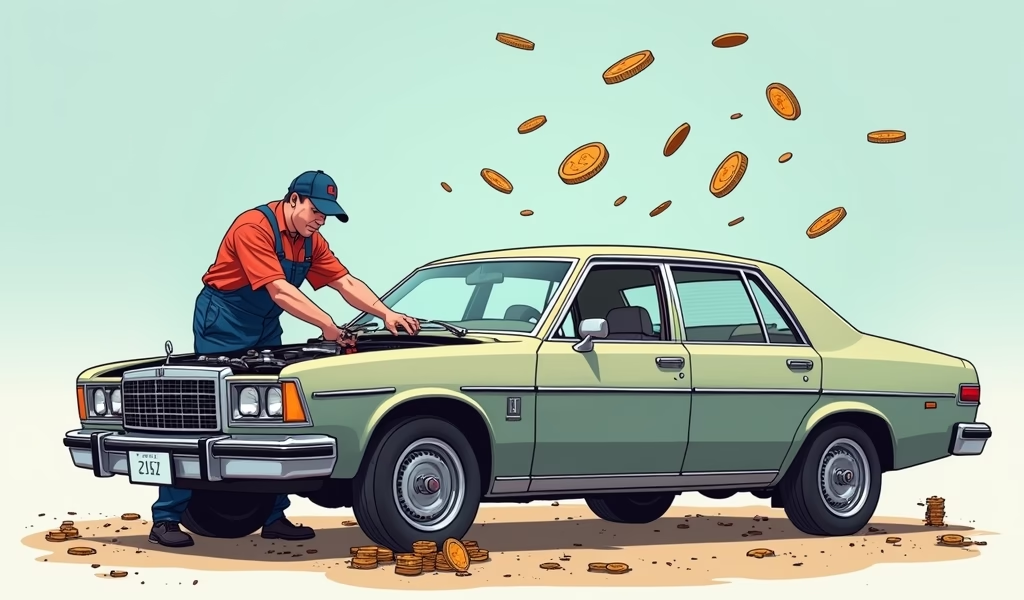
Just like your morning coffee prevents workplace meltdowns, regular maintenance of your Kia Cadenza’s complex 8-speed transmission prevents costly repairs—with proper fluid checks, timely changes, and attentive driving potentially extending its life to 200,000 miles. The comprehensive guide covers everything from recognizing early warning signs (unusual noises, delayed engagement, fluid leaks) to cost-saving repair strategies that could mean the difference between a $200 software update and a $4,500 complete replacement.
Table of Contents
- Understanding Kia Cadenza Transmission: The Basics
- Common Transmission Issues in the Kia Cadenza
- Warning Signs of Transmission Problems
- DIY Maintenance Tips to Prevent Transmission Issues
- When to Seek Professional Help
- Cost-Saving Strategies for Transmission Repairs
- Extended Warranties and Transmission Coverage
- Conclusion: Protecting Your Kia Cadenza’s Transmission
- Frequently Asked Questions
Understanding Kia Cadenza Transmission: The Basics
The Kia Cadenza’s transmission system is the unsung hero of this luxury sedan’s smooth performance. As someone who’s spent 15 years diagnosing and repairing these sophisticated systems, I can tell you that understanding your Kia Cadenza transmission is the first step to avoiding costly repairs.
Most Cadenza models feature an 8-speed automatic transmission that transfers power from the engine to the wheels. This complex hydraulic system contains hundreds of precisely engineered components working together to deliver the seamless driving experience Cadenza owners love.
The transmission in your Cadenza doesn’t just change gears; it optimizes fuel efficiency, enhances driving comfort, and contributes to overall vehicle performance. When functioning properly, you’ll barely notice its operation – and that’s exactly how it should be.
However, no mechanical system is immune to issues. The good news? Many Kia Cadenza transmission problems can be prevented with proper maintenance, and even when issues do arise, they don’t always require a complete replacement or bank-breaking repair.
Just last month, I worked with a Cadenza owner named Mark who was quoted $3,200 for a transmission replacement when in reality, a simple software update procedure fixed his shifting problems completely – for less than $200. Stories like this are why I’m passionate about educating Cadenza owners about their transmissions.
Common Transmission Issues in the Kia Cadenza
Based on my workshop experience and reports from numerous Cadenza owners, several transmission issues appear more frequently than others in these vehicles. Recognizing these common problems early can save you significant money and headaches.
Delayed engagement or hesitation when shifting from park to drive is one of the most reported issues. This often manifests as a noticeable pause before the car moves forward after you’ve shifted gears. Sarah, a 2017 Cadenza owner from Ohio, described it as “a 2-3 second heart-stopping moment where nothing happens when I press the gas.”
Rough shifting between gears, particularly between 2nd and 3rd or during downshifts, is another frequent complaint. This can feel like a noticeable jerk or shudder when the transmission changes gears, rather than the smooth transition you’d expect.
Transmission fluid leaks are less common but more serious when they occur. The Cadenza uses a specific type of automatic transmission fluid (ATF), and leaks can lead to insufficient fluid levels and increased friction – ultimately causing overheating and accelerated wear.
Electronic control issues can also plague the Cadenza’s transmission. The transmission control module (TCM) manages the complex shifting patterns, and when it develops problems, erratic shifting or even complete failure to engage certain gears can result. Fortunately, many of these electronic issues can be resolved with a module programming update rather than mechanical repairs.
Torque converter problems occasionally surface, especially in higher-mileage Cadenzas. The torque converter is essentially the clutch of an automatic transmission, and issues here often manifest as shuddering at low speeds or during gentle acceleration.

Warning Signs of Transmission Problems
Catching transmission issues early can mean the difference between a minor repair and a complete rebuild. Here are the warning signs every Kia Cadenza owner should know:
The check engine light is often your first indicator of transmission trouble. While this light can indicate various issues, when combined with unusual transmission behavior, it shouldn’t be ignored. Modern vehicles like the Cadenza have sophisticated diagnostic systems that can detect transmission problems before they become obvious to the driver.
Unusual noises are reliable early warning signs. If you hear whining, buzzing, or humming sounds that increase with vehicle speed, your transmission may be telling you something’s wrong. One Cadenza owner described it as “a distant bee swarm that gets louder as I accelerate.”
Burning smells are never a good sign in any vehicle. If you notice a burnt toast odor, especially after driving in stop-and-go traffic or climbing hills, your transmission fluid may be overheating. This requires immediate attention, as overheated fluid quickly loses its protective properties.
Slipping gears can be both annoying and dangerous. If your Cadenza’s engine revs without corresponding acceleration, or if the transmission unexpectedly shifts to neutral while driving, your transmission is slipping. This indicates significant internal wear or fluid issues that need addressing.
Fluid condition provides valuable clues about transmission health. Healthy transmission fluid should be clear red or pink. If your fluid appears brown, has a burnt smell, or contains particles, internal damage may already be occurring. Checking your transmission fluid is simple and can provide early warning of developing problems.
Delayed engagement after shifting into drive or reverse shouldn’t be ignored. That pause before your vehicle moves indicates hydraulic issues, worn components, or electronic control problems. What might seem like a minor annoyance today could develop into a major repair tomorrow.
DIY Maintenance Tips to Prevent Transmission Issues
While some transmission work requires professional equipment and expertise, several preventative maintenance tasks are well within the average Cadenza owner’s capabilities. These DIY approaches can significantly extend your transmission’s lifespan and save hundreds in repair costs.
Checking your transmission fluid regularly is perhaps the single most important preventative measure. Unlike engine oil, transmission fluid doesn’t burn off – so if levels are low, you likely have a leak that needs addressing. Here’s how to check it properly:
- Park on level ground and warm up the engine
- Locate the transmission dipstick (consult your owner’s manual if unsure)
- Remove, wipe clean, reinsert fully, and remove again to read the level
- Check both the level and condition of the fluid
Maintaining a proper transmission service interval is crucial for longevity. While Kia officially recommends fluid changes around 60,000 miles, many experienced mechanics including myself suggest more frequent intervals of 30,000-40,000 miles, especially if you frequently drive in stop-and-go traffic or hilly terrain.
Using the correct transmission fluid is non-negotiable. The Kia Cadenza requires a specific ATF type, and using the wrong fluid can cause significant damage. Your owner’s manual specifies the exact fluid type, or you can consult with a Kia dealership service department.
External cooling for your transmission can be a worthwhile investment, especially if you live in a hot climate or frequently tow with your Cadenza. Auxiliary transmission coolers are relatively affordable and can dramatically reduce operating temperatures, which is the primary cause of fluid breakdown and premature transmission wear.
Driving habits significantly impact transmission longevity. Avoid these transmission-killing behaviors:
- Shifting while the vehicle is still rolling (always come to a complete stop)
- Accelerating aggressively from a stop
- “Riding” the brakes while driving (this increases transmission temperature)
- Exceeding your vehicle’s towing capacity
Regular transmission system scans can catch potential issues before they become serious. While professional diagnostic equipment provides the most comprehensive analysis, affordable OBD-II scanners that connect to your smartphone can detect many transmission-related issues early. According to a J.D. Power Vehicle Dependability Study, early detection of transmission issues can reduce repair costs by up to 40%.
When to Seek Professional Help
While DIY maintenance is valuable, some transmission issues require professional intervention. Knowing when to call in the experts can prevent minor problems from escalating into major expenses.
Persistent check engine lights with transmission-related codes should never be ignored. Modern transmissions are heavily computer-controlled, and these codes often indicate problems that can be resolved inexpensively if addressed early. A professional scan will reveal specific trouble codes that point to exact causes, rather than general symptoms.
Fluid leaks require prompt professional assessment. Transmission fluid doesn’t just lubricate – it cools, cleans, and provides the hydraulic pressure needed for operation. Even small leaks can lead to cascading damage if left unrepaired. James, a 2018 Cadenza owner, told me he saved over $2,000 by addressing a small transmission leak promptly rather than waiting until performance issues developed.
Shifting abnormalities that persist after fluid checks and basic maintenance indicate internal issues requiring expert diagnosis. While some shifting issues can be resolved with TCM updates, others may indicate worn clutch packs, solenoid issues, or valve body problems – all requiring specialized knowledge and equipment to address.
Complete transmission failure signs include inability to engage certain gears, grinding noises, or the transmission staying in neutral regardless of selected gear. These symptoms require immediate professional attention to prevent potential safety issues and minimize repair costs.
When seeking professional help, consider these options:
- Kia dealership service departments (best for warranty work and specific Kia expertise)
- Independent transmission specialists (often more affordable for out-of-warranty repairs)
- General repair shops with transmission experience (variable quality – check reviews specifically mentioning transmission work)

Cost-Saving Strategies for Transmission Repairs
When transmission issues do arise, these strategies can help minimize the financial impact without compromising repair quality.
Always get multiple repair quotes before proceeding with major transmission work. I’ve seen price variations of over 40% for essentially identical repairs. Be sure each quote specifies exactly what work will be performed and what parts will be used – this makes comparison meaningful and prevents surprises.
Consider remanufactured or rebuilt transmissions as alternatives to new units. Quality rebuilt transmissions typically cost 30-50% less than new ones and often come with warranties comparable to new units. Many professional rebuilders actually improve upon original designs by addressing known weak points.
Ask about partial rebuilds when appropriate. Sometimes only specific components have failed, and replacing just those parts can save thousands compared to a complete rebuild. For example, replacing a failed solenoid pack might cost $600-800, while a complete rebuild could exceed $3,000.
Negotiate labor rates and warranty terms. Many shops have flexibility in these areas, especially for larger jobs like transmission work. Extended warranties, in particular, are often available at discounted rates when purchased with the repair.
Explore aftermarket warranty options if your vehicle is no longer covered by the factory warranty. Companies like Endurance and CarShield offer transmission coverage that can be more affordable than paying out-of-pocket for major repairs.
Consider preventive repairs before total failure occurs. When symptoms first appear, addressing the root cause is almost always less expensive than waiting for complete failure. For instance, replacing a torque converter showing early signs of failure might cost $800-1,000, while waiting until it damages other components could result in a $3,500 rebuild.
Learn to distinguish between critical repairs and acceptable quirks. Minor transmission quirks that have remained stable for months or years may not justify expensive repairs. One Cadenza owner I work with has lived with a slight shudder during the 2-3 upshift for over 40,000 miles without progression or additional issues.
Extended Warranties and Transmission Coverage
Extended warranty options can provide significant financial protection against transmission failures, which are among the most expensive automotive repairs. Understanding your options can help you make informed decisions about coverage.
Kia’s factory powertrain warranty is impressively generous, covering the transmission for 10 years or 100,000 miles for original owners. This is among the best in the industry and provides substantial protection against unexpected transmission failures during the first decade of ownership.
Kia’s certified pre-owned program extends the powertrain warranty to 10 years/100,000 miles from the original purchase date, making CPO Cadenzas an excellent value from a warranty perspective. This extension provides significant peace of mind for second owners.
Third-party extended warranties vary widely in quality and coverage. When considering these options, pay particular attention to:
- Coverage limitations and exclusions (especially for electronic components)
- Deductible amounts and application (per visit or per repair)
- Repair facility restrictions (can you choose your shop?)
- Claims process and reputation (check reviews specifically about transmission claims)
Mechanical breakdown insurance is an alternative to traditional extended warranties that functions more like car insurance. These policies, offered by companies like Geico and Progressive, often provide comprehensive coverage with flexible repair options. They typically become more cost-effective for vehicles over three years old.
The cost-benefit analysis of extended coverage depends on several factors. For the Cadenza specifically, transmission repairs typically range from $2,800-$4,500 for major work. Compare this to warranty costs of $1,500-$3,000 depending on coverage level and term. Your driving habits, local repair costs, and risk tolerance should all factor into this decision.
Transferability can add significant value to your Cadenza if you plan to sell it before warranty expiration. Factory extended warranties usually transfer to new owners, adding to resale value, while third-party warranties have varying transfer terms and fees.
Conclusion: Protecting Your Kia Cadenza’s Transmission
Your Kia Cadenza’s transmission is a marvel of engineering that deserves proper care and attention. Throughout this guide, we’ve explored the common issues affecting these sophisticated systems, early warning signs to watch for, and practical strategies to prevent problems before they start.
The most important takeaway is that proactive maintenance dramatically reduces the likelihood of major transmission failures. Regular fluid checks, timely fluid changes, and attentive driving habits are your best defense against expensive repairs. Remember that maintaining your Cadenza transmission isn’t just about avoiding repair costs – it’s about preserving the smooth, refined driving experience that made you choose this luxury sedan in the first place.
When issues do arise, addressing them promptly almost always results in less expensive repairs and better outcomes. The difference between a $300 solenoid replacement and a $3,000 rebuild often comes down to timing and attention to early warning signs.
By following the advice in this guide, you’re now equipped with the knowledge to protect your investment, avoid unnecessary repairs, and keep your Kia Cadenza delivering the premium driving experience it was designed for – potentially saving thousands in the process.
Frequently Asked Questions
How long should a Kia Cadenza transmission last?
With proper maintenance, a Kia Cadenza transmission typically lasts 150,000-200,000 miles. Regular fluid changes every 30,000-40,000 miles can significantly extend this lifespan.
Is it worth replacing a transmission in a Kia Cadenza?
Yes, it’s often worth replacing a Cadenza transmission if the vehicle is otherwise in good condition and has less than 100,000 miles. The car’s overall value and remaining useful life usually justify the investment.
How much does it cost to replace a Kia Cadenza transmission?
A complete Kia Cadenza transmission replacement typically costs between $3,200-$4,500 at a dealership. Independent shops may offer rebuilds for $2,500-$3,500, while remanufactured units fall somewhere in between.
Can I drive with a slipping transmission?
No, driving with a slipping transmission is unsafe and will likely cause additional damage. A slipping transmission can unexpectedly lose power or fail completely, creating dangerous driving situations.
Does Kia have a transmission fluid change interval?
Kia officially recommends transmission fluid changes around 60,000 miles for normal driving conditions. However, many mechanics suggest 30,000-40,000 mile intervals for optimal protection, especially in severe driving conditions.