
Overview
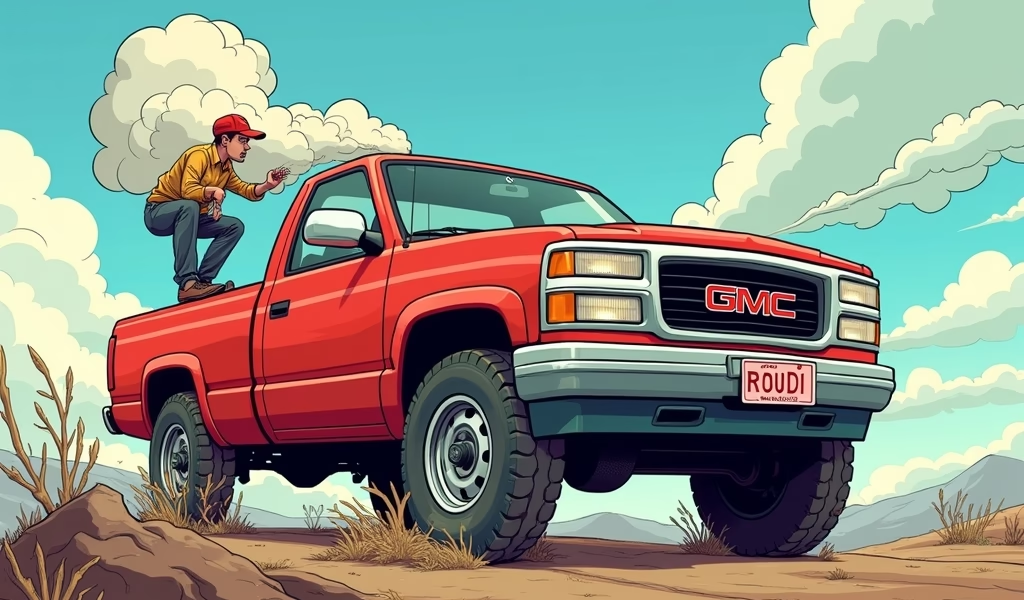
Like Mike’s ill-fated fishing trip, GMC Canyon owners face potential transmission slipping issues that manifest through delayed engagement, unexpected RPM increases, burning smells, and difficult acceleration—often caused by low fluid levels, degraded fluid, worn bands, faulty solenoids, or torque converter problems. Regular maintenance including fluid checks every 30,000-45,000 miles can prevent these issues, but when transmission problems progress, owners should seek professional diagnosis with repair costs ranging from $250 for fluid changes to $6,000 for complete replacement, depending on the severity of the problem.
Table of Contents
- Introduction: The Frustration of Transmission Problems
- What Is Transmission Slipping in the GMC Canyon?
- Warning Signs Your GMC Canyon Transmission Is Slipping
- Common Causes of Transmission Slipping in GMC Canyons
- GMC Canyon Transmission Lifespan: What to Expect
- Preventative Maintenance to Avoid Transmission Slipping
- When Transmission Repair or Replacement Becomes Necessary
- Cost Expectations for GMC Canyon Transmission Service
- DIY vs. Professional Transmission Service
- Common Mistakes GMC Canyon Owners Make with Transmissions
- Conclusion
- Frequently Asked Questions
Introduction: The Frustration of Transmission Problems
Mike had been planning his cross-country fishing trip for months. Three hundred miles into the journey in his 2017 GMC Canyon, the truck started behaving strangely on a steep mountain pass. The engine revved loudly, but the vehicle barely gained speed. Then came the burnt smell. Mike’s heart sank as he recognized the classic symptoms of transmission slipping – an unwelcome companion on what should have been the adventure of a lifetime.
Few vehicle issues create as much anxiety as transmission problems. They’re often unpredictable, potentially dangerous, and notoriously expensive to fix. For GMC Canyon owners, a transmission that begins to slip doesn’t just threaten your wallet – it compromises your truck’s reliability when you need it most.
In this comprehensive guide, we’ll explore everything Canyon owners need to know about transmission slipping. You’ll learn how to identify the warning signs early, understand the common causes specific to GMC Canyons, implement preventative maintenance strategies, and make informed decisions if repairs become necessary. Whether you’re currently experiencing symptoms or simply want to protect your investment, this article will equip you with the knowledge to keep your Canyon’s transmission shifting smoothly for years to come.
What Is Transmission Slipping in the GMC Canyon?
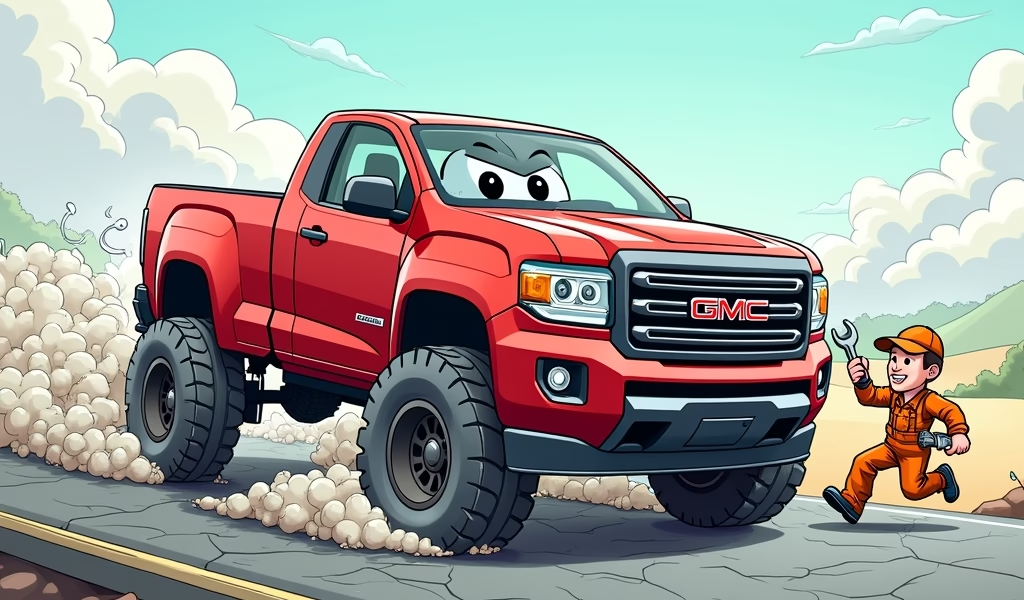
Transmission slipping occurs when your GMC Canyon’s transmission fails to provide the appropriate amount of power to the wheels for the selected gear. Instead of smoothly transferring engine power to move your vehicle, the transmission “slips” out of the proper gear engagement, causing a momentary loss of power delivery.
The automatic transmission in your GMC Canyon is a sophisticated hydraulic system designed to seamlessly shift between gears as you accelerate and decelerate. It uses a combination of planetary gear sets, clutches, bands, and hydraulic pressure to change gear ratios automatically. When functioning correctly, you should barely notice the transitions as the transmission computer selects the optimal gear for your current driving conditions.
Normal transmission behavior in the Canyon includes smooth, barely perceptible shifts that occur at appropriate speeds and RPM levels. You might notice a slight change in engine pitch or a gentle sensation as the vehicle changes gears, but these transitions should feel refined and purposeful. The truck should respond promptly when shifting from park to drive and maintain consistent acceleration without unexpected engine revving.
Abnormal behavior – slipping – manifests as a disconnection between engine effort and vehicle movement. Your Canyon’s engine might suddenly rev higher without a corresponding increase in speed, or you might feel a momentary loss of power followed by a jarring re-engagement. These incidents indicate that something is interfering with the transmission’s ability to maintain proper gear engagement.
Warning Signs Your GMC Canyon Transmission Is Slipping
Catching transmission problems early can save you thousands in repair costs. Here are the key warning signs that your GMC Canyon’s transmission is beginning to slip:
Delayed engagement when shifting from park to drive: When you shift your Canyon from park to drive, there should be an immediate engagement. If you notice a delay of several seconds before the transmission engages and the vehicle begins to move, this could indicate transmission slipping. This symptom is especially noticeable when the engine is cold.
Unexpected RPM increases without speed change: While driving at a steady speed, pay attention to your tachometer. If the RPMs suddenly climb without corresponding acceleration or when you’re not pressing harder on the gas pedal, your transmission is likely slipping. This is one of the most definitive symptoms and often occurs during the transition between gears.
Burning smell while driving: A distinct burning odor, often described as similar to burning paper or overheated electronics, can indicate overheating transmission fluid. This smell often means your transmission is operating at excessive temperatures due to slipping, which accelerates fluid breakdown and can cause serious damage if not addressed quickly.
Difficulty accelerating: If your Canyon seems underpowered or hesitates when you press the accelerator, the transmission may be slipping and failing to deliver proper power to the wheels. You might notice this especially when trying to accelerate onto highways or when climbing hills.
Strange noises during gear changes: Listen for whining, buzzing, or humming sounds that increase in volume during gear shifts or as you accelerate. Clunking or thudding when the transmission shifts can also indicate problems with internal components that are causing slipping.
Dashboard warning lights: Modern GMC Canyons are equipped with sophisticated monitoring systems. The check engine light or dedicated transmission warning light may illuminate when sensors detect abnormal transmission operation. Don’t ignore these warnings – they’re often your first indication of developing issues.
Common Causes of Transmission Slipping in GMC Canyons
Understanding what causes transmission slipping can help you prevent problems before they start. Here are the most common culprits in GMC Canyons:
Low transmission fluid levels: The most straightforward cause of slipping is insufficient transmission fluid. This vital fluid provides hydraulic pressure, lubrication, and cooling. Even being a quart low can cause erratic shifting and slipping, especially in older Canyon models. Leaks from pan gaskets, cooler lines, or seals are typically responsible for fluid loss.
Burnt or degraded transmission fluid: Transmission fluid doesn’t last forever. Over time, heat and friction break down the fluid’s lubricating properties and detergent additives. In GMC Canyons, especially models used for towing, fluid can degrade faster than expected. Dark brown or black fluid with a burnt smell indicates severely degraded fluid that can cause slipping and accelerate wear on internal components.
Worn transmission bands: Transmission bands connect the gears in your Canyon’s transmission. These bands can wear out over time, causing slipping during specific gear changes. This issue is more common in higher-mileage vehicles and those subjected to heavy use or towing.
Faulty solenoids: Modern GMC Canyons use electronic solenoids to control fluid flow and gear changes. When these solenoids malfunction due to electrical issues or internal debris, they can cause erratic shifting and slipping. The 2015-2018 models, in particular, have occasionally experienced solenoid-related issues.
Torque converter issues: The torque converter transfers power from the engine to the transmission. Problems with the torque converter clutch not locking or unlocking properly can cause slipping sensations, especially at highway speeds. Some Canyon owners have reported torque converter issues in models with higher mileage.
Clutch problems: The clutch plates inside automatic transmissions can wear down or become damaged, reducing their ability to engage properly. This internal wear is particularly common in Canyons used for frequent towing or hauling heavy loads.
Software/computer control issues: The transmission control module (TCM) manages shifting in modern GMC Canyons. Software issues or sensor failures can cause the TCM to initiate inappropriate shifts or fail to maintain proper gear engagement. Sometimes, a simple software update from a GMC dealer can resolve these issues.
GMC Canyon Transmission Lifespan: What to Expect
The transmission in your GMC Canyon is designed for longevity, but actual lifespan varies significantly based on several factors. Here’s what you can typically expect:
Most GMC Canyon transmissions should reliably function for 150,000 to 200,000 miles when properly maintained. However, this range can vary considerably depending on your specific model year and driving habits. The 6L50 transmission found in second-generation Canyons (2015-2021) typically performs well through the 180,000-mile mark before major issues might develop.
Several factors significantly affect how long your Canyon’s transmission will last. Regular maintenance is the most critical factor – Canyons that receive scheduled transmission service consistently outlast those that don’t. Your driving environment matters too; vehicles regularly operated in extreme temperatures, dusty conditions, or mountainous terrain typically experience shorter transmission lifespans. Towing habits dramatically impact longevity – consistently operating at or near maximum towing capacity accelerates wear on transmission components.
Some model years have demonstrated more transmission concerns than others. The 2015-2016 models experienced some early teething problems, with owners reporting occasional hard shifts and slipping. The 8-speed automatic introduced in later models had some initial programming issues that were addressed through software updates. The 2019-2021 models appear to have more refined transmissions with fewer reported issues overall. First-generation Canyons (2004-2012) generally had reliable transmissions, though the four-speed automatics in the earliest models are now showing age-related issues as they approach higher mileages.
Preventative Maintenance to Avoid Transmission Slipping
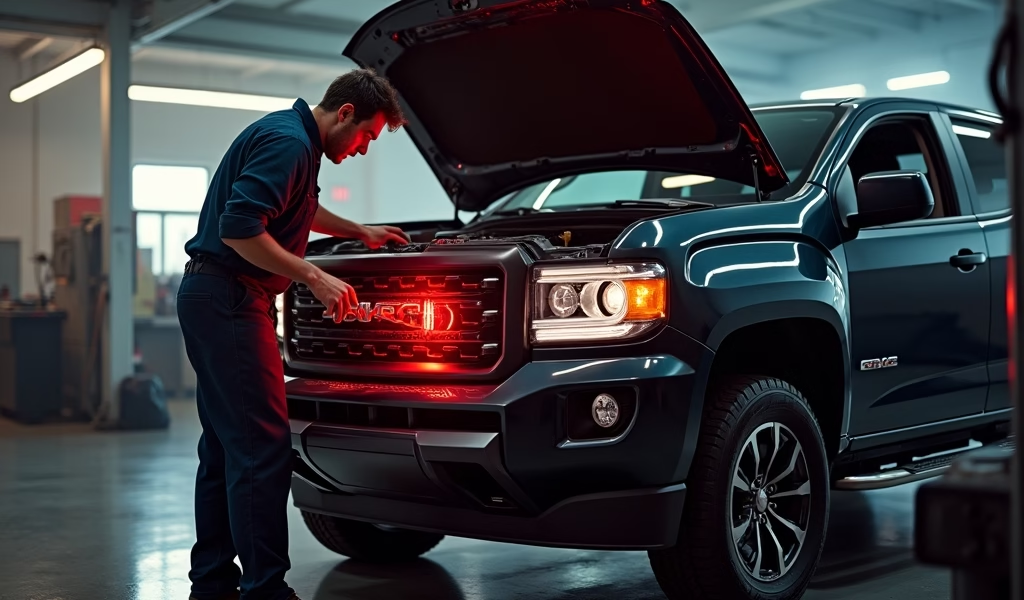
An ounce of prevention truly is worth a pound of cure when it comes to transmission care. Here’s how to keep your GMC Canyon’s transmission performing optimally:
Regular fluid checks and change intervals: Check your transmission fluid level monthly using the dipstick (while the engine is running and warmed up). The fluid should be bright red, not brown or black, and should smell slightly sweet rather than burnt. GMC recommends changing transmission fluid every 45,000 miles under normal conditions, but consider more frequent changes (every 30,000 miles) if you regularly tow or drive in severe conditions.
Transmission flush recommendations: A complete transmission flush, which replaces virtually all fluid rather than just what drains from the pan, is recommended every 60,000-100,000 miles for most Canyon models. This service removes accumulated debris and deposits that can cause valve body and solenoid issues. However, on very high-mileage Canyons (over 150,000 miles) that have never had transmission service, a flush can sometimes dislodge debris that was actually helping seal worn components, potentially creating new problems.
Cooling system maintenance: Your transmission relies on the cooling system to maintain proper operating temperatures. Ensure your Canyon’s radiator, transmission cooler, and cooling fans are functioning properly. Overheating is a primary killer of automatic transmissions, especially in trucks used for towing.
Driving habits that protect your transmission: Allow your Canyon’s transmission to fully warm up before subjecting it to heavy loads or aggressive driving, especially in cold weather. Avoid frequent towing in overdrive, which can cause excessive heat buildup. When stopped for more than a minute, shift to neutral to reduce strain on the transmission’s holding components.
Towing considerations for Canyon owners: If you regularly tow with your Canyon, consider installing an auxiliary transmission cooler if your model doesn’t already have the towing package. When towing near your truck’s capacity, use the tow/haul mode to optimize shift patterns and reduce heat buildup. After towing, allow the transmission to cool down by driving gently for several minutes before shutting off the engine. Don’t forget that proper transfer case maintenance is also crucial for 4WD models when towing regularly.
When Transmission Repair or Replacement Becomes Necessary
Despite your best maintenance efforts, there may come a time when your Canyon’s transmission requires professional attention. Here’s how to know when that time has arrived:
Progressive symptoms that indicate serious issues: Occasional, minor slipping might be resolved with fluid service, but symptoms that increase in frequency or severity demand immediate attention. If your Canyon begins slipping more frequently, develops hard shifting between multiple gears, or shows delayed engagement consistently, these progressive symptoms suggest internal mechanical issues that won’t resolve themselves.
Diagnostic procedures mechanics will perform: A qualified transmission specialist will connect a scanner to access transmission-specific diagnostic trouble codes not visible on generic OBD2 readers. They’ll perform a pressure test to check hydraulic function, conduct a thorough road test to replicate symptoms, and likely remove the transmission pan to inspect for metal particles indicating internal damage. The mechanic should also check related systems like engine performance and computer control modules that might be causing transmission-like symptoms.
Repair options for different severity levels: Minor issues like solenoid failures, sensor malfunctions, or valve body problems can often be repaired without full transmission removal. Moderate problems might require removal and partial disassembly to replace worn bands, clutch packs, or the torque converter. Severe internal damage typically necessitates either a complete rebuild or replacement.
Transmission rebuilding vs. replacement considerations: Rebuilding involves disassembling your existing transmission, replacing worn components, and reassembling it with new seals, gaskets, and clutches. This option preserves your original transmission case while addressing worn components. Replacement with a remanufactured unit often provides a quicker turnaround time and typically comes with a longer warranty. For Canyon models still under 100,000 miles, rebuilding is often the more economical choice, while replacement might make more sense for higher-mileage vehicles.
Cost Expectations for GMC Canyon Transmission Service
Transmission work is never inexpensive, but understanding the potential costs can help you make informed decisions:
Price range for fluid changes and minor repairs: A standard transmission fluid and filter change typically costs $150-$300 for a GMC Canyon. A complete transmission flush service ranges from $250-$400 depending on your location and the shop you choose. Solenoid replacement might run $300-$850, depending on which solenoids need replacing and their accessibility. Valve body replacement or reconditioning generally falls in the $600-$1,200 range.
Cost of major transmission repairs: Replacing a torque converter typically costs $800-$1,500 installed. Repairing internal components like clutch packs or bands while leaving the transmission in the vehicle can run $1,200-$2,500, depending on the extent of the repairs and labor rates in your area.
Complete transmission replacement expenses: A full transmission rebuild for a GMC Canyon typically costs $2,500-$4,000 at an independent shop, or $3,500-$5,000 at a dealership. Installing a remanufactured transmission generally runs $3,000-$4,500 at an independent shop or $4,000-$6,000 at a dealership. These prices include labor, which accounts for a significant portion of the total cost.
Warranty considerations: Factory powertrains warranties on newer Canyons typically cover the transmission for 5 years/60,000 miles. If your transmission is failing within this period, contact your GMC dealer immediately. Extended warranties often cover transmission repairs but may require pre-authorization and have deductibles. After paying for major transmission work, expect a 12-36 month warranty on parts and labor, depending on the shop and whether you choose rebuilt or remanufactured components.
Aftermarket vs. OEM parts comparison: OEM (Original Equipment Manufacturer) transmission parts match your Canyon’s original specifications exactly but typically cost 20-40% more than aftermarket alternatives. Quality aftermarket parts from reputable brands can offer comparable performance at lower prices. For vehicles still under warranty or with lower mileage, OEM parts are often worth the premium. For higher-mileage Canyons, quality aftermarket components provide good value.
DIY vs. Professional Transmission Service
While some maintenance tasks can be performed by capable DIY mechanics, transmissions require specialized knowledge:
Transmission maintenance tasks suitable for DIY: Checking transmission fluid level and condition is straightforward for most owners. Replacing transmission fluid and filter is achievable for experienced home mechanics with proper tools and a service manual. External transmission cooler installation is also within reach of DIY enthusiasts comfortable with basic fluid line connections.
Tools and skills needed for basic transmission work: For fluid changes, you’ll need a transmission pan gasket, filter, appropriate fluid type, basic hand tools, a drain pan, jack and stands, and torque wrench. Skills required include safely supporting your vehicle, proper bolt torquing procedures, and understanding fluid level checking methods. DIYers should be prepared for potential complications like stripped pan bolts or difficult-to-reach filter locations.
When to absolutely seek professional help: Any internal transmission work should be left to professionals. Diagnosing electronic transmission control issues requires specialized scanning equipment not typically available to consumers. If you’re experiencing actual slipping symptoms, rather than just performing preventative maintenance, professional diagnosis is strongly recommended before attempting any repairs.
How to find a qualified transmission specialist: Look for shops specializing in transmissions rather than general repair facilities. Ask about technician certifications specific to transmissions, such as Automatic Transmission Service Group (ATSG) or Automatic Transmission Rebuilders Association (ATRA) credentials. Request references from other Canyon or GM truck owners, and check online reviews specifically mentioning transmission work. A quality shop will offer a comprehensive diagnostic procedure before recommending specific repairs and provide a detailed warranty policy in writing.
Common Mistakes GMC Canyon Owners Make with Transmissions
Avoiding these common pitfalls can save you significant headaches and expenses:
Ignoring early warning signs: Many Canyon owners dismiss occasional slipping or hard shifts as normal behavior, especially in cold weather. These early symptoms rarely resolve themselves and typically progress to more serious failures. Addressing strange transmission behavior when it first appears is almost always less expensive than waiting until a complete failure occurs.
Using incorrect transmission fluid: GMC Canyons require specific transmission fluid formulations – typically Dexron VI for most models. Using generic “multi-vehicle” fluid or older Dexron formulations can cause shifting problems, accelerated wear, and even catastrophic failure. Always consult your owner’s manual for the exact fluid specification for your model year.
Neglecting to check fluid levels: Many owners assume the “sealed” transmissions in newer Canyons never need fluid checks. While these transmissions don’t have traditional dipsticks, they still have proper fill procedures and can leak. Having fluid levels checked during regular oil changes is a simple preventative measure.
Aggressive driving habits that damage transmissions: Shifting from reverse to drive without coming to a complete stop puts tremendous strain on transmission components. “Power braking” (holding the brake while accelerating) before takeoff generates excessive heat. Frequent rapid acceleration and abrupt stops also accelerate wear on clutches and bands. Proper clutch adjustment frequency is important if you drive a manual transmission Canyon.
Improper towing techniques: Exceeding your Canyon’s rated towing capacity is a direct path to transmission problems. Equally damaging is towing heavy loads in overdrive, which causes the transmission to constantly hunt between gears and generate excessive heat. Always use the tow/haul mode when pulling significant loads to optimize shift patterns and engage the torque converter lockup appropriately.
Conclusion
A slipping transmission in your GMC Canyon doesn’t have to mean the end of the road for your truck. By recognizing the early warning signs, understanding the common causes, and implementing proper preventative maintenance, you can significantly extend your transmission’s life and avoid costly breakdowns.
Remember that regular fluid checks and changes are your first line of defense against transmission problems. Pay attention to how your Canyon drives, and don’t ignore unusual behavior – that momentary slip might be your transmission’s cry for help before more serious damage occurs.
Whether you choose to handle basic maintenance yourself or rely on professional expertise, investing in your GMC Canyon’s transmission health now will pay dividends in reliability and longevity down the road. Your truck was built to work hard and play hard – with proper care, its transmission will be ready for whatever adventures you have planned.
Frequently Asked Questions
How often should I change the transmission fluid in my GMC Canyon?
GMC recommends changing transmission fluid every 45,000 miles under normal conditions. If you frequently tow or drive in severe conditions, consider changing it every 30,000 miles instead.
Can transmission slipping be fixed with just a fluid change?
Minor slipping caused by old, degraded fluid might be resolved with a fluid change. However, if slipping is due to worn internal components, a fluid change alone won’t fix the problem.
How much does it cost to repair a slipping transmission in a GMC Canyon?
Costs range from $250-$400 for a fluid service to $3,000-$5,000+ for a full rebuild or replacement. The exact price depends on the underlying cause and your location.
What transmission fluid does the GMC Canyon use?
Most GMC Canyons require Dexron VI automatic transmission fluid. Always check your owner’s manual for the specific fluid recommendation for your model year.
Are there any GMC Canyon years with known transmission problems?
The 2015-2016 model years experienced some programming issues causing hard shifts. Some 2017-2018 models with the 8-speed automatic initially had shuddering sensations, often fixed through software updates.