

Overview
Just like a skilled interpreter between your right foot and the road, your Dodge Hornet’s transmission requires proper maintenance to avoid costly repairs ranging from $1,800 to $5,500. This comprehensive guide outlines common issues with the Hornet’s 9-speed and 6-speed transmission options, warning signs of trouble, maintenance best practices, and practical advice for extending your transmission’s lifespan through proper fluid changes, driving habits, and timely attention to minor symptoms.
Table of Contents
- Understanding Your Dodge Hornet Transmission
- Common Transmission Issues in the Dodge Hornet
- Warning Signs of Transmission Problems
- What Causes Transmission Problems?
- Essential Maintenance Tips to Prevent Transmission Failure
- DIY vs. Professional Transmission Service
- Transmission Repair and Replacement Costs
- How to Extend Your Transmission’s Lifespan
- Conclusion
- Frequently Asked Questions
Understanding Your Dodge Hornet Transmission
The transmission in your Dodge Hornet isn’t just another part under the hood—it’s the critical component that transfers power from your engine to your wheels. Think of it as the interpreter between your right foot and the road. When working properly, you barely notice it’s there. When problems develop, your wallet notices quickly.
The Dodge Hornet comes equipped with two transmission options: a 9-speed automatic in the GT model with the 2.0L turbocharged engine, or a 6-speed automatic in the R/T plug-in hybrid variant. Both are sophisticated systems designed for performance and efficiency, but they’re not without their quirks.
Modern transmissions contain hundreds of precisely engineered parts working together in a complex dance of mechanical and hydraulic movements. All that complexity means more potential points of failure. And with repair costs averaging between $1,800 and $3,500 for major transmission work, prevention is definitely worth a pound of cure.
Getting familiar with how your Hornet’s transmission functions will help you recognize when something isn’t quite right. The transmission should shift smoothly between gears, with no jarring movements or unusual sounds. If you follow the recommended service intervals, your transmission should provide many years of reliable service.
Common Transmission Issues in the Dodge Hornet
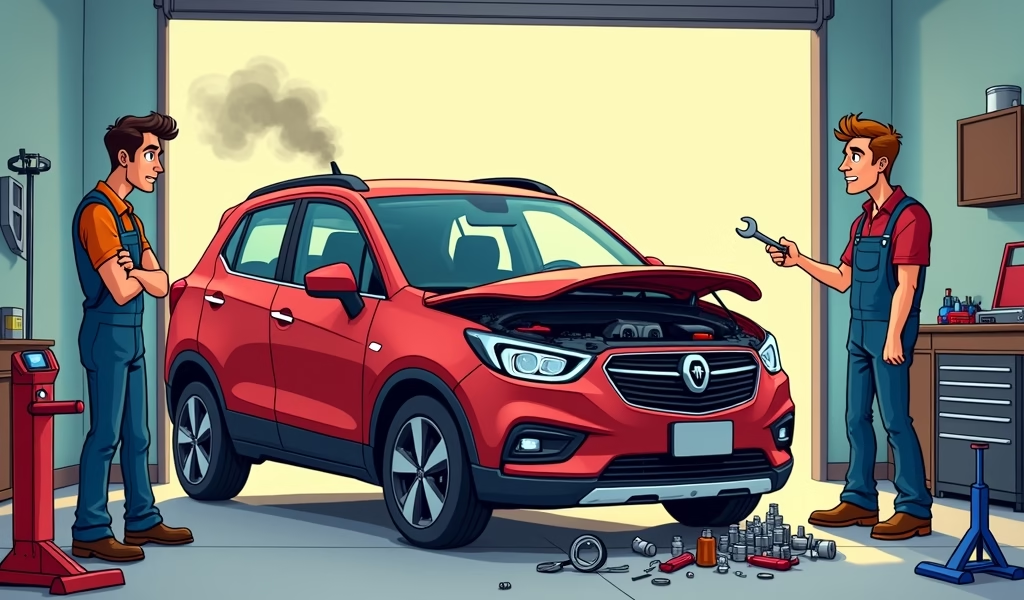
While the Dodge Hornet is still relatively new to the market, it shares transmission components with other vehicles in the Stellantis family, giving us insight into potential trouble spots. Here are the most common issues owners have reported:
The 9-speed transmission in the GT model has exhibited occasional rough shifting, particularly in cold weather. This is often related to software calibration rather than mechanical failure. In many cases, a transmission control module flash update can resolve these issues without major repairs.
Torque converter problems have been noted in similar Stellantis transmissions. The torque converter is responsible for transferring power from the engine to the transmission, and when it fails, you’ll typically feel shuddering or vibration during acceleration or at cruising speeds.
Solenoid pack malfunctions can cause erratic shifting or complete transmission failure. These electronic components control fluid flow and pressure within the transmission. When they begin to fail, shifting becomes unpredictable or harsh.
Valve body issues are another common problem area. The valve body directs hydraulic fluid to activate the proper clutch packs for each gear. When it malfunctions, you may experience hard shifts, slipping, or gear hunting.
Fluid leaks and degradation accelerate wear on internal components. The special fluid in your Hornet’s transmission breaks down over time, particularly under high-stress driving conditions. According to Consumer Reports’ transmission experts, degraded fluid provides less protection and can lead to premature failure.
Warning Signs of Transmission Problems
Your Dodge Hornet will typically give you warning signs before a catastrophic transmission failure occurs. Catching these early can mean the difference between a minor repair and a complete replacement. Here’s what to watch for:
- Delayed engagement when shifting from Park to Drive
- Hard shifts that feel like a jolt or bang
- Slipping sensations where the engine revs but acceleration lags
- Unusual noises like whining, grinding, or clunking during shifts
- Burning smell (often indicates overheating transmission fluid)
- Visible fluid leaks under your vehicle (transmission fluid is typically red or brown)
- Check engine or transmission warning lights on your dashboard
- Vibration or shuddering during acceleration or at steady speeds
One particularly telling sign is if your Hornet struggles to maintain highway speeds or feels like it’s “hunting” between gears during steady cruising. This often indicates electronic control issues or worn internal components.
Don’t ignore intermittent symptoms! Many owners report that transmission problems start as occasional quirks before developing into consistent issues. That occasional rough shift might seem minor, but it could be the first warning of bigger problems ahead.
If your Hornet is still under warranty, report these symptoms to your dealer immediately. Document when they occur and under what driving conditions to help technicians diagnose the problem correctly.
What Causes Transmission Problems?
Understanding what causes transmission issues can help you avoid them. Several factors contribute to transmission problems in the Dodge Hornet:
Lack of proper maintenance is perhaps the most common culprit. Despite some manufacturers claiming their transmissions have “lifetime fluid,” the reality is that transmission fluid degrades over time. Regular fluid changes are essential but often overlooked.
Driving habits significantly impact transmission longevity. Aggressive driving puts tremendous strain on your transmission. Frequent hard accelerations, riding the brakes while driving (causing partial clutch engagement), and shifting while still rolling backward can all contribute to premature wear.
Extreme temperatures and challenging conditions accelerate wear. The Hornet’s transmission works especially hard in mountainous terrain, stop-and-go traffic, or when carrying heavy loads. According to AAA’s automotive experts, transmissions operating at higher temperatures experience dramatically shortened lifespans.
Manufacturing defects and design issues can affect some vehicles. While the Hornet is a solid performer, the 9-speed transmission used in some models has undergone multiple refinements over the years to address known challenges.
Using improper transmission fluid can cause serious damage. The Hornet requires specific transmission fluid formulations, and substitutions can lead to premature failure. Always use the exact fluid type specified in your owner’s manual.
Electrical problems can affect transmission performance in modern vehicles like the Hornet. With so much of the transmission’s function controlled by electronics, issues with sensors, wiring, or control modules can create shifting problems even when the mechanical components are fine.
Essential Maintenance Tips to Prevent Transmission Failure

An ounce of prevention is worth a pound of cure—especially when it comes to transmission repairs. Here’s how to keep your Dodge Hornet’s transmission healthy:
Follow the manufacturer’s recommended fluid change interval. For most Hornets, changing the transmission fluid every 60,000 miles is a good rule of thumb. If you frequently drive in severe conditions (heavy traffic, mountainous terrain, extreme temperatures), consider more frequent changes—perhaps every 30,000-45,000 miles instead.
Check your fluid regularly. Unlike engine oil, transmission fluid doesn’t burn off—it just degrades. Low fluid levels almost always indicate a leak that should be addressed immediately. Healthy transmission fluid should be bright red, not brown or black, and should smell sweet rather than burnt.
Allow your vehicle to warm up before driving in cold weather. Cold transmission fluid doesn’t flow as effectively and puts extra strain on internal components. Let your Hornet idle for a minute or two on cold mornings before driving away.
Drive gently for the first few minutes of operation. This gives the transmission fluid time to reach proper operating temperature and achieve optimal flow throughout the system. Your transmission will thank you with a longer service life.
Consider installing an auxiliary transmission cooler if you frequently tow or drive in hot climates. Excessive heat is the number one killer of transmissions. A quality auxiliary cooler can extend your transmission’s lifespan by maintaining proper operating temperatures.
Use the correct transmission fluid. The Hornet requires specific fluid formulations, and using the wrong type can cause serious damage. Consult your owner’s manual or a dealer service department to ensure you’re using the right product.
Address minor issues before they become major problems. That slight hesitation or occasional rough shift is your transmission’s way of asking for help. Responding quickly to these early warning signs can prevent catastrophic failures.
DIY vs. Professional Transmission Service
When it comes to transmission care, knowing what you can handle yourself and when to seek professional help is crucial. Let’s break it down:
DIY-friendly tasks include checking fluid levels and condition, inspecting for external leaks, and performing visual inspections. If you’re mechanically inclined, you might feel comfortable changing transmission fluid and external filters, though access can be challenging on some Hornet models.
Professional-only jobs include internal repairs, transmission removal, solenoid replacement, and computer programming or updates. These require specialized tools, equipment, and expertise that most home mechanics don’t possess.
If you’re considering DIY fluid changes, be aware that many modern transmissions don’t have traditional dipsticks. Instead, they require special procedures and sometimes specialized tools to check and fill fluid correctly. Incorrect fluid levels can cause as many problems as dirty fluid.
When choosing a professional shop, look for specialists rather than general repair facilities. Transmission work requires specific expertise and equipment. Ask whether technicians are ASE-certified specifically for automatic transmissions, and check reviews mentioning transmission work.
Dealership service departments have access to the latest technical service bulletins and factory-specific diagnostic equipment, which can be valuable for complex issues. However, quality independent transmission shops often offer better value and comparable expertise for routine maintenance or common repairs.
Before authorizing work, always get a detailed written estimate that specifies what parts will be replaced, what kind of warranty is offered, and whether the shop has experience with Dodge/Stellantis transmissions specifically.
Transmission Repair and Replacement Costs
When transmission problems strike, costs can vary widely depending on the specific issue and repair approach. Here’s what you might expect to pay:
Diagnostic fees typically range from $100-$200. This covers the technician’s time to connect diagnostic equipment, perform test drives, and identify the specific problem. Many shops will apply this fee toward repairs if you proceed with their recommended work.
Minor repairs such as replacing external sensors or performing a transmission fluid flush typically cost $200-$400. Solenoid pack replacements are more involved, usually running $400-$800 depending on labor rates in your area.
Major component repairs like replacing a torque converter or valve body can cost $800-$1,500. These repairs require partial disassembly of the transmission but not complete removal from the vehicle.
Complete transmission replacement is the most expensive option, with costs typically ranging from $3,500-$5,500 for a Dodge Hornet. This varies based on:
- Whether you choose new, remanufactured, or used
- Labor rates in your area
- Whether you’re using a dealership or independent shop
- Additional components replaced during installation
Factory warranty coverage is a vital consideration. New Hornets come with a 5-year/60,000-mile powertrain warranty that covers the transmission. If your vehicle is still within these limits, transmission repairs should be covered at no cost to you.
Extended warranties often cover transmission failures, but read the fine print carefully. Some have exclusions for certain components or require documentation of regular maintenance to honor claims.
How to Extend Your Transmission’s Lifespan
Beyond basic maintenance, several driving and care habits can significantly extend your transmission’s life:
Avoid “launching” your vehicle with heavy acceleration from a standstill. While the Hornet’s sporty character may tempt you to test its acceleration frequently, aggressive starts put tremendous strain on the transmission.
Come to a complete stop before shifting between Drive and Reverse. Shifting while the vehicle is still moving in the opposite direction forces the transmission to absorb the kinetic energy, accelerating wear on clutches and bands.
Don’t ride the brakes while driving (known as “two-footing”). This creates partial engagement of the transmission’s clutches and generates excessive heat.
Avoid overloading your vehicle. Exceeding weight recommendations forces the transmission to work harder than designed. Check your owner’s manual for specific capacity limits.
Use engine braking appropriately when driving downhill rather than riding the brakes. This reduces transmission fluid temperature and minimizes wear on brake components.
Consider transmission cooler installation if you frequently drive in hot climates, heavy traffic, or mountainous terrain. Keeping transmission temperatures within optimal ranges dramatically extends component life.
Address unusual sounds or performance issues immediately. That minor symptom could be the early warning of a developing problem that’s much cheaper to fix now than later.
Keep your engine properly tuned. Engine performance issues can put additional strain on your transmission as it tries to compensate for power delivery problems.
Conclusion
Your Dodge Hornet’s transmission is a marvel of engineering that requires proper care to deliver its best performance and longevity. By understanding how it works, recognizing early warning signs, and following proper maintenance protocols, you can avoid many common problems that lead to costly repairs.
Remember that prevention is always more economical than repair when it comes to transmissions. Regular fluid changes, careful driving habits, and prompt attention to minor issues can save you thousands in the long run. Don’t fall into the trap of ignoring subtle changes in your vehicle’s performance—they’re often the first indicators of developing problems.
If you do encounter transmission issues, weigh your repair options carefully. Sometimes, investing in quality repairs early can prevent the need for complete replacement later. Work with reputable professionals who specialize in transmissions and don’t be afraid to get second opinions on major repair recommendations.
With proper care, your Dodge Hornet’s transmission should provide many years of trouble-free service, allowing you to enjoy all the performance and driving pleasure this exciting crossover has to offer.
Frequently Asked Questions
How often should I change my Dodge Hornet’s transmission fluid?
Every 60,000 miles is recommended for normal driving conditions. If you frequently drive in severe conditions (extreme temperatures, heavy traffic, mountainous terrain), consider changing it every 30,000-45,000 miles instead.
What color should transmission fluid be?
Healthy transmission fluid should be bright red and transparent. If it’s dark brown or black, or has a burnt smell, it needs to be changed immediately.
Can I use any transmission fluid in my Hornet?
No, you must use the specific type specified in your owner’s manual. Using the wrong fluid can cause serious damage even if it seems to work initially.
How much does a transmission replacement cost for a Dodge Hornet?
Complete transmission replacement typically costs between $3,500-$5,500, depending on your location and whether you choose new, remanufactured, or used. Remanufactured units often provide the best balance of quality and cost.
Are Dodge Hornet transmissions covered under warranty?
Yes, new Hornets come with a 5-year/60,000-mile powertrain warranty that includes the transmission. Check your specific warranty documentation for details and coverage limitations.