
Overview
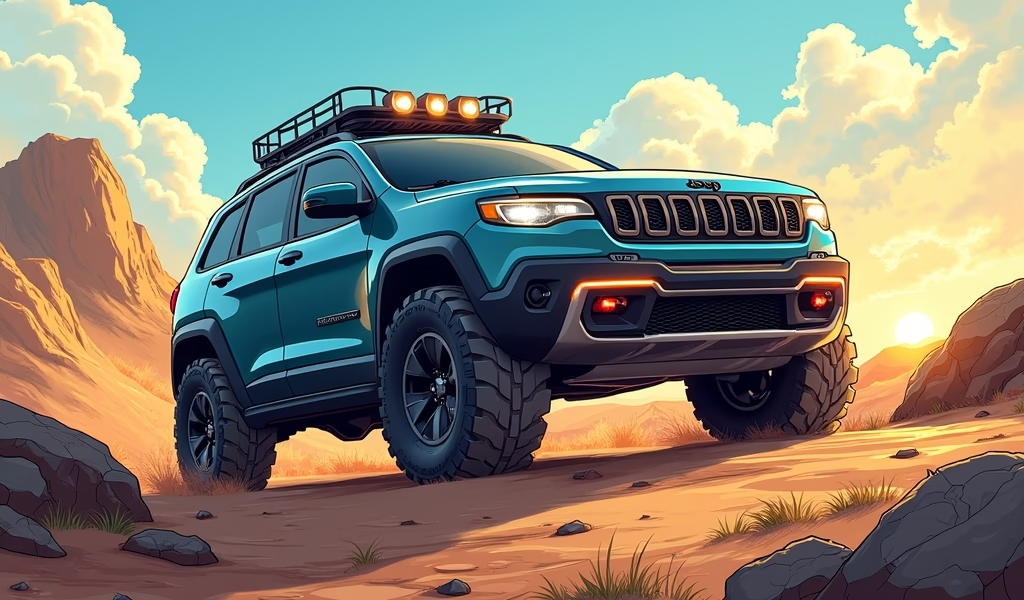
Just like a sophisticated orchestra conductor, your Jeep Avenger’s transmission balances everyday drivability with rugged capability while learning your driving habits over time—but it requires regular maintenance to avoid costly repairs. Understanding the warning signs of transmission trouble (unusual noises, delayed engagement, slipping sensations), performing consistent fluid checks, and developing patient driving habits can extend your transmission’s life well beyond 200,000 miles while saving you thousands in potential repair costs.
Table of Contents
- Understanding Your Jeep Avenger Transmission
- Signs of Transmission Trouble
- Common Transmission Problems
- Maintenance Tips
- Fluid Checks and Changes
- When to Seek Professional Help
- Cost of Transmission Repairs
- Extending Transmission Life
- Conclusion
- Frequently Asked Questions
Understanding Your Jeep Avenger Transmission
Your Jeep Avenger transmission is essentially the heart of your vehicle’s drivetrain. It’s what takes the raw power from your engine and converts it into the smooth, controlled movement you feel when driving. Most Avenger models come equipped with a 6-speed automatic transmission, though some European markets offer a manual option as well.
Think of your transmission as a sophisticated orchestra conductor – it determines exactly when to shift gears based on your driving conditions, speed, and how hard you’re pressing the accelerator. The Avenger’s transmission is specifically designed to balance everyday drivability with the rugged capability you expect from a Jeep.
Unlike larger Jeep models that might use heavy-duty transmissions built primarily for off-road adventures, the Avenger uses a more refined unit that prioritizes smooth shifting and fuel efficiency. This makes it perfect for city driving while still offering enough capability for weekend adventures.
What makes the Avenger’s transmission special is its adaptive learning capability. The transmission control module actually learns your driving habits over time and adjusts shift points accordingly. This means your vehicle literally becomes more in tune with your driving style the longer you own it – pretty cool, right?
Signs of Transmission Trouble
Your Jeep Avenger has a way of telling you when something’s not right with its transmission – you just need to know what to look (and listen) for. One of the most common warning signs is unusual noises. If you hear whining, buzzing, or clunking sounds, especially when shifting gears, your transmission is trying to tell you something’s wrong.
Delayed engagement is another red flag. When you shift from Park to Drive, your Avenger should respond promptly. If there’s a noticeable lag before the vehicle moves, that’s your transmission saying “Houston, we have a problem.” Similarly, if you feel a rough jolt when shifting between gears, that smooth orchestra conductor we talked about is losing its rhythm.
Pay attention to any slipping sensations too. This feels like your engine revving higher without a corresponding increase in speed, almost as if your Avenger is trying to accelerate through molasses. It’s often accompanied by unexpected shifts or a feeling that your vehicle is struggling to maintain power.
The check engine light can also signal transmission issues. While this light can indicate many different problems, when paired with any of the symptoms above, it’s often transmission-related. Modern vehicles like the Avenger have sophisticated onboard diagnostics that can detect transmission problems before they become catastrophic.
Perhaps the most obvious sign is leaking transmission fluid. Unlike engine oil, transmission fluid is typically reddish (when new) or brownish (when older). If you spot this type of fluid beneath your parked Avenger, it’s definitely time for a checkup. Even small leaks can lead to big problems if they cause your fluid level to drop too low.
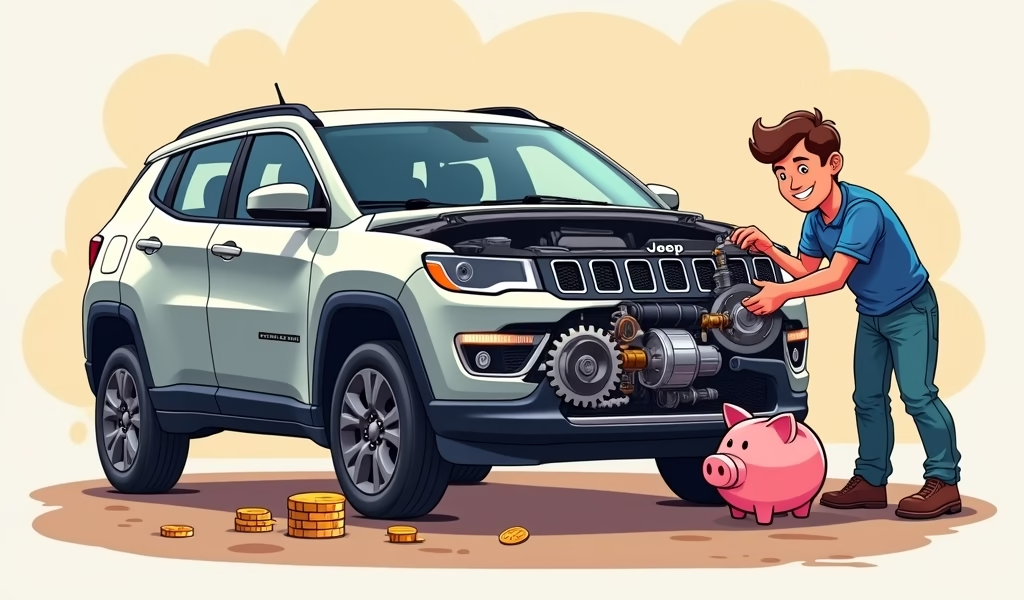
Trust your instincts – if your Jeep doesn’t feel right when driving, it probably isn’t. Catching transmission problems early can save you thousands in repair costs and prevent you from being stranded at the worst possible moment.
Common Transmission Problems
The Jeep Avenger, while generally reliable, does have a few transmission quirks you should be aware of. Fluid degradation is perhaps the most common issue – and unfortunately, many owners don’t realize it until other problems develop. Your transmission fluid doesn’t just lubricate; it cools components and transmits hydraulic pressure. When it breaks down, everything suffers.
Solenoid problems are another frequent culprit in Avenger transmission troubles. These electromagnetic components control fluid flow within the transmission. When they start to fail, you’ll experience erratic shifting, hard shifts, or even the inability to engage certain gears. The good news is that solenoid replacements are relatively affordable compared to other transmission repairs.
Torque converter issues can also plague the Avenger, especially in models with higher mileage. The telltale sign is shuddering during acceleration or a whining noise that changes with vehicle speed. The torque converter is what transfers power from the engine to the transmission, so when it starts failing, performance takes a serious hit.
Some Avenger owners have reported valve body complications, particularly in 2021-2022 models. The valve body directs transmission fluid where it needs to go, and when it malfunctions, shifting becomes unpredictable. You might find your Jeep shifting too early, too late, or sometimes not at all.
Electronic control issues round out the most common problems. Modern transmissions like the one in your Avenger rely heavily on sensors and computers to function properly. A faulty sensor can send incorrect data to the transmission control module, causing all sorts of shifting oddities even when the mechanical parts are fine.
Fortunately, many of these problems can be prevented with proper maintenance. Regular transmission service intervals are crucial for avoiding these common pitfalls. According to a study by AAA, about 30% of transmission failures could be prevented with proper fluid maintenance alone.
Maintenance Tips
Taking care of your Jeep Avenger’s transmission doesn’t require mechanical genius – just consistent attention. First and foremost, follow Jeep’s recommended maintenance schedule. For most Avenger models, this means changing the transmission fluid and filter every 60,000 miles under normal conditions. However, if you frequently drive in “severe” conditions (towing, mountainous terrain, extreme temperatures), consider cutting that interval in half.
Pay attention to how you drive. Your transmission takes a beating when you regularly accelerate hard from a stop or constantly shift between drive and reverse without coming to a complete stop. These habits force the transmission to work harder than necessary, generating excess heat and wear.
When driving in hilly areas, use your Avenger’s manual shift mode if it has one. This gives you control over when the transmission shifts, preventing it from “hunting” between gears on long inclines. It’s much gentler on the transmission components than letting the automatic mode constantly shift up and down.
Give your transmission time to warm up, especially in cold weather. Just like your muscles work better after a warm-up, your transmission fluid needs to reach operating temperature before it can properly protect components. Let your Jeep idle for 30-60 seconds before driving, and take it easy for the first few miles.
If your Avenger is equipped for towing, be mindful of your limits. Even if you’re within the manufacturer’s towing capacity, consider adding an auxiliary transmission cooler for frequent towing. Excess heat is the number one killer of transmissions, and towing generates plenty of it.
Finally, make transmission inspection part of your regular routine. Once a month, check under your Jeep for any signs of reddish fluid leaks. While you’re at it, pop the hood and check the transmission fluid level and condition if your model has a dipstick (not all do). Catching issues early can save you from costly repairs down the road.
Fluid Checks and Changes
Your transmission fluid is truly the lifeblood of your Jeep Avenger’s transmission system. Checking it properly isn’t quite as simple as checking your engine oil, but it’s a skill worth mastering. For most Avenger models, you’ll need to have the engine running at normal operating temperature, with the transmission in Park on level ground.
The color of your transmission fluid tells an important story. Fresh fluid should be a bright, translucent red. If it’s brown or has a burnt smell, it’s degraded and needs changing immediately. If it looks pink and frothy, that means coolant is mixing with your transmission fluid – a serious problem requiring professional attention.
When it comes to changing your transmission fluid, you have two options: a simple drain and fill or a complete flush. A drain and fill only replaces about 40% of the old fluid, as much of it remains in the torque converter and other parts. A complete flush replaces nearly all the fluid but requires special equipment. For the Avenger, most mechanics recommend a drain and fill every 30,000 miles and a complete flush every 60,000 miles.
Always use the correct fluid specification. The Jeep Avenger typically requires ATF+4 transmission fluid (Mopar MS-9602) for automatic transmissions. Using the wrong type can cause shifting problems, overheating, and premature failure. It’s worth spending a little extra for the correct fluid rather than risking thousands in repairs.
If you’re doing a DIY fluid change, don’t forget the filter. The transmission filter captures debris before it can circulate through the system and cause damage. Most mechanics suggest replacing it with every fluid change. While you’re at it, inspect the pan gasket and replace it if it shows any signs of leaking.
Remember that your differential service schedule is just as important as your transmission maintenance. The differential works in conjunction with your transmission to deliver power to your wheels, and neglecting either one can lead to driveline issues.
When to Seek Professional Help
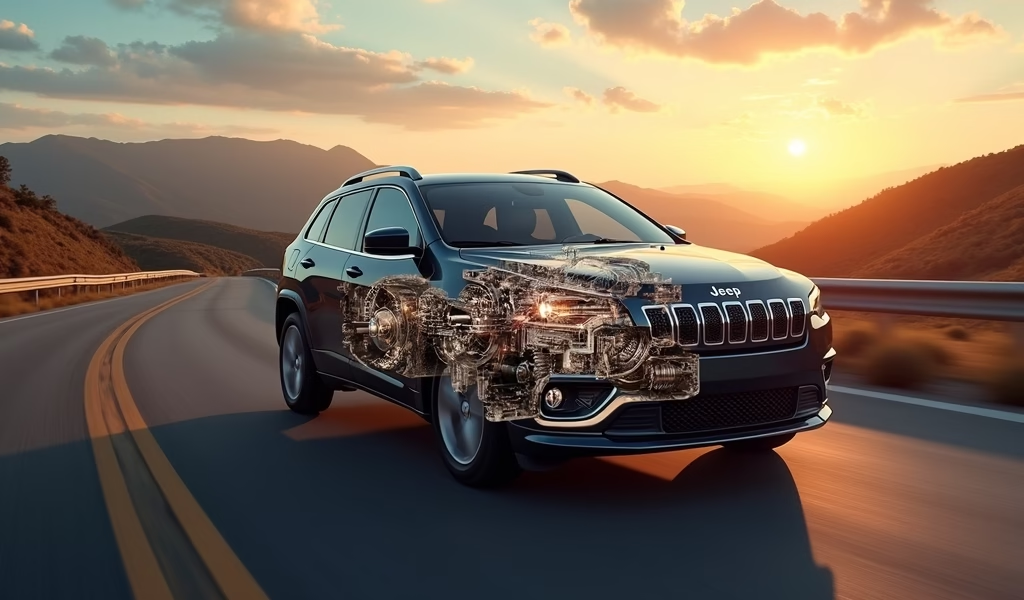
While there’s a lot you can do yourself to maintain your Jeep Avenger’s transmission, sometimes you need a professional’s touch. If your transmission is slipping between gears, making unusual noises, or showing the dreaded check engine light, it’s time to visit a specialist. These symptoms often indicate internal issues that require specialized knowledge and tools to diagnose and fix.
When choosing a transmission shop, look beyond the lowest price. Find a specialist with specific experience working on Jeep transmissions. The Avenger’s transmission has its own quirks and characteristics that a generalist might miss. Ask about warranties too – quality shops stand behind their work with meaningful guarantees.
Before approving any major transmission work, always get a detailed diagnosis. A reputable shop will explain exactly what’s wrong, show you the affected parts when possible, and provide a written estimate before starting repairs. If someone gives you a vague explanation and a hefty estimate, consider getting a second opinion.
Be wary of shops that immediately recommend a complete rebuild or replacement without first trying less invasive solutions. Sometimes a transmission problem is caused by a single faulty component or electronic issue that can be fixed without tearing everything apart. The Automatic Transmission Rebuilders Association can help you find qualified transmission specialists in your area.
If your Avenger is still under warranty, always take transmission issues to the dealership first. Warranty coverage can save you thousands on repairs, but attempting DIY fixes or using non-authorized shops might void that coverage. Even if you prefer independent shops, know your warranty status before making decisions about transmission repairs.
Remember that the transfer case maintenance is closely related to transmission health in four-wheel drive models. Many transmission shops can handle both systems, providing comprehensive driveline care for your Jeep.
Cost of Transmission Repairs
Let’s talk money – because transmission repairs for your Jeep Avenger can range from minor expenses to budget-busting major repairs. Understanding the potential costs helps you plan accordingly and make informed decisions when problems arise.
Minor transmission services like fluid changes typically run between $150-$300 depending on whether you choose a simple drain-and-fill or a complete flush. Filter replacements add another $50-$100 to that total. These preventive services are your best defense against more costly repairs down the road.
Mid-range repairs like replacing solenoids or sensors usually cost $300-$800. These electronic components often cause shifting issues but are relatively accessible without completely disassembling the transmission. Torque converter replacements fall in the $700-$1,200 range and represent the upper end of “partial” transmission repairs.
When it comes to major repairs, rebuilding your Avenger’s transmission typically costs between $2,000-$3,500 depending on your location and the specific shop you choose. A complete replacement with a remanufactured transmission runs $3,000-$4,500, while factory-new units can exceed $5,000 with labor included.
Consider these costs against the value of your vehicle. If your Avenger is relatively new with low mileage, investing in a quality rebuild or replacement makes financial sense. For older, high-mileage vehicles, you might weigh the repair cost against the vehicle’s current value – though remember that a working transmission dramatically affects resale value.
Extended warranty options can provide peace of mind if your factory warranty has expired. Aftermarket warranties specifically covering the transmission typically cost $1,000-$2,000 for 3-5 years of coverage. While this seems expensive, it can save you thousands if a major failure occurs.
The cheapest option is always prevention. Regular maintenance might cost you $200-$300 annually, but it can help your transmission last the lifetime of your vehicle – potentially saving you thousands compared to premature replacement costs.
Extending Transmission Life
Want your Jeep Avenger’s transmission to last as long as possible? Let’s explore some proven strategies to extend its lifespan well beyond the average. First, develop patient driving habits. Avoiding aggressive acceleration, hard braking, and quick direction changes reduces stress on transmission components. Your transmission will thank you with thousands of additional miles of service.
Temperature management is crucial for transmission longevity. Excessive heat accelerates fluid breakdown and damages seals. If you frequently tow or drive in hot climates, consider installing an auxiliary transmission cooler – a relatively inexpensive upgrade that can dramatically extend transmission life by maintaining optimal operating temperatures.
Be mindful of your vehicle weight. Constantly driving with a heavily loaded Avenger puts additional strain on the transmission. While occasional heavy loads are fine, try to distribute weight evenly and avoid regularly pushing the maximum payload capacity if you’re concerned about transmission longevity.
Consider synthetic transmission fluid for your Avenger. While more expensive initially, synthetic fluids offer better temperature stability and longevity than conventional fluids. Many transmission specialists report seeing significantly less wear in transmissions regularly serviced with high-quality synthetic fluids.
If you live in an area with extreme cold, give your transmission extra warm-up time in winter months. Cold transmission fluid is thicker and doesn’t flow properly until it warms up. A good rule is to let your engine reach normal operating temperature before asking your transmission to handle demanding conditions like hill climbing or highway merging.
Finally, address small problems before they become big ones. That slight hesitation when shifting into drive? The occasional hard shift? These minor symptoms often indicate developing issues that can be fixed inexpensively if caught early. Ignoring them can lead to catastrophic failure and expensive repairs down the road.
Conclusion
Your Jeep Avenger’s transmission doesn’t have to be a mysterious black box that eventually fails and empties your wallet. With the right knowledge and proactive maintenance approach, you can keep it shifting smoothly for hundreds of thousands of miles.
Remember that most catastrophic transmission failures don’t happen suddenly – they develop gradually after warning signs have been ignored. By staying alert to changes in your Avenger’s performance and addressing issues promptly, you’ll prevent most major problems before they develop.
The key takeaway should be that prevention is infinitely cheaper than cure when it comes to transmission health. Regular fluid changes, careful driving habits, and prompt attention to minor issues are your best defense against expensive repairs.
Whether you choose to handle maintenance yourself or partner with a trusted mechanic, consistency is crucial. Your Jeep Avenger was built to provide years of reliable service, and with proper care, its transmission will remain a strong link in your vehicle’s drivetrain for the long haul.
So the next time you smoothly accelerate onto the highway or confidently navigate a winding mountain road, take a moment to appreciate the sophisticated engineering working beneath your feet – and remember that a little care today means many more adventures tomorrow.
Frequently Asked Questions
How often should I change the transmission fluid in my Jeep Avenger?
Under normal driving conditions, change your Avenger’s transmission fluid every 60,000 miles. If you regularly drive in severe conditions (extreme temperatures, mountains, towing), consider changing it every 30,000 miles instead.
What type of transmission fluid does the Jeep Avenger use?
Most Jeep Avenger automatic transmissions require ATF+4 (Mopar MS-9602) transmission fluid. Always verify the exact specification in your owner’s manual as requirements can vary slightly between model years.
How do I check the transmission fluid level in my Avenger?
Start the engine and let it reach operating temperature, then with the engine still running, pull out the transmission dipstick (if equipped), wipe it clean, reinsert it fully, and pull it out again to check the level. The fluid should be between the MIN and MAX marks on the dipstick.
What’s the average lifespan of a Jeep Avenger transmission?
With proper maintenance, a Jeep Avenger transmission typically lasts 150,000-200,000 miles. Some well-maintained transmissions have been known to exceed 250,000 miles without major issues.
How much does it cost to rebuild a Jeep Avenger transmission?
A complete transmission rebuild for a Jeep Avenger typically costs between $2,000-$3,500 depending on your location and the specific shop you choose. Remanufactured replacement units run $3,000-$4,500 installed.