

Overview
Just like a faithful translator between your engine and wheels, your Hyundai Tucson’s transmission requires proper maintenance to avoid those wallet-draining repair bills that can reach $5,000 for a replacement. This guide walks owners through identifying common problems (particularly in troublesome 2016-2018 DCT models), provides model-specific maintenance schedules, and offers practical tips to extend transmission life—potentially to 200,000+ miles with regular fluid changes and attentive driving habits.
Table of Contents
- Understanding Tucson Transmissions: The Basics
- Common Symptoms of Transmission Trouble
- Transmission Types in Hyundai Tucson Models
- Known Issues by Model Year
- Preventative Maintenance: Your First Line of Defense
- Repair Options and Costs
- DIY or Professional: Making the Right Choice
- Tips for Extending Your Transmission’s Lifespan
- Conclusion
- Frequently Asked Questions
Understanding Tucson Transmissions: The Basics
Let’s talk shop about your Hyundai Tucson’s transmission – that complex bit of engineering that shifts your gears so you don’t have to. I’ve seen plenty of drivers panic at the first sign of transmission trouble, and honestly, I get it. A failed transmission can set you back thousands, turning your reliable ride into a costly nightmare.
Think of your transmission as the interpreter between your engine and wheels. It takes the raw power your engine generates and makes it usable, allowing your vehicle to move at different speeds while keeping the engine within its optimal RPM range. Without it working properly, you’re going nowhere fast – literally.
The Hyundai Tucson has gone through several transmission evolutions over the years. Early models featured traditional automatics, while newer generations introduced sophisticated dual-clutch systems and continuously variable transmissions. Each has its own personality and, yes, its own potential quirks.
My years turning wrenches have taught me that understanding the basics helps you make smarter decisions about your vehicle’s care. Whether you’re currently experiencing symptoms or just being proactive (smart move, by the way), knowing what makes your Tucson’s transmission tick is step one to avoiding those eye-watering repair bills.
Common Symptoms of Transmission Trouble
Your Tucson will usually give you a heads-up before a major transmission failure. The key is knowing what those warning signs look and feel like. I’ve helped countless drivers who wished they’d recognized these symptoms sooner:
- Delayed engagement when shifting from park to drive or reverse
- Rough shifting between gears – that jerky feeling that makes your coffee spill
- Strange noises – grinding, whining, or buzzing, especially when in neutral
- Slipping gears – when your engine revs but acceleration lags
- Transmission fluid leaks – look for reddish puddles under your parked car
- Burning smells – often indicates overheating transmission fluid
- Dashboard warning lights – including check engine and transmission temperature warnings
One of the most common complaints I hear from Tucson owners is hesitation when accelerating from a stop. That momentary pause before the car moves forward often signals transmission control issues, particularly in models with the dual-clutch transmission (DCT).
Don’t ignore these symptoms, even if they seem intermittent. Transmission problems rarely fix themselves, and what starts as a minor hiccup can quickly deteriorate into a complete failure. In my experience, catching issues early can be the difference between a simple fix and having to schedule a transmission service interval for a complete rebuild.
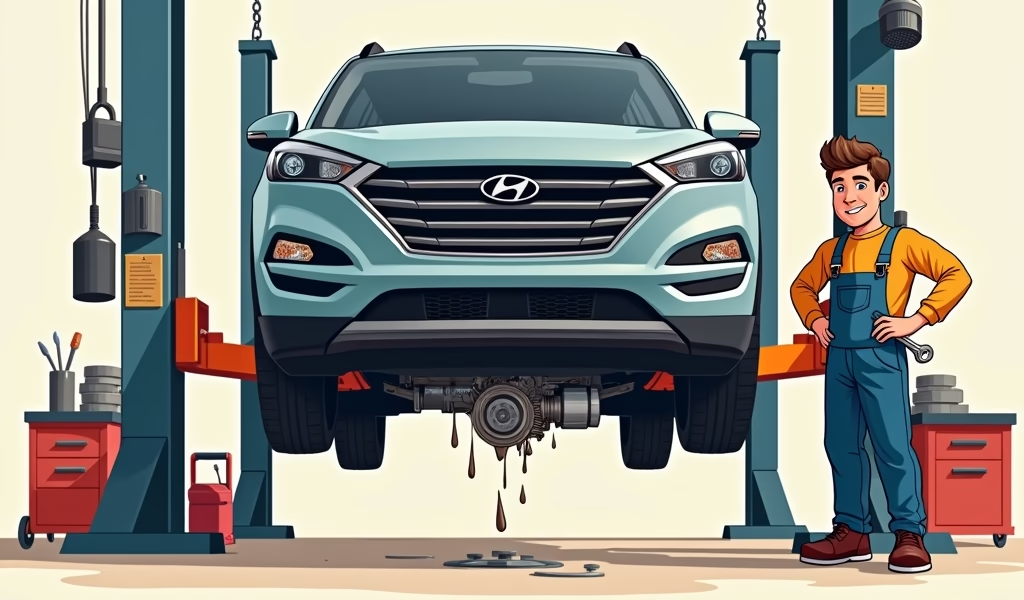
Transmission Types in Hyundai Tucson Models
Understanding which transmission your Tucson has helps you recognize model-specific issues and maintenance needs. Let me break down the different types you might find under your hood:
Conventional Automatic (6-Speed)
Found in many 2010-2022 Tucsons, this workhorse uses planetary gear sets and a torque converter to change gears. It’s generally reliable but can develop valve body issues or torque converter lockup problems over time. These transmissions typically need fluid changes every 60,000 miles, though Hyundai often markets them as “filled for life” – a claim I’ve seen lead to premature failures.
7-Speed Dual-Clutch Transmission (DCT)
Introduced in some 2016-2018 models, the DCT uses two separate clutches for odd and even gears, promising quicker shifts and better fuel economy. Unfortunately, these have been the most problematic in the Tucson lineup, with issues ranging from hesitation to premature clutch wear. They require different driving techniques than conventional automatics and can feel jerky, especially in stop-and-go traffic.
8-Speed Automatic
Newer Tucsons (2019+) often feature this transmission, which offers smoother shifts and better efficiency. While generally more reliable than the DCT, they still benefit from regular transmission fluid maintenance, despite what some dealers might tell you.
Each transmission type has specific fluid requirements, maintenance schedules, and common failure points. Using the wrong procedures or fluids can cause serious damage, which is why I always recommend consulting your owner’s manual or a Hyundai specialist when servicing these complex systems.
Known Issues by Model Year
I’ve worked on Tucsons from every generation, and certain model years stand out for their transmission quirks. Here’s what I’ve consistently seen roll into the shop:
2016-2018 Models (DCT Issues)
These years are the most problematic, with numerous complaints about the 7-speed dual-clutch transmission. Owners frequently report hesitation when accelerating from a stop, shuddering sensations, and premature clutch wear. Hyundai issued several Technical Service Bulletins (TSBs) for these models, including software updates to improve shift quality.
If you own one of these models and experience symptoms, check if your vehicle qualifies for any extended warranty coverage. Hyundai has been known to cover some repairs outside the standard warranty period due to the widespread nature of these issues.
2010-2015 Models
The 6-speed automatics in these earlier Tucsons are generally more reliable, but they’re not immune to problems. Common issues include delayed engagement when shifting from park to drive (especially in cold weather) and torque converter lockup problems that can trigger the check engine light.
These transmissions also tend to develop valve body issues around the 100,000-mile mark, which can cause erratic shifting or failure to engage certain gears.
2019 and Newer Models
While the latest Tucsons have improved transmission designs, I still occasionally see complaints about hard shifts or hesitation, particularly in the 8-speed automatic. Many of these concerns can be addressed with software updates from the dealer.
The good news is that Hyundai has learned from earlier transmission issues, and the newest models show significantly fewer problems. That said, proactive maintenance remains crucial for long-term reliability, regardless of model year.
If you’re experiencing issues, a good first step is checking the NHTSA recall database using your VIN to see if your specific vehicle is affected by any known transmission-related recalls or service campaigns.
Preventative Maintenance: Your First Line of Defense
In my 20+ years working on transmissions, I’ve learned one undeniable truth: prevention is infinitely cheaper than repair. Here’s how to keep your Tucson’s transmission healthy and avoid those four-figure repair bills:
Fluid Changes Matter – A Lot
Despite some manufacturers claiming “lifetime” transmission fluid, I’ve seen too many “lifetime” units fail at 80,000 miles to believe it. For most Tucson models, I recommend changing transmission fluid every 30,000-60,000 miles, depending on your driving conditions.
City driving, towing, or frequent short trips? Lean toward the 30,000-mile mark. The transfer case maintenance schedule often aligns with transmission service intervals for AWD models, making it efficient to handle both at once.
Check Fluid Regularly
Some Tucson models have dipsticks that let you check fluid level and condition. Healthy transmission fluid should be pinkish-red and smell slightly sweet – not brown or black with a burnt odor. Low fluid levels can cause overheating and accelerated wear, so regular checks can catch problems before damage occurs.
Listen to Your Vehicle
Your Tucson communicates with you. Those subtle changes in how it shifts, unusual sounds, or new vibrations aren’t just annoyances – they’re early warning systems. Don’t mute these symptoms with the radio; address them promptly while repairs are still minor.
I’ve saved customers thousands by catching small issues during routine maintenance before they cascaded into transmission failures. A $200 solenoid replacement is vastly preferable to a $4,000 rebuild!

Repair Options and Costs
When transmission troubles strike your Tucson, you’ve got several repair paths to consider. Let’s break down your options and what you can expect to pay:
Minor Repairs ($300-$800)
Many transmission issues can be resolved without major surgery. Replacing external components like shift solenoids, sensors, or even the valve body often fixes shifting problems without requiring transmission removal. These targeted repairs are typically the most cost-effective solution when caught early.
For example, a transmission control solenoid replacement might cost $300-500, while a valve body replacement could run $600-800. These repairs often resolve issues like delayed shifting or rough engagement.
Transmission Rebuild ($2,000-$3,500)
A rebuild involves removing, disassembling, inspecting, and replacing worn parts in your existing transmission. This labor-intensive process costs more than minor repairs but less than full replacement. The advantage is that only worn components are replaced, and a skilled rebuilder can address known weak points in your specific transmission model.
Rebuilds typically come with warranties ranging from 1-3 years, depending on the shop. The clutch adjustment frequency after a rebuild is usually minimal, as everything is set to factory specifications during reassembly.
Replacement ($3,000-$5,000)
Sometimes, a complete replacement is the most sensible option, especially for severely damaged transmissions. You have several choices:
- New factory transmission: Most expensive ($4,000-5,000) but highest quality
- Remanufactured: Factory-rebuilt units with new parts ($3,000-4,000)
- Used: Salvage yard units ($1,500-2,500) – lowest cost but highest risk
Factory replacements come with the best warranty protection but at premium prices. Remanufactured units offer a good balance of quality and cost. I generally caution against used transmissions unless budget constraints are severe, as they come with unknown history and often limited warranties.
When getting quotes, always ask about warranty terms, whether the torque converter is included, and if any related parts (mounts, cooler lines, etc.) are also being replaced. These details matter both for the quality of repair and final cost.
DIY or Professional: Making the Right Choice
As someone who’s spent decades elbow-deep in transmissions, I understand the appeal of DIY repairs. There’s satisfaction in fixing things yourself, not to mention the potential cost savings. But when it comes to transmissions, you need to carefully assess what’s within your skillset.
What You Can DIY
Even if you’re not a professional mechanic, there are transmission maintenance tasks you can likely handle:
- Checking transmission fluid level and condition (on models with dipsticks)
- Performing fluid changes on conventional automatics (drain and fill)
- Replacing external filters on some models
- Using an OBD-II scanner to read basic transmission-related codes
These tasks require basic tools and mechanical knowledge but can save you a few hundred dollars in service costs. Just be sure to use the correct fluid specified for your particular Tucson model – using the wrong type can cause serious damage.
When to Call the Professionals
Some transmission jobs should be left to specialists with the right tools and expertise:
- Internal repairs requiring transmission removal
- Valve body rebuilds or replacements
- Clutch pack replacements in DCTs
- Transmission control module programming or updates
- Complete rebuilds or replacements
These complex procedures require specialized knowledge, expensive tools, and often computer diagnostic equipment that most DIYers don’t have. Attempting these repairs without proper equipment often leads to further damage and higher eventual costs.
When choosing a professional, look beyond the dealership. While dealers have factory training, independent transmission specialists often have deeper expertise with transmission systems specifically and may offer better rates. Look for shops with ASE-certified technicians and solid warranties on their work.
I’ve seen too many DIY transmission jobs end with a tow truck and bigger repair bills. Know your limits and don’t be afraid to call in the experts when needed. Your wallet (and your Tucson) will thank you.
Tips for Extending Your Transmission’s Lifespan
After working on thousands of transmissions, I’ve noticed patterns in which ones last 200,000+ miles and which fail prematurely. Here are my top tips for keeping your Tucson’s transmission healthy for the long haul:
Drive Smart
Your driving habits directly impact transmission longevity. Avoid aggressive acceleration, especially from a stop. Come to a complete stop before shifting from reverse to drive or vice versa. When in stop-and-go traffic, either commit to stopping (shift to park) or maintain a slow crawl rather than riding the brakes with the transmission engaged.
If you have a DCT model, understand that it behaves differently than a conventional automatic. These transmissions can feel jerky at low speeds – that’s normal. Riding the clutch by inching forward in traffic can cause premature wear.
Manage Heat
Heat is a transmission’s worst enemy. Towing, mountain driving, and stop-and-go traffic all generate excess heat. If your Tucson sees these conditions regularly, consider an auxiliary transmission cooler – it’s relatively inexpensive insurance against overheating.
Let your transmission warm up before demanding hard work from it, especially in cold weather. Just a minute or two of gentle driving makes a difference in fluid circulation and protecting components.
Regular Inspections
Make transmission checks part of your routine maintenance. Look for leaks around seals and cooler lines. Check mounting bolts to ensure they’re tight – loose mounts can cause misalignment and accelerated wear. Inspect electrical connections for corrosion or damage.
Pay attention to how the transmission behaves when cold versus warm. Changes in this pattern often signal developing issues that can be addressed before they become serious.
Use the Right Fluids
I can’t stress this enough: use only transmission fluid specified for your exact Tucson model. The wrong fluid, even if it’s high quality, can cause shifting problems, overheating, and premature failure. This is one area where generic or “compatible” fluids aren’t worth the risk.
Following these practices won’t make your transmission immortal, but they can substantially extend its life and postpone major repairs. I’ve seen well-maintained Tucsons with 200,000+ miles on original transmissions – proof that preventative care works.
Conclusion
Throughout this guide, we’ve explored the ins and outs of Hyundai Tucson transmission issues – from identifying early warning signs to understanding your repair options. While transmission problems can be intimidating, being proactive puts you in the driver’s seat when it comes to managing costs and extending your vehicle’s life.
Remember that most catastrophic transmission failures don’t happen overnight. They develop gradually, giving you opportunities to intervene before you’re facing a $4,000+ repair bill. By familiarizing yourself with your specific model’s quirks and maintaining a regular service schedule, you can avoid joining the ranks of drivers caught off guard by unexpected transmission failures.
Whether you choose to tackle basic maintenance yourself or develop a relationship with a trusted transmission specialist, the key is consistency and attentiveness. Your Tucson will thank you with reliable service and fewer unexpected repair bills, keeping you on the road and your budget intact.
The transmission may be complex, but caring for it doesn’t have to be. Regular fluid changes, attentive driving, and prompt attention to early symptoms remain your best defenses against costly failures – simple strategies that pay significant dividends in the long run.
Frequently Asked Questions
How long should a Hyundai Tucson transmission last?
With proper maintenance, your Tucson’s transmission should last 150,000-200,000 miles. Regular fluid changes and avoiding abusive driving habits are key to reaching the upper end of this range.
What are the most common Tucson transmission problems?
The most common issues include hesitation or jerking when accelerating (especially in 2016-2018 DCT models), delayed engagement from park to drive, and solenoid failures causing erratic shifting. Fluid leaks and overheating are also frequently reported problems.
How much does it cost to replace a Tucson transmission?
Full replacement costs range from $3,000 to $5,000 depending on the model year and transmission type. Rebuilds are typically $2,000-$3,500, while minor repairs like solenoid replacements might run $300-800.
Can I drive with a slipping transmission?
Driving with a slipping transmission is risky and can lead to complete failure or getting stranded. A slipping transmission generates excessive heat that can rapidly accelerate damage, turning a repairable issue into a replacement situation.
Does Hyundai offer any transmission warranty extensions?
Hyundai has offered extended warranty coverage for certain transmission issues, particularly for the 2016-2018 DCT models. Contact your dealer with your VIN to check if your specific vehicle qualifies for any warranty extensions or recalls.