
Overview
That dark puddle under your Jeep Grand Cherokee L isn’t just ruining your driveway—it’s signaling potential issues ranging from simple valve cover gaskets to complex rear main seal failures that could impact performance and value. The article provides a complete roadmap for identifying common leak points, diagnosing issues like a professional, determining which repairs you can handle yourself versus when to seek help, and implementing preventative measures to keep your Jeep running smoothly while protecting your wallet and the environment.
Table of Contents
- Spotting the Signs of an Oil Leak in Your Jeep Grand Cherokee L
- Common Oil Leak Points in the Grand Cherokee L
- How to Diagnose Oil Leaks Like a Pro
- DIY Fixes for Minor Oil Leaks
- When to Seek Professional Help
- Preventing Future Oil Leaks
- Cost Breakdown: What You’ll Pay to Fix That Leak
- Impact of Oil Leaks on Vehicle Performance
- Conclusion
- Frequently Asked Questions
Spotting the Signs of an Oil Leak in Your Jeep Grand Cherokee L
Nothing ruins your day quite like spotting that telltale dark puddle under your Jeep Grand Cherokee L. Oil leaks are the automotive equivalent of a slow-dripping faucet – annoying at first, potentially catastrophic if ignored.
The most obvious sign is, of course, oil spots on your driveway or garage floor. Fresh engine oil appears amber to dark brown and feels slick between your fingers. If you’re unsure whether that spot is from your vehicle, try the cardboard test – place cardboard under your engine overnight and check it in the morning.
Your nose can be just as helpful as your eyes. That distinct burning oil smell when you’re driving signals oil dripping onto hot engine components. It’s particularly noticeable after highway driving when engine temperatures are highest.
Pay attention to your dashboard warning lights too. The oil pressure warning light doesn’t always mean you’re low on oil – sometimes it means that oil is actively escaping your engine. Either way, it deserves immediate attention.
Engine performance issues might also indicate an oil leak. If your Jeep starts running roughly, loses power, or develops unusual ticking sounds, low oil levels from a leak could be starving your engine of vital lubrication.
Finally, keep an eye on your oil level between changes. If you’re adding a quart or more between scheduled services, something’s not right – even if you don’t see visible leaks.
Common Oil Leak Points in the Grand Cherokee L
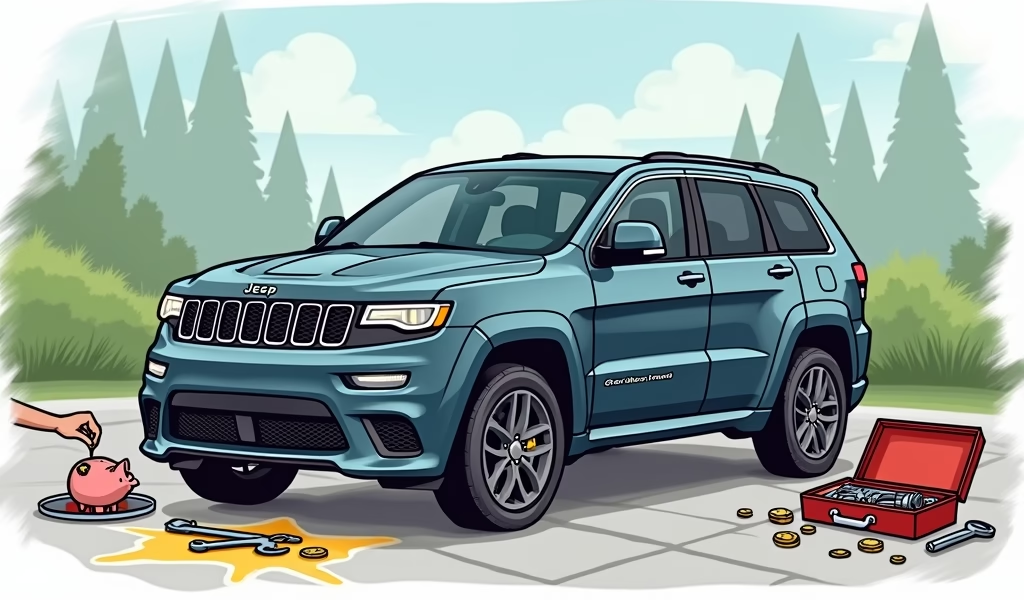
The Jeep Grand Cherokee L uses either the 3.6L Pentastar V6 or the 5.7L HEMI V8. Both are solid powerplants, but they have their weak points when it comes to keeping oil where it belongs.
Valve cover gaskets are prime suspects in these engines. These rubber seals sit between the valve covers and cylinder heads, enduring constant heat cycles that cause them to harden and shrink over time. On the Pentastar engines especially, I’ve seen these start to weep around the 60,000-mile mark.
The oil pan gasket is another common culprit. It’s located at the bottom of the engine where the oil pan meets the block, making it vulnerable to damage from road debris if you take your Grand Cherokee L off-roading. The constant road vibration and temperature fluctuations don’t help either.
For HEMI-equipped models, pay special attention to the timing cover. This component houses critical timing components at the front of the engine and uses a gasket that can start leaking around 70,000 miles. Oil typically runs down the front of the engine, making it appear as if it’s coming from somewhere else.
The oil filter housing can also develop problems, particularly in newer Grand Cherokee L models. Either the housing itself develops hairline cracks, or the mounting bolts loosen over time. This often creates confusing leak patterns as oil runs down the side of the engine before dripping off.
Perhaps most dreaded is the rear main seal – where the crankshaft exits the back of the engine to connect to the transmission. When this fails, you’re looking at a significant repair job since the transmission needs to be separated from the engine to access it.
How to Diagnose Oil Leaks Like a Pro
Tracking down the precise source of an oil leak requires some detective work. Let me walk you through the process I use in my shop when a Grand Cherokee L rolls in with an oil leak complaint.
Start with a clean engine. You can’t find a new leak on an engine caked with old oil and road grime. A thorough degreasing makes fresh leaks immediately apparent. If you’re doing this yourself, use an environmentally friendly degreaser and follow local regulations for runoff.
Once you have a clean engine, the UV dye method is remarkably effective. Add a small amount of fluorescent oil dye (available at any auto parts store) to your engine oil, run the engine for 15-20 minutes, then inspect with a UV flashlight. The leaking spot will glow brightly, eliminating any guesswork.
Don’t forget to check when the engine is both cold and hot. Some leaks only show up when the engine reaches operating temperature and components expand. Others might only leak when cold before gaskets have expanded.
When examining the engine, follow a systematic approach. Check from top to bottom: valve covers first, then work your way down to the oil pan. Pay particular attention to seams, gaskets, and places where different components meet.
For the Grand Cherokee L specifically, inspect the area where the transmission meets the engine block carefully. The rear main seal hides here and can be tricky to diagnose without removing components.
If you’re still stumped, consider a compression or pressure test. Sometimes what appears as an external oil leak is actually oil being drawn into combustion chambers through worn valve guides or piston rings.
DIY Fixes for Minor Oil Leaks
Not every oil leak requires a trip to the dealership. For the mechanically inclined, several Grand Cherokee L oil leaks can be tackled in your own garage.
The simplest fix might just be tightening loose components. Check the drain plug first (torque to 25-30 ft-lbs) and ensure the oil filter is properly secured. If you recently had an oil change, these are prime suspects.
Valve cover gaskets on the 3.6L Pentastar are relatively straightforward to replace. You’ll need basic hand tools, a torque wrench, and the correct OEM gaskets (aftermarket options often don’t seal as well). The job takes about 2-3 hours and will save you several hundred dollars in labor costs.
Oil filter housing gaskets are another DIY-friendly repair. Located on the side of the engine block, this housing can be removed with basic socket wrenches. Just be sure to follow the proper torque sequence when reinstalling to prevent warping the housing.
For minor seepage around gaskets that aren’t yet badly damaged, high-quality oil stop leak additives can sometimes help. Products containing PTFE or seal conditioners can rejuvenate hardened rubber gaskets. However, I only recommend this as a temporary measure for very minor leaks – they won’t fix actual gasket failures.
When working on your Grand Cherokee L yourself, use only manufacturer-recommended parts. The HEMI and Pentastar engines use specific gasket designs that account for their unique thermal expansion properties. “Universal” gaskets simply won’t provide a reliable seal.
Safety first: always work with the engine cold, use proper jacking points if you need to get underneath, and disconnect the battery before working around sensitive electrical components. Regular maintenance of related systems like the differential can also prevent stress on your engine seals.
When to Seek Professional Help
Some oil leaks on your Grand Cherokee L are best left to the professionals. Knowing when to call in reinforcements can save you time, frustration, and potentially more money in the long run.
Timing cover leaks typically require specialized tools and extensive disassembly. This repair involves removing multiple components to access the front of the engine, proper torque sequence knowledge, and sometimes specialty alignment tools. Even experienced DIYers should approach this with caution.
Rear main seal leaks are definitely professional territory. This job requires separating the transmission from the engine – a task that needs a lift, transmission jack, and considerable expertise. If oil is collecting at the bell housing where your engine meets the transmission, head to a trusted shop.
If your Jeep is still under warranty (typically 3 years/36,000 miles basic or 5 years/60,000 miles powertrain), always take it to an authorized dealer for leak repairs. DIY fixes might save money initially but could void your warranty coverage for related components down the road.
When choosing a shop, ask specific questions about their experience with the Grand Cherokee L and its engines. A shop that regularly services Jeeps will be familiar with the common leak points and have the correct parts on hand. They’ll also know the transfer case specifications if that area needs attention during repairs.
Get itemized estimates from multiple shops for comparison. Labor rates can vary dramatically, and some shops may recommend replacing additional components while they’re in there. While this proactive approach often makes sense (replacing all gaskets while the engine is partially disassembled), you want to know exactly what you’re paying for.
Remember that specialized diagnostic equipment like dye detection systems can pinpoint leaks more accurately than visual inspection alone, potentially saving hours of labor costs from misdiagnosis.
Preventing Future Oil Leaks
An ounce of prevention is worth a gallon of oil when it comes to keeping your Grand Cherokee L leak-free. Follow these maintenance practices to extend the life of your engine seals and gaskets.
First, follow Jeep’s recommended oil change intervals religiously. For the Grand Cherokee L, that’s typically every 5,000 miles under severe conditions (short trips, extreme temperatures, towing) or up to 8,000 miles with synthetic oil under normal driving. Fresh oil maintains the elasticity of seals and gaskets longer than degraded oil.
Always use the correct oil viscosity. The 3.6L Pentastar typically calls for 5W-20, while the 5.7L HEMI uses 5W-20 or 0W-20 depending on the model year. Using incorrect viscosity can accelerate gasket wear or allow oil to seep through tight clearances.
Pay attention to your engine’s operating temperature. Overheating is a gasket’s worst enemy, causing rapid deterioration of rubber components. Keep your cooling system in top shape with regular coolant flushes (every 60,000 miles is recommended) and prompt repair of any cooling issues.
When changing your own oil, be meticulous about torque specifications. Over-tightening drain plugs strips threads and damages gaskets. Under-tightening allows vibration to loosen components over time. Use a torque wrench to achieve the factory-specified values – your owner’s manual lists these precisely.
Avoid extended idling when possible. Modern engines are designed to operate at normal temperature, and prolonged idling can cause uneven heating that stresses gaskets. This is especially true in extreme weather conditions.
Consider using high-quality synthetic oil. These formulations typically contain seal conditioners that help maintain gasket flexibility longer than conventional oils. They also stand up better to temperature extremes that can stress your engine’s seals.
Finally, address minor leaks promptly before they become major problems. That slight weeping from your valve cover won’t fix itself, and catching it early usually means a simpler, less expensive repair.
Cost Breakdown: What You’ll Pay to Fix That Leak
Understanding the potential costs helps you budget appropriately for oil leak repairs on your Grand Cherokee L. Here’s what you can expect to pay at most shops.
Minor repairs like replacing the oil filter, drain plug, or tightening loose components typically run $50-150, mostly covering labor with minimal parts costs.
Valve cover gasket replacements usually cost $250-450 for the 3.6L Pentastar and $300-500 for the 5.7L HEMI. The gaskets themselves are inexpensive ($20-40), but labor makes up the bulk of the expense.
Oil pan gasket replacement will set you back $350-600, depending on whether you have skid plates or other accessories that complicate access. Off-road models with additional underbody protection tend toward the higher end of that range.
Timing cover leaks are more expensive, typically $800-1,200 for the 5.7L HEMI and $600-900 for the 3.6L Pentastar. These jobs require significant disassembly and precise reassembly of multiple components.
The most expensive repair is typically the rear main seal, ranging from $900-1,500 because it requires transmission removal. If you have four-wheel drive, expect to pay on the higher end as the transfer case adds complexity to the job.
Independent shops typically charge 20-40% less than dealerships for the same repairs. However, dealerships may have more experience with specific Grand Cherokee L issues and always use OEM parts, which can provide peace of mind despite the higher price tag.
Consider the financial implications of delaying repairs. A $300 valve cover gasket replacement can escalate to thousands in engine repairs if low oil levels cause internal damage. Additionally, leaking oil creates environmental hazards and potential fire risks.
Impact of Oil Leaks on Vehicle Performance
Even small oil leaks affect your Grand Cherokee L’s performance in ways you might not immediately notice. Understanding these impacts might motivate you to address leaks promptly.
Fuel economy suffers when your engine is running with insufficient lubrication due to an oil leak. The increased friction creates drag on moving parts, forcing your engine to work harder and consume more fuel. I’ve seen improvements of 1-2 MPG after fixing significant leaks.
Engine power and responsiveness decline as oil levels drop. Your Jeep’s computer may even put the engine into a protective “limp mode” if oil pressure falls too low, dramatically reducing available power to prevent engine damage.
The environmental impact is considerable. Just one quart of oil can contaminate up to 250,000 gallons of drinking water. That small drip in your driveway ultimately makes its way into storm drains and water systems.
Your vehicle’s longevity takes a hit too. Proper lubrication is essential for long engine life. Even running slightly low on oil accelerates wear on critical components like bearings, camshafts, and cylinder walls – wear that can’t be reversed once it occurs.
Safety concerns arise when oil drops onto hot exhaust components, creating smoke and potentially fire hazards. Additionally, a catastrophic oil leak while driving could cause sudden engine seizure, leaving you stranded or even causing a dangerous loss of power during critical driving maneuvers.
Don’t forget the impact on resale value. Service records showing prompt attention to maintenance issues like oil leaks signal to potential buyers that the vehicle has been well-maintained. Conversely, evidence of neglected leaks raises red flags about overall vehicle care.
Conclusion
Oil leaks in your Jeep Grand Cherokee L shouldn’t be ignored, no matter how minor they seem at first. From that first small spot on your driveway to potentially catastrophic engine damage, the progression can be surprisingly quick if left unaddressed.
By understanding the common leak points in your specific engine, recognizing the early warning signs, and knowing which repairs you can tackle yourself versus when to seek professional help, you’re well-equipped to protect your investment.
Remember that prevention through proper maintenance is always less expensive than repairs. Following the manufacturer’s recommended service intervals, using the correct oil and parts, and addressing small issues before they become big problems will keep your Grand Cherokee L running strong for years to come.
Whether you’re a weekend warrior who enjoys DIY maintenance or someone who prefers to leave it to the professionals, staying vigilant about oil leaks will save you money, protect the environment, and help your Jeep maintain its performance and value over the long haul.
Frequently Asked Questions
How serious is a small oil leak in my Jeep Grand Cherokee L?
Even small leaks deserve attention as they indicate failing seals that will worsen over time. Left unaddressed, minor leaks can lead to low oil levels, engine damage, and environmental hazards.
Will synthetic oil reduce the chance of leaks in my Jeep?
Quality synthetic oils often contain seal conditioners that help maintain gasket flexibility and reduce minor seepage. However, synthetic oil won’t fix damaged gaskets or seals that need replacement.
How often should I check for oil leaks?
Check for leaks monthly by examining your parking spot and monitoring oil levels between changes. Additionally, perform a visual inspection after every oil change and maintenance service.
Can extreme temperatures cause oil leaks in the Grand Cherokee L?
Yes, temperature extremes can accelerate gasket deterioration and cause leaks. Cold weather makes seals brittle while extreme heat can cause them to degrade faster.
Will an oil leak void my Jeep warranty?
An oil leak itself won’t void your warranty, but DIY repairs might affect coverage for related components. If your vehicle is under warranty, have leaks addressed by an authorized dealer to maintain your coverage.