
Overview
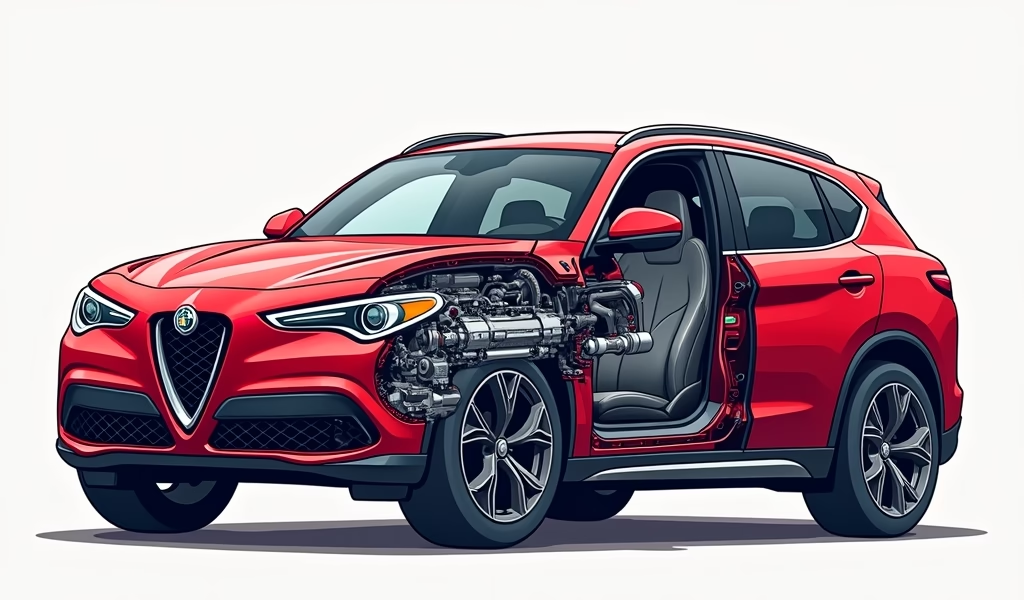
Despite Alfa Romeo’s claim of “lifetime fluid,” the Stelvio’s ZF 8-speed transmission requires regular fluid changes every 40,000-50,000 miles to avoid a potential $8,000 replacement bill that plagues neglected vehicles. With proper maintenance and attention to early warning signs like rough shifting or unusual noises, owners can expect their Stelvio’s transmission to last 150,000-200,000 miles while preserving the vehicle’s distinctive Italian driving experience.
Table of Contents
- The $8,000 Problem No Alfa Owner Wants
- Understanding Your Stelvio’s Transmission System
- Why Transmission Health Matters in Your Alfa
- Warning Signs of Transmission Issues
- Common Causes of Stelvio Transmission Failures
- Expected Lifespan of Your Stelvio’s Transmission
- Essential Maintenance to Prevent Transmission Problems
- When Transmission Replacement Becomes Necessary
- Cost Breakdown: What to Budget For
- DIY vs. Professional Service: What’s Safe?
- Common Mistakes Stelvio Owners Make
- Conclusion: Protecting Your Investment
- Frequently Asked Questions
The $8,000 Problem No Alfa Owner Wants
Picture this: You’re cruising down your favorite road in your Alfa Romeo Stelvio, enjoying that perfect blend of Italian performance and luxury. Then it happens—a slight hesitation when you press the gas, followed by an unsettling shudder. Within weeks, your pride and joy sits in a service bay with a gut-wrenching diagnosis: complete transmission failure.
I’ve seen this scenario play out more times than I’d like to count in my shop. The owner’s face drops when I have to deliver the news: “$7,000 to $8,000 for a replacement.” It’s a tough pill to swallow, especially for a vehicle that might only be a few years old.
But here’s the good news—most Alfa Romeo Stelvio transmission failures are completely preventable. With the right knowledge and proactive care, you can save yourself from joining the unfortunate club of owners facing this expensive repair.
As a specialist who’s worked on hundreds of European luxury vehicles, I’ve noticed that the Stelvio’s sophisticated ZF 8-speed transmission is actually quite robust when properly maintained. The problem isn’t usually with the engineering—it’s with the maintenance schedule and owner awareness.
In this guide, I’ll walk you through everything you need to know about your Alfa Romeo Stelvio transmission—from how it works to the warning signs of trouble and the maintenance steps that can help you avoid that dreaded $8,000 repair bill.
Understanding Your Stelvio’s Transmission System
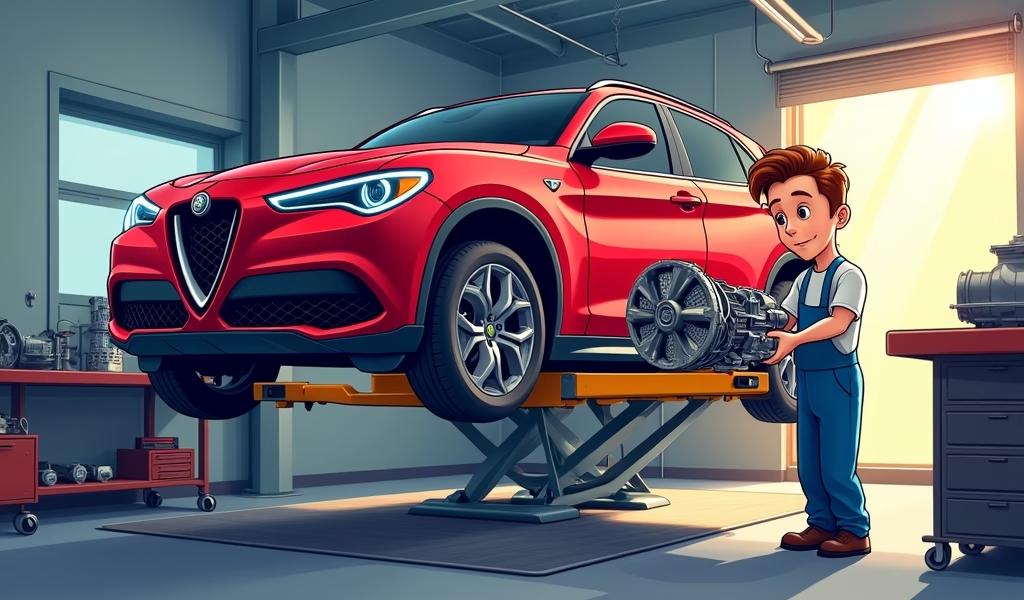
The heart of your Stelvio’s performance is its ZF 8-speed automatic transmission—a marvel of German engineering from ZF Friedrichshafen that’s used in various high-end vehicles. But in your Alfa, it’s been specifically tuned to deliver that distinctive Italian driving character we all love.
Unlike the clunky automatics of yesteryear, this transmission uses a sophisticated hydraulic torque converter paired with planetary gearsets and multiple clutch packs. It’s a complex symphony of mechanical and electronic components working together to deliver that seamless power you feel when you press the accelerator.
Key components in your Stelvio’s transmission include:
- Torque converter: The fluid coupling that transfers power from the engine while allowing the vehicle to stop without stalling
- Planetary gearsets: The mechanical heart that provides the eight different gear ratios
- Valve body: A labyrinth of channels and solenoids controlling fluid flow
- Transmission control module (TCM): The electronic brain making split-second shifting decisions
- Multiple clutch packs: The friction elements that engage and disengage to change gears
What makes the Stelvio’s transmission special is its calibration. While many automatic transmission vehicles using the ZF 8-speed aim for invisible shifts, Alfa Romeo engineers programmed yours for a more engaging experience. In Dynamic driving mode, you’ll feel those shifts happen with purpose—a characteristic that sets the Stelvio apart from more sedate luxury SUVs.
According to Car and Driver’s long-term test, this transmission delivers “quick, crisp shifts” that enhance the driving experience. It’s a key part of what makes your Stelvio feel special behind the wheel.
Why Transmission Health Matters in Your Alfa
Your Stelvio’s transmission does far more than just change gears—it fundamentally shapes your entire driving experience. When it’s healthy, power delivery is immediate and seamless, acceleration is crisp, and you feel that distinctive Alfa Romeo character with every press of the pedal.
Beyond the driving experience, transmission health directly impacts your Stelvio’s longevity. Transmission problems create a domino effect, putting additional strain on your engine, drivetrain, and other connected systems. What starts as a minor transmission issue can snowball into more significant (and expensive) problems throughout your vehicle.
Then there’s fuel efficiency. A properly functioning transmission keeps your engine in its optimal power band, maximizing both performance and economy. When transmission issues develop, your Stelvio often compensates by using more fuel—I’ve seen fuel economy drop by 15-20% when transmission problems begin to surface.
Perhaps most importantly for many owners is resale value. Few things scare away potential buyers faster than transmission concerns. In the premium vehicle market where Alfa Romeo competes, buyers expect perfection, and a Stelvio with transmission issues—or even a history of them—will take a significant hit at trade-in time.
The bottom line? Transmission health isn’t just about avoiding repair costs—it’s about preserving everything that made you choose an Alfa Romeo in the first place.
Warning Signs of Transmission Issues
In my years working on European performance vehicles, I’ve found that transmissions rarely fail without warning. Your Stelvio will almost always give you signals that something’s amiss—if you know what to look for.
The most common early warning sign is delayed or rough shifting. If your Stelvio hesitates for a beat before engaging when you shift from park to drive, or if you notice harsh, clunky transitions between gears while driving, your transmission is trying to tell you something. These symptoms often first appear when the transmission is cold but gradually become more noticeable as problems progress.
Unusual noises are another telltale indicator. Your Stelvio’s transmission should operate quietly. Any whining, buzzing, clunking, or grinding—particularly sounds that change with vehicle speed—warrant immediate attention. A high-pitched whine often points to pump issues, while clunking suggests mechanical wear inside the transmission.
Keep an eye out for transmission fluid leaks, too. The fluid is typically red or dark red when new, becoming darker and brownish as it ages. Make a habit of checking your parking spot for any spots or stains. Even small leaks can lead to insufficient fluid levels, causing overheating and accelerated wear.
Your Stelvio’s sophisticated electronic systems are also looking out for you. The check engine light or a dedicated transmission warning light should never be ignored. Modern Stelvios have monitoring systems that can detect problems before they become catastrophic. If your dashboard lights up with a transmission-related code, consider it an early opportunity to avoid more expensive repairs.
Performance issues like slipping gears, hesitation during acceleration, unexpected surges, or a disconnected feeling between your foot and the vehicle’s response are serious red flags. These symptoms often appear intermittently at first, making them easy to dismiss—but they rarely resolve on their own.
Finally, be alert for any burning smell after driving, particularly after tackling hills or carrying heavy loads. This distinctive odor—similar to burning paper—indicates your transmission fluid is overheating and breaking down, a condition that can quickly lead to component failure if not addressed.
Common Causes of Stelvio Transmission Failures
After working on countless Stelvios with transmission issues, I’ve identified several recurring culprits behind these expensive failures:
The most common issue by far is fluid degradation and contamination. The ZF 8-speed in your Stelvio depends on high-quality transmission fluid to lubricate, cool, and enable hydraulic pressure for shifting. Despite what some owner’s manuals suggest about “lifetime” fluid, this vital fluid does break down over time and becomes contaminated with tiny metal particles from normal wear. Without regular fluid changes, these contaminants act like liquid sandpaper on precision components.
Overheating is another frequent villain. Your Stelvio’s transmission has a specific operating temperature range, and exceeding it repeatedly causes seals to harden, clutches to slip, and fluid to break down prematurely. Aggressive driving, stop-and-go traffic in hot weather, mountain roads, and towing can all push temperatures beyond safe limits.
The sophisticated electronics controlling your transmission can also be a failure point. The transmission control module (TCM) occasionally experiences software glitches or hardware failures that affect shifting performance. In some cases, these electronic issues can be resolved with software updates, but hardware failures typically require component replacement.
Transmission solenoids—electromagnetic valves that control fluid flow—sometimes become stuck due to contamination or wear out electrically. These issues often cause specific symptoms related to particular gears or driving conditions. In my experience, solenoid problems are more common in Stelvios driven primarily in urban environments with frequent stop-and-go traffic.
Torque converter issues also plague some Stelvios, particularly those with higher mileage. The lockup clutch can develop shudder, bearings can wear, or fluid seals can leak. These problems typically manifest as vibration during specific speed ranges or reduced fuel economy.
It’s worth noting that early Stelvio models (2017-2018) experienced some transmission programming issues that caused hesitation and rough shifting. Alfa Romeo addressed many of these concerns with software updates, but not all vehicles received these updates. If you own an earlier model, checking for available software updates could resolve minor issues before they progress.
Expected Lifespan of Your Stelvio’s Transmission
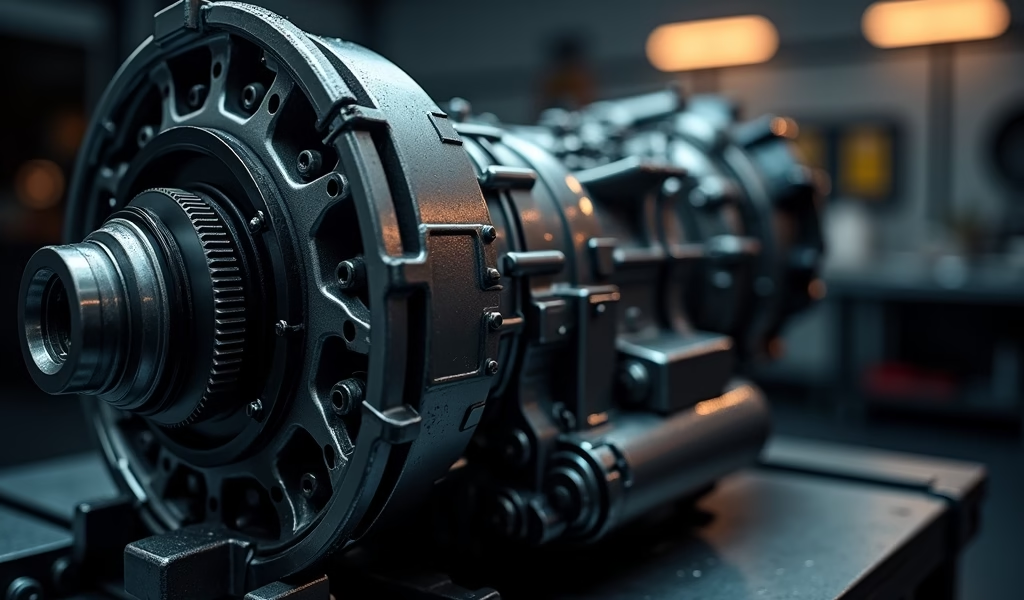
Let’s talk longevity. With proper maintenance, your Stelvio’s ZF transmission should last between 150,000 and 200,000 miles under normal driving conditions. I’ve seen well-maintained examples go even further, while neglected units sometimes fail before reaching 100,000 miles.
Several factors significantly impact this lifespan. Regular aggressive driving and frequent use of launch control place enormous stress on the transmission’s internal components. Operating in extremely hot climates or constant stop-and-go traffic generates excessive heat that accelerates wear. Towing or regularly carrying heavy loads also taxes the transmission beyond its designed parameters.
Maintenance history is perhaps the most critical factor. A Stelvio that’s received regular fluid and filter changes at appropriate intervals will typically outlast an identical vehicle that’s adhered to the misleading “lifetime fluid” recommendation by a significant margin.
Compared to industry averages, the ZF transmission in the Stelvio actually performs quite well, though it does seem to require more frequent maintenance than the same transmission in some other applications. This is partly due to the performance-oriented calibration in the Stelvio versus the same transmission in more comfort-focused vehicles.
I’ve also noticed differences between model years. The 2017-2018 Stelvios sometimes experienced premature transmission wear due to initial calibration issues. The 2019 and newer models generally demonstrate improved transmission longevity, thanks to revised programming and manufacturing refinements.
If you’ve purchased a used Stelvio, investigating its maintenance history should be a top priority. A vehicle that’s received regular transmission services will likely provide many more trouble-free miles than one that hasn’t, regardless of the odometer reading.
Essential Maintenance to Prevent Transmission Problems
After seeing hundreds of preventable transmission failures, I can confidently say this: proper maintenance is your best insurance against expensive repairs. Here’s what your Stelvio needs to keep shifting smoothly for years to come:
First and most importantly, ignore the “lifetime fluid” claim in your owner’s manual. This marketing-driven statement has led countless owners to expensive repairs. In real-world conditions, your transmission fluid breaks down and accumulates contaminants over time. I recommend changing the fluid and filter every 40,000-50,000 miles—or even more frequently if you drive aggressively or in challenging conditions.
When it’s time for a fluid service, insist on the correct specification. Your ZF 8-speed requires a specific transmission fluid with particular friction characteristics and additives. Using the wrong fluid—even temporarily—can cause shifting problems and accelerated wear. Always use genuine ZF Lifeguard 8 fluid or the Alfa Romeo equivalent specified in your owner’s manual.
Don’t forget about your cooling system. Since the Stelvio’s transmission cooling is integrated with the engine cooling system, maintaining proper coolant levels and condition is essential for transmission health. Have the cooling system inspected whenever you service the transmission, and address any issues promptly.
For automatic transmission vehicles like your Stelvio, software updates can be crucial. Periodically check with your dealer about available transmission control module updates. Alfa Romeo has released several updates that improve shift quality and address potential reliability issues, particularly for earlier models.
As your Stelvio accumulates miles, consider more frequent fluid changes—perhaps every 30,000 miles after reaching 100,000 total miles. Adding an auxiliary transmission cooler can also be a worthwhile investment for high-mileage vehicles, especially if you drive in hot climates or challenging conditions.
Finally, adjust your driving habits to reduce transmission stress. Allow your Stelvio to warm up for a minute or two before driving aggressively in cold weather. Come to a complete stop before shifting between drive and reverse. And avoid holding the vehicle on an incline using just the accelerator—use the brake instead.
This maintenance schedule might seem more intensive than what’s officially recommended, but I’ve seen the results firsthand. A $300-400 fluid service every 40,000 miles is a small price to pay to avoid a $7,000-8,000 transmission replacement.
When Transmission Replacement Becomes Necessary
Sometimes, despite your best efforts, transmission replacement becomes unavoidable. Before assuming the worst, ensure your Stelvio receives proper diagnostics. A qualified technician should perform computer diagnostics, road testing, and possibly a transmission fluid analysis. The specific error codes and symptoms will determine whether repair or replacement makes the most sense.
Minor issues like solenoid failures, sensor problems, or valve body issues can often be repaired without full transmission replacement. These repairs typically range from $500-2,000 depending on the specific components involved. However, once internal mechanical damage occurs to the planetary gears, clutch packs, or case, full replacement is usually more cost-effective than attempting repairs.
When replacement is necessary, you’ll generally have three options:
- New OEM transmission: The most expensive option ($7,000-8,000 installed) but offers factory-fresh components and full warranty coverage
- Factory remanufactured: A middle-ground option ($5,500-6,500) where Alfa Romeo rebuilds transmissions to original specifications
- Aftermarket remanufactured: The most affordable option ($4,500-5,500), but quality varies significantly between suppliers
In my professional experience, factory remanufactured units offer the best balance of reliability and value for most Stelvio owners. These transmissions are completely disassembled, inspected, and rebuilt using updated components to address known weakness points. They typically include a warranty comparable to a new unit at a more reasonable price point.
If your vehicle is approaching the end of its warranty period and showing early transmission symptoms, having it diagnosed before warranty expiration could save you thousands. Manufacturers are more likely to approve a warranty repair for subtle, documented symptoms than they are after complete failure occurs.
Some owners use transmission replacement as an opportunity to upgrade performance. Specialized shops can modify the valve body and reprogram the TCM for quicker shifts and higher torque capacity. While these modifications add to the replacement cost, they can enhance the driving experience for enthusiasts who plan to keep their Stelvio long-term.
Cost Breakdown: What to Budget For
Let’s talk money. Transmission work isn’t cheap, but understanding the potential costs helps you budget appropriately and avoid surprises:
A proper transmission fluid service for your Stelvio typically runs between $250-400 at an independent specialist. This includes:
- 8-10 quarts of specialized ZF fluid ($15-20 per quart)
- Transmission filter
- Pan gasket
- 2-3 hours of labor
Dealership prices are often 20-30% higher. Many shops advertise cheaper “transmission flush” services, but these often don’t include filter replacement and may use incorrect fluid—avoid these shortcuts for your Stelvio.
For minor repairs, budget accordingly:
- External solenoid replacement: $400-600
- Speed sensor replacement: $250-350
- Valve body replacement: $800-1,200
- Transmission software reprogramming: $200-300
More significant repairs might involve:
- Torque converter replacement: $1,800-2,500
- Valve body rebuilding with solenoid replacement: $1,200-1,800
- Partial transmission rebuilding: $2,500-3,500
For complete transmission replacement, expect to pay:
- New OEM unit: $7,000-8,000 installed
- Factory remanufactured: $5,500-6,500 installed
- Quality aftermarket remanufactured: $4,500-5,500 installed
These prices vary based on your location, model year, and specific Stelvio variant. The Quadrifoglio models, with their higher performance specifications, typically land on the higher end of these ranges.
If you’re concerned about future transmission issues, several companies offer extended warranties specifically covering the Stelvio’s drivetrain. According to Edmunds’ analysis of extended warranties, these typically range from $2,500-4,000 for 3-5 years of additional coverage. These policies make the most sense for owners planning to keep their Stelvio beyond the factory warranty period.
DIY vs. Professional Service: What’s Safe?
As a mechanic who appreciates a good DIY project, I’m all for owners taking an active role in vehicle maintenance. However, the Stelvio’s transmission requires specialized knowledge and equipment for most services. Here’s what you can safely handle yourself and when to call in the professionals:
Even with limited mechanical experience, Stelvio owners can perform some basic transmission care:
- Check transmission fluid level (though this requires following specific procedures)
- Inspect for fluid leaks beneath the vehicle
- Document transmission behavior and symptoms
- Scan for error codes with a quality OBD-II scanner
- Perform basic cooling system maintenance
The Stelvio’s transmission requires specific tools for proper service, including specialized fluid temperature monitoring equipment, transmission control module programming interface, pressure testing equipment, and special fluid dispensing tools to ensure proper fill levels. Most DIY mechanics won’t have access to these specialized tools, making professional service necessary for most transmission work.
Not all shops are equipped to work on the Stelvio’s sophisticated transmission. Beyond the dealership, look for independent shops specializing in European luxury vehicles, technicians with ZF transmission certification, shops with Alfa Romeo-specific diagnostic equipment, and facilities with positive reviews specifically for transmission work on Italian vehicles.
Before authorizing transmission work, ask potential shops: “How many Stelvio transmissions have you serviced?” “What specific diagnostic steps will you take?” “Will you use genuine ZF transmission fluid?” “What parts will be new versus remanufactured?” and “What warranty coverage comes with the service?”
Dealerships offer factory training and direct access to OEM parts but typically charge 20-30% more than independent specialists. For warranty work, diagnostics, and software updates, dealerships are often the best choice. For vehicles outside warranty, reputable independent specialists can offer comparable quality at lower prices, particularly for fluid services and minor repairs.
Common Mistakes Stelvio Owners Make
After years of working on Alfa Romeo vehicles, I’ve noticed some recurring mistakes that lead to preventable transmission problems:
The most common mistake is ignoring early warning signs. Many owners dismiss initial symptoms like occasional rough shifts or brief hesitations, only to face major repairs months later. The Stelvio’s transmission rarely fails catastrophically without first providing subtle warnings. Addressing these early signals typically means less expensive repairs.
Another frequent error is using incorrect transmission fluid. The ZF 8-speed requires a specific transmission fluid with particular friction characteristics and additives. Using generic “multi-vehicle” transmission fluid—even temporarily—can cause shifting problems and accelerate wear. Always insist on genuine ZF Lifeguard 8 fluid or the Alfa Romeo equivalent specified in your owner’s manual.
Many owners also overlook cooling system issues. Since the Stelvio’s transmission cooling is integrated with the engine cooling system, engine overheating problems invariably affect transmission temperatures. Address cooling system leaks, fan operation issues, or coolant mixture problems promptly to protect your transmission.
Certain driving habits are particularly hard on transmissions. While the Stelvio is designed for spirited driving, constant use of launch control, shifting from reverse to drive before completely stopping, regular aggressive acceleration and braking, and holding the vehicle on an incline using only the accelerator all accelerate wear. Enjoying your Stelvio’s performance capabilities is expected, but balancing enthusiastic driving with mechanical sympathy will extend transmission life.
Perhaps the most costly mistake is following the “lifetime fluid” recommendation in the owner’s manual. The real-world consensus among specialists is clear: regular fluid and filter changes dramatically extend transmission life. Investing $300-400 every 40,000-50,000 miles can prevent a $8,000 replacement down the road.
Conclusion: Protecting Your Investment
Your Alfa Romeo Stelvio represents both a significant financial investment and a passionate choice. Its transmission—complex, sophisticated, and essential to the vehicle’s character—deserves proper care to ensure years of that distinctive Italian driving experience.
The key takeaway is simple: proactive maintenance prevents expensive repairs. Don’t believe the “lifetime fluid” myth—change transmission fluid and filters every 40,000-50,000 miles. Address minor symptoms before they escalate into major problems. Choose qualified specialists familiar with Alfa Romeo’s unique requirements. And be mindful of how your driving style affects your transmission’s longevity.
While the Stelvio’s ZF 8-speed transmission is a sophisticated piece of engineering, it’s not inherently problematic when properly maintained. Most of the failures I’ve seen in my shop were preventable with regular service and attention to early warning signs.
Remember that maintaining your transmission isn’t just about avoiding repair costs—it’s about preserving the performance, efficiency, and driving experience that made you choose an Alfa Romeo in the first place. With proper care, your Stelvio can provide years of trouble-free enjoyment without the dreaded transmission replacement bill.
As I tell all my Stelvio customers: spend hundreds on prevention now, or thousands on repairs later. The choice is yours, but I think we both know which option makes more sense for your wallet and your driving pleasure.
Frequently Asked Questions
How often should I change the transmission fluid in my Alfa Romeo Stelvio?
Despite the “lifetime fluid” claim, change your transmission fluid every 40,000-50,000 miles. This interval should be reduced to 30,000 miles if you drive aggressively or in challenging conditions like extreme heat or mountains.
Can minor transmission issues be repaired, or is replacement always necessary?
Many minor issues like solenoid failures, sensor problems, or valve body issues can be repaired without full replacement. These targeted repairs typically cost between $500-2,000, compared to $5,000-8,000 for a complete replacement.
Why does my Stelvio transmission sometimes feel jerky in cold weather?
The ZF 8-speed can exhibit noticeably firmer shifts when cold, particularly below 20°F. This typically resolves after 5-10 minutes of driving as the fluid warms up, but persistent jerky behavior after warming requires professional attention.
Is it safe to tow with my Stelvio?
Yes, but with important limitations. Stay within your specific model’s towing capacity (typically 3,000 pounds), install an auxiliary transmission cooler for regular towing, and reduce your fluid change intervals by about 30%.
Are aftermarket transmission parts reliable for the Stelvio?
Quality varies dramatically between manufacturers. For electronic components like solenoids and sensors, OEM parts generally offer better reliability, while high-quality aftermarket filters and seals are usually acceptable alternatives.