
Overview
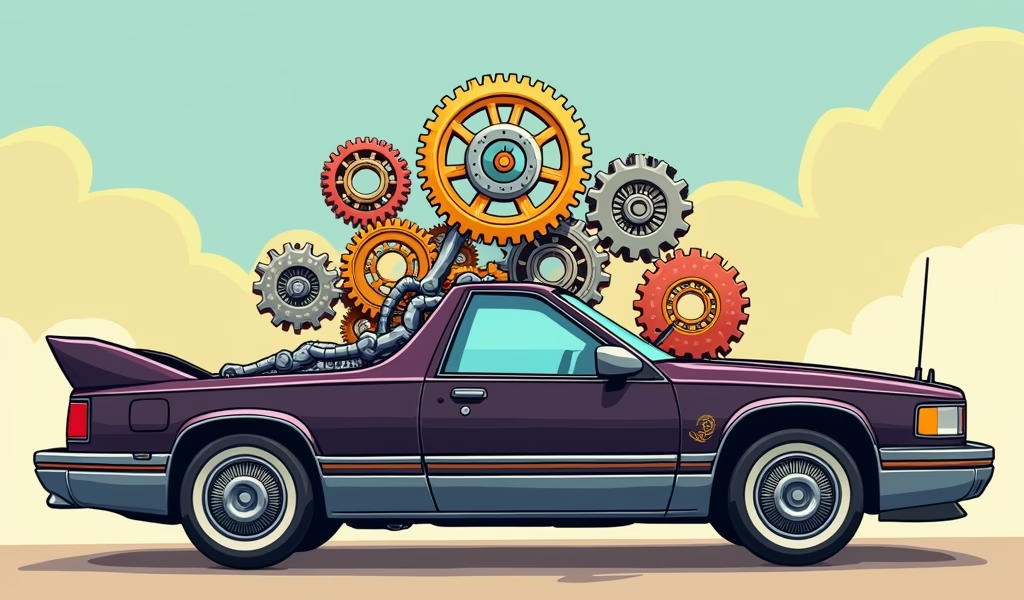
Your Cadillac Blackwing’s transmission—whether the lightning-quick 10-speed automatic or the smooth 6-speed manual—requires more specialized care than average, with heat being its greatest enemy and early warning signs like hesitation or unusual sounds demanding immediate attention. With proper maintenance including more frequent fluid changes, appropriate driving habits, and addressing small issues promptly, your high-performance transmission can easily surpass 100,000 miles—saving you from the eye-watering $7,000-12,000 replacement cost.
Table of Contents
- Understanding the Blackwing Transmission
- Warning Signs You Shouldn’t Ignore
- Common Causes of Blackwing Transmission Failures
- Essential Maintenance Tips
- DIY vs. Professional Maintenance
- Cost Considerations for Repairs
- Extending Your Transmission’s Lifespan
- Conclusion
Understanding the Blackwing Transmission
Let me tell you something about the Cadillac Blackwing transmission that might save you thousands. These aren’t your everyday transmissions. The Blackwing models represent Cadillac’s pinnacle of performance engineering, and their transmissions are specifically designed to handle extraordinary power outputs.
Whether you’re driving the CT4-V Blackwing or the beefier CT5-V Blackwing, you’ve got either a 10-speed automatic or a 6-speed manual transmission under your control. Both are engineering marvels with specific quirks worth understanding.
The automatic transmission features lightning-quick shift times of around 150 milliseconds – faster than many dual-clutch setups on the market. Meanwhile, the manual Tremec TR-6060 comes with triple-cone synchronizers and active rev-matching capabilities that make every gear change silky smooth.
What makes these transmissions unique is their thermal management systems. Both have dedicated cooling circuits designed to handle the extreme heat generated when you’re pushing all that horsepower through the drivetrain. This cooling capability is critical – heat is the number one enemy of transmission longevity.
Think of your Blackwing transmission as a high-performance athlete. It can perform amazing feats, but it also requires more specialized care than the average transmission. The investment in proper maintenance pays dividends in both performance and longevity.
Warning Signs You Shouldn’t Ignore
Your Blackwing will usually give you hints before a catastrophic transmission failure. That slight hesitation when accelerating? It’s not just annoying – it’s your car trying to communicate with you.
Delayed engagement is one of the earliest warning signs. If you shift into drive and experience a noticeable pause before the car moves, your transmission is sending up a red flag. For manual transmissions, this might feel like clutch slippage even when fully engaged.
Unusual sounds deserve immediate attention. A healthy transmission should operate quietly. Any whining, grinding, or clunking noises – especially during gear changes – indicate potential internal problems. In the automatic Blackwing, a high-pitched whine often points to pressure regulator issues or low fluid levels.
Perhaps the most concerning symptom is slipping gears during acceleration. If your engine revs higher without a corresponding increase in speed, your transmission is likely failing to fully engage. This is particularly alarming in high-performance vehicles like the Blackwing, where the massive torque output can quickly turn a minor slip into a major failure.
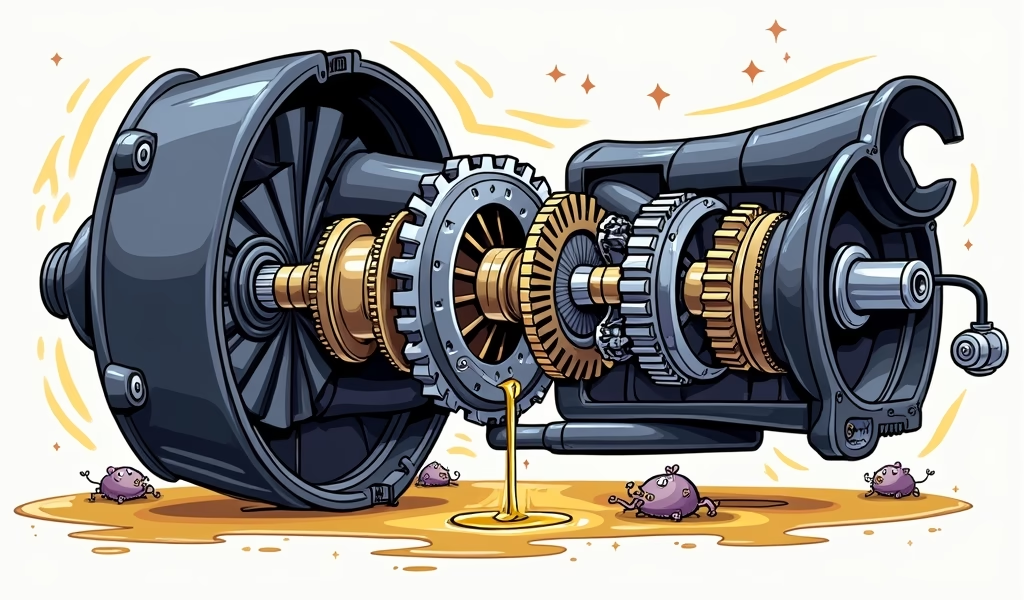
Fluid leaks should never be ignored. The automatic transmission fluid in your Blackwing has a distinctive red color and slightly sweet smell when fresh. Any puddles beneath your car warrant immediate investigation.
Modern Blackwings feature sophisticated monitoring systems. A transmission temperature warning or check engine light with P07XX trouble codes demands attention, even if the car seems to drive normally. These electronic warnings are often your first (and best) chance to address issues before they become expensive problems.
Common Causes of Blackwing Transmission Failures
In my years working on high-performance vehicles, I’ve seen certain failure patterns emerge with the Cadillac Blackwing transmission. Understanding these can help you avoid joining the ranks of owners facing four-figure repair bills.
Heat management issues top the list of culprits. The Blackwing’s substantial power output generates tremendous heat during spirited driving. Once fluid temperatures exceed 220°F, transmission life dramatically decreases. Even with the factory cooling system, extended track sessions or aggressive driving in hot weather can push beyond safe limits.
Fluid degradation happens faster in Blackwings than in standard Cadillacs due to higher operating temperatures and pressures. The specialized fluid typically maintains peak protection for about 30,000-40,000 miles under normal conditions – significantly less with track use or aggressive driving.
For those with manual transmissions, improper clutch technique is a leading cause of premature failure. “Riding the clutch” or aggressive launches can reduce clutch life from the expected 60,000+ miles to as little as 20,000 miles. The high-torque environment puts extraordinary stress on the entire clutch assembly.
In automatic Blackwings, torque converter problems often develop when subjected to frequent hard launches. The lockup clutch inside the converter must withstand tremendous forces, and it can fail prematurely if the transmission fluid becomes contaminated or overheated.
Electronic control unit failures also plague modern transmissions. The sophisticated control modules in Blackwings are vulnerable to electrical issues, sensor failures, or wiring problems. These can cause erratic shifting behavior or even complete transmission failure.
Your driving habits dramatically impact transmission longevity. Constant aggressive acceleration, track use without proper cooling upgrades, or failing to allow proper warm-up in cold weather can all significantly reduce your transmission’s lifespan. Remember – these cars are built for performance, but even the best engineering has limits.
Essential Maintenance Tips
Preserving your Blackwing transmission isn’t complicated, but it does require diligence. Here’s my practical advice after working on countless performance transmissions.
First, establish a more frequent fluid change schedule than the factory recommends. For street-driven Blackwings, change automatic transmission fluid and filter every 30,000 miles. For track use or aggressive driving, cut that interval in half. Fresh fluid is your transmission’s best friend – it’s far cheaper than a rebuild.
Don’t just change the fluid; check it monthly. For automatics, the fluid should be bright red, not brown or black, and should never smell burnt. Consider an annual fluid analysis if you track your vehicle. Laboratory testing can identify wear metals and contaminants before damage occurs.
Pay special attention to the transmission cooling system. Unlike many vehicles, Blackwings have a separate transmission cooling circuit that’s critical to longevity. Inspect the transmission cooler for debris or damage, particularly if you drive in areas with road debris. Ensure airflow isn’t restricted by aftermarket components.
Develop proper warm-up habits. Before driving aggressively, ensure your transmission reaches operating temperature. This typically takes 5-10 minutes of normal driving. The ideal transmission fluid temperature should be between 175-185°F before pushing the car hard.
For manual transmission owners, clutch pedal free play deserves regular checking. There should be approximately 1 inch of free play at the top of the pedal travel. Also, refine your shifting technique – smooth, deliberate shifts are far better for longevity than quick, forced movements.
Automatic transmission owners should use paddle shifters judiciously. While they add to the driving experience, excessive manual mode usage increases heat and wear. When stopping on inclines, use the brake rather than holding position with the throttle. This prevents unnecessary clutch pack wear.
Periodically check with your dealer for transmission control module updates. GM occasionally releases calibration improvements that can enhance shift quality and longevity. These updates are particularly important for 2022-2023 models, as early production vehicles sometimes benefit from software refinements.
DIY vs. Professional Maintenance
As a technician who’s worked on countless Blackwings, I’m often asked what owners can handle themselves versus what requires professional attention. There’s a clear line between DIY-friendly tasks and those requiring specialized equipment.
Owners can realistically handle fluid level checks, external inspections, and monitoring transmission performance. Advanced DIYers with proper tools can perform fluid and filter changes on automatics, or fluid changes on manuals. These basic maintenance tasks can save hundreds in service costs over the vehicle’s lifetime.
However, professional transmission work requires specialized tools: transmission jacks, pressure gauges, electronic diagnostic equipment, and removal tools specific to Blackwing models. The investment in these tools rarely makes sense for individual owners.
Cost Considerations for Repairs
When it comes to Blackwing transmission repairs, the numbers can be sobering. Let me break down what you might expect to pay so you can budget accordingly.
Routine maintenance costs are reasonable. Expect to pay $250-350 for automatic transmission fluid and filter changes at a dealer, or $180-250 at independent shops. Manual transmission fluid changes typically run $150-200. These are small investments considering what they prevent.
Minor repair costs escalate quickly. Sensor replacements, solenoid packs, or external seal replacements generally fall in the $500-1,500 range, depending on labor rates and part accessibility. These repairs are often worth doing promptly to prevent cascade failures.
Major repair estimates can cause sticker shock. Valve body replacements for automatics or clutch replacements for manuals fall in the $2,000-5,000 range, with dealer prices typically higher than independent shops. These substantial repairs often make owners question whether to repair or sell.
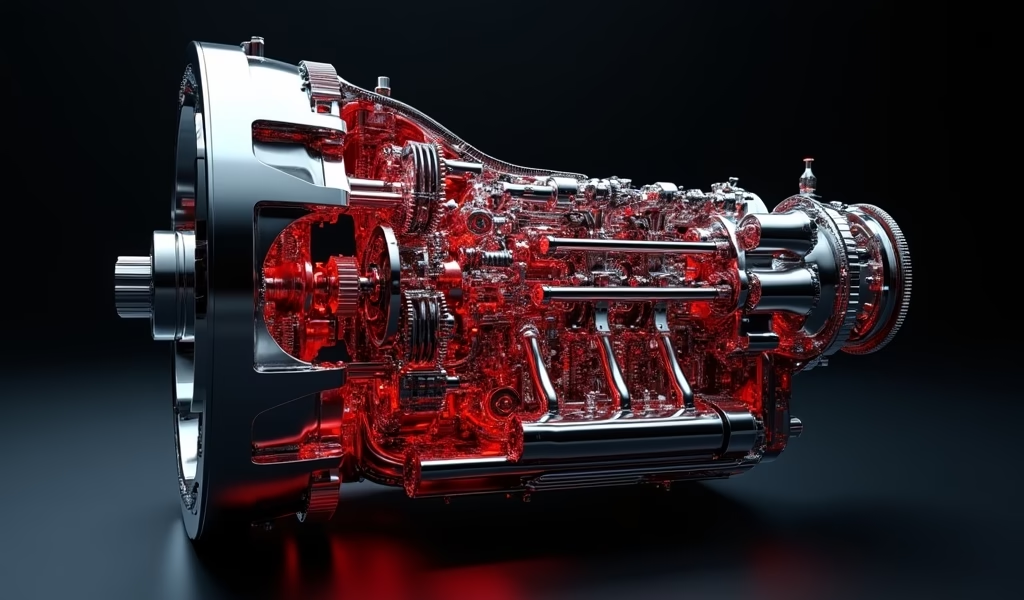
Complete transmission replacement represents the worst-case scenario. A factory replacement transmission for a CT5-V Blackwing can approach $8,000-12,000 installed at a dealership. The CT4-V Blackwing runs slightly less at $7,000-10,000. Independent shops using quality remanufactured units might save you 20-30%, but still represent a major expense.
Don’t forget to anticipate additional expenses: towing ($150-300), diagnostic fees ($150-500), rental car costs during extended repairs ($50-100/day), and specialized parts that may not be included in initial estimates. A comprehensive transmission repair often involves more than just the primary component.
When choosing between dealership and independent transmission specialists, consider the tradeoffs carefully. Dealers have direct access to factory parts and specialized training, while quality independent shops often have more hands-on rebuild experience and charge significantly less. For out-of-warranty vehicles, independent transmission specialists often provide the best value.
Extending Your Transmission’s Lifespan
With proper care, your Blackwing transmission can easily last 100,000+ miles without major issues. I’ve seen well-maintained examples go much further. Here are my top strategies for maximizing transmission longevity.
First, be mindful of how you drive. Your right foot has more impact on transmission life than almost anything else. Smooth, progressive throttle inputs are far gentler on transmission components than aggressive stabs of acceleration. Save the full-throttle runs for special occasions rather than daily driving.
Consider additional cooling if you frequently drive in hot climates or enjoy track days. Aftermarket transmission coolers can provide significant protection, keeping fluid temperatures in the optimal range even under demanding conditions. This is perhaps the most cost-effective insurance policy for your transmission.
Use only the specified transmission fluids. The Blackwing requires specific fluid formulations that maintain their protective properties under high temperatures. Using incorrect fluids to save a few dollars can cost thousands in repairs later.
Address small issues before they become major problems. That occasional hard shift or momentary hesitation might seem minor, but addressing it early could prevent catastrophic failure. When it comes to transmissions, small symptoms often precede major failures.
If you modify your engine for additional power, remember to support the transmission accordingly. Every 50hp increase beyond factory specifications should be accompanied by transmission cooling upgrades and more frequent fluid changes. The factory transmission is robust, but it was designed for specific power levels.
For track enthusiasts, consider dedicated track day preparation. Additional cooling, fresh fluid, and perhaps even more aggressive transmission programming can help your Blackwing withstand the rigors of high-performance driving. What’s adequate for street driving often isn’t sufficient for track conditions.
Conclusion
Your Cadillac Blackwing transmission is an engineering marvel that deserves thoughtful maintenance. By recognizing early warning signs, following a proactive maintenance schedule, and addressing small issues before they escalate, you can avoid the heartache (and wallet pain) of major transmission failures.
Remember that preventative care is always more affordable than reactive repairs. The investment in regular fluid changes, proper driving habits, and occasional professional inspections will pay dividends in both performance and longevity.
Whether you’re driving the CT4-V or CT5-V Blackwing, these vehicles represent the pinnacle of American performance sedans. Their sophisticated transmissions are designed to deliver exceptional performance, but they require a level of care that matches their premium engineering.
With the knowledge you’ve gained from this guide, you’re well-equipped to keep your Blackwing’s transmission operating at its best for many years to come. After all, these remarkable machines deserve to be driven and enjoyed – not sitting in a service bay awaiting expensive repairs.
Frequently Asked Questions
How often should I change the transmission fluid in my Cadillac Blackwing?
For street driving, change automatic transmission fluid every 30,000 miles and manual transmission fluid every 30,000-45,000 miles. If you track your vehicle or drive aggressively, cut these intervals in half.
What transmission fluid does the Cadillac Blackwing require?
The Blackwing automatic requires Dexron VI HP (GM part #19417577), not standard Dexron fluid. The manual transmission uses either Dexron VI or Pentosin FFL-4.
Can I use my Cadillac Blackwing on the track without transmission modifications?
Yes, but consider additional cooling and more frequent fluid changes if you plan regular track use. Factory transmissions are robust but benefit from extra cooling during high-performance driving sessions.
What’s the average lifespan of a Cadillac Blackwing transmission?
With proper maintenance, you can expect 100,000-120,000 miles from an automatic and slightly more from a manual transmission. Regular maintenance and driving habits significantly impact actual longevity.
How much does it cost to replace a Cadillac Blackwing transmission?
Factory replacement costs range from $7,000-12,000 at dealerships, depending on the model. Independent shops typically charge 20-30% less when using quality remanufactured units.