

Overview
That check engine light in your Dodge Hellcat isn’t just an annoyance—it could signal potential disaster for your 700+ horsepower investment that requires vigilant maintenance to prevent costly repairs. The article details common Hellcat engine problems (focusing on supercharger issues, cooling system failures, and oil concerns), provides a preventative maintenance schedule beyond factory recommendations, and offers practical advice for extending engine life through proper warm-up procedures, quality fuel usage, and regular fluid checks.
Table of Contents
- Understanding the Hellcat Engine
- Common Dodge Hellcat Engine Problems
- Supercharger-Related Issues
- Cooling System Failures
- Oil System Concerns
- Early Warning Signs
- Preventative Maintenance Schedule
- DIY vs. Professional Maintenance
- Cost of Repairs
- Extending Engine Life
- Conclusion
- Frequently Asked Questions
That check engine light in your Dodge Hellcat isn’t just another annoyance – it could be signaling potential disaster for your 700+ horsepower beast. After spending your hard-earned money on one of America’s most powerful production cars, protecting that investment becomes crucial, not just an option.
I’ve spent 20 years working on high-performance engines, and I can tell you that Hellcat engines are engineering marvels – but they’re also complex machines operating under extreme stress. The good news? Most catastrophic failures can be prevented with the right knowledge and maintenance schedule.
Let’s dive into what makes these supercharged powerhouses tick, what commonly goes wrong, and how you can save yourself from a repair bill that might make your eyes water.
Understanding the Hellcat Engine
The heart of every Hellcat is its supercharged 6.2-liter HEMI V8. This monster produces a minimum of 707 horsepower in stock form – more than many exotic supercars costing three times as much. What makes this engine special isn’t just its raw power figures, but how it delivers that power so reliably… when properly maintained.
These engines use a twin-screw IHI supercharger running at up to 14,600 RPM to force-feed air into those eight hungry cylinders. To handle this kind of power, Dodge beefed up nearly everything compared to standard HEMI engines:
- Forged-alloy pistons
- Powder-forged connecting rods
- Heat-treated aluminum cylinder heads
- High-strength crankshaft
- Unique valve springs and retainers
- Enhanced oiling system
While impressively over-engineered, this complexity means more potential failure points than your standard naturally aspirated engine. The supercharger alone adds a layer of maintenance requirements that many owners underestimate when purchasing these vehicles.
As Motor Trend’s inside look at the Hellcat engine revealed, these powerplants were tested for over 1.5 million customer-equivalent miles before release. They’re built to last – but only if you respect what’s happening under the hood.
Common Dodge Hellcat Engine Problems
Based on thousands of service records I’ve reviewed, several issues appear consistently across the Hellcat lineup. The good news? Most are preventable with proper maintenance. Let’s break down what tends to fail, why it happens, and how you can avoid these headaches.
Supercharger-Related Issues
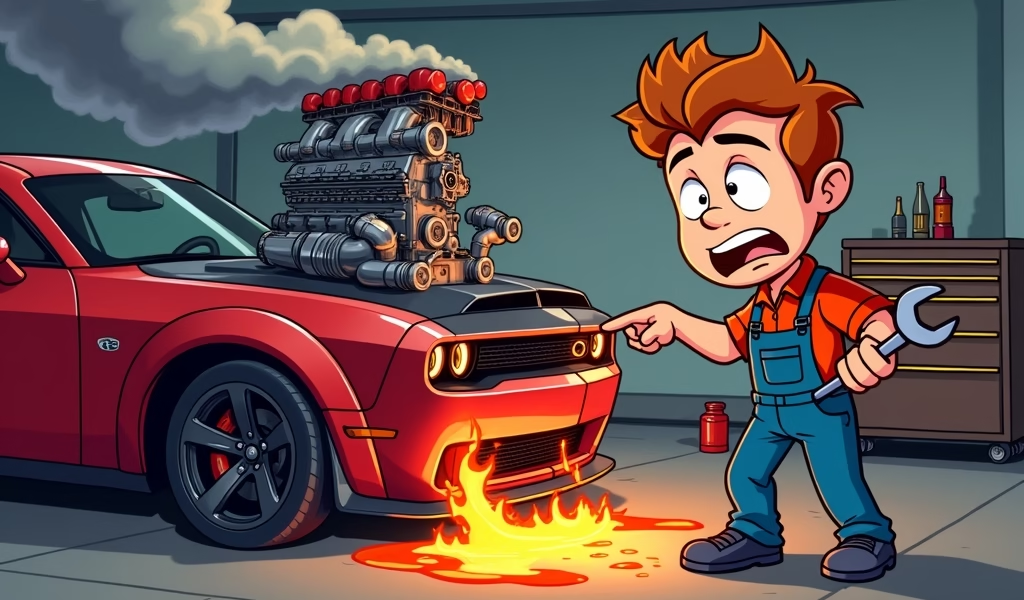
The IHI supercharger is the star of the show in Hellcat engines, but it’s also a common source of expensive repairs. The most frequent issues I see include:
Supercharger Bearing Failures
These bearings spin at astronomical speeds and depend entirely on proper lubrication. When they fail, you’ll notice a distinct change in the supercharger whine – it becomes more of a howl or grinding noise. By then, you’re looking at a complete supercharger rebuild.
Prevention is straightforward but often overlooked: change your oil at recommended intervals with factory-specified synthetic oil, and consider servicing the supercharger oil separately around 40,000 miles (it’s not part of the standard maintenance schedule, but should be).
Drive Belt Problems
The supercharger belt takes tremendous strain, and when it fails, you’ll immediately lose power – potentially leaving you stranded. More concerning is when the belt shreds and pieces get caught in other components.
Smart owners make belt inspection a regular interval, checking for cracks, glazing, or fraying around the 20,000-mile mark. Replacement cost is minimal compared to the damage a failed belt can cause.
Intercooler and Heat Exchanger Issues
The built-in charge air cooler helps keep intake temperatures down, but it’s prone to developing leaks where coolant passages meet the housing. Signs of trouble include unexplained coolant loss, sweet-smelling coolant near the engine, or overheating during spirited driving.
Regular cooling system pressure tests can catch these issues before they leave you stranded – something worth doing yearly regardless of mileage.
Cooling System Failures
Keeping 700+ horsepower cool is no small feat. The cooling system works overtime in these vehicles, and several common failure points have emerged:
Water Pump Failures
I’ve seen water pumps fail as early as 40,000 miles in some Hellcats. The high-output nature of these engines puts tremendous strain on cooling components. Warning signs include coolant leaks near the front of the engine, temperature fluctuations, or the dreaded overheating warning.
Some owners proactively replace the water pump around 60,000 miles as preventative maintenance – a wise investment considering what’s at stake.
Radiator Limitations
The stock radiator is adequate for street driving but can be overwhelmed during track days or extended high-performance driving. If you regularly push your Hellcat hard, consider upgrading to a higher-capacity aftermarket radiator.
Regardless of driving style, flushing the cooling system every 30,000 miles helps prevent corrosion and ensures optimal cooling performance.
Oil System Concerns
The lifeblood of any engine is its oil, but this is especially true for supercharged beasts like the Hellcat. Several oil-related issues deserve your attention:
Oil Consumption
Some oil consumption is normal in high-performance engines – up to a quart between changes isn’t unusual. However, excessive consumption (more than a quart every 1,000 miles) could indicate problems with piston rings, valve seals, or PCV system issues.
Regularly checking your oil level – ideally weekly – helps you establish what’s normal for your specific engine and catch problems early.
Oil Pump Failures
While relatively rare, oil pump failures are catastrophic when they occur. The high-revving nature of Hellcat engines puts tremendous strain on the oil pump. Any loss of oil pressure can destroy an engine in seconds.
Pay attention to oil pressure warning lights immediately – they’re not suggesting you stop “when convenient” but rather “right now.” Low oil pressure at idle, especially when the engine is warm, can be an early warning of pump problems.
Oil Quality and Change Intervals
The factory recommends oil changes every 6,000 miles, but most Hellcat specialists I know, including myself, recommend 3,000-4,000 mile intervals with full synthetic oil meeting SRT specifications.
This is one area where cutting corners to save a few dollars can cost you thousands. Always use the recommended oil grade (typically 0W-40 or 5W-40) from reputable manufacturers.

Early Warning Signs
Your Hellcat will usually try to tell you something’s wrong before catastrophic failure occurs. Learning to recognize these warning signs can save you significant money:
Unusual Sounds
The Hellcat has a distinctive supercharger whine that owners come to love. Any change to this sound – whether it becomes louder, develops a grinding quality, or includes new rattles – warrants immediate investigation.
Knocking sounds, particularly under acceleration, could indicate detonation issues. This is extremely serious and requires immediate attention to prevent engine damage.
Performance Changes
Sudden power loss, hesitation under acceleration, or rough idle can all indicate developing problems. Many owners report a “falling off a cliff” sensation when supercharger issues begin to develop.
Modern engines are remarkably good at compensating for minor issues, meaning by the time you notice a performance decrease, the underlying problem may have existed for some time.
Fluid Leaks
Any fluid leak deserves attention, but some are more serious than others:
- Oil leaks – potentially indicate gasket failures or cracked components
- Coolant leaks – can lead to overheating and severe engine damage
- Transmission fluid – might point to seal failures or cooler line issues
A clean engine bay makes spotting leaks much easier – consider having the engine bay detail cleaned annually as part of your maintenance routine.
Preventative Maintenance Schedule
The factory maintenance schedule is a good starting point, but for Hellcats that are driven enthusiastically, I recommend the following enhanced schedule:
Every 3,000-4,000 Miles
- Full synthetic oil change with high-quality filter
- Inspect all belts and hoses
- Check for fluid leaks
- Verify proper coolant level and condition
Every 15,000 Miles
- Replace air filter
- Inspect supercharger belt (replace if showing wear)
- Check brake fluid condition
- Rotate tires and check alignment
Every 30,000 Miles
- Complete cooling system flush
- Replace spark plugs (earlier if modified)
- Consider fuel system cleaning
- Transmission fluid and filter change
- Differential fluid change
Every 40,000-50,000 Miles
- Supercharger oil service (not in factory schedule but highly recommended)
- Consider proactive water pump replacement
- Replace fuel filter
Keeping detailed service records for maintenance not only helps you stay on schedule but also enhances resale value when documentation shows meticulous care.
DIY vs. Professional Maintenance
Many Hellcat owners are enthusiasts who enjoy working on their vehicles. While certain maintenance tasks are DIY-friendly, others require specialized equipment and expertise.
DIY-Friendly Tasks
- Oil and filter changes
- Air filter replacement
- Basic inspections
- Spark plug replacement (though access is tight)
- Fluid level checks
Leave to the Professionals
- Supercharger service or repairs
- Internal engine work
- Cooling system pressure testing
- Diagnostic troubleshooting
- Anything requiring specialized scan tools
Finding a qualified Hellcat specialist is worth the effort. Not all dealerships have technicians with specific high-performance experience, so asking in owner groups for recommendations can lead you to the right shop.
Cost of Repairs
Understanding potential repair costs helps justify preventative maintenance expenses. Here’s what you might expect for common Hellcat repairs:
Preventative Maintenance
- Oil change: $100-150
- Cooling system flush: $150-200
- Supercharger oil service: $300-500
- Spark plugs: $150-250
Common Repairs
- Water pump replacement: $800-1,200
- Supercharger rebuild: $2,500-4,000
- Supercharger replacement: $7,000-9,000
- Engine rebuild: $12,000-18,000
- New crate engine: $20,000+
The math becomes clear – spending $1,000-1,500 annually on preventative maintenance can save you tens of thousands in major repairs.
Extending Engine Life
Beyond the maintenance schedule, several driving and ownership habits can significantly extend your Hellcat’s engine life:
Proper Warm-Up and Cool-Down
Always allow your engine to reach operating temperature before heavy acceleration. After spirited driving, let the engine idle for 2-3 minutes before shutdown to allow the supercharger bearings to cool gradually.
This single habit might be the most important factor in supercharger longevity.
Fuel Quality Matters
These engines are designed for premium fuel (91 octane minimum, 93 recommended). Using lower octane can cause engine knock and potential damage, even with the knock sensors trying to compensate by retarding timing.
The few dollars saved at the pump aren’t worth the potential repair costs.
Oil Level Checks
Make checking your oil level a weekly habit. Catching low oil before damage occurs is simple preventative maintenance that costs nothing but takes just seconds.
Track Day Preparation
If you take your Hellcat to the track, consider additional cooling modifications and more frequent maintenance. Many owners change oil immediately after track days, regardless of mileage, to remove contamination from high-RPM operation.
Conclusion
Owning a Hellcat means having one of the most thrilling production cars ever created – but that thrill comes with responsibility. These engines represent the peak of American muscle car engineering, capable of delivering years of excitement when properly maintained.
The most common failures – supercharger issues, cooling system problems, and oil-related concerns – are largely preventable with diligent maintenance and proper operating procedures. The investment in preventative care is minimal compared to the cost of major repairs.
Remember that these cars are designed to be driven and enjoyed, not babied – but they do demand respect and attention. Give your Hellcat the care it deserves, and it will continue to deliver those smile-inducing supercharger screams for many years to come.
Whether you’re a new Hellcat owner or considering becoming one, understanding these common issues and their prevention will help you enjoy your high-horsepower journey with fewer expensive detours to the repair shop.
Frequently Asked Questions
How reliable is the Dodge Hellcat engine?
The Hellcat engine is generally reliable when properly maintained with regular oil changes and cooling system service. Most failures stem from maintenance neglect or abuse rather than inherent design flaws.
What’s the most common failure point on Hellcat engines?
The cooling system components, particularly the water pump, tend to be the most common failure points. Supercharger-related issues follow closely behind, especially in vehicles driven hard without proper cool-down procedures.
How often should I change the oil in my Hellcat?
For optimal longevity, change the oil every 3,000-4,000 miles with high-quality synthetic oil meeting SRT specifications. This interval is more conservative than the factory recommendation but provides better protection for these high-performance engines.
Can I daily drive my Hellcat without reliability concerns?
Many owners daily drive their Hellcats with excellent reliability by following a more aggressive maintenance schedule than the factory recommends. The key is consistent preventative maintenance rather than reactive repairs.
What’s the average lifespan of a properly maintained Hellcat engine?
A well-maintained Hellcat engine should easily reach 100,000-150,000 miles without major issues. Some examples with exceptional care have exceeded 200,000 miles while still performing strongly.