

Overview
That smooth-shifting Lexus LX570 might be hiding an $8,000 problem, as its sophisticated 8-speed transmission requires more frequent maintenance than the manufacturer’s “lifetime fluid” claim suggests. Proactive owners who recognize early warning signs and change transmission fluid every 30,000-50,000 miles can avoid catastrophic failures, potentially extending their transmission’s lifespan well beyond 200,000 miles instead of facing premature replacement as early as 80,000 miles.
Table of Contents
- The $8,000 Problem No One Sees Coming
- Understanding Your Lexus LX570 Transmission
- Warning Signs of Transmission Problems
- Common Causes of Transmission Issues
- Transmission Lifespan: What to Expect
- Essential Maintenance to Protect Your Transmission
- When Replacement Becomes Necessary
- Cost Expectations: Budgeting for Transmission Work
- DIY vs. Professional Service
- Common Mistakes LX570 Owners Make
- Protecting Your Investment
- Frequently Asked Questions
The $8,000 Problem No One Sees Coming
Picture this: Three hours into a cross-country road trip, your Lexus LX570 starts shifting erratically. What begins as a slight hesitation between gears quickly deteriorates into violent shuddering. Minutes later, you’re stranded on the roadside facing an $8,300 transmission replacement bill and a ruined vacation.
This scenario plays out more often than you might think for LX570 owners. Despite this luxury SUV’s stellar reputation, the transmission represents one of its most vulnerable and expensive components.
The sophisticated 8-speed automatic transmission that delivers the LX570’s signature smooth performance requires specific maintenance and attention. Miss the warning signs, and you’re looking at repair costs that could buy a decent used car.
Transmission vigilance isn’t optional for Lexus LX570 owners—it’s essential. This guide will walk you through everything you need to know to protect your investment and avoid that dreaded roadside breakdown.
Understanding Your Lexus LX570 Transmission
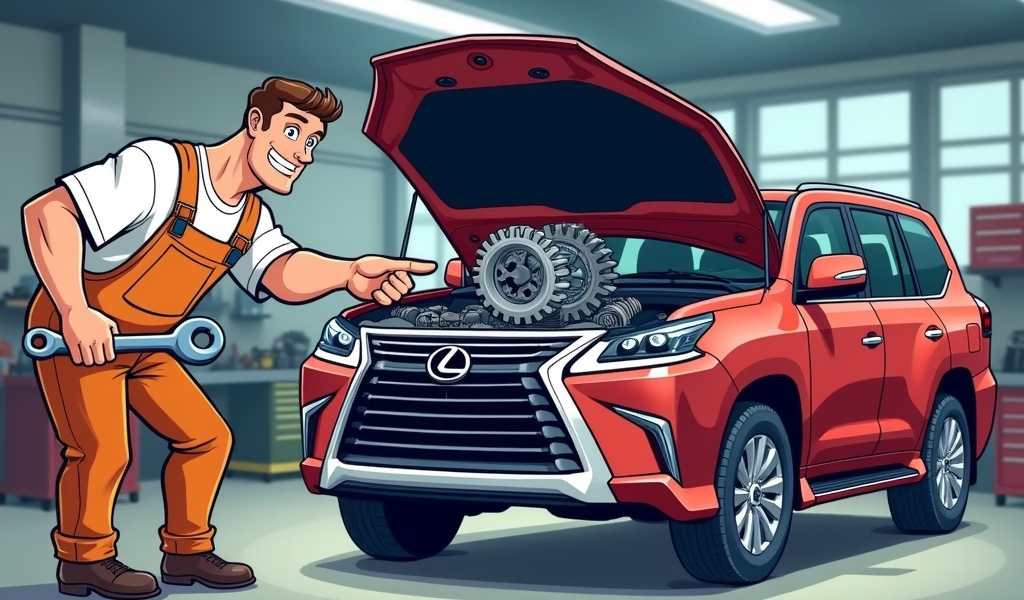
The Lexus LX570 features an advanced 8-speed automatic transmission (earlier models used a 6-speed) engineered for a perfect balance of highway cruising and off-road capability. This transmission is a marvel containing hundreds of precisely machined parts, sophisticated hydraulics, and complex electronic controls.
At its core, the transmission ensures your engine operates at optimal RPMs while delivering appropriate power to the wheels. The 8-speed configuration allows for better fuel economy and smoother acceleration by providing more precise gear ratio options.
What makes the LX570 transmission special is how it interfaces with the advanced four-wheel-drive system, including the transfer case and differential locks that give this vehicle its legendary off-road capabilities. When functioning correctly, you’ll barely notice it—gear changes happen seamlessly, and power delivery feels effortless.
The health of your transmission directly impacts your vehicle’s reliability, safety, and value. A well-maintained transmission can help your LX570 reach impressive mileage milestones, while a neglected one might leave you with a repair bill approaching five figures.
Understanding how the different types of automatic transmissions work can help you better appreciate the complexity of your LX570’s system and why proper maintenance is so critical.
Warning Signs of Transmission Problems
Catching transmission issues early can save you thousands. Here are the key warning signs every LX570 owner should know:
Delayed or Rough Shifting
If your LX570 hesitates before engaging a gear, especially when shifting from park to drive, your transmission is sending distress signals. Pay close attention to how the vehicle behaves during the 3-4 and 4-5 gear transitions, where problems often first appear.
Any jerky or harsh shifts that feel like a “thunk” rather than a smooth transition indicate something’s not right. These symptoms often start intermittently before becoming constant.
Unusual Noises
Listen for whining sounds that increase with speed, buzzing during acceleration, or clunking when shifting gears. These sounds may be subtle at first but typically worsen as the problem develops.
A healthy transmission should be nearly silent. Any new or unusual noise deserves immediate attention, especially if it changes with vehicle speed or gear selection.
Transmission Fluid Leaks
The LX570’s transmission should be completely sealed. Any sign of reddish fluid beneath your parked vehicle warrants immediate attention. Check specifically around the transmission pan gasket and cooler lines, which are common failure points.
Fresh transmission fluid is bright red with a sweet smell. Darker, brownish fluid with a burnt odor indicates serious overheating issues and requires immediate attention from a specialist.
Warning Lights
Modern Lexus vehicles can detect subtle transmission problems before they become catastrophic failures. Pay immediate attention if you see the “Check Engine” light, “VSC” (Vehicle Stability Control) warning, or the direct transmission temperature warning.
Don’t ignore these electronic alerts—they’re your first line of defense against major damage. According to CarMD’s Vehicle Health Index, addressing warning lights promptly can reduce repair costs by an average of 33%.
Vibration or Shuddering
A transmission-related vibration typically feels different from other issues. It often occurs at specific speeds or during acceleration and may feel like driving over rumble strips. This symptom frequently indicates torque converter problems or worn transmission mounts.
If you notice the vibration is most pronounced between 40-50 mph or when the transmission shifts into higher gears, it’s almost certainly transmission-related.
Common Causes of Transmission Issues
Understanding what causes transmission problems can help you prevent them. Here are the most common culprits behind LX570 transmission failures:
Inadequate Maintenance
Despite Lexus marketing some transmission fluids as “lifetime,” real-world experience shows regular fluid changes are essential. As fluid degrades, it loses protective properties and allows increased friction and heat—the enemies of transmission longevity.
The complex hydraulic systems in the LX570’s transmission depend on clean, effective fluid to function properly. When this fluid breaks down, it can no longer provide the lubrication and cooling necessary for optimal performance.
Overheating
The LX570 can tow up to 7,000 pounds and tackle serious off-road adventures. However, these activities generate significant heat in the transmission. Without proper cooling or frequent breaks, temperatures can rise to levels that break down fluid properties and damage seals and clutches.
Owners who regularly tow heavy loads or tackle challenging off-road conditions face higher risks of transmission issues due to this heat buildup.
Electrical and Sensor Failures
The modern LX570 transmission relies on a network of sensors and solenoids to execute precise shifting commands. When these electronic components fail, they can cause erratic shifting behavior even when the mechanical aspects remain sound.
Issues with the Transmission Control Module (TCM) or faulty speed sensors are particularly common in models from 2013-2016, often manifesting as unpredictable shift timing or failure to engage certain gears.
Factory Defects and Known Issues
Certain model years have demonstrated specific vulnerabilities. The 2008-2010 models occasionally suffer from torque converter shudder problems, while 2016-2018 vehicles have shown higher rates of valve body issues.
Some 2013-2015 LX570s experienced premature transmission failure related to manufacturing defects in the planetary gear sets—a problem that typically emerges between 60,000 and 90,000 miles.
Transmission Lifespan: What to Expect
Under ideal conditions with proper maintenance, the transmission in a Lexus LX570 should last between 150,000 and 200,000 miles. However, several factors can significantly extend or reduce this expected lifespan.
Regular maintenance provides the greatest impact on longevity. Owners who change transmission fluid every 30,000-50,000 miles frequently see transmissions lasting well beyond 200,000 miles. Conversely, neglected maintenance can lead to failures as early as 80,000-100,000 miles.
Climate and operating conditions also play major roles. LX570s operated primarily in extreme temperatures typically experience shorter transmission lifespans. Similarly, vehicles regularly used for heavy towing or serious off-roading face accelerated wear patterns.
For most owners, transmission warning signs begin appearing in a predictable timeline:
- Minor shifting irregularities: 70,000-90,000 miles
- Electronic control issues: 90,000-110,000 miles
- Mechanical symptoms: 100,000-130,000 miles (if maintenance has been neglected)
Understanding these patterns can help you anticipate potential issues and address them before they escalate into expensive repairs.
Essential Maintenance to Protect Your Transmission

Proactive maintenance remains your best defense against catastrophic transmission failure. Here’s what every LX570 owner should know:
Fluid Change Intervals
Despite Lexus claiming “lifetime fluid,” real-world experience strongly suggests otherwise. For maximum protection, change your LX570’s transmission fluid every 30,000-50,000 miles under normal conditions, or every 30,000 miles if you frequently tow or drive in severe conditions.
This contradicts the dealer recommendation but aligns with what independent Lexus specialists consistently observe. The experts at Edmunds also recommend more frequent transmission fluid changes than many manufacturers suggest, especially for vehicles used in demanding conditions.
Cooling System Maintenance
The transmission cooling system is crucial yet often overlooked. Have the transmission cooler and lines inspected during regular service intervals. If you frequently tow or drive in hot climates, consider adding an auxiliary transmission cooler—a relatively inexpensive upgrade that can dramatically extend transmission life.
A properly functioning cooling system keeps transmission temperatures in the optimal 175-200°F range, while overheating can push temperatures above 240°F, where fluid breakdown occurs rapidly.
Proper Driving Techniques
How you drive significantly impacts transmission longevity. Follow these best practices:
- Allow your LX570 to warm up properly before driving aggressively, especially in cold weather
- Come to a complete stop before shifting between reverse and drive
- When off-roading, use appropriate terrain settings to ensure correct shift mapping
- Avoid riding the brakes during long descents, which can transfer excessive heat to the transmission
- Use the tow/haul mode when pulling heavy loads to optimize shift patterns
These simple habits can add tens of thousands of miles to your transmission’s lifespan with virtually no additional cost.
When Replacement Becomes Necessary
Eventually, some LX570 owners will face the difficult decision between repair and replacement. Understanding how to make this assessment can save thousands.
Diagnostic Steps
Before assuming you need a complete replacement, ensure proper diagnostics have been performed. A transmission scan using Lexus-specific equipment (not just a generic OBD-II scanner) can often identify specific issues.
Have a transmission specialist conduct a pressure test to evaluate internal hydraulic function and inspect the fluid for metal particles that would indicate internal damage. These detailed diagnostics may cost $200-300 but can prevent an unnecessary $8,000 replacement.
Repair vs. Replacement Considerations
Minor issues like solenoid failures, sensor problems, or valve body issues can often be repaired without full transmission replacement. However, if internal mechanical damage exists—particularly to planetary gear sets or the torque converter—complete replacement typically proves more cost-effective than attempting partial repairs.
The general rule: if repair costs exceed 60% of replacement costs, replacement is usually the better long-term option.
New vs. Remanufactured Options
A factory-new Lexus transmission offers the highest quality but at premium pricing (often $7,000-$9,000 plus labor). Remanufactured units from reputable suppliers provide a middle-ground option, typically with costs between $4,000-$6,000 plus installation.
Avoid used transmissions unless they come with comprehensive testing documentation and meaningful warranties. The slight savings rarely justify the risk of inheriting someone else’s problem.
Cost Expectations: Budgeting for Transmission Work
Transmission work represents one of the most expensive maintenance categories for LX570 owners. Here’s what to expect financially:
Preventative Maintenance
Basic transmission fluid and filter changes typically cost $300-$500 at independent shops and $400-$700 at dealerships. More comprehensive services including cooling system inspection, electronic diagnostics, and adjustments range from $700-$1,000.
While expensive, these preventative services cost a fraction of major repairs and should be viewed as insurance against catastrophic failure.
Minor Repair Costs
Solenoid replacements or valve body rebuilds typically fall in the $800-$1,800 range. Torque converter replacements generally cost $1,500-$2,500 installed. Control module replacements or reprogramming can range from $500-$1,200 depending on labor complexity.
These “middle ground” repairs often provide the best value when caught early, addressing specific issues without requiring complete transmission replacement.
Full Replacement Costs
Complete transmission replacement represents the most significant expense. Factory-new Lexus units installed at dealerships can reach $7,000-$9,000. Remanufactured units installed at independent shops typically range from $5,000-$7,000.
Labor alone often accounts for $1,500-$2,000 of these totals due to the complexity of removing and reinstalling the transmission in the LX570’s full-frame chassis.
When budgeting for transmission work, always factor in potential peripheral expenses like towing fees, diagnostic charges, rental vehicles during extended repairs, and related components that may need replacement during installation.
DIY vs. Professional Service
While the LX570 requires specialized knowledge and tools for major transmission work, certain maintenance tasks remain accessible to mechanically inclined owners.
DIY-Appropriate Tasks
Checking transmission fluid level and condition is manageable for most owners with basic tools. External inspections for leaks around the pan gasket, cooler lines, and case seals can be performed during routine under-vehicle checks.
Some owners can handle transmission fluid and filter changes, though the procedure requires careful attention to torque specifications and using the correct Toyota/Lexus WS (World Standard) transmission fluid. Using the wrong type can cause significant damage, even if it’s a premium brand.
Learning about how automatic transmissions work can help you make more informed DIY decisions and understand when professional help is necessary.
When to Consult Professionals
Any internal transmission work requires professional intervention. Electronic diagnostics, solenoid replacements, pressure testing, and component adjustments demand specialized tools and expertise that most DIYers simply don’t have.
Never attempt internal repairs without proper knowledge—improper reassembly can cause catastrophic failure and safety hazards. The best transmission service typically comes from shops specializing exclusively in transmissions rather than general repair facilities or even dealerships.
Look for technicians with specific Lexus certification or those who regularly work on Toyota/Lexus 8-speed transmissions. Independent Lexus specialists often provide dealership expertise at more reasonable rates.
Common Mistakes LX570 Owners Make
Avoiding these common errors can save you thousands in premature transmission repairs:
Ignoring Early Warning Signs
The subtle hesitation or occasional rough shift easily dismissed as “normal” often represents the first indication of developing problems. Addressing these symptoms when they first appear typically means simpler, less expensive repairs.
Don’t wait until the problem becomes impossible to ignore—by then, the damage is usually extensive and costly.
Using Incorrect Fluid
The LX570’s transmission requires specific Toyota/Lexus WS (World Standard) fluid. Using generic automatic transmission fluid, even high-quality brands, can cause shifting problems and accelerated wear.
Some transmission shops may use universal fluids unless specifically instructed otherwise—always verify they’re using the correct specification before authorizing service.
“Lifetime Fluid” Misconceptions
Perhaps the most damaging myth involves Lexus’s “lifetime fluid” designation. In real-world driving, transmission fluid degrades like any other lubricant. Waiting until problems develop before changing fluid often means it’s too late to prevent damage.
The term “lifetime” in this context really means “lifetime of the warranty”—not the lifetime of the vehicle. Regular fluid changes remain essential for long-term reliability.
Choosing Improper Repair Facilities
General repair shops lacking specific Lexus transmission experience often misdiagnose issues or recommend unnecessary replacement when repairs would suffice. Conversely, some dealerships may recommend complete replacement without exploring more economical repair options.
Finding a specialist who knows both transmissions and Lexus vehicles specifically will typically yield the best results for both your vehicle and your wallet.
Protecting Your Investment
The Lexus LX570 represents a significant investment, combining uncompromising luxury with genuine capability. Protecting its sophisticated transmission system requires awareness, diligence, and proactive maintenance beyond factory recommendations.
By recognizing early warning signs and addressing minor issues promptly, you can avoid catastrophic failures and their associated costs. Implementing a more aggressive maintenance schedule than Lexus recommends—particularly regarding transmission fluid changes—can extend the life of your transmission by many years and thousands of miles.
Remember that the LX570’s premium nature extends to its repair costs. Budgeting for preventative transmission maintenance now can help avoid the shock of unexpected multi-thousand-dollar repairs later. The difference between a $400 fluid service and an $8,000 transmission replacement makes the choice clear for informed owners.
With proper care and attention, your LX570’s transmission can provide many years of trouble-free service, allowing you to enjoy this exceptional vehicle’s comfort and capability without the stress of unexpected breakdowns.
Frequently Asked Questions
How often should I change the transmission fluid in my LX570?
Every 30,000-50,000 miles is recommended for normal driving, despite Lexus suggesting it’s “lifetime” fluid. If you tow frequently or drive in extreme conditions, shorten this interval to 30,000 miles.
What are the first signs of transmission problems in an LX570?
The earliest signs typically include delayed engagement when shifting from park to drive, subtle hesitation during gear changes, or occasional shuddering. Don’t ignore these subtle warnings, as they rarely resolve on their own.
Can I tow with my LX570 without damaging the transmission?
Yes, but always use the vehicle’s tow/haul mode and consider installing an auxiliary transmission cooler if you tow regularly. Allow cooling periods during extended towing, especially in hot weather or on steep grades.
What’s the average cost to replace an LX570 transmission?
Expect to pay $5,000-$9,000 depending on whether you choose a factory-new or remanufactured unit. Labor alone typically costs $1,500-$2,000 due to the complexity of the job.
Is it worth fixing an LX570 with transmission problems?
Yes, if the vehicle is otherwise in good condition, as the LX570 typically maintains strong resale value. Minor transmission issues caught early often cost $800-$2,000 to repair, far less than replacement or purchasing a different vehicle.