
Overview
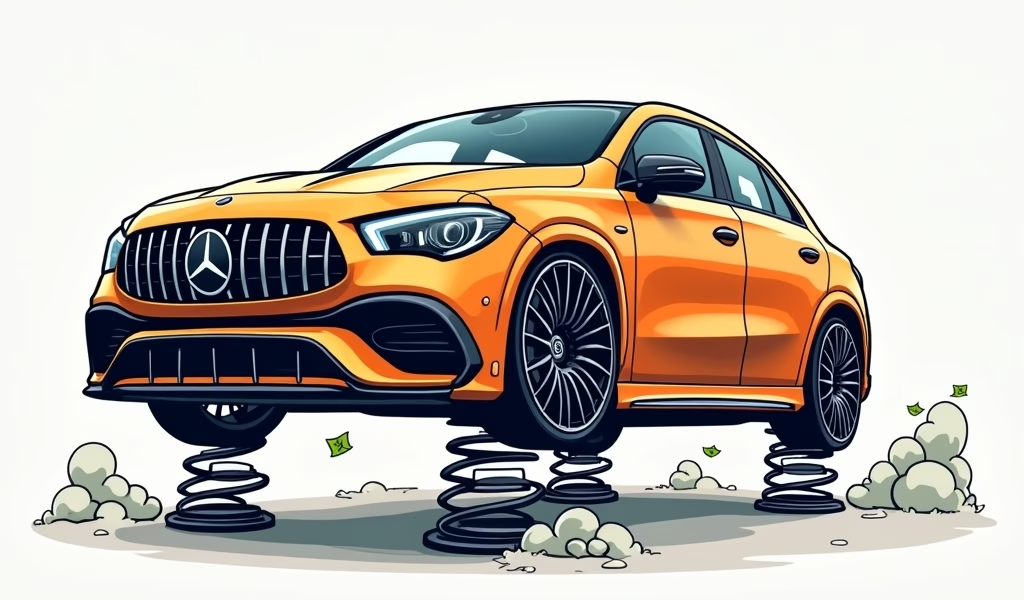
Like a finely-tuned instrument that occasionally needs retuning, Mercedes AMG air suspension systems deliver exceptional performance but require vigilant maintenance to avoid costly repairs that can reach $7,000 at dealerships. The article provides a complete roadmap for owners to understand common issues (air leaks, compressor failures, sensor malfunctions), recognize early warning signs, and choose between dealer service, independent specialists, or DIY repairs that can save thousands while maintaining the signature AMG ride quality.
Table of Contents
- Understanding Mercedes AMG Air Suspension
- Common Air Suspension Issues
- Signs Your Mercedes AMG Air Suspension is Failing
- Diagnosing Air Suspension Problems
- DIY Repair Options
- Preventive Maintenance Tips
- Cost Comparison: Dealer vs Independent vs DIY
- Aftermarket Alternatives
- Conclusion
- Frequently Asked Questions
Understanding Mercedes AMG Air Suspension
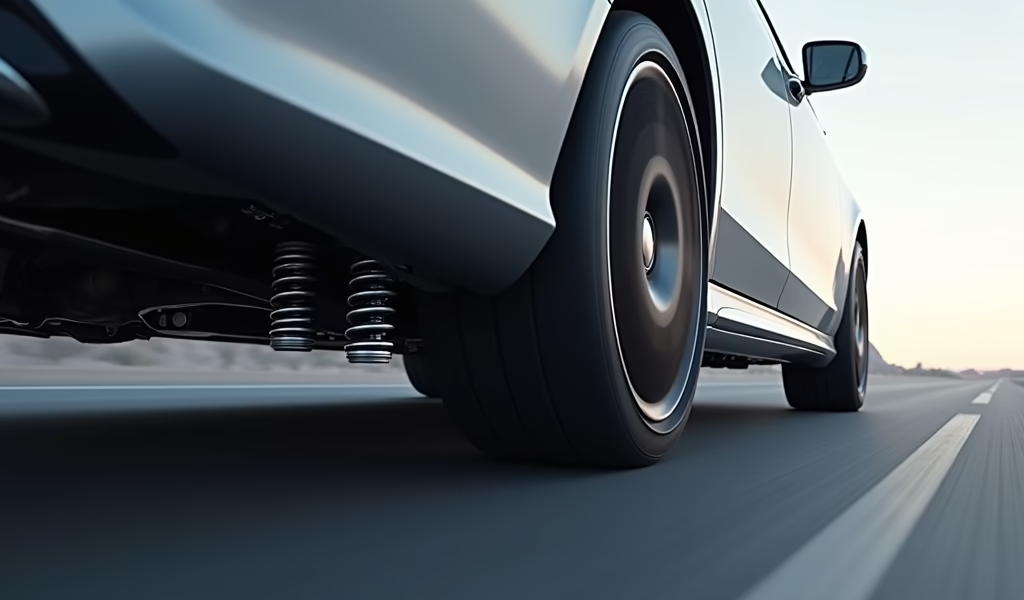
The Mercedes AMG air suspension system is a marvel of German engineering that transforms how these performance vehicles handle the road. Unlike conventional coil spring setups, the AMG air suspension uses compressed air-filled rubber bellows that can adjust vehicle height and firmness on demand. This sophisticated system delivers that butter-smooth ride quality Mercedes is famous for while maintaining the aggressive handling characteristics AMG owners crave.
At its core, the Mercedes AMG air suspension consists of air struts at each wheel, an air compressor, reservoir tank, electronic control unit, and a network of sensors. When functioning properly, this system continuously monitors road conditions and driving dynamics, making microsecond adjustments to maintain optimal performance. The ability to raise the vehicle for rough terrain or lower it at highway speeds for improved aerodynamics showcases the impressive versatility of this technology.
What separates the AMG variant from standard Mercedes air suspension is its performance tuning. The system is calibrated for more responsive handling with reduced body roll and pitch during aggressive driving. However, this performance orientation also means the components experience greater stress and can be more prone to wear than their standard counterparts. Understanding this fundamental design philosophy helps explain why certain issues are common and how to approach maintenance strategically.
Common Air Suspension Issues
Over my years working with Mercedes AMG vehicles, I’ve observed several recurring issues with their air suspension systems. Air leaks top the list as the most common culprit behind suspension failures. These typically develop at connection points where rubber components meet harder materials, with air springs and lines being particularly vulnerable. Temperature fluctuations and normal aging cause rubber to lose elasticity over time, creating tiny pathways for air to escape.
Compressor failure is another frequent headache for AMG owners. The air compressor works overtime in these performance vehicles, especially if you enjoy spirited driving. Eventually, this critical component can burn out from overuse or seize due to moisture contamination. When this happens, the entire system loses its ability to maintain proper ride height.
Sensor malfunctions represent the third common issue category. Modern Mercedes AMG vehicles rely on a complex network of height and pressure sensors to monitor suspension status. These electronic components can fail due to water damage, wiring issues, or simple wear and tear. When sensors provide incorrect readings, the control module makes improper adjustments, resulting in uneven ride height or inappropriate firmness settings.

Signs Your Mercedes AMG Air Suspension is Failing
Catching air suspension issues early can save you thousands in repair costs. The most obvious warning sign is uneven ride height—when your AMG sits noticeably lower on one corner or side. This typically indicates a leaking air spring or line that can’t maintain proper pressure. Many owners first notice this after the vehicle has been parked overnight, as a slow leak becomes more apparent during extended periods of inactivity.
Dashboard warning lights provide another clear indicator of trouble. Modern Mercedes vehicles are equipped with sophisticated diagnostics that detect abnormal suspension operation. If you see the suspension warning symbol illuminated on your instrument cluster, don’t ignore it! The onboard computer has identified a problem that requires attention before it worsens.
Listen carefully for unusual sounds when starting your vehicle or changing ride height settings. A compressor that runs longer than normal—typically more than 60 seconds—suggests it’s struggling to pressurize a leaking system. Similarly, knocking or clunking noises during cornering or over bumps may indicate worn suspension components that need replacement.
Changes in ride quality often precede complete system failure. If your once-smooth AMG begins transmitting more road imperfections or seems to “bottom out” over bumps, your air suspension is likely losing its ability to maintain proper pressure. Similarly, handling characteristics that feel inconsistent or unpredictable suggest the system isn’t adjusting properly to driving conditions.
Diagnosing Air Suspension Problems
Before spending big money on repairs, take some time to properly diagnose your Mercedes AMG air suspension issues. Start with a visual inspection—park your vehicle on level ground and check if all four corners sit at equal height. Next, look for any obvious signs of damage to air lines or struts. Moistness or oily residue around air components often indicates a leak.
For a more thorough investigation, perform the “soap test” on suspected leak areas. Mix a solution of dish soap and water, apply it to connections and components, then watch for bubbles forming as air escapes. This simple technique can pinpoint exact leak locations without expensive equipment.
If you’re comfortable using air compressor connections and basic tools, you can test component functionality individually. Disconnect and reconnect electrical connectors to rule out simple contact issues. For those with access to diagnostic equipment, pulling error codes from the suspension control module provides valuable insights into specific component failures.
Don’t overlook the compressor and its relay when diagnosing problems. A failing relay may prevent the otherwise healthy compressor from activating, mimicking compressor failure symptoms. Similarly, check the air dryer (if equipped), as a clogged dryer can restrict airflow and prevent proper system pressurization. According to Mercedes-Benz technical documentation, moisture contamination accounts for approximately 30% of air system failures.
DIY Repair Options
With some mechanical aptitude and proper tools, you can tackle several Mercedes AMG air suspension repairs yourself. Replacing air springs is within reach for DIY enthusiasts and can save hundreds in labor costs. Aftermarket air springs typically cost $200-400 per corner versus $600-800 for OEM parts. Just ensure you properly relieve system pressure before disconnecting any components, and follow torque specifications carefully during reassembly.
For minor leaks in accessible air lines, repair kits are available that allow you to cut out damaged sections and install replacement line with specialized fittings. This approach costs around $50-100 for materials and requires no specialized tools beyond a sharp utility knife and proper wrenches. Be meticulous about creating clean, square cuts and ensuring fittings are properly seated.
Even compressor replacement can be manageable for DIY mechanics. Aftermarket compressors range from $250-500 compared to dealer prices of $800-1200. The procedure typically involves disconnecting the air lines, electrical connections, and mounting brackets, then reversing the process for installation. Remember to replace the air dryer simultaneously for optimal system longevity.
For those comfortable with basic electrical troubleshooting, sensor repairs often require only cleaning connections or replacing relatively inexpensive components. Height sensor replacement kits cost $100-200 and usually involve removing a few fasteners and a simple plug connection. Researchers at Aftermarket Air Springs found that over 40% of air suspension issues can be resolved through DIY repairs with proper guidance.
Preventive Maintenance Tips
An ounce of prevention truly is worth a pound of cure when it comes to Mercedes AMG air suspension. Incorporate regular visual inspections into your maintenance routine—checking for signs of air spring deterioration such as cracking, discoloration, or deformation. These early warning signs can help you address issues before catastrophic failure occurs.
Keep the air compressor healthy by ensuring it doesn’t overwork. Avoid using the vehicle’s height adjustment feature excessively when unnecessary. Each activation cycle puts wear on the compressor, so be judicious with those suspension setting changes. If you must frequently adjust ride height, consider upgrading to a heavy-duty compressor designed for increased duty cycles.
Proper drainage of the air system prevents moisture accumulation that leads to internal corrosion. Many Mercedes models have a drain valve on the air tank that should be opened periodically to release collected condensation. This simple five-minute task can significantly extend component life.
Consider these proactive maintenance steps to maximize system longevity:
- Replace the air filter for the compressor every 30,000 miles
- Apply silicone lubricant to rubber components annually to prevent drying and cracking
- Use sway control adjustments appropriately to reduce stress on air components during spirited driving
- Keep electrical connections clean and protected from moisture
- Consider preemptive replacement of air springs at 80,000-100,000 miles even if no issues are present
Cost Comparison: Dealer vs Independent vs DIY
The financial implications of Mercedes AMG air suspension repair vary dramatically depending on your chosen repair path. Dealership repairs represent the premium option, with complete system overhauls ranging from $4,000-7,000. Individual component replacement at dealers typically costs $1,000-2,500 per corner for air struts and $1,200-1,800 for compressor replacement. While you get factory parts and factory-trained technicians, the markup is substantial.
Independent Mercedes specialists offer a middle ground, typically charging 30-40% less than dealerships while still providing qualified expertise. Most independent shops are comfortable working with aftermarket parts when appropriate, further reducing costs without significantly compromising quality. Expect to pay $700-1,800 for air strut replacement and $800-1,200 for compressor work at reputable independent shops.
The DIY approach delivers the most dramatic savings but requires time investment and mechanical confidence. Material costs for complete air spring replacement run approximately $800-1,600 for all four corners using quality aftermarket components. Compressor replacement might cost $300-600 in parts. The labor—your own—is free, though the job might consume a weekend for those new to air suspension work.
Consider this real-world example: a complete system restoration on a 2016 Mercedes-AMG E63 with failing air springs and compressor would cost approximately $5,500 at the dealer, $3,200 at an independent shop, and $1,400 in DIY parts. The quality difference between proper independent repair and dealer service is often negligible, making independent specialists the value sweet spot for many owners.
Aftermarket Alternatives
For those tired of dealing with air suspension headaches, conversion kits offer a permanent solution. These kits replace the entire air suspension system with traditional coil springs and conventional shock absorbers. Quality conversion systems for Mercedes AMG models range from $700-1,500 and eliminate the possibility of future air-related failures. The downside? You lose the adjustability and adaptive ride qualities that made your AMG special.
If you’re committed to maintaining air suspension functionality but want more reliability, upgraded aftermarket components provide enhanced durability. Companies like Arnott and Strutmasters manufacture reinforced air springs with thicker rubber compounds and improved internal design that often outlast OEM parts. These premium aftermarket options typically cost 20-30% less than dealer parts while offering comparable or better longevity.
Some enterprising AMG enthusiasts opt for custom solutions, integrating commercial-grade air system components from heavy-duty applications. While requiring more fabrication and technical knowledge, these hybrid systems can deliver exceptional reliability. Online Mercedes forums often feature detailed guides for these modifications, though they generally void any remaining warranty coverage.
Before making any aftermarket modifications, consider how they might affect other vehicle systems. For example, adaptive driving modes in many modern AMG models are programmed to work specifically with the factory air suspension characteristics. According to a study from SAE International, aftermarket suspension modifications can impact electronic stability control effectiveness if not properly calibrated.
Conclusion
The Mercedes AMG air suspension system delivers an unparalleled combination of performance and comfort, but its complexity comes with maintenance challenges. By understanding how the system works and recognizing early warning signs, you can avoid many of the costly repair scenarios that plague uninformed owners. Whether you choose DIY repairs, independent specialists, or dealership service depends on your comfort level and budget—but knowledge is your best defense regardless of path.
Remember that preventive maintenance delivers the highest value return. Simple checks and proactive component replacement can prevent cascading failures that lead to complete system breakdown. The good news? Most air suspension issues develop gradually, giving attentive owners time to address problems before they become emergencies.
Ultimately, Mercedes AMG air suspension represents a premium feature worth maintaining properly. With the strategies outlined in this guide, you can enjoy the remarkable ride quality and performance benefits while avoiding unnecessary repair expenses. Your AMG deserves thoughtful care, and your wallet will thank you for the informed approach to this sophisticated system.
Frequently Asked Questions
How long does Mercedes AMG air suspension typically last?
With proper maintenance, Mercedes AMG air suspension components typically last 70,000-100,000 miles. Environmental factors, driving habits, and maintenance history significantly impact longevity.
Can I drive with a failed air suspension system?
While technically possible, driving with failed air suspension is not recommended as it can damage other components and compromises safety. The vehicle will typically ride extremely low with poor handling characteristics.
How much does it cost to replace all four air struts?
Dealer replacement costs range from $4,000-6,000 for all four corners, while independent shops charge $2,500-4,000. DIY parts cost approximately $800-1,600 for quality aftermarket components.
Will a conversion kit to coil springs affect my vehicle’s performance?
Yes, converting to coil springs will eliminate the adjustability features and may alter handling characteristics. However, properly engineered conversion kits maintain reasonable ride quality while improving long-term reliability.
Can I repair just one air spring, or should I replace them in pairs?
Best practice is to replace air springs in pairs (front or rear) to maintain balanced suspension characteristics. A single new spring alongside aged components often creates uneven handling.