

Overview
Like the engine in your first car, the Chrysler Pacifica hybrid’s sophisticated 16kWh lithium-ion battery requires attentive care—from monitoring warning signs like reduced range to adopting battery-friendly charging habits that can extend its 7-10 year lifespan. Understanding these maintenance needs, along with replacement options ranging from $2,800 to $9,000, empowers owners to maximize the efficiency of their family-friendly minivan while avoiding unexpected repair costs down the road.
Table of Contents
- Understanding the Pacifica Hybrid Battery
- Warning Signs of Battery Problems
- Common Causes of Battery Failure
- Extending Your Battery Life
- Replacement Options and Costs
- DIY vs. Professional Service
- Conclusion
- Frequently Asked Questions
Understanding the Pacifica Hybrid Battery
The Chrysler Pacifica hybrid battery isn’t your standard car battery. It’s a sophisticated 16 kWh lithium-ion powerhouse that sits at the heart of this family-friendly minivan. This isn’t just a starter battery – it’s what enables the vehicle to run on electric power for about 32 miles before the gas engine kicks in.
As a mechanic who’s worked on countless hybrid systems, I can tell you that understanding this battery is crucial for any Pacifica Hybrid owner. The battery pack consists of 96 cells arranged in modules, carefully housed under the second-row floor. This placement helps protect the system while preserving the Pacifica’s famous interior space, though it does slightly reduce those handy Stow ‘n Go compartments compared to the non-hybrid model.
What makes this system particularly impressive is how it works with the 3.6L Pentastar V6 engine through Chrysler’s eFlite transmission. The battery powers two electric motors that can operate independently or alongside the gas engine, creating a remarkably efficient driving experience. When you’re braking or coasting, the system actually recaptures energy through regenerative braking – basically turning your brake pedal into a battery charger!
This complex system is why the Pacifica Hybrid can achieve that impressive 82 MPGe rating, potentially saving you over $1,500 annually in fuel costs compared to conventional minivans. That’s significant savings for anyone considering a hybrid vehicle.
Warning Signs of Battery Problems
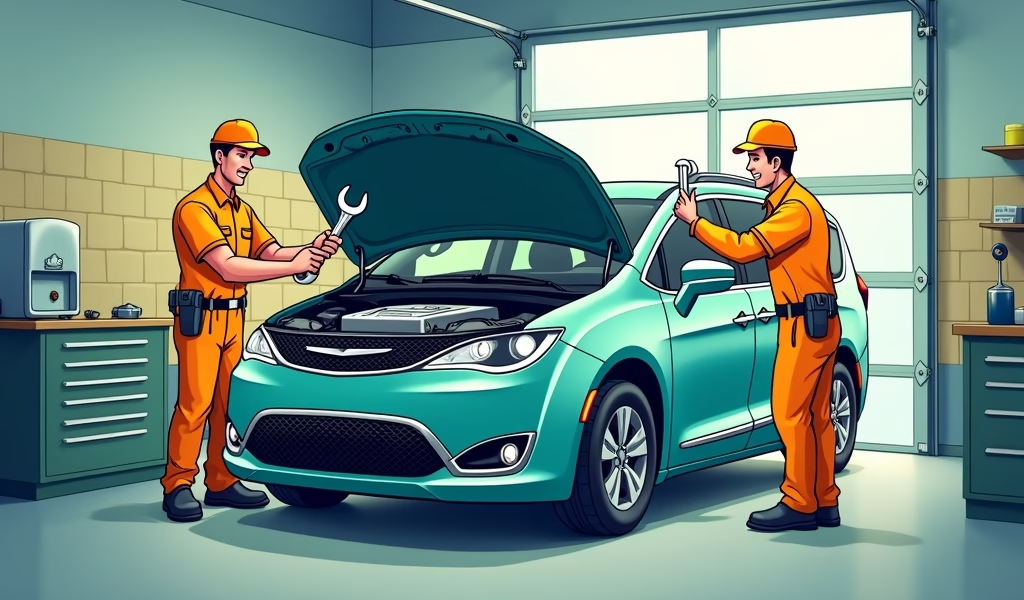
Catching battery issues early can save you thousands in repair costs. From my years working on these systems, I’ve identified several warning signs that Pacifica Hybrid owners should never ignore.
The most obvious indicator is a significant drop in electric range. If your Pacifica once traveled 30+ miles on battery power but now struggles to reach 20 miles on a full charge, that’s your battery telling you something’s wrong. I recommend tracking your typical range to spot gradual declines.
Pay attention to unusual battery gauge behavior. The charge indicator should deplete relatively consistently during normal driving. If you notice rapid drops from 80% to 30%, or strange jumps without charging, your battery management system may be misreading the actual charge level.
Dashboard warnings are your vehicle’s way of saying “help me now.” When you see a battery warning light or “Service Hybrid System” message, don’t wait – these rarely resolve themselves and typically indicate problems that will only worsen with time.
Another telltale sign is deteriorating fuel economy. When the hybrid system isn’t operating efficiently, your vehicle relies more heavily on gasoline. If you’re suddenly stopping at gas stations more frequently, your battery might be the culprit.
Listen for unusual sounds too. High-pitched whining, clicking, or buzzing noises from under the floor could indicate problems with the battery cooling system, inverter, or connections. As with most automotive issues, unusual noises deserve immediate attention.
Finally, pay attention to performance changes. A healthy Pacifica Hybrid delivers smooth, immediate power. If you experience hesitation during acceleration, particularly when transitioning between electric and gas power, something may be amiss with your battery or power management system.
Common Causes of Battery Failure
Understanding what damages hybrid batteries can help you avoid costly failures. In my 15+ years working on hybrids, I’ve seen patterns emerge in what causes these expensive systems to degrade prematurely.
Age-related degradation is inevitable – all lithium-ion batteries naturally lose capacity over time. After 5-7 years, most packs have lost 10-20% of their original capacity. This is normal and unavoidable, but other factors can accelerate this process dramatically.
Temperature extremes are battery killers. While the Pacifica’s battery management system works hard to maintain optimal temperature, prolonged exposure to extreme heat or cold can accelerate degradation. Whenever possible, park in climate-controlled garages or at least in the shade during hot summer days.
Your charging habits make a significant difference. Consistently letting the battery fully deplete before recharging or always charging to 100% and leaving it plugged in for days can reduce long-term capacity. For maximum longevity, try keeping your battery between 20% and 80% charged during regular use.
Early production Pacifica Hybrids (particularly 2017-2018 models) experienced some battery-related issues, leading to several recalls. If your vehicle falls within these model years, verify that all recall work has been completed by checking with your dealer or on the NHTSA’s recall website.
Software glitches can sometimes make a perfectly good battery behave badly. Regular dealer software updates are crucial for preventing these issues. Some owners skip these updates, not realizing they often contain critical fixes for battery management.
Physical damage is often overlooked. Even minor accidents can impact battery components or connections. After any collision, have the hybrid system checked by a qualified technician, even if the vehicle seems to drive normally.
Extending Your Battery Life
Taking proactive steps can add years to your battery’s useful life. Based on my experience servicing hundreds of hybrid vehicles, these practical tips can help protect your investment.
Optimize your charging routine. For daily driving, consider charging to only 80% rather than 100% if it meets your range needs. When planning long trips, charge to full capacity just before departure rather than leaving it at 100% for days. This small change can significantly extend battery life according to research from the U.S. Department of Energy.
Manage temperature exposure whenever possible. Extreme heat is particularly damaging to lithium-ion batteries. In summer, try to park in shaded areas or garages. Using scheduled charging during cooler overnight hours not only saves on electricity costs but reduces battery heat stress.
Keep your Pacifica’s software current. Chrysler periodically releases updates that improve battery management algorithms. These updates often fly under the radar but can significantly impact battery longevity.
Adopt battery-friendly driving habits. Smooth acceleration and deceleration maximize regenerative braking efficiency. Aggressive driving forces the battery to deliver high current, generating heat that accelerates degradation. A gentle touch on the pedals pays dividends in battery life.
Regular use is actually better than letting your Pacifica sit idle for extended periods. The battery management systems are designed for regular charge/discharge cycles. If you’ll be away for weeks, leave the battery at around 50% charge—not completely full or empty.
Consider using a quality portable battery pack to maintain your 12V battery during long periods of inactivity. While this doesn’t directly affect the high-voltage battery, it prevents system drains that could impact overall hybrid system health.
Address warning signs immediately. If you notice any performance changes, have the system checked promptly. Early intervention can often prevent complete failure and extend your battery’s useful life by years.
Replacement Options and Costs
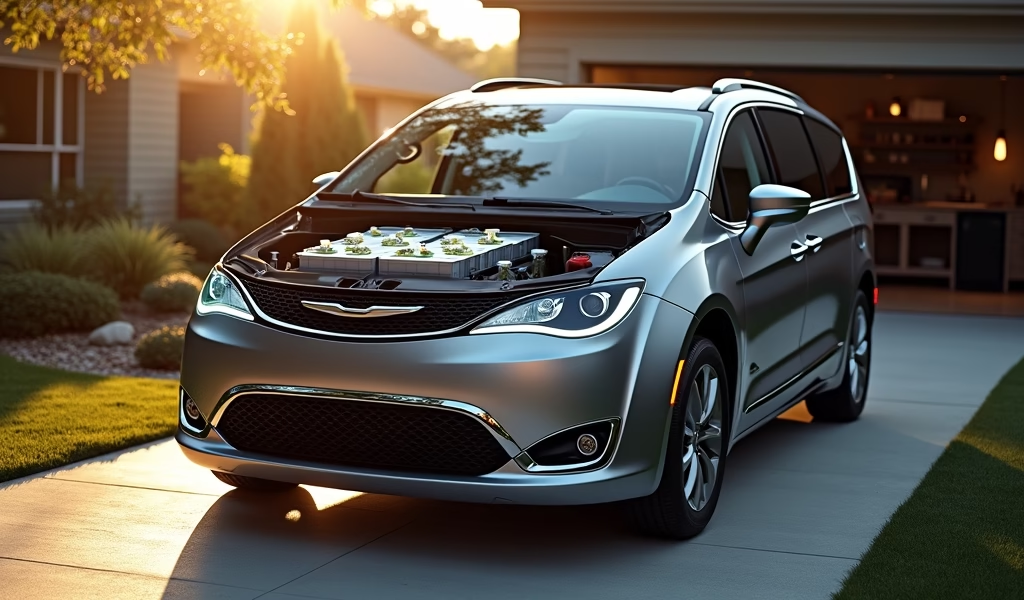
When battery replacement becomes unavoidable, you’ll face several options with varying costs and benefits. Let me walk you through what to expect based on current market conditions.
A factory replacement battery directly from Chrysler typically costs between $6,000-$9,000 including installation. This is the most expensive option, but comes with full warranty coverage and guaranteed compatibility. Dealer labor rates average $150-$200 per hour, with installation typically taking 4-6 hours.
Refurbished or remanufactured batteries offer a more wallet-friendly alternative at approximately $3,500-$5,000 installed. These batteries are typically removed from vehicles with collision damage, thoroughly tested, and any defective cells replaced before resale. Quality can vary, so look for providers offering at least a two-year warranty.
Third-party alternatives from companies specializing in hybrid battery rebuilding might cost $2,800-$4,500. These can be good options but require careful research. I recommend checking reviews from other Pacifica owners and confirming that the provider has specific experience with your model.
Beyond the battery itself, be aware of these potential additional costs:
- Battery control module programming ($200-$400)
- Diagnostic fees ($150-$300)
- Battery disposal fees ($50-$200)
- Rental car during service (typically 1-2 days)
Before authorizing an expensive replacement, ensure proper diagnostics are performed. A qualified technician should conduct a comprehensive battery capacity test, not just read error codes. If individual cells are failing rather than the entire pack, cell replacement services might be available for $1,500-$3,000—significantly less than a complete pack.
For vehicles still under warranty (10 years/100,000 miles in ZEV states, 8 years/80,000 miles elsewhere), document all maintenance and warning signs thoroughly. This documentation can be crucial for warranty claims, particularly if you’re near the coverage limits.
Consider the vehicle’s overall condition before investing in an expensive battery. If your Pacifica has high mileage and needs other major repairs, trading for a newer model might be more economical than replacing the battery.
DIY vs. Professional Service
As someone who’s worked on hybrid systems for years, I’m always careful about what I recommend owners handle themselves versus when to seek professional help. Hybrid systems involve potentially dangerous high voltage components, but there are still things you can safely monitor and maintain.
What owners can safely do:
- Monitor battery performance through the vehicle’s information displays
- Keep battery cooling vents clean and unobstructed
- Maintain proper tire pressure and alignment (which reduces battery load)
- Check for software updates and schedule dealer installation
- Use appropriate battery care tips for the 12V system
Several consumer-grade diagnostic tools can provide insight into your hybrid system’s health. Products like the OBDLink MX+ with PID support can read many battery-related values for under $100, giving you a window into your system’s performance between professional checkups.
However, when it comes to actual hybrid component service, professional assistance becomes mandatory. The Pacifica Hybrid operates with high-voltage systems (up to 400 volts) that can cause serious injury or death if mishandled. Even disconnecting certain components requires special tools and training.
When selecting a service facility, look for:
- Chrysler hybrid certification or manufacturer training
- Specialized hybrid diagnostic equipment
- Experience specifically with Pacifica Hybrids, not just hybrids in general
- Positive reviews from other hybrid owners
Before authorizing service, ask these questions:
- Will they perform a full battery capacity test, not just read codes?
- What warranty comes with their work?
- Are they using OEM or aftermarket parts?
- Can they provide documentation of all work for your records?
Keep detailed records of all service, including before/after performance metrics when available. These records not only help with future troubleshooting but substantially increase resale value by demonstrating proper care.
Conclusion
Your Chrysler Pacifica hybrid battery is truly the heart of your vehicle’s advanced powertrain system. With proper care and attention, this sophisticated component can provide years of reliable service while delivering the exceptional fuel economy and performance that made you choose a hybrid in the first place.
By learning to recognize warning signs early, understanding the common causes of battery degradation, and following best practices for charging and maintenance, you can potentially add years to your battery’s useful life. Remember that prevention is invariably more affordable than replacement.
When service becomes necessary, having a relationship with knowledgeable professionals makes all the difference. The peace of mind that comes from working with technicians who truly understand hybrid systems is invaluable – as is having a clear understanding of your options and costs.
Your family deserves reliable transportation without unexpected financial surprises. By taking a proactive approach to your Pacifica Hybrid’s battery health, you can enjoy the remarkable efficiency these vehicles offer while avoiding costly repairs down the road.
Frequently Asked Questions
How long does a Chrysler Pacifica hybrid battery typically last?
With proper care, your Pacifica Hybrid battery should remain serviceable for 7-10 years or approximately 100,000-150,000 miles. Many owners report minimal degradation (less than 10%) after 5 years of normal use.
What’s the cost to replace a Pacifica hybrid battery?
Replacement costs typically range from $6,000-$9,000 for new OEM batteries at dealerships, $3,500-$5,000 for refurbished packs, and $2,800-$4,500 for third-party rebuilt options. Labor costs average 4-6 hours at $150-$200 per hour.
Can I drive my Pacifica with a hybrid battery warning light on?
While you can typically drive home or to a service center safely, continuing to drive with active battery warnings can cause additional damage. The vehicle will usually default to a reduced power mode that prioritizes reaching a service facility.
Is the Pacifica hybrid battery covered under warranty?
Chrysler covers the high-voltage battery pack for 10 years/100,000 miles in ZEV states, and 8 years/80,000 miles elsewhere. This warranty covers defects in materials and workmanship but may not cover gradual capacity loss considered normal degradation.
How can I check the health of my Pacifica’s hybrid battery?
The simplest assessment is monitoring electric range consistency using the trip computer. Professional diagnostics using tools like the Chrysler Witech system can provide detailed cell-by-cell analysis, typically costing $150-$300 at service centers.