

Overview
Just like an Italian romance, your Alfa Romeo Giulia’s ZF 8-speed transmission delivers exhilarating performance but demands consistent attention to maintain that passionate relationship. Regular fluid changes every 40,000-50,000 miles, proper driving habits, and prompt attention to warning signs like rough shifting can help you avoid the heartbreak of a $7,000+ transmission replacement while preserving the distinctive driving character that made you fall in love with your Giulia in the first place.
Table of Contents
- Understanding the Alfa Romeo Giulia Transmission
- Common Transmission Problems
- Warning Signs of Transmission Issues
- Maintenance Tips
- Repair Costs
- Preventing Transmission Failures
- DIY vs Professional Service
- Conclusion
- Frequently Asked Questions
Understanding the Alfa Romeo Giulia Transmission
The Alfa Romeo Giulia comes equipped with a sophisticated ZF 8HP 8-speed automatic transmission that’s both a marvel of engineering and a potential source of headaches if not properly maintained. This transmission is also found in several luxury vehicles, including BMWs and Jaguars, which speaks to its quality and performance capabilities.
As a mechanic who’s worked on dozens of these Italian beauties, I can tell you that understanding what makes your Giulia’s transmission tick is the first step in avoiding those eye-watering repair bills. The ZF 8-speed is designed to deliver lightning-quick shifts while maintaining smooth operation – it’s part of what gives the Giulia its distinctive driving character.
The transmission’s brain is an electronic control unit that constantly monitors driving conditions, adjusting shift patterns based on your driving style and conditions. When working properly, it’s almost telepathic in its ability to be in the right gear at the right time. But like any complex system, it requires proper care to maintain this performance over the long haul.
Some performance-oriented Giulia models like the Quadrifoglio come with paddle shifters that allow for manual control when desired. These shift mechanisms add another layer of driving engagement but also introduce additional components that need maintenance.
Common Transmission Problems
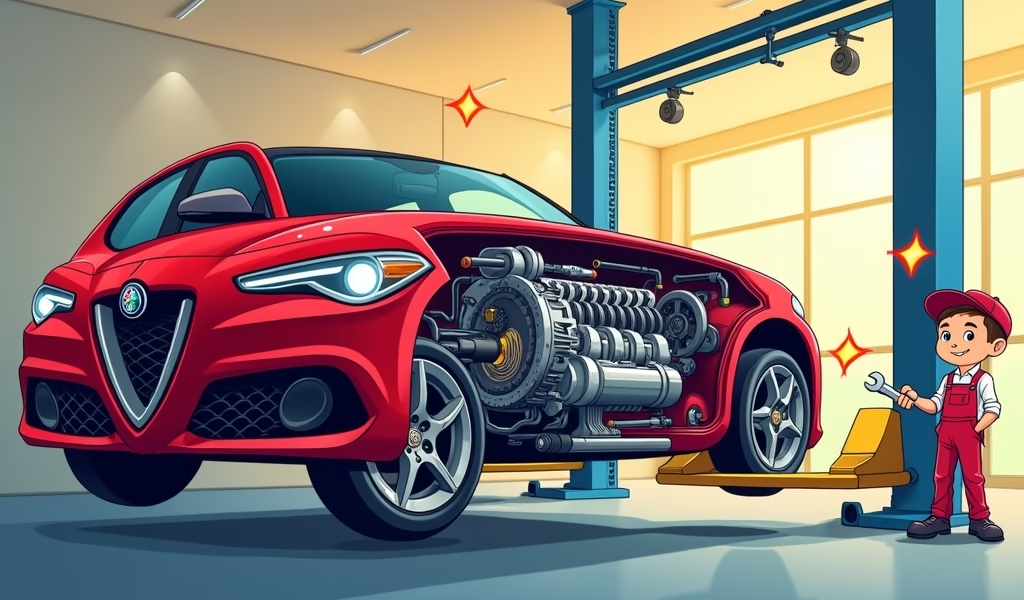
After seeing countless Giulias roll through my shop over the years, I’ve noticed several recurring transmission issues that seem to plague these otherwise exceptional vehicles. Understanding these common problems can help you spot trouble before it escalates into a transmission replacement situation.
The most frequent culprit I encounter is fluid degradation. Despite what some dealers might tell you, there’s no such thing as “lifetime transmission fluid” in a performance vehicle like the Giulia. The high operating temperatures and pressure demands simply break down the fluid over time, leading to poor shifting and eventually component wear.
Another common issue stems from the valve body – the hydraulic control center of the transmission. These can develop sticking solenoids or worn passages that cause erratic shifting or harsh engagement. I’ve replaced dozens of valve bodies that could have lasted much longer with proper fluid maintenance.
The mechatronic unit, which contains the transmission control module and hydraulic components in one assembly, is another potential failure point. When this unit starts to fail, you’ll typically notice inconsistent shift patterns or transmission error messages on your dash.
Many owners don’t realize that the transmission software also plays a crucial role in performance. Alfa Romeo has released several updates for the transmission control module that address shift quality issues. Skipping these updates can leave you with annoying shift behavior that could be easily remedied.
According to a Consumer Reports reliability study, transmission issues account for approximately 20% of serious repairs in modern luxury vehicles, with the average replacement cost exceeding $5,000.
Warning Signs of Transmission Issues
Your Giulia will typically give you plenty of warning before a catastrophic transmission failure. The trick is knowing what to look (and feel) for. Think of these signs as your car’s way of crying for help before things get really expensive.
The most obvious warning is delayed or rough shifting. If your Giulia hesitates before engaging a gear or shifts with a noticeable jerk, especially when cold, take notice. A healthy transmission should provide nearly imperceptible shifts in normal driving conditions.
Pay attention to any unusual noises. A healthy transmission operates quietly, so whining, grinding, or buzzing sounds – especially during gear changes – warrant immediate attention. These sounds often indicate mechanical wear or insufficient lubrication due to low fluid levels.
Transmission fluid leaks are another red flag. If you spot reddish fluid beneath your parked Giulia, it’s likely transmission fluid. Even small leaks can eventually lead to fluid starvation and overheating, which accelerates wear on internal components.
Watch your dashboard for warning lights. The Giulia has sophisticated electronics that can often detect transmission issues before they become obvious to the driver. A transmission warning light or check engine light might be your first indication of trouble.
- Hesitation when shifting between gears
- Unusual noises during acceleration or gear changes
- Reddish fluid leaks underneath the vehicle
- Transmission warning lights on the dashboard
- Burning smell after driving
- Slipping out of gear while driving
If you notice a burning smell after driving, particularly after pushing the car hard, your transmission fluid may be overheating. Heat is the number one enemy of automatic transmissions, breaking down fluid and damaging seals and friction materials.
Perhaps the most alarming symptom is when your Giulia unexpectedly slips out of gear or shifts to neutral while driving. This dangerous situation indicates advanced transmission problems requiring immediate attention.
Maintenance Tips
The good news? With proper maintenance, your Giulia’s transmission can easily go 150,000+ miles without major issues. I’ve seen well-maintained ZF transmissions last the lifetime of the vehicle, while neglected ones fail before 60,000 miles. The difference comes down to a few simple maintenance practices.
First and foremost, forget what you may have heard about “lifetime fluid” – change your transmission fluid every 40,000-50,000 miles. This interval strikes the right balance between cost and protection. Use only the specified ZF Lifeguard 8 fluid or dealer-approved equivalent – this isn’t the place to save a few bucks with generic fluid.
Always replace the transmission filter when changing fluid. This simple step prevents contaminants from circulating through the system and causing premature wear. A clean filter also ensures proper fluid pressure throughout the transmission.
Periodically check with your dealer for transmission control module updates. These software updates can improve shift quality and address known issues. Many owners overlook this aspect of maintenance, living with shifting quirks that could be easily resolved.
Consider your driving habits too. The transmission in automatic cars like the Giulia benefits from gentle operation when cold. Allow your vehicle to warm up for a minute or two before demanding driving, especially in cold weather. Come to a complete stop before shifting between drive and reverse to reduce stress on the transmission.
If you live in an area with extreme temperatures, consider installing an auxiliary transmission cooler. Excessive heat is a transmission killer, and added cooling capacity can significantly extend component life, especially if you drive spiritedly or in stop-and-go traffic regularly.
Transmission maintenance experts at Transmission Repair Cost Guide recommend these preventative measures as the most cost-effective way to avoid major transmission failures.
Repair Costs
Let’s talk money – specifically, how much you might need to shell out for transmission repairs on your Giulia. I’ve found that being financially prepared helps owners make smarter maintenance decisions rather than deferring service that could prevent bigger problems.
For routine maintenance, expect to pay $400-$650 at the dealership for a transmission fluid and filter change. Independent shops often charge $250-$450 for the same service. This price difference makes independents attractive, but ensure they use the correct fluid specification.
Minor repairs like replacing a pan gasket or seal typically run $300-$550. Shift solenoid replacements fall in the $500-$900 range. These are the kinds of repairs you might face around 60,000-80,000 miles with average maintenance.
More substantial repairs get considerably pricier. A valve body rebuild or replacement runs $1,200-$2,100. The mechatronic unit replacement (a common repair on higher-mileage Giulias) costs between $1,800-$2,800 including labor.
If you’re facing a complete transmission replacement, brace yourself. A new OEM transmission installed at a dealership typically costs $7,000-$9,000. Remanufactured units offer better value at $5,000-$7,000 installed but still represent a significant investment.
Used transmissions might tempt you at $2,500-$4,000 installed, but I rarely recommend this route for Giulia owners. The condition of used units is unpredictable, and you might be inheriting someone else’s maintenance neglect.
These costs highlight why preventative maintenance makes financial sense. Spending $250-$650 every 40,000-50,000 miles for fluid services is a bargain compared to major repairs or replacement.
Preventing Transmission Failures
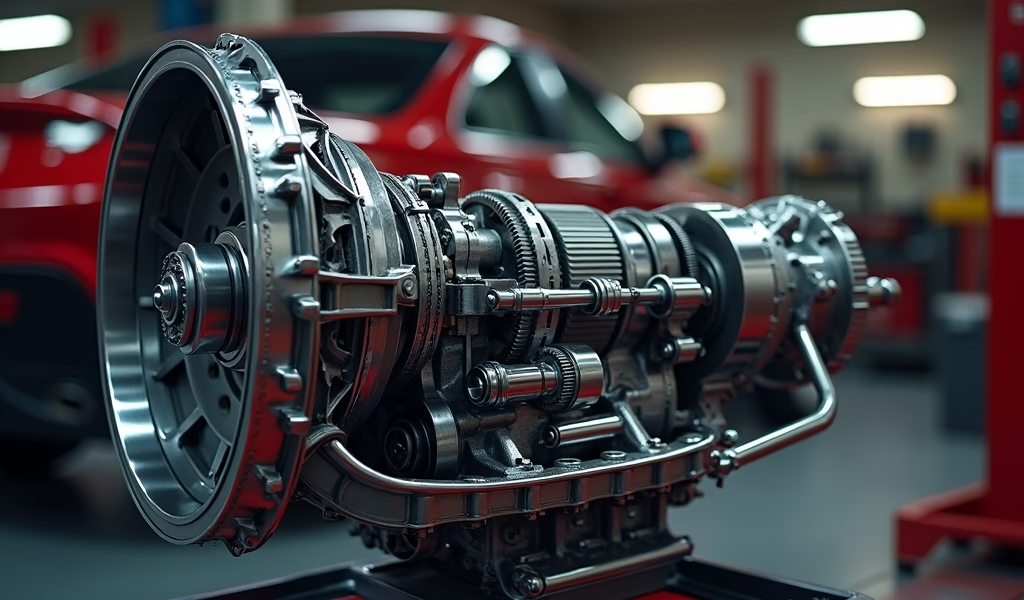
Prevention is always cheaper than cure when it comes to your Giulia’s transmission. Over my years working on these Italian machines, I’ve developed a preventative maintenance approach that has saved my customers thousands in potential repairs.
Beyond the regular fluid changes we’ve discussed, pay attention to your driving style. The Giulia begs to be driven enthusiastically – it’s part of the ownership experience – but certain habits are particularly hard on transmissions. Avoid holding the vehicle on an incline using just the accelerator rather than the brake, and try not to use launch control excessively.
Temperature management is crucial for transmission longevity. In extremely hot climates or during spirited driving, give your transmission a chance to cool down before shutting off the engine. This prevents the fluid from “cooking” in the torque converter. Similarly, in very cold weather, allow the transmission to warm up before demanding full performance.
Consider transmission software updates as part of your maintenance routine. Alfa Romeo periodically releases calibration updates that can improve shift quality and reduce wear. Many of these updates are free under warranty and can extend the life of your transmission components.
Keep an eye on your cooling system too. In many Giulias, the transmission shares cooling with the engine through a heat exchanger. A cooling system issue can therefore affect your transmission. Regular coolant changes and cooling system checks indirectly protect your transmission.
For those looking to improve their car’s performance while maintaining reliability, consider a high-quality transmission fluid cooler. This relatively inexpensive modification can significantly reduce operating temperatures during demanding driving.
According to transmission specialists at Sonnax, adding a supplemental cooler can reduce transmission operating temperatures by up to 30°F during demanding driving conditions.
DIY vs Professional Service
As someone who’s spent decades working on transmissions, I’m often asked what maintenance Giulia owners can tackle themselves versus what should be left to professionals. The answer depends on your mechanical aptitude and available tools.
For the home mechanic with moderate skills, external inspections for leaks and cleaning transmission cooler fins are DIY-friendly tasks. You can also check transmission fluid temperature and levels using an OBD scanner with the right capabilities – a good investment for any Giulia owner.
However, most transmission work requires specialized tools and expertise. Fluid changes on modern ZF transmissions involve specific fill procedures and temperature monitoring. The transmission must be at the correct temperature when checking fluid level, and overfilling can be just as damaging as underfilling.
If you decide to tackle a fluid change yourself, you’ll need an OBD scanner capable of monitoring transmission temperature, a fluid transfer pump, and the correct transmission fluid (ZF Lifeguard 8 or equivalent). You’ll also need to properly dispose of the old fluid according to local regulations.
For anything beyond basic maintenance, I strongly recommend professional service. Internal transmission work requires specialized tools, proper cleaning procedures, and precise torque specifications. Getting these wrong can lead to costly failures.
When selecting a shop for your Giulia’s transmission work, don’t automatically default to the dealer. Find specialists who understand European vehicles and specifically Alfa Romeo transmissions. Ask about their diagnostic equipment and experience with ZF 8-speed transmissions specifically.
Good questions to ask potential shops include:
- “How many Giulias have you serviced?”
- “Do you use factory-specified transmission fluids?”
- “What diagnostic equipment do you use for transmission issues?”
- “Do you perform software updates as part of transmission service?”
Conclusion
Your Alfa Romeo Giulia’s transmission is a sophisticated piece of engineering that delivers the exhilarating performance that made you fall in love with your Italian sports sedan. With proper care and maintenance, it can provide years of trouble-free operation, preserving both your driving experience and your bank account.
Remember, most catastrophic transmission failures don’t happen suddenly – they follow a pattern of ignored warning signs and deferred maintenance. By staying vigilant for the warning signs we’ve discussed and following a proactive maintenance schedule, you can avoid joining the unfortunate club of Giulia owners facing $7,000+ transmission replacements.
The investment in regular fluid changes, filter replacements, and addressing minor issues promptly pays enormous dividends in reliability and longevity. Think of it as insurance – spending a few hundred dollars periodically to avoid spending thousands unexpectedly.
Treat your Giulia’s transmission with respect, from your driving habits to your maintenance choices, and it will reward you with those perfectly timed shifts and exhilarating acceleration that make every drive in an Alfa Romeo special. After all, isn’t that special feeling why you chose a Giulia in the first place?
Frequently Asked Questions
How often should I change the transmission fluid in my Alfa Romeo Giulia?
Change the fluid every 40,000-50,000 miles or 4 years, whichever comes first. Disregard “lifetime fluid” claims as no fluid truly lasts the lifetime of a performance vehicle.
What are the first signs of transmission failure in a Giulia?
Watch for hesitation when shifting gears, especially when cold, or occasional rough shifts. Fluid leaks and transmission warning lights may also appear early in the failure process.
Is the ZF 8-speed in the Giulia reliable compared to other transmissions?
Yes, when properly maintained. The basic design is proven across multiple brands, though the Giulia’s performance tuning demands more attentive maintenance.
How much does it cost to replace an Alfa Romeo Giulia transmission?
Expect $7,000-$9,000 for a complete replacement with a new OEM unit installed. Remanufactured alternatives typically run $5,000-$7,000 installed.
Can I drive my Giulia if the transmission warning light comes on?
It’s not recommended as continued driving could cause immediate and extensive damage. Have the vehicle towed to a service facility for diagnosis.