

Overview
Just like a thoroughbred needs proper grooming, the Ferrari Portofino’s sophisticated 7-speed dual-clutch transmission requires specialized care—from regular fluid changes to gentle warm-up periods—to avoid repair costs that can easily reach $30,000 for major issues. Understanding warning signs like unusual noises or delayed shifts, choosing proper driving modes, and investing in professional maintenance can significantly extend the transmission’s lifespan while preserving the exhilarating performance that makes Ferrari ownership so special.
Table of Contents
- Understanding Ferrari Portofino Transmission
- Common Transmission Problems in the Ferrari Portofino
- Warning Signs of Transmission Issues
- Preventive Maintenance Tips
- The Importance of Transmission Fluid
- Professional Servicing vs. DIY Maintenance
- Cost Considerations for Transmission Repairs
- Extending Your Transmission’s Lifespan
- Conclusion
- Frequently Asked Questions
Understanding Ferrari Portofino Transmission
The Ferrari Portofino transmission is a marvel of Italian engineering that deserves proper care and attention. As the heart of this luxury grand tourer, the 7-speed dual-clutch transmission (DCT) delivers both lightning-fast gear changes and the smooth operation expected from a premium GT car. Having worked on countless Portofinos in my 20+ years as a specialist, I’ve seen how proper maintenance can make the difference between a transmission that performs flawlessly for years and one that requires costly repairs.
Manufactured by Getrag, the Portofino’s transmission is designed to handle the impressive 592 horsepower and 561 lb-ft of torque produced by the 3.9-liter twin-turbocharged V8 engine. Unlike conventional automatics, this dual-clutch transmission system uses two separate clutches for odd and even gear sets, allowing for nearly instantaneous shifts and better power delivery. However, this sophisticated design also means more potential points of failure if not properly maintained.
The Ferrari Portofino’s transmission control module constantly monitors driving conditions and adapts shift patterns accordingly. When you select different driving modes through the manettino dial, you’re not just changing the engine response and suspension settings – you’re also altering how the transmission behaves. In “Comfort” mode, the DCT prioritizes smooth, fuel-efficient shifts, while “Sport” and “Race” modes deliver increasingly aggressive and rapid gear changes.
Common Transmission Problems in the Ferrari Portofino
Despite its sophisticated engineering, the Ferrari Portofino transmission can develop several issues over time. Understanding these potential problems helps you stay ahead of costly repairs and maintain your exotic car’s performance. Let’s examine the most common transmission issues Portofino owners encounter.
Clutch wear remains one of the primary concerns with the Portofino’s DCT. Unlike traditional manual clutches designed for 60,000+ miles, the dual-clutch system may show signs of wear as early as 30,000 miles, especially with aggressive driving styles. The clutch packs work constantly, even when you’re driving normally, making them susceptible to premature wear.
Electronic control module failures can also plague these sophisticated transmissions. The complex electronics that manage shift timing, clutch engagement, and adaptive learning can sometimes develop glitches, resulting in harsh shifts, delayed responses, or warning lights. Often, these issues can be resolved with software updates rather than mechanical repairs, highlighting the importance of regular dealer visits.
Warning Signs of Transmission Issues
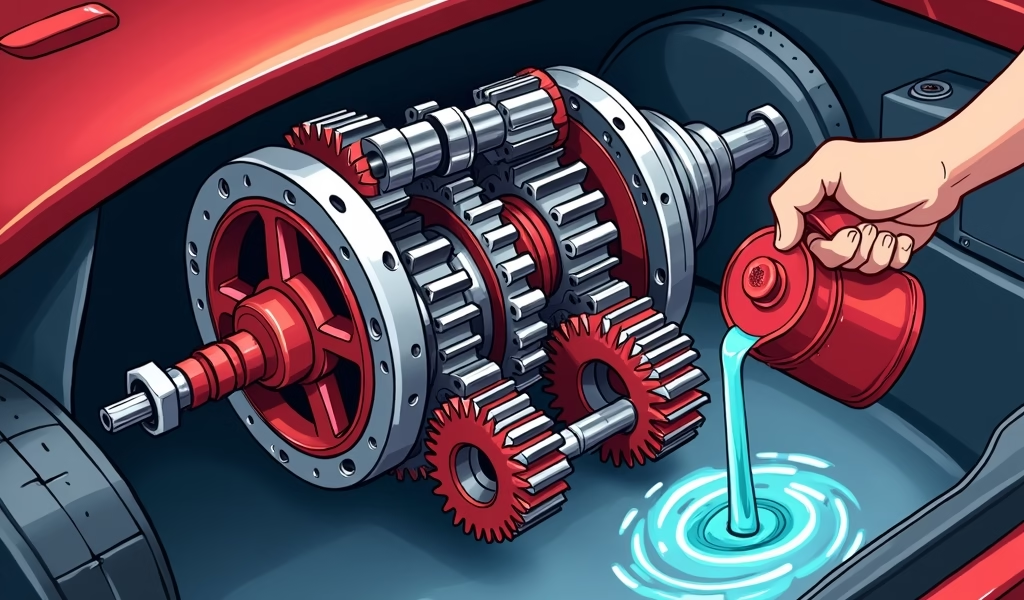
Recognizing the early warning signs of Ferrari Portofino transmission problems can save you thousands in repair bills. These sophisticated transmissions typically provide clear indicators when something isn’t right, giving you the opportunity to address issues before they escalate into major failures.
Hesitation or delay when shifting gears is one of the most common early warning signs. If you notice your Portofino taking longer than usual to engage when shifting from park to drive, or if there’s a momentary lag when accelerating, your transmission may be developing issues. This hesitation often indicates problems with the clutch packs, hydraulic system, or electronic controls.
Unusual noises specific to the transmission should never be ignored. Listen for grinding, whining, or buzzing sounds, particularly during gear changes or when accelerating from a stop. These noises often signal mechanical wear inside the transmission that will only worsen without intervention. In the Portofino’s DCT, clicking or clunking during shifts can indicate issues with the selector mechanism or worn synchronizers.
Slipping gears presents another serious warning sign. If your Portofino suddenly feels like it’s shifting to neutral momentarily while driving, or the engine revs without corresponding acceleration, you’re likely experiencing transmission slip. This commonly results from worn clutch packs, low transmission fluid, or pressure regulation problems within the hydraulic system.
Dashboard warning lights should never be overlooked. Modern Ferraris have sophisticated diagnostic systems that monitor transmission performance. If you see the “Check Engine” light or a specific transmission warning indicator illuminate, have your vehicle diagnosed promptly. According to Ferrari Owners Club maintenance guidelines, ignoring these warnings can lead to catastrophic transmission failure.
Leaking transmission fluid represents another red flag. The Portofino uses specialized transmission fluid that should never leak. Inspect your parking space regularly for dark red or brown fluid spots. Even small leaks can eventually lead to fluid levels dropping below critical thresholds, causing overheating and accelerated wear of internal components.
Preventive Maintenance Tips
Taking a proactive approach to Ferrari Portofino transmission maintenance can dramatically reduce your risk of expensive repairs. Implementing these preventive measures will help ensure your exotic car delivers peak performance for years to come.
Regular transmission fluid changes are absolutely essential. While Ferrari officially recommends changing the transmission fluid every 8 years or 60,000 miles, many specialists (myself included) advocate for more frequent changes – typically every 30,000 miles for cars driven spiritedly. Fresh fluid provides better lubrication, cooling, and hydraulic pressure, extending component life significantly.
Proper warm-up procedures protect your transmission from unnecessary stress. Allow your Portofino’s transmission fluid to reach operating temperature before engaging in aggressive driving. This typically takes about 10-15 minutes of normal driving. Cold transmission fluid is more viscous and provides less effective protection for moving parts.
Here are specific preventive maintenance steps every Portofino owner should follow:
- Schedule regular diagnostic scans to catch potential issues before they manifest as drivability problems
- Have transmission mounts inspected annually for signs of wear or deterioration
- Ensure software updates are promptly applied when released by Ferrari
- Consider transmission fluid analysis to detect early signs of internal wear
- Use transmission cooling time after high-performance driving before shutting down
Avoiding aggressive driving habits significantly extends transmission life. While it’s tempting to experience your Portofino’s full performance potential regularly, constant hard acceleration, abrupt shifts, and excessive use of launch control place tremendous stress on the transmission components. Instead, save aggressive driving for special occasions and adopt smoother inputs for daily driving.
Following the recommended break-in procedures for new or rebuilt transmissions is crucial. For the first 1,500 miles after a major transmission service or replacement, avoid full-throttle acceleration, maintain moderate RPMs, and vary your driving speed to allow components to properly seat themselves. This initial period sets the stage for long-term reliability.
The Importance of Transmission Fluid
The lifeblood of your Ferrari Portofino transmission is its specialized fluid. This isn’t just any transmission fluid – it’s a carefully formulated liquid specifically designed for the unique requirements of Ferrari’s dual-clutch system. Understanding its role and maintenance needs is critical for preventing transmission failures.
Transmission fluid in the Portofino serves multiple crucial functions simultaneously. It lubricates moving parts, reducing friction and wear between gears, bearings, and clutch packs. It transfers hydraulic pressure to operate clutches and shift mechanisms with precision. Perhaps most importantly, it dissipates heat generated during operation, preventing the thermal damage that can quickly destroy expensive components.
The factory-specified transmission fluid contains special additives that protect metal surfaces, maintain proper friction characteristics for clutch engagement, and resist breakdown under extreme heat. Using incorrect fluid can rapidly damage your transmission, voiding warranties and leading to repairs costing tens of thousands of dollars.
Fluid degradation occurs naturally over time, even with normal driving. Heat cycles, moisture contamination, and normal wear particles gradually reduce the fluid’s protective properties. As these properties diminish, wear accelerates, creating a dangerous cycle that eventually leads to component failure if not addressed through regular fluid changes.
Professional Servicing vs. DIY Maintenance
When it comes to maintaining your Ferrari Portofino transmission, the question of professional servicing versus DIY approaches deserves careful consideration. While some maintenance tasks can be performed by knowledgeable owners, others absolutely require specialized equipment and expertise.
Professional Ferrari technicians bring several advantages to transmission maintenance. They have access to proprietary diagnostic equipment that can identify issues before they become apparent to drivers. Factory-trained technicians understand the specific quirks of the Portofino transmission and can spot developing problems that might escape notice otherwise. Additionally, official service records from authorized dealers help maintain resale value should you ever decide to sell your Portofino.
That said, there are certain basic monitoring tasks every owner should perform regularly:
- Visually inspecting for fluid leaks underneath the vehicle
- Paying attention to any changes in shift quality or transmission behavior
- Monitoring temperature gauges during spirited driving
- Ensuring scheduled maintenance intervals are never exceeded
- Following proper driving protocols during warm-up periods
The debate about independent specialists versus dealership service centers remains active in the Ferrari community. While dealerships offer factory training and direct access to Ferrari’s latest technical information, reputable independent specialists often provide more personalized service at lower costs. Many experienced Ferrari owners use dealerships for complex transmission work while relying on trusted independents for routine maintenance, finding this hybrid approach balances quality and cost effectively.
When selecting a service provider for your Portofino’s transmission needs, always verify their specific experience with Ferrari DCT systems. Ask detailed questions about their familiarity with common issues, diagnostic capabilities, and whether they use genuine Ferrari parts. According to Ferrari Life forums, technician experience specifically with Ferrari transmissions matters far more than general exotic car expertise.
Cost Considerations for Transmission Repairs
I won’t sugarcoat it – Ferrari Portofino transmission repairs can be shockingly expensive. Understanding the potential costs involved helps you appreciate why preventive maintenance is so crucial for these sophisticated vehicles. Let’s break down what you might expect to pay for various transmission-related services.
Routine transmission fluid changes typically cost between $1,200 and $1,800 at authorized Ferrari dealerships. This might seem steep compared to ordinary cars, but the specialized fluid, complex access procedures, and system bleeding requirements justify the price. Independent Ferrari specialists might offer this service for 20-30% less, though quality can vary significantly.
More substantial repairs quickly escalate in cost. Clutch pack replacement, one of the more common major repairs, generally ranges from $8,000 to $12,000 depending on labor rates and whether related components need attention. Full transmission rebuilds or replacements represent the most expensive scenario, typically costing between $20,000 and $30,000 – a sobering reminder of why preventive care matters so much.
I genuinely empathize with the financial burden these repairs represent. Even for Ferrari owners, unexpected five-figure repair bills can be distressing. This is precisely why I emphasize maintenance as an investment rather than an expense. The $1,500 fluid change that seems expensive today might save you $25,000 in two years.
Extended warranty options deserve serious consideration for Portofino owners planning to keep their vehicles beyond the factory warranty period. Ferrari’s official extended service contracts specifically covering transmission components provide valuable peace of mind, though they typically cost $5,000-$8,000 annually. For many owners, this premium is justified by the protection against catastrophic repair costs.
Some automatic transmission specialists outside the Ferrari network now offer rebuild services at lower costs using upgraded components designed to enhance durability. While these can sometimes provide good value, carefully research any non-factory options, as using unapproved parts or services may affect both reliability and resale value.
Extending Your Transmission’s Lifespan
Beyond regular maintenance, several driving and ownership practices can significantly extend your Ferrari Portofino transmission’s lifespan. These habits cost nothing to implement but can save thousands in premature repair costs.
Adopting smoother driving techniques pays huge dividends for transmission longevity. Avoid abrupt throttle inputs that force rapid downshifts and place stress on clutch packs. Instead, anticipate the need for acceleration and apply throttle progressively. Similarly, easing off the accelerator before braking reduces the transmission’s workload compared to abrupt transitions.
Proper usage of driving modes makes a meaningful difference. The “Comfort” setting reduces stress on transmission components during everyday driving by promoting earlier upshifts and smoother engagement. Reserve “Sport” and especially “Race” modes for special occasions when you truly want to experience your Portofino’s full performance envelope. Studies by SAE International show that constant use of aggressive drive modes can reduce clutch life by up to 40%.
Temperature management deserves particular attention. Dual-clutch transmissions like the Portofino’s generate considerable heat during operation. When driving enthusiastically, particularly in hot weather or on track days, monitor transmission temperature carefully. If you notice temperatures rising beyond normal operating range (typically indicated by dashboard warnings), reduce your pace and allow cooling before continuing aggressive driving.
For owners in cold climates, additional considerations apply. Allow your transmission to warm up properly before demanding full performance. Cold transmission fluid circulates poorly and provides inadequate lubrication until it reaches proper operating temperature. A gentle five-minute drive before any spirited acceleration dramatically reduces cold-weather wear.
Parking strategies can also affect transmission health. When parking on significant inclines, always use the parking brake first, then place the transmission in park. This sequence prevents the transmission’s parking pawl from bearing the vehicle’s full weight, reducing stress on this relatively delicate component.
Conclusion
The Ferrari Portofino transmission represents a pinnacle of automotive engineering, balancing extreme performance capabilities with the refinement expected in a grand touring car. By understanding its needs and providing appropriate care, you can enjoy thousands of miles of trouble-free driving while protecting your substantial investment.
Remember that preventive maintenance always costs less than reactive repairs. Regular fluid changes, professional inspections, and appropriate driving habits will help ensure your Portofino’s transmission delivers the extraordinary driving experience Ferrari designed it to provide. The initial investment in proper care pays dividends in both driving pleasure and avoided repair costs.
While the potential expense of major transmission repairs may seem daunting, it reflects the sophisticated nature of the technology beneath your feet. By treating your Portofino’s transmission with the respect it deserves, you’re more likely to enjoy the car’s breathtaking performance without unexpected interruptions or financial surprises.
I hope this guide helps you better understand and care for your Ferrari Portofino’s remarkable transmission system. Whether you’ve owned Ferraris for decades or are new to the prancing horse family, maintaining these engineering masterpieces properly ensures they continue to deliver the unparalleled driving experience that makes Ferrari ownership so special.
Frequently Asked Questions
How often should I change the transmission fluid in my Ferrari Portofino?
Ferrari officially recommends changing transmission fluid every 8 years or 60,000 miles, but many specialists suggest every 3-4 years or 30,000 miles for vehicles driven spiritedly. More frequent changes provide better protection for this critical system.
Can I use aftermarket transmission fluid in my Portofino?
Never use aftermarket fluids unless they’re specifically certified for Ferrari dual-clutch transmissions. The specialized factory fluid contains proprietary additives critical for proper clutch engagement and component protection.
What’s the average lifespan of a Ferrari Portofino transmission?
With proper maintenance, the Portofino’s transmission typically lasts 60,000-90,000 miles before requiring major service. Driving habits and maintenance frequency significantly impact longevity.
Is it normal for the Portofino’s transmission to make slight noises during cold starts?
Minimal mechanical sounds during the first few shifts when cold are normal as the fluid warms up. Persistent noises that don’t disappear after warming, however, warrant professional inspection.
Can transmission problems affect the Ferrari Portofino’s performance?
Absolutely – transmission issues directly impact acceleration, shift speed, and overall driving dynamics. Even minor problems can reduce performance and potentially lead to limp mode if the vehicle’s computers detect significant issues.