
Overview
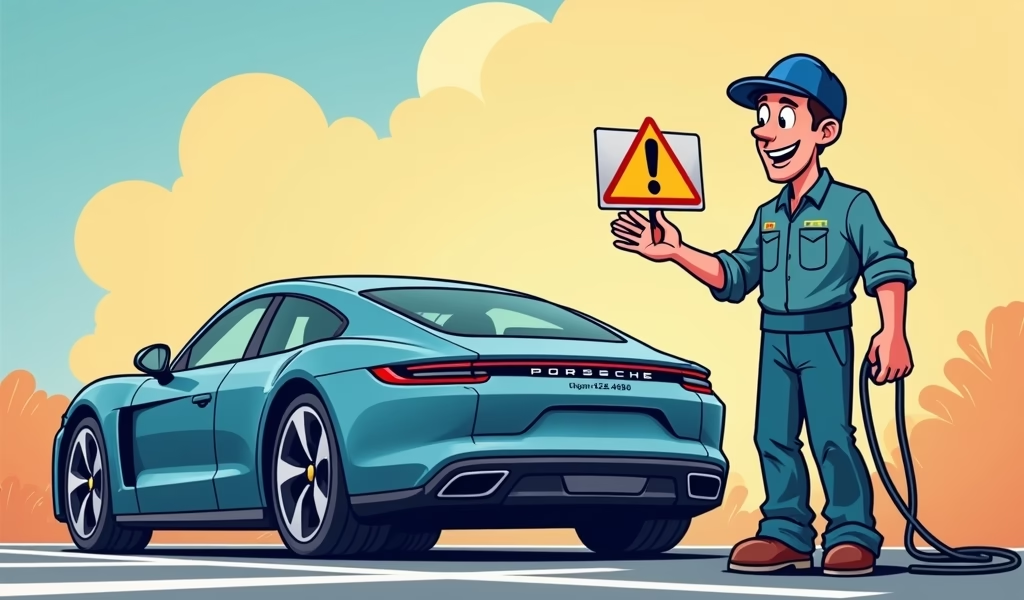
Even a marvel of engineering like the Porsche Taycan can experience charging issues, from inconsistent DC fast charging speeds to communication errors and component failures, though proper diagnosis and preventative maintenance can mitigate these problems. The article provides detailed guidance on troubleshooting common issues, understanding the 800-volt charging architecture, estimating potential repair costs ranging from $500 to over $5,000, and leveraging manufacturer warranty coverage while emphasizing when DIY approaches are appropriate versus when professional service is essential.
Table of Contents
- Understanding Porsche Taycan Charging
- Common Charging Issues With The Porsche Taycan
- Diagnosing Charging Problems
- Preventative Maintenance To Avoid Charging Issues
- Potential Repair Costs For Charging System Problems
- DIY Solutions vs. When To See A Professional
- Manufacturer Support And Warranty Coverage
- Future Improvements And Software Updates
- Conclusion
- Frequently Asked Questions
Understanding Porsche Taycan Charging
The Porsche Taycan represents the pinnacle of electric vehicle technology, but even this engineering marvel can experience Porsche Taycan charging issues. As someone who’s had their hands under the hood (or rather, inside the charging system) of countless Taycans, I can tell you that understanding how this sophisticated system works is your first line of defense against costly repairs.
The Taycan utilizes an 800-volt architecture, twice the voltage of most electric vehicles on the market. This higher voltage allows for faster charging and improved performance, but it also means the charging components are under significant stress during each charging cycle. Think of it as running a marathon versus a casual jog – both get you to the finish line, but one puts considerably more strain on your body.
Porsche engineered the Taycan to handle DC fast charging at rates up to 270 kW, which can take the battery from 5% to 80% in approximately 22.5 minutes under ideal conditions. The key phrase here is “ideal conditions” – a concept we’ll explore throughout this article.
The charging system comprises several critical components: the onboard charger (OBC), charge port assembly, high-voltage battery, battery management system (BMS), and various cooling systems. All these components must work in harmony for efficient charging. When electric cars work properly, this dance of components is seamless, but disruptions can lead to significant issues.
Most owners will use three primary charging methods: AC home charging (Level 1 or Level 2), DC fast charging at public stations, and regenerative braking. Each method interacts differently with the car’s charging system and can present unique challenges or stress points.
Common Charging Issues With The Porsche Taycan
After working on numerous Taycans, I’ve noticed several recurring Porsche Taycan charging issues that owners should watch for. Early detection can make the difference between a simple fix and a wallet-emptying repair.
The most frequently reported issue is inconsistent charging speeds at DC fast chargers. Many owners expect their Taycan to consistently hit those advertised 270 kW charging rates, but reality often falls short. This isn’t necessarily a malfunction – the charging rate depends on multiple factors including battery temperature, state of charge, ambient conditions, and the charger itself.
Another common complaint involves the charge port door. The sophisticated motorized mechanism can malfunction, preventing access to the charge port entirely. I’ve seen cases where moisture intrusion or mechanical wear causes these failures, which, while not directly impacting charging functionality, certainly prevents it from happening!
Communication errors between the vehicle and charging station represent a significant frustration point. These typically manifest as charging sessions that unexpectedly stop, fail to start, or charge at extremely slow rates. The culprit is often software-related, though hardware issues in the communication module can also be responsible.
Battery conditioning problems can severely impact charging performance, especially in extreme temperatures. The Taycan’s battery management system must properly prepare the battery for fast charging, and failures in this system can dramatically increase charging times or reduce the maximum charging rate available.
Some owners have experienced more serious issues with the high-voltage components, including:
- Onboard charger (OBC) failures leading to inability to AC charge
- DC/DC converter malfunctions affecting 12V system operation
- High-voltage battery cooling system problems
- Battery contactor wear or failure preventing proper charging connection
- Battery management system (BMS) calibration issues leading to reduced range or charging capacity
Diagnosing Charging Problems
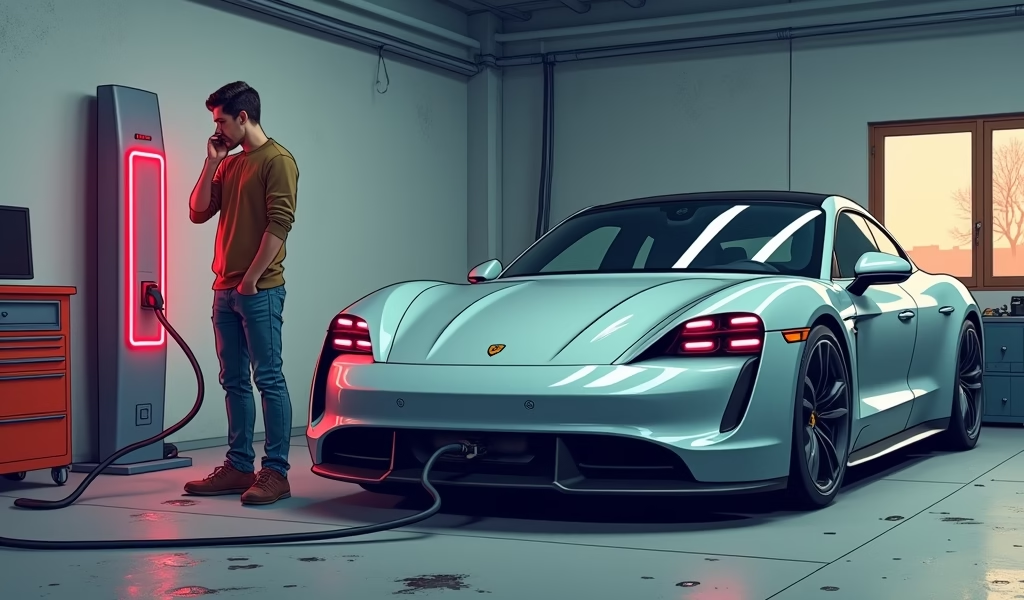
Accurately diagnosing Porsche Taycan charging issues requires a methodical approach. Let me walk you through the process I use when a Taycan arrives at my shop with charging complaints.
First, establish a clear pattern. Is the problem occurring with all charging methods or just one type? Does it happen at every charging attempt or intermittently? Temperature-dependent problems are particularly common with EVs, so note whether issues occur more frequently in hot or cold weather. This pattern recognition helps narrow down potential causes significantly.
Next, check for active fault codes. The Taycan’s sophisticated diagnostics system often identifies issues before they become severe. While generic OBD scanners can provide some information, proper diagnosis typically requires Porsche-specific diagnostic equipment that can access all control units, particularly those managing the high-voltage systems.
Visual inspection of the charge port is essential. Look for signs of damage, corrosion, or debris in the port itself. The pins should be clean and undamaged. Sometimes the solution is as simple as cleaning the charge port contacts – though I recommend having this done professionally due to the high-voltage components involved.
For those experiencing slow charging rates, monitoring battery temperature during a charging session can reveal cooling system inadequacies. The Taycan should actively manage battery temperature during DC fast charging, and failures in this system often manifest as reduced charging speeds rather than complete failures.
Communication errors typically require more sophisticated diagnosis. These can stem from the vehicle’s communication module, software issues, or even problems with cellular connectivity if the vehicle uses over-the-air authentication for charging sessions. Recent studies on EV charging reliability have shown that communication protocols between vehicles and chargers remain one of the most complex areas for troubleshooting.
Remember that not all charging problems originate with the vehicle. I always recommend testing with multiple chargers before concluding that the Taycan itself is at fault. Public charging infrastructure varies widely in maintenance and reliability, and what appears to be a car problem may actually be a charger issue.
Preventative Maintenance To Avoid Charging Issues
An ounce of prevention is worth a pound of cure – especially when that “cure” might cost thousands in Porsche repair bills. Let me share some practical preventative maintenance steps to keep your Taycan’s charging system healthy.
Regular charge port cleaning should be part of your routine maintenance. Use compressed air to remove debris and inspect for any signs of corrosion or damage. For deeper cleaning, specialized electrical contact cleaners can be used – just ensure the vehicle is powered off and follow proper safety protocols.
Software updates are crucial for the Taycan. Porsche frequently releases updates that improve charging behavior, communication protocols, and battery management. While many updates are delivered over-the-air, some require dealer visits. Never skip these updates – they’re often addressing issues before they become serious problems.
Practice good charging habits to extend battery and charging system life:
- Avoid routinely charging to 100% unless needed for long trips
- Try to keep the battery between 20% and 80% for daily use
- Minimize frequent DC fast charging sessions when possible
- Allow battery conditioning to complete before fast charging in extreme temperatures
- Use scheduled charging features to finish charging closer to departure time in hot climates
For those in extreme climates, garage storage with temperature control can dramatically reduce stress on the charging system. If that’s not possible, at minimum, use the Taycan’s preconditioning feature before charging in very cold temperatures.
Pay attention to charging behavior changes. If you notice your typical charging session suddenly takes longer or delivers less range than before, don’t ignore it. Early intervention often prevents minor issues from escalating into major repairs. As someone who has worked with electric cars for beginners and experts alike, I can tell you that attentiveness to these small changes makes a huge difference.
Consider annual electrical system inspections by a Porsche-certified technician. They’ll check cooling system performance, battery health metrics, insulation resistance of high-voltage components, and ensure all charging-related firmware is current. This proactive approach typically costs $250-400 but can save thousands in preventable repairs.
Potential Repair Costs For Charging System Problems
Let’s talk numbers – specifically, what Porsche Taycan charging issues might cost to resolve. Understanding potential expenses can help you prioritize preventative maintenance and recognize when warranty coverage is crucial.
Charge port repairs represent one of the more common and less expensive fixes. A replacement charge port assembly typically runs $800-1,200 including labor. If the issue is limited to the motorized charge port door, costs might be around $500-700. These repairs are straightforward and can usually be completed in a few hours.
The onboard charger (OBC) sits at a higher price point. This critical component manages AC charging, and replacement costs typically range from $2,200 to $3,500 including labor. Diagnosis alone can cost $200-300, as specialized equipment is needed to isolate OBC failures from other potential issues.
Battery management system repairs vary widely in cost. Sometimes a simple software calibration (approximately $250-400) resolves issues, while in other cases, replacement of control modules may be necessary, pushing costs above $1,500. The silver lining is that many BMS issues can be resolved without component replacement through software updates or recalibration.
The most expensive scenario involves high-voltage battery repairs. While complete battery replacements are rare (and typically covered under the 8-year battery warranty), repairs to battery cooling systems, contactors, or individual modules can range from $1,800 to over $5,000 depending on the specific components affected.
Communication module repairs tend to fall in the middle range, typically $800-1,500 including diagnosis and programming. These modules manage the interface between the vehicle and charging stations, and failures can completely prevent charging despite the rest of the system being functional.
It’s worth noting that according to industry data, EVs like the Taycan typically have lower overall maintenance costs than comparable combustion vehicles, but when repairs are needed, they often come with higher individual repair bills. This makes preventative care and warranty coverage particularly valuable.
DIY Solutions vs. When To See A Professional
As someone who’s worked on both sides of the garage door, I understand the appeal of DIY solutions. However, with the Taycan’s high-voltage system, safety must come first. Let’s explore what you can reasonably tackle yourself and when to call in the professionals.
DIY-friendly tasks primarily revolve around basic maintenance and troubleshooting:
- Cleaning the exterior of the charge port (using compressed air or soft brushes)
- Checking and cleaning charging cables and connectors
- Performing soft resets of the infotainment system (which sometimes resolves charging communication issues)
- Documenting charging behavior and error messages for professional diagnosis
- Testing with different chargers to isolate vehicle vs. infrastructure problems
Always seek professional help for anything involving direct contact with high-voltage components. The Taycan operates at 800 volts – significantly higher than household electricity and capable of causing serious injury or death. Even seemingly simple tasks like deep-cleaning charge port pins should be left to trained technicians with proper safety equipment.
Software-related issues generally require professional intervention as well. While some troubleshooting can be performed through the Porsche Connect app, deeper diagnostics and reprogramming require dealer-level equipment. Some independent shops specialize in Porsche EVs and may offer more competitive pricing than dealerships while maintaining the necessary expertise.
Warning signs that indicate immediate professional attention include:
- Visible damage to charging components or cables
- Unusual odors during charging
- Error messages related to high-voltage systems
- Significant changes in charging performance or battery range
- Any charging-related warning lights on the dashboard
Even for those comfortable with DIY auto repair, the specialized nature of EV systems means professional diagnosis often saves money in the long run by preventing misdiagnosis and unnecessary parts replacement. Professional EV specialists have access to manufacturer-specific diagnostic tools that provide much deeper insights than consumer-grade scanners.
Manufacturer Support And Warranty Coverage
Understanding what support Porsche offers for charging issues can save you significant headaches and expenses. The Taycan comes with several warranty provisions specifically relevant to charging components.
The standard bumper-to-bumper warranty covers most charging components for 4 years or 50,000 miles, whichever comes first. This includes the charge port assembly, onboard charger, DC/DC converter, and communication modules. For original owners, this provides substantial protection against early charging system failures.
More importantly, the high-voltage battery and its management system carry an extended 8-year/100,000-mile warranty. This longer coverage acknowledges the battery as the most expensive component and provides crucial protection. The warranty covers not just capacity loss beyond a certain threshold (typically 70% of original capacity) but also functional issues affecting charging capability.
Porsche has issued several Technical Service Bulletins (TSBs) addressing specific Taycan charging issues. These aren’t recalls but manufacturer-acknowledged problems with prescribed solutions. Dealers will typically perform these repairs at no cost even if your specific issue wasn’t previously documented – provided your vehicle exhibits the symptoms described in the TSB.
Beyond warranty coverage, Porsche offers “Porsche Charging Service,” which provides access to multiple charging networks through a single account. While this doesn’t directly address vehicle-side charging issues, it can help troubleshoot by eliminating payment or account access problems from the equation when diagnosing charging failures.
For vehicles experiencing chronic charging issues, don’t hesitate to reference lemon laws in your state. These consumer protection laws typically apply when significant defects can’t be successfully repaired after multiple attempts. Documentation is key – maintain detailed records of all charging problems, dealer visits, and repair attempts.
When dealing with the dealership for charging issues, being specific about symptoms rather than diagnosing the problem yourself often yields better results. The service department has a diagnostic process to follow, and steering them in the right direction with precise information helps them identify the root cause more efficiently.
Future Improvements And Software Updates
The good news for Taycan owners is that Porsche continues to improve charging functionality through software updates and hardware refinements in newer production runs. Understanding these developments can help you manage expectations and make informed decisions about updating your vehicle.
Porsche has delivered several significant over-the-air (OTA) updates since the Taycan’s launch, many specifically targeting charging performance. These updates have addressed communication protocols with common charging networks, improved thermal management during fast charging, and optimized battery conditioning algorithms.
For 2021 models and later, Porsche implemented hardware changes to the charging system based on early feedback. These include more robust charge port components and refined cooling systems that better maintain optimal battery temperature during repeated fast-charging sessions. Unfortunately, these hardware improvements can’t be retrofitted to earlier models in most cases.
Looking ahead, Porsche is developing enhanced “Plug and Charge” functionality across more charging networks, which should reduce communication errors that account for many charging failures. This technology authenticates and initiates charging automatically when plugging in, eliminating steps where communication breakdowns commonly occur.
The company has also acknowledged the importance of charging reliability in customer satisfaction surveys, and industry sources suggest that charging system robustness is a key focus area for the next generation of Taycan models. Current owners benefit from this focus through more frequent software updates addressing known issues.
For those experiencing charging issues, staying current with software updates is crucial. While many updates deploy automatically, some require dealer visits. I recommend checking for available updates through the Porsche Connect app monthly, as update rollouts often occur in phases rather than simultaneously to all vehicles.
Third-party charging equipment continues to evolve as well. Newer DC fast chargers often include improved handshake protocols that better accommodate the Taycan’s 800-volt architecture. This means that charging experiences tend to improve over time as both vehicle software and charging infrastructure mature.
Conclusion
Navigating Porsche Taycan charging issues doesn’t have to be a journey filled with expensive surprises and frustration. Throughout this article, we’ve explored the sophisticated charging system that powers this remarkable vehicle, the common issues that can arise, and practical approaches to diagnose, prevent, and resolve them.
Remember that preventative maintenance represents your best defense against costly charging system repairs. Regular charge port cleaning, software updates, and practicing good charging habits go a long way toward ensuring trouble-free operation. Pay attention to subtle changes in charging behavior – they often provide early warning of developing issues.
When problems do arise, a methodical approach to diagnosis helps identify the root cause efficiently. Don’t hesitate to leverage warranty coverage and manufacturer support for issues beyond basic maintenance. The specialized nature of the Taycan’s high-voltage systems means professional service is often the safest and most cost-effective solution for significant problems.
As Porsche continues to refine the Taycan through software updates and hardware improvements, many early charging issues are being addressed. Staying current with these updates ensures your vehicle benefits from the latest optimizations and fixes.
The Porsche Taycan represents cutting-edge electric vehicle technology, and like any pioneering system, it comes with both remarkable capabilities and occasional challenges. With the knowledge shared in this guide, you’re well-equipped to maximize the reliability of your Taycan’s charging system while minimizing unexpected expenses. Happy charging!
Frequently Asked Questions
How often should I use DC fast charging with my Taycan?
Occasional DC fast charging is perfectly fine, but relying on it daily can accelerate battery degradation. For optimal battery longevity, use Level 2 home charging for daily needs and reserve fast charging primarily for road trips.
Why does my Taycan charge slower in cold weather?
Cold temperatures increase battery resistance, requiring the battery management system to reduce charging rates to protect cells. Always use the preconditioning feature before charging in cold weather to warm the battery and achieve faster charging speeds.
Can I use non-Porsche chargers with my Taycan?
Yes, the Taycan is compatible with all standard J1772 AC chargers and CCS DC fast chargers. While third-party chargers work well, some may not deliver the maximum possible charging speed that Porsche-approved equipment can provide.
What’s the best charging routine to maximize battery life?
Keep your battery between 20-80% for daily use, only charging to 100% when needed for long trips. Setting a charge limit of 80% in your vehicle settings for regular charging is the single best practice for long-term battery health.
How do I know if my charging issue is with my Taycan or the charging station?
Try charging at different stations to establish a pattern. If problems persist across multiple charging locations, the issue is likely with your vehicle, but if it only happens at specific stations, the charger is probably at fault.