

Overview
Just like relationships, your QX80’s sophisticated 7-speed transmission needs regular attention to avoid the dreaded “it’s not you, it’s me” conversation at the repair shop. This detailed guide covers everything from common transmission issues and warning signs to preventive maintenance strategies and cost-saving repair options, empowering Infiniti owners to extend their transmission’s lifespan beyond the typical 150,000-200,000 mile mark.
Table of Contents
- Understanding Infiniti QX80 Transmission
- Common Transmission Issues in the QX80
- Preventive Maintenance Tips
- Warning Signs of Transmission Problems
- DIY Maintenance You Can Perform
- When to Seek Professional Service
- Cost-Saving Strategies for Transmission Repairs
- Extended Warranty Considerations
- Conclusion
- Frequently Asked Questions
Understanding Infiniti QX80 Transmission
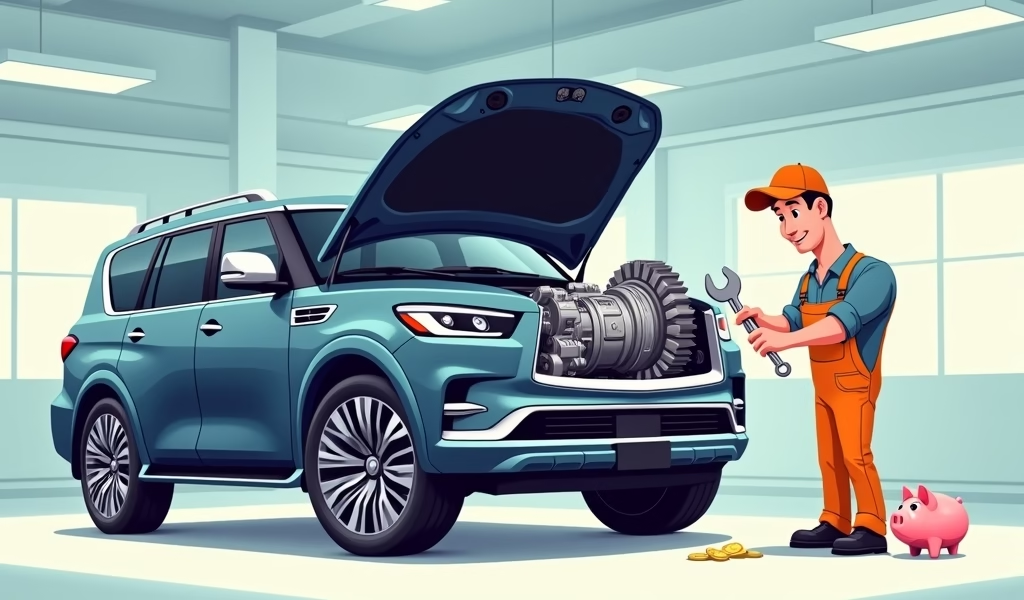
The Infiniti QX80 transmission is a sophisticated piece of engineering that deserves proper attention and care. As a luxury SUV, the QX80 typically comes equipped with a 7-speed automatic transmission that’s designed to handle the vehicle’s substantial power while providing smooth gear transitions. Having worked on countless QX80s over my 20 years as a mechanic, I’ve developed a deep appreciation for these robust yet delicate systems.
Most QX80 models utilize a transmission manufactured by JATCO, a subsidiary of Nissan. This transmission is specifically engineered to manage the power from the QX80’s 5.6-liter V8 engine, which produces an impressive 400 horsepower. The transmission’s design prioritizes both performance and comfort, allowing for responsive acceleration while maintaining the luxurious ride quality that Infiniti owners expect.
Understanding how your QX80’s transmission works is the first step in proper maintenance. Unlike manual transmissions, automatic transmissions like those in the QX80 use a complex hydraulic system, a torque converter, and numerous electronic components to change gears. This complexity means that proper care is essential for longevity.
The transmission fluid in your QX80 serves multiple crucial purposes. It lubricates moving parts, transfers power from the engine, and helps cool the transmission. Over time, this fluid breaks down and becomes less effective at performing these vital functions. That’s why regular fluid checks and changes are fundamental to transmission health – something we’ll dive into more deeply shortly.
Common Transmission Issues in the QX80
While the Infiniti QX80 transmission is generally reliable, certain issues tend to appear as these vehicles accumulate miles. Being aware of these common problems can help you catch them early before they lead to costly repairs or complete transmission failure.
Delayed engagement is one of the most reported issues with the QX80 transmission. This manifests as a noticeable pause between shifting the gear selector and feeling the transmission engage. If you’ve ever put your QX80 in Drive and experienced a 1-2 second delay before the vehicle moves, you’re experiencing delayed engagement. This problem often starts subtly but gradually worsens over time.
Preventive Maintenance Tips
Preventive maintenance is your best defense against costly Infiniti QX80 transmission repairs. By following these proven strategies, you’ll significantly extend your transmission’s life and maintain optimal performance. Let’s break down the essential maintenance tasks you should prioritize.
Regular transmission fluid changes form the cornerstone of preventive maintenance. Unlike what some may tell you, the “lifetime fluid” claim doesn’t hold up in real-world driving conditions, especially for vehicles that experience towing or frequent stop-and-go traffic. I recommend changing your QX80’s transmission fluid every 30,000-60,000 miles, depending on your driving habits.
When changing the fluid, always use the manufacturer-recommended type. For most QX80 models, Nissan Matic-S ATF is the specified fluid. Using incorrect fluid can cause shifting problems, reduced lubrication, and premature wear of transmission components. According to transmission repair specialists, using the wrong fluid is a common cause of avoidable transmission damage.
Checking the fluid regularly is equally important. Here’s how to properly check your QX80 transmission fluid:
- Ensure the vehicle is on level ground and warmed up to operating temperature
- With the engine running, move through all gear positions before setting to Park
- Pull out the dipstick, wipe it clean, reinsert fully, then remove to check the level
- Verify that the fluid level is between the “MIN” and “MAX” marks
- Check the fluid’s color and smell – it should be reddish and not have a burnt odor
The cooling system also plays a crucial role in transmission health. Your QX80’s transmission relies on the engine cooling system to regulate its temperature. A failing cooling system can lead to transmission overheating, which accelerates fluid breakdown. Ensure regular cooling system maintenance is part of your overall vehicle maintenance routine to protect your transmission.
Finally, adjust your driving habits to reduce transmission strain. Avoid aggressive acceleration, coming to a complete stop before switching between Drive and Reverse, and allow the vehicle to fully stop before shifting gears. These simple adjustments can add years to your transmission’s lifespan.
Warning Signs of Transmission Problems
Catching transmission issues early can save you thousands in repair costs. Your Infiniti QX80 will typically give you several warning signs before a catastrophic failure occurs. Knowing these signs can be the difference between a minor repair and a complete transmission replacement.
Unusual noises are often the first indication of developing problems. If you hear whining, buzzing, or clunking sounds, especially when shifting gears or in neutral, your transmission is trying to tell you something’s wrong. These noises usually result from worn bearings, planetary gears, or low fluid levels.
Burning smells are another critical warning sign. Transmission fluid has a distinct sweet smell when it’s in good condition. If you detect a burning odor, particularly after driving, it likely indicates overheating transmission fluid. This overheating can occur due to low fluid levels, an internal problem, or excessive strain on the transmission.
Erratic shifting behaviors should never be ignored. This includes hard shifts (where the vehicle jerks when changing gears), slipping gears (where the engine revs but acceleration lags), or refusing to shift into certain gears. These symptoms often indicate electronic control issues, worn clutch plates, or problems with the valve body.
Fluid leaks represent another warning sign that requires immediate attention. Transmission fluid is typically red or dark red. If you notice reddish puddles under your parked QX80, you’re likely dealing with a transmission leak. Common leak sources include pan gaskets, seals, cooler lines, or the torque converter seal.
The check engine light may also illuminate due to transmission issues. Modern transmissions are heavily controlled by electronics, and the onboard diagnostic system can detect abnormalities in transmission function. If your check engine light comes on, have the codes read promptly. Transmission-related codes often start with “P07XX” series.
As automatic transmission technology has evolved, so have the electronic diagnostic systems. Taking advantage of these early warning systems by responding promptly to any check engine light can prevent minor issues from escalating.
DIY Maintenance You Can Perform
While some transmission work requires specialized tools and expertise, there are several maintenance tasks you can perform yourself to keep your Infiniti QX80 transmission in top shape. These DIY procedures can save you money while ensuring your transmission receives the care it needs.
Checking transmission fluid is the simplest yet most important DIY task. Unlike engine oil, transmission fluid isn’t consumed during normal operation, so any drop in level indicates a leak that needs addressing. Beyond level, pay close attention to the fluid’s condition. Fresh transmission fluid is bright red and clear. If yours is dark brown or has a burnt smell, it’s time for a change regardless of mileage.

When to Seek Professional Service
While DIY maintenance is valuable, knowing when to seek professional help is equally important for your Infiniti QX80 transmission. Certain situations warrant expert intervention to prevent further damage and ensure proper repairs.
If you’re experiencing persistent shifting problems like slipping, hard shifts, or delayed engagement that don’t resolve with fluid changes, it’s time to consult a professional. These symptoms often indicate internal wear or electronic control issues that require specialized diagnostic equipment. According to transmission specialists at AAA, addressing these symptoms early typically results in less extensive repairs.
Unusual noises that persist after fluid service also warrant professional inspection. Grinding, whining, or clunking sounds typically indicate mechanical problems inside the transmission that DIY methods can’t address. A transmission specialist can pinpoint the exact source of these noises and recommend appropriate repairs.
When selecting a repair shop, consider transmission specialists over general repair facilities. Transmission repair requires specialized knowledge and tools that many general shops lack. Look for shops with ASE-certified transmission specialists who have experience specifically with Infiniti vehicles.
Consider getting multiple opinions for major transmission issues. Transmission diagnosis can be complex, and different shops may have different approaches to the same problem. Some might recommend a complete rebuild when a less expensive repair would suffice. Getting a second or third opinion can save you thousands of dollars.
Always ask about warranty coverage when having transmission work performed. Quality shops stand behind their work with meaningful warranties. For major repairs like rebuilds, look for at least a 1-year/12,000-mile warranty, though many reputable shops offer 2-3 year warranties on rebuilds.
Cost-Saving Strategies for Transmission Repairs
Transmission repairs for the Infiniti QX80 can be expensive, but several strategies can help minimize these costs without compromising quality. Let’s explore some practical approaches to save money on transmission maintenance and repairs.
Preventive maintenance is always the most cost-effective strategy. Regular fluid changes and addressing minor issues promptly can prevent catastrophic failures that lead to complete rebuilds or replacements. The few hundred dollars spent on maintenance can save thousands in major repair costs.
When facing major repairs, consider all available options before proceeding. For serious transmission problems, you typically have three choices: repair specific components, rebuild the existing transmission, or replace it with a remanufactured unit. Each has different cost implications:
- Component repair: Least expensive if only one part has failed, but diagnosis must be accurate
- Rebuild: Mid-range cost option where your original transmission is disassembled and worn parts replaced
- Remanufactured replacement: Highest initial cost but often comes with the best warranty coverage
Independent transmission shops often offer better value than dealerships for out-of-warranty vehicles. While dealerships have manufacturer-specific training, independent specialists frequently have more experience with transmission repairs at lower labor rates. Many independent shops use genuine parts while charging significantly less for labor.
If your QX80 has high mileage but is otherwise in good condition, a quality remanufactured transmission might be the most economical long-term solution. These units typically cost $3,000-$4,500 installed and often carry warranties of up to 3 years/100,000 miles. While the upfront cost is high, the per-mile cost makes sense if you plan to keep the vehicle.
Always check for extended warranty coverage before paying for repairs. Some owners forget they purchased extended coverage, or don’t realize their powertrain warranty might still be in effect. Infiniti’s standard powertrain warranty covers the transmission for 5 years/60,000 miles, but many owners purchase extended protection.
Extended Warranty Considerations
Extended warranties represent a potential safety net for Infiniti QX80 owners concerned about transmission repair costs. However, these warranties vary significantly in coverage, cost, and value. Understanding your options helps you make informed decisions about protecting your investment.
Factory-backed extended warranties, sometimes called service contracts, offer the most comprehensive coverage. Infiniti’s own extended protection plans cover virtually all transmission components and typically include roadside assistance, rental car coverage, and other perks. These plans cost more initially but generally provide the most hassle-free claims experience.
Third-party warranties often cost less than factory options but require careful scrutiny. Look for plans specifically listing transmission coverage, including electronic control components. The best third-party providers have direct-pay relationships with repair facilities, meaning you won’t have to pay out-of-pocket and wait for reimbursement.
When evaluating any extended warranty, pay close attention to exclusions and the claims process. Some less expensive plans exclude electronic components or have high deductibles that diminish their value. Others require extensive documentation of previous maintenance or have lengthy approval processes that can leave your vehicle in the shop for extended periods.
For QX80s with over 100,000 miles, specialized high-mileage transmission coverage might be worth considering. These plans typically cost less than comprehensive coverage but specifically protect against expensive transmission failures. Some providers like CarShield offer plans specifically designed for high-mileage luxury vehicles.
Remember that the best warranty is preventive maintenance. Even the most comprehensive coverage typically requires proof of proper maintenance, and many transmission failures can be prevented through regular service. No warranty will cover damage resulting from neglect or improper maintenance.
Conclusion
The Infiniti QX80 transmission represents both the sophistication and potential vulnerability of modern luxury vehicles. Throughout this guide, we’ve explored the essential aspects of maintaining this critical component, from understanding its operation to recognizing warning signs and implementing preventive measures.
Regular maintenance remains your best defense against costly transmission failures. By following the recommended fluid change intervals, addressing minor issues promptly, and adjusting your driving habits to reduce transmission strain, you can potentially add years to your transmission’s life and save thousands in repair costs.
When problems do arise, having the knowledge to distinguish between DIY-appropriate tasks and situations requiring professional intervention empowers you to make informed decisions. Remember that early detection of transmission issues almost always results in less extensive and less expensive repairs.
The strategies we’ve discussed for saving money on transmission service don’t involve cutting corners on quality, but rather making smarter choices about when, where, and how to maintain and repair your QX80’s transmission. Whether through preventive maintenance, choosing the right repair options, or carefully evaluating extended warranty coverage, you can protect your investment while controlling costs.
Your Infiniti QX80 represents a significant investment, and its transmission is fundamental to both its performance and value. By applying the knowledge shared in this guide, you can enjoy your luxury SUV with confidence, knowing you’re taking the right steps to maximize its reliability and longevity.
Frequently Asked Questions
How long should an Infiniti QX80 transmission last?
With proper maintenance, an Infiniti QX80 transmission typically lasts 150,000-200,000 miles. Regular fluid changes and addressing minor issues promptly can significantly extend this lifespan.
How much does it cost to replace an Infiniti QX80 transmission?
A complete transmission replacement for an Infiniti QX80 costs between $3,500-$5,000 at an independent shop, or $5,000-$7,000 at a dealership. Rebuilds may be slightly less expensive than full replacements.
Can I drive with a slipping transmission in my QX80?
Driving with a slipping transmission is not recommended as it can cause further damage and potentially leave you stranded. Have your vehicle inspected immediately if you notice transmission slipping.
How often should I change the transmission fluid in my Infiniti QX80?
For normal driving conditions, change the transmission fluid every 30,000-60,000 miles. If you frequently tow or drive in severe conditions, consider changing it every 30,000 miles.
Are aftermarket transmission parts good for the Infiniti QX80?
Quality aftermarket parts from reputable manufacturers can be suitable alternatives to OEM components. Consult with a transmission specialist to ensure compatibility and reliability for your specific model year.