
Overview
While your Honda Insight’s hybrid battery can provide 8-10 years of reliable service, its longevity depends heavily on your understanding of warning signs, proper maintenance, and smart driving habits like smooth acceleration and strategic use of regenerative braking. Temperature management, regular driving, software updates, and knowing when to DIY versus seeking professional help are essential strategies that can save you thousands in potential replacement costs, which range from $800 for used batteries to $3,500 for new OEM options.
Table of Contents
- Understanding Your Honda Insight Hybrid Battery
- Signs Your Honda Insight Battery Needs Attention
- Regular Maintenance Tips to Extend Battery Life
- Driving Habits That Affect Your Hybrid Battery
- Temperature Considerations for Hybrid Batteries
- Replacement Options and Costs
- DIY Maintenance vs. Professional Service
- Conclusion
- Frequently Asked Questions
Understanding Your Honda Insight Hybrid Battery
The Honda Insight hybrid battery isn’t just another component in your vehicle—it’s the heart of what makes your Insight a hybrid in the first place. As someone who’s spent years working on these sophisticated systems, I can tell you that understanding this powerhouse is your first step toward avoiding those dreaded costly breakdowns.
At its core, the Honda Insight hybrid battery is a nickel-metal hydride (NiMH) pack in earlier models (2000-2006, 2010-2014) or a more advanced lithium-ion battery in newer generations (2019 and beyond). These aren’t your standard car batteries. They’re complex energy storage systems designed to capture regenerative braking energy and deliver power when needed, working in harmony with the gasoline engine to maximize fuel efficiency.
What makes these batteries special is also what makes their care unique. Unlike conventional car batteries that primarily start the engine, hybrid system batteries constantly cycle through charge and discharge as you drive, making their maintenance requirements different from what most drivers are accustomed to.
Honda designed the Insight’s battery to last—many owners report 8-10 years or more of reliable service. However, this longevity depends heavily on how well you understand and care for this vital component. Battery replacements aren’t cheap, typically ranging from $2,000 to $3,500 depending on your model year and whether you’re using OEM or aftermarket solutions.
The battery management system (BMS) in your Insight constantly monitors cell voltage, temperature, and overall pack health. This sophisticated computer keeps things running smoothly, but it can’t prevent all issues. That’s where your awareness and proactive maintenance come into play.
Signs Your Honda Insight Battery Needs Attention
After working on hundreds of hybrid vehicles, I’ve noticed certain patterns that signal battery problems. Catching these early can mean the difference between a minor service and a complete battery replacement. Here are the warning signs you should never ignore:
The most obvious red flag is when your IMA (Integrated Motor Assist) light illuminates on your dashboard. This amber warning light specifically monitors your hybrid system and battery. When it comes on, your vehicle is telling you something’s wrong with the hybrid system—often the battery.
Another common symptom is decreased fuel economy. If you’re suddenly getting significantly fewer miles per gallon than usual, your hybrid battery may not be efficiently assisting the gasoline engine. Many owners notice a 5-10 MPG drop when the hybrid battery begins to fail.
Pay attention to unusual state-of-charge fluctuations on your dashboard display. A healthy hybrid battery should maintain relatively stable charge levels during normal driving. If you notice wild swings or the battery consistently showing very low charge despite driving in conditions that should recharge it, this suggests cell degradation.
Reduced power during acceleration is another telltale sign. The electric motor should provide a smooth power boost when accelerating, especially from a stop. If your Insight feels sluggish or struggles to get up to speed, the battery may not be delivering adequate power to the electric motor.
Engine running more frequently or constantly is worth monitoring too. In normal operation, your Insight should be able to run on electric-only power in certain conditions, particularly at low speeds or while cruising. If you notice the gasoline engine rarely shuts off or runs more aggressively than usual, your hybrid battery may be unable to take over its share of the workload.
Finally, listen for the frequent stopping and starting of the engine. If your auto start-stop system seems erratic or if the engine restarts roughly, this could indicate insufficient power from the hybrid battery to maintain electrical systems when the engine would normally shut off.
Regular Maintenance Tips to Extend Battery Life
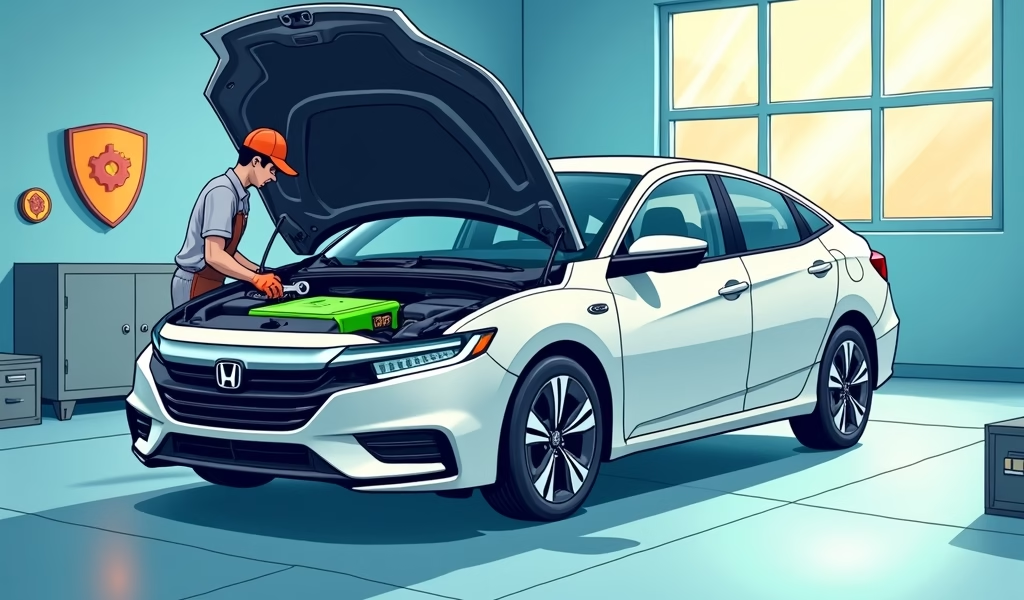
After 20+ years working with hybrids, I’m convinced that regular maintenance is your best defense against premature battery failure. The good news? Many effective maintenance practices are simple enough to incorporate into your routine. Here’s my professional advice for extending your Honda Insight hybrid battery life:
- Keep up with regular 12-volt battery maintenance. While separate from your hybrid battery, a weak or failing 12-volt battery puts additional strain on the hybrid system. Have it tested annually and replace it preventatively every 4-5 years.
- Drive your Insight regularly. Hybrid batteries don’t like sitting unused for extended periods. Even a 20-minute drive once a week helps maintain proper cell balance and prevents deep discharge.
- Follow Honda’s recommended maintenance schedule religiously. This includes regular inverter coolant checks and changes, which help maintain optimal battery temperature.
- Monitor and clean battery cooling vents. Most Insights have air cooling vents for the battery pack (typically located behind the rear seats). Ensure these aren’t blocked by cargo or debris.
- Consider an occasional “recalibration drive.” Every few months, safely deplete the hybrid battery through steady highway driving, then allow it to fully recharge through city driving with frequent stops. This helps the battery management system accurately gauge capacity.
One often overlooked maintenance aspect is ensuring proper functioning of your Insight’s regenerative braking system. This system not only helps slow the vehicle but also recharges the hybrid battery. If you notice reduced regeneration (visible on your dashboard energy display), have your system checked by a hybrid-certified technician.
Software updates are crucial too. Honda occasionally releases updates for the battery management system that can improve performance and longevity. During regular service visits, ask if any software updates are available for your hybrid system.
I recommend keeping detailed records of your battery’s performance. Note any changes in fuel economy, how the battery charges during different driving conditions, and any warning lights. This information is invaluable for technicians if problems arise and helps establish patterns that might indicate early-stage issues before they become serious.
Proper battery care also means being vigilant about diagnostic codes. If your check engine light appears, don’t delay in having the codes read—many hybrid battery issues first present as seemingly unrelated engine codes. A quality OBD-II scanner with hybrid system capabilities can be a worthy investment for the proactive owner.
Driving Habits That Affect Your Hybrid Battery
I’ve seen firsthand how driving habits directly impact hybrid battery lifespan. The way you handle your Insight can either nurture or punish that expensive battery pack. Let’s talk about some driving behaviors that make a real difference:
Avoid frequent rapid acceleration and hard braking when possible. These driving patterns force your hybrid battery to discharge and recharge rapidly, which can accelerate cell degradation over time. Instead, aim for smooth, gradual acceleration and anticipate stops to maximize regenerative braking effectiveness.
Speaking of regenerative braking, learn to use it strategically. On downhill stretches, ease off the accelerator early rather than riding the brakes. This allows the regenerative system to capture more energy while reducing wear on your conventional brakes—a win-win situation.
Try to achieve a balance of highway and city driving. While it might seem counterintuitive, exclusively highway driving isn’t ideal for hybrid batteries. The battery gets more exercise (healthy charge-discharge cycles) in stop-and-go traffic where the electric motor engages more frequently. If your commute is primarily highway driving, consider occasionally taking local roads to provide this beneficial cycling.
Extremely short trips can be problematic too. Very brief drives don’t allow the hybrid system to reach optimal operating temperature, and the battery might not complete beneficial charge cycles. When possible, combine errands into single trips rather than multiple short journeys.
Many Honda Insight owners don’t realize that their vehicle’s drive modes significantly impact battery usage. Using “ECON” mode reduces demands on the hybrid system and promotes more balanced energy use. Meanwhile, aggressive use of “Sport” mode increases battery cycling and, over time, may contribute to earlier degradation.
Understanding how hybrid systems operate can help you develop driving habits that maximize efficiency and battery health. The U.S. Department of Energy offers excellent resources on optimal hybrid vehicle operation that align with what I’ve observed in my shop.
Lastly, pay attention to your vehicle’s energy display. This real-time feedback helps you understand how your driving style affects battery usage. Many Insight owners develop a sort of “game” of maximizing efficiency, which not only saves fuel but promotes driving habits that extend battery life.
Temperature Considerations for Hybrid Batteries
After years in the shop, I’ve noticed a clear pattern—temperature extremes are the silent killers of hybrid batteries. Your Honda Insight’s battery management system works hard to maintain ideal operating temperatures, but it has limits. Understanding these limitations can help you protect your investment.
Extreme heat accelerates chemical reactions within battery cells, potentially leading to premature degradation. When possible, park your Insight in shaded areas or garages during hot summer months. If you must park in direct sunlight, consider using a windshield sunshade—while it won’t directly shield the battery (typically located behind the rear seats), it helps keep the overall cabin temperature lower.
Cold weather presents its own challenges. Below freezing temperatures reduce chemical activity and electrical conductivity within the battery, temporarily decreasing available capacity. During winter, if possible, park in a heated garage or at least shield your vehicle from direct exposure to freezing winds.
The battery cooling system in your Insight requires attention too. Earlier models use air cooling while newer generations employ more sophisticated liquid cooling. Regardless of type, ensure cooling vents remain unobstructed and have the cooling system inspected during regular maintenance.
If you live in an area with extreme temperature variations, consider how this affects your driving habits. In very cold weather, your hybrid battery may provide less assistance until it warms up. A slightly longer warm-up period (30-60 seconds) before driving off can help the entire hybrid system reach more efficient operating temperatures.
Similarly, in extremely hot conditions, your battery may enter a self-protective mode that reduces performance to prevent damage. This is normal, but consistent operation in these conditions may accelerate wear. If possible, avoid lengthy high-demand driving (like climbing long grades) during the hottest parts of the day.
According to research from the National Renewable Energy Laboratory, maintaining hybrid batteries between 68°F and 95°F (20°C-35°C) provides optimal performance and longevity. While you can’t control ambient temperatures, being mindful of exposure to extremes makes a meaningful difference in battery health.
Replacement Options and Costs
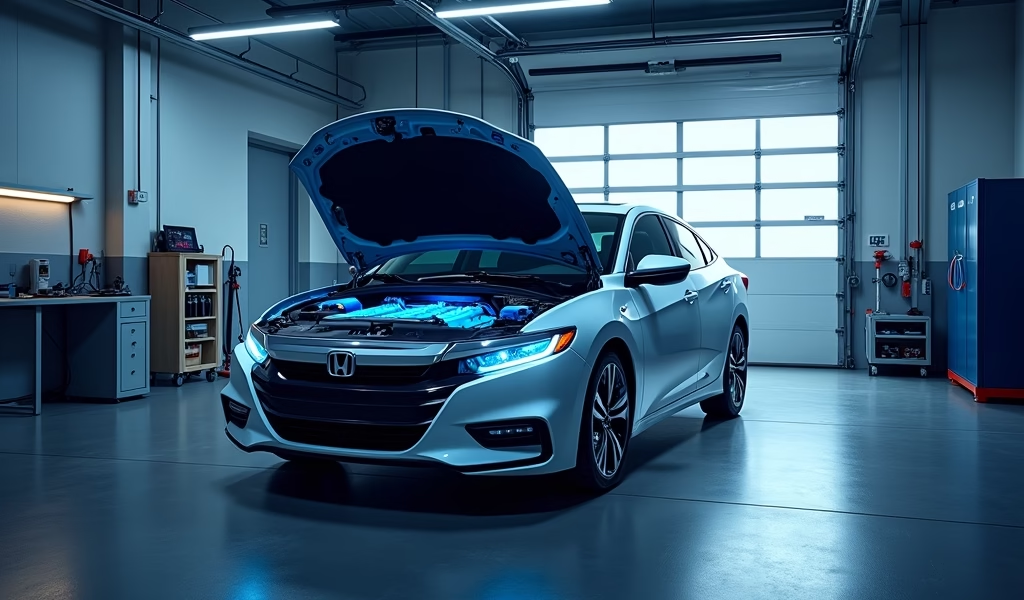
When a Honda Insight hybrid battery eventually needs replacement, you have several options—each with its own benefits and considerations. Having guided many customers through this process, I can offer some practical insights into what works best in different situations.
New OEM (Original Equipment Manufacturer) batteries provide the most reliable solution, typically costing between $2,000-$3,500 plus labor. These come with a warranty (usually 8 years/100,000 miles for newer models) and offer peace of mind with factory-spec performance. However, for older Insights, this option may approach or exceed the vehicle’s value.
Reconditioned or remanufactured battery packs offer a middle-ground solution, typically ranging from $1,200-$2,000 plus installation. These packs have been disassembled, tested, and had faulty cells replaced. Quality varies significantly between providers, so research is crucial—look for reconditioning services that offer at least a 1-2 year warranty.
Used battery packs salvaged from accident vehicles might cost $800-$1,500, but represent the highest risk. Without proper testing and reconditioning, you might simply be inheriting another vehicle’s upcoming battery problems. I generally don’t recommend this option unless you’re comfortable with potential short-term solutions.
For the mechanically inclined, DIY cell replacement is possible but challenging. Individual cells can be purchased and bad cells replaced within the pack. This requires specialized knowledge, proper safety precautions (high voltage is no joke), and equipment for cell matching and pack balancing. The cost savings can be significant, but so are the risks if done incorrectly.
Beyond cost considerations, factor in post-replacement calibration. After installation, the battery management system needs to “learn” the characteristics of the new pack. Some independent shops lack the specialized equipment for this process, which can result in warning lights or reduced performance even with a healthy replacement battery.
When weighing these options, consider your intended ownership period. If you plan to keep your Insight for many more years, investing in higher-quality solutions makes sense. For vehicles you may sell soon, less expensive options might be more appropriate, though they should be disclosed to potential buyers.
As someone who’s worked with hybrid vehicles throughout their evolution, I’ve seen the marketplace for replacement options grow substantially. Prices have generally trended downward as more third-party solutions become available, especially for popular models like the Insight.
DIY Maintenance vs. Professional Service
After guiding countless Honda owners through hybrid battery maintenance, I’ve developed a pretty clear sense of what’s feasible for DIY enthusiasts versus what’s best left to professionals. Finding that sweet spot can save you money while avoiding costly mistakes.
For the average Insight owner, several maintenance tasks are perfectly suitable for DIY handling. Keeping battery cooling vents clean, ensuring the 12-volt battery remains in good condition, and monitoring performance via your dashboard displays are all straightforward preventive measures anyone can perform.
Using an OBD-II scanner to check for error codes is another approachable DIY task—just make sure your scanner can read hybrid system codes, as basic scanners often miss these. For about $100-150, a quality hybrid-capable scanner provides valuable early warning of developing issues.
However, when it comes to actual hybrid battery servicing, caution is warranted. These systems operate at high voltages (up to 158 volts in some Insight models), presenting genuine safety risks to the untrained. Before attempting any work directly on the hybrid battery, proper safety equipment and comprehensive knowledge of high-voltage disconnect procedures are absolutely essential.
Cell balancing, pack recalibration, and cooling system maintenance generally require specialized equipment and expertise. While detailed guides exist online, these procedures affect the fundamental operation of your vehicle’s powertrain and mistakes can be costly.
When seeking professional service, look specifically for technicians with hybrid certification and experience with Honda systems. General mechanics without hybrid training often lack the specialized knowledge and equipment needed for proper diagnosis and repair. ASE certification in hybrid vehicles or factory Honda training are good indicators of qualified professionals.
A middle-ground approach many Insight owners find effective is learning to perform detailed monitoring and basic maintenance themselves while establishing a relationship with a hybrid-specialized technician for annual inspections and any necessary technical service. This combination provides the cost benefits of DIY care with the security of professional oversight.
Remember that proper diagnosis often prevents unnecessary battery replacement. I’ve seen many cases where symptoms suggesting battery failure were actually caused by peripheral issues like cooling system problems, control module issues, or even software that needed updating. A qualified professional can distinguish between these scenarios, potentially saving thousands in unnecessary replacements.
Conclusion
Taking care of your Honda Insight hybrid battery doesn’t have to be intimidating or expensive. With the right knowledge and proactive approach, you can significantly extend its lifespan and avoid those heart-stopping repair bills that make hybrid owners anxious.
Remember that your driving habits matter tremendously—smooth acceleration, strategic use of regenerative braking, and a good mix of city and highway driving all contribute to battery health. Temperature management, while often overlooked, plays a crucial role in preventing premature degradation, so those simple steps like parking in shade can make a real difference.
Regular maintenance isn’t just a recommendation—it’s essential for maximizing your hybrid investment. Keep those cooling vents clear, ensure your 12-volt battery stays healthy, and don’t ignore warning signs when they appear. Early intervention almost always costs less than waiting until complete failure occurs.
When replacement eventually becomes necessary, take time to research your options thoroughly. The cheapest solution rarely provides the best value over time, but the most expensive isn’t always necessary either. Your driving needs and how long you plan to keep the vehicle should guide this decision.
Most importantly, remember that hybrid technology is proven and reliable—your Insight was built to deliver hundreds of thousands of miles of efficient service with proper care. By implementing the tips we’ve discussed, you’re well on your way to enjoying all the benefits of your Honda Insight hybrid with confidence and without the fear of unexpected battery failures draining your wallet.
Frequently Asked Questions
How long does a Honda Insight hybrid battery typically last?
Most Honda Insight hybrid batteries last 8-10 years or 100,000-150,000 miles with proper maintenance. Individual results vary based on driving conditions, climate, and maintenance practices.
Can I replace just one cell in my Insight’s hybrid battery?
While technically possible, replacing individual cells requires specialized equipment and expertise to ensure proper voltage balancing. It’s generally more reliable to replace the entire module containing the bad cell or to use a professional reconditioning service.
Will using climate control reduce my hybrid battery life?
Excessive use of climate control, especially in extreme temperatures, can increase demands on the hybrid battery. Use reasonable settings and consider using the seat heaters instead of full cabin heating when possible in cold weather.
Is it normal for my Insight’s MPG to decrease in cold weather?
Yes, a 5-15% reduction in fuel economy during cold weather is normal for hybrid vehicles. Cold temperatures reduce battery efficiency and increase energy needed for cabin heating.
Can I jump-start another car with my Honda Insight?
Honda does not recommend using the Insight to jump-start other vehicles as this could damage the hybrid system. The 12-volt battery in the Insight is not designed for the high current demands of jump-starting.