
Overview
That mysterious red puddle beneath your car signals a transmission fluid leak, which can range from a simple gasket issue requiring a $100 fix to a serious problem potentially leading to catastrophic transmission failure costing thousands. Understanding the signs, causes, and severity of transmission fluid leaks—along with knowing when to attempt DIY fixes versus seeking professional help—can save you significant money and protect one of your vehicle’s most complex components.
Table of Contents
- Understanding Transmission Fluid: What It Is and Why It Matters
- Common Signs of a Transmission Fluid Leak
- Identifying the Source of Your Transmission Fluid Leak
- Common Causes of Transmission Fluid Leaks
- DIY Diagnosis: How to Confirm a Transmission Fluid Leak
- Temporary Fixes for Transmission Fluid Leaks
- When to See a Mechanic: Understanding the Severity
- Cost Breakdown: What to Expect for Repairs
- Prevention Tips: Avoiding Future Transmission Fluid Leaks
- Conclusion
- Frequently Asked Questions
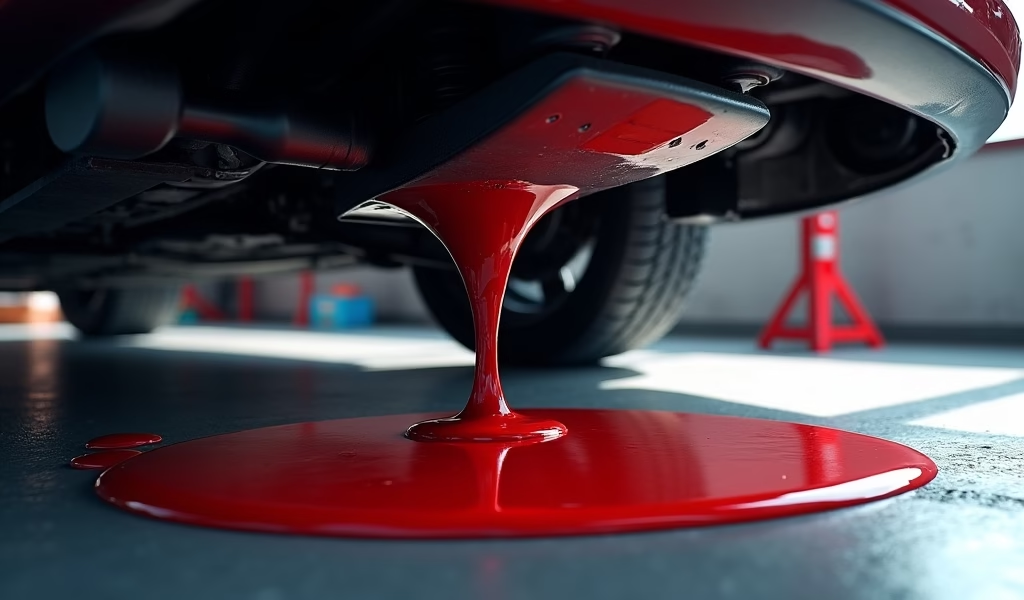
Discovering a mysterious puddle under your car can send your heart sinking faster than your bank account might later. If that puddle has a reddish tint and smells slightly sweet, you’re likely dealing with a transmission fluid leak. Before you panic about potential repair costs, let’s walk through why your car might be leaking transmission fluid and what you can do about it. As a mechanic with over 15 years in the field, I’ve seen everything from minor gasket issues to full transmission failures, and I’m here to help you understand what you’re up against.
Understanding Transmission Fluid: What It Is and Why It Matters
Think of transmission fluid as your transmission’s lifeblood. It lubricates all those complex moving parts, reduces friction, prevents overheating, and helps transfer power from your engine to your wheels. Without adequate transmission fluid, your car’s transmission components would grind themselves to bits faster than you can say “expensive repair bill.”
Transmission fluid comes in several types: automatic transmission fluid (ATF), manual transmission fluid, and continuously variable transmission (CVT) fluid. Each is specially formulated for different transmission systems. Most modern vehicles use a synthetic transmission fluid that’s designed to last longer and perform better under extreme conditions.
Unlike engine oil, transmission fluid doesn’t get “used up” during normal operation. This means if your fluid level is dropping, you’ve got a leak somewhere in the system. While regular car maintenance checks should catch these issues early, many drivers don’t notice until they see that telling red puddle on their driveway.
The color of healthy transmission fluid ranges from clear red to deep crimson. As it ages and collects contaminants, it darkens to brown. If you’re seeing black fluid, that’s a sign your transmission has been overheating or the fluid is severely degraded.
Common Signs of a Transmission Fluid Leak
Your car has ways of telling you something’s wrong long before you might notice a puddle. Pay attention to these warning signs that point to transmission fluid leaks:
- Red or brown fluid puddles under your car (especially after it’s been parked overnight)
- Difficulty shifting gears or delayed gear engagement
- Unusual noises during gear shifts (whining, buzzing, or clunking)
- Transmission slipping or revving without accelerating
- Burning smell coming from under your hood
- Dashboard warning lights (check engine or transmission temperature)
One of the most reliable indicators is the transmission dipstick reading. If your fluid level is consistently dropping between checks, you’ve almost certainly got a leak. Remember that transmission problems tend to cascade – what starts as a small leak can quickly lead to overheating and significant mechanical damage if ignored.
The most telling sign is often how your vehicle drives. If it hesitates when shifting gears or seems to “hunt” for the right gear, your transmission might be low on fluid. This happens because the hydraulic pressure needed for smooth gear changes requires adequate fluid levels. Modern vehicles may also engage “limp mode” to protect the transmission when fluid levels drop dangerously low, limiting you to lower gears and reduced performance.

Identifying the Source of Your Transmission Fluid Leak
Finding exactly where your transmission is leaking can be tricky, even for professionals. The transmission system has multiple potential leak points, and fluid can travel along the underside of your vehicle before dripping down. This is why that puddle you see might not be directly under the actual leak source.
Common leak locations include the pan gasket, input/output shaft seals, transmission lines, cooler connections, and the torque converter seal. Each location presents different repair challenges and costs. For instance, a leaky pan gasket is relatively accessible and affordable to fix, while a torque converter seal requires much more extensive labor.
To help pinpoint the source, start by cleaning the underside of your transmission with a degreaser and then place clean cardboard under your parked car. After driving, check the cardboard for fresh spots and note their position relative to your vehicle. This can help narrow down the general area of the leak.
Modern diagnostic tools can sometimes help identify the source. Some car diagnostic apps can provide insights, though they’re no substitute for a thorough visual inspection. For a definitive diagnosis, mechanics often use UV dye added to the transmission fluid, which glows under ultraviolet light and clearly shows the leak path.
Common Causes of Transmission Fluid Leaks
Understanding what causes transmission fluid leaks can help you prevent future issues. Here are the most common culprits I encounter in the shop:
- Worn seals and gaskets: These rubber components naturally degrade over time due to heat and chemical exposure. The transmission pan gasket is particularly prone to leaking after 60,000+ miles.
- Loose pan bolts: Sometimes the solution is as simple as tightening the bolts that secure the transmission pan. These can loosen due to vibration and temperature fluctuations.
- Cracked transmission pan: Impact damage from road debris or bottoming out can crack or dent your transmission pan, creating leak points.
- Damaged transmission cooler lines: These metal or rubber lines that connect to your radiator can corrode or develop cracks, particularly in regions where road salt is used.
- Torque converter issues: The torque converter seal is a common failure point in high-mileage vehicles, requiring substantial work to access and replace.
- Over-pressurization: Overfilling the transmission or blocked vents can create excess pressure that forces fluid past seals.
Vehicle age plays a significant role in leak development. According to Consumer Reports, transmission leaks become substantially more common after vehicles reach the 100,000-mile mark. Climate factors into the equation too – extreme heat accelerates seal deterioration, while extreme cold can make seals brittle and prone to cracking.
Interestingly, some vehicles are more prone to specific transmission leak issues than others. Online forums dedicated to your specific make and model can sometimes alert you to common failure points before they become problems for your vehicle.
DIY Diagnosis: How to Confirm a Transmission Fluid Leak
Before heading to a mechanic, you can perform some simple diagnostic steps to confirm you’re dealing with a transmission fluid leak and not another fluid. This knowledge will help you communicate more effectively with your mechanic and potentially avoid unnecessary diagnostic fees.
First, let’s verify it’s actually transmission fluid. Transmission fluid is typically red or brown with a slightly sweet or burnt smell when old. It has a slick, oily texture. This distinguishes it from engine coolant (green, yellow, or pink with a sweet smell), power steering fluid (often similar to transmission fluid but usually leaks in different locations), or engine oil (amber to black with a petroleum smell).
To check your transmission fluid level:
- Park on level ground with the engine running (for most vehicles)
- Set parking brake and shift through all gears, ending in Park
- Locate the transmission dipstick (typically has a red handle)
- Remove, wipe clean, reinsert fully, and check again
- Fluid should be between the “MIN” and “MAX” marks
A simple paper test can help determine which fluid you’re dealing with. Place a drop of the mysterious fluid on plain white paper and observe the color. If it’s engine oil, it will appear amber to black. Transmission fluid leaves a distinct red to brown stain. Power steering fluid is similar to transmission fluid but often darker. Coolant will appear green, orange, or pink and feels slippery rather than oily.
For a more thorough inspection, jack up your vehicle safely (always use jack stands!) and look for wet spots or accumulated grime around transmission seals, the pan gasket, cooler lines, and where the transmission meets the engine. Sometimes using a flashlight at different angles helps spot wet areas that might otherwise blend in with the general grime of the undercarriage.
Implementing essential car maintenance treatments can help you spot these issues earlier before they become major problems. Regular checks under your vehicle after it’s been parked overnight can alert you to developing leaks when they’re still minor.
Temporary Fixes for Transmission Fluid Leaks
Sometimes you need a quick fix to get you through until proper repairs can be made. While these temporary solutions shouldn’t replace permanent repairs, they can help in a pinch. Just remember – these are bandaids, not cures.
Transmission stop-leak additives are available at most auto parts stores. These products contain chemicals that can swell seals temporarily and may plug very small leaks. Be cautious, though – many mechanics, including myself, have mixed feelings about these products. While they can work for minor seepage, they’re not a solution for significant leaks and can sometimes cause more problems than they solve by affecting fluid properties. According to transmission repair specialists, these additives work best on rubber seals that have shrunk from age, not on actual cracks or worn components.
For leaking pan gaskets, sometimes tightening the pan bolts in a proper sequence can temporarily reduce leakage. Be extremely careful not to overtighten, as this can warp the pan or damage the gasket further. Always use a torque wrench and follow the manufacturer’s specifications.
If you’re dealing with a leak from a transmission cooler line, specialized tape designed for high-pressure, high-temperature applications can sometimes get you to a repair shop. Products like silicone tape or rescue tape create a temporary seal that can withstand the pressure and heat of transmission operation.
While managing a temporary fix, keep an extra quart or two of the correct transmission fluid in your vehicle. Check your fluid level frequently – at least daily – and top off as needed to prevent transmission damage. Remember that consistently low fluid levels can cause transmission overheating and potentially catastrophic failure.
When to See a Mechanic: Understanding the Severity
Not all transmission leaks require immediate attention, but some absolutely do. Here’s how to gauge the urgency of your situation:
Seek immediate professional help if:
- You’re losing significant amounts of fluid (more than a few drops overnight)
- Your transmission is slipping, hesitating, or making unusual noises
- The check engine light or transmission warning light is illuminated
- The fluid appears dark brown or black with a burnt smell
- You notice performance issues like delayed engagement or difficulty shifting
Minor seepage that results in a few drops every few days might not require emergency service, but should still be addressed during your next scheduled maintenance. However, even small leaks inevitably worsen over time. What starts as a few drops can quickly become a steady stream as the leak point expands.
When selecting a repair shop, consider those specializing in transmissions rather than general repair facilities. Transmission specialists have the expertise and specialized tools needed for these complex systems. Ask if the shop has ASE-certified technicians (Automotive Service Excellence), which indicates they’ve passed standardized testing in transmission repair.
Be wary of shops that immediately recommend a full transmission rebuild for minor leaks. Get a second opinion if something doesn’t feel right. A reputable mechanic will take the time to properly diagnose the leak source before recommending extensive repairs. They should be able to explain exactly where the leak is coming from and why their proposed solution is appropriate.
Cost Breakdown: What to Expect for Repairs
Repair costs for transmission fluid leaks vary dramatically based on the leak source and your vehicle make and model. Here’s a general breakdown to help you budget appropriately:
- Transmission pan gasket replacement: $100-$350 (parts and labor)
- Transmission pan replacement: $250-$500 (if damaged beyond repair)
- Transmission cooler line repair: $150-$500 depending on accessibility
- Output shaft seal replacement: $200-$500 (requires more labor)
- Torque converter seal replacement: $600-$1,000+ (requires transmission removal)
- Complete transmission rebuild: $1,500-$4,000+ (for severe damage from prolonged leaking)
These figures represent national averages – costs in metropolitan areas tend to run higher than in rural locations. Luxury and European vehicles often cost more to repair due to specialized parts and labor requirements. For instance, a pan gasket replacement on a Mercedes might cost twice what it would on a Ford Fusion.
When comparing repair quotes, ensure you’re comparing apples to apples. Some shops might quote just the immediate leak repair while others include preventative maintenance like a transmission fluid and filter change. Ask for an itemized estimate that breaks down parts and labor costs separately.
Many transmission repairs fall within the $200-$500 range, making them significant but not catastrophic expenses. The key is addressing leaks promptly before they lead to internal transmission damage. Once metal-on-metal contact occurs inside your transmission due to insufficient lubrication, repair costs skyrocket into the thousands.
Prevention Tips: Avoiding Future Transmission Fluid Leaks
An ounce of prevention is worth a pound of cure, especially when it comes to transmission maintenance. Here are proven strategies to minimize your risk of future leaks:
- Follow manufacturer service intervals: Regular transmission fluid changes remove contaminants that can degrade seals. Most vehicles need service every 30,000-100,000 miles, depending on the model and driving conditions.
- Use the correct fluid: Different transmissions require specific fluid formulations. Using the wrong type can cause seal degradation and leaks. Your owner’s manual specifies the exact fluid your transmission needs.
- Avoid overfilling: Excess fluid creates pressure that can force fluid past seals. Always measure carefully when adding fluid.
- Drive gently until warm: Cold transmission fluid doesn’t circulate properly. In cold weather, allow your vehicle to warm up before driving aggressively.
- Address minor leaks promptly: Small seepage often indicates seal deterioration that will worsen over time.
- Avoid extreme temperature conditions when possible: Excessive heat accelerates fluid breakdown and seal deterioration.
- Install a transmission temperature gauge: For those who tow or drive in mountainous terrain, monitoring transmission temperature can prevent overheating that leads to seal failure.
Transmission fluid condition is as important as its level. Even without leaks, fluid degrades over time. Fresh fluid should be red and clear; if yours is brown or smells burnt, it’s time for service regardless of mileage intervals. Regular transmission fluid checks every few months can catch potential issues before they become serious problems.
Consider using a transmission cooler if you regularly tow heavy loads or drive in hot climates. Cooler operating temperatures significantly extend the life of transmission seals and gaskets. These aftermarket additions typically cost $100-300 installed but can prevent thousands in repair costs.
Conclusion
Transmission fluid leaks range from minor nuisances to serious problems requiring immediate attention. The key takeaway is that ignoring even small leaks can lead to catastrophic transmission failure and bills that might make your eyes water more than the burnt transmission fluid smell.
By understanding what transmission fluid does, recognizing the signs of leaks, and knowing how to perform basic diagnostic steps, you’re already ahead of most drivers. This knowledge empowers you to speak confidently with mechanics and make informed decisions about repairs.
Remember that while temporary fixes exist, they should only bridge the gap until proper repairs can be made. Your transmission is one of your vehicle’s most complex and expensive components – treating minor leaks as the warning signs they are will save you significant money and headaches in the long run.
Regular maintenance remains your best defense against leaks developing in the first place. Follow your manufacturer’s service recommendations, use the correct fluid, and pay attention to how your vehicle feels and sounds. Your transmission will thank you with years of trouble-free service.
Frequently Asked Questions
Can I drive with a transmission fluid leak?
You can drive with a very minor leak if you monitor fluid levels daily and top off as needed. Moderate to severe leaks require immediate attention as they can quickly lead to transmission damage.
How much does it typically cost to fix a transmission fluid leak?
Repair costs range from $150-500 for simple gasket and seal replacements to $1,500+ for major repairs. The exact price depends on the leak source and your specific vehicle model.
Will stop leak products damage my transmission?
Quality stop leak products are generally safe for emergency use but aren’t permanent solutions. Low-quality products can potentially alter fluid properties and cause long-term issues.
How do I know if it’s transmission fluid or something else leaking?
Transmission fluid is typically red or brownish with a slightly sweet smell when fresh. Place a drop on white paper – transmission fluid leaves a distinct red stain unlike other vehicle fluids.
How often should transmission fluid be changed to prevent leaks?
Most manufacturers recommend changing transmission fluid every 30,000-100,000 miles depending on vehicle and driving conditions. Regular fluid changes help maintain seal condition and prevent leaks.