

Overview
That ticking sound under your hood might be your timing belt warning you of trouble before it fails catastrophically, potentially turning a $500-1000 replacement into a $4000+ engine rebuild. This guide reveals seven warning signs of timing belt failure—including engine ticking, misfiring, and rough idling—while emphasizing the importance of following manufacturer-recommended replacement intervals (typically every 60,000-100,000 miles) to prevent expensive engine damage.
Table of Contents
- Understanding Your Timing Belt
- Why Timing Belt Health Matters
- 7 Warning Signs of a Failing Timing Belt
- How to Visually Inspect Your Timing Belt
- Mileage and Age Considerations
- Preventing Timing Belt Failure
- Timing Belt Replacement Cost vs. Engine Damage
- DIY vs. Professional Replacement
- Conclusion
- Frequently Asked Questions
Understanding Your Timing Belt
Wondering how to tell if timing belt is failing? That ticking sound under your hood might be more than just normal engine noise—it could be your timing belt warning you of impending trouble. As a mechanic with over 15 years of experience, I’ve seen countless engines destroyed because drivers missed the subtle warning signs of timing belt failure.
Your timing belt is the unsung hero of your engine, synchronizing the rotation of the crankshaft and camshaft to ensure valves open and close at precisely the right moments during engine operation. Unlike many car components that gradually lose efficiency, a timing belt typically works perfectly until it suddenly fails—often with catastrophic consequences.
In this comprehensive guide, I’ll walk you through everything you need to know about timing belt health, from recognizing early warning signs to understanding when preventative replacement makes sense. By being proactive about regular vehicle maintenance checks, you can avoid the heartbreak (and wallet-break) of major engine damage.
Why Timing Belt Health Matters
Let’s talk about why your timing belt deserves your attention. Unlike a worn brake pad or a failing battery that gives you plenty of warning, timing belts often fail suddenly and completely. When this happens in an interference engine (which most modern cars have), the pistons and valves can collide, resulting in bent valves, damaged pistons, and sometimes even cracked cylinder heads.
Think of it this way: a $500-800 timing belt replacement might seem expensive until you compare it to a $3,000-5,000 engine rebuild. It’s like choosing between a dental cleaning and a root canal—prevention is always less painful and less expensive.
Your timing belt is typically made of reinforced rubber with teeth that grip gears on the engine’s camshaft and crankshaft. Over time, this rubber can deteriorate due to heat, oil contamination, and simple age. According to Gates Automotive, a leading manufacturer of automotive belts, timing belts should typically be replaced every 60,000 to 100,000 miles, depending on your vehicle make and model.
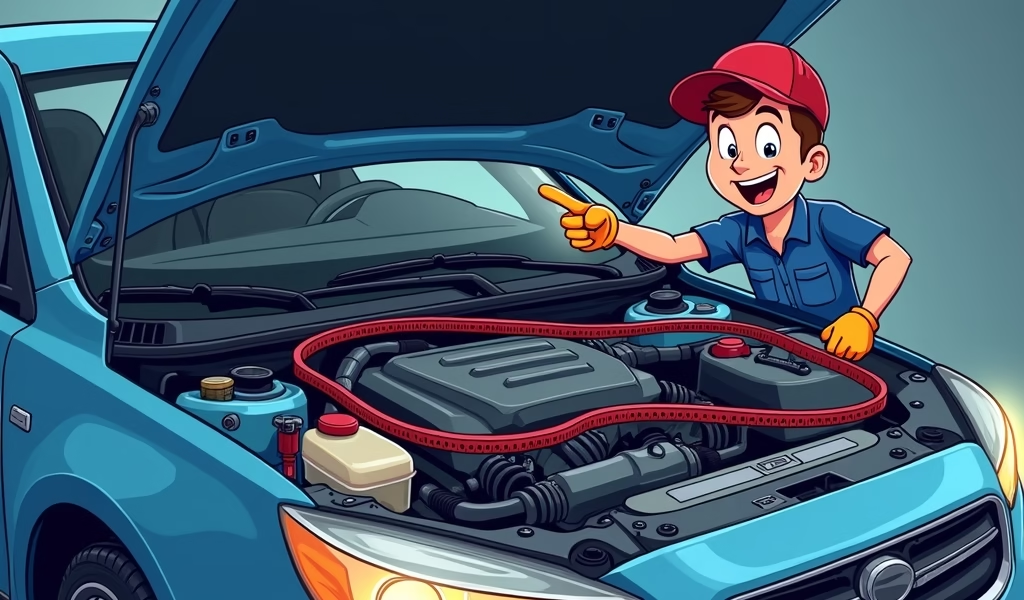
7 Warning Signs of a Failing Timing Belt
How to tell if timing belt is failing? Your car will often give you hints before a catastrophic failure. Here are the seven most common warning signs I’ve observed throughout my career:
1. Ticking Noise from the Engine
One of the earliest signs of timing belt wear is a ticking or clicking noise coming from the engine area. This happens when the belt’s teeth begin to wear down or when the tension is incorrect. The sound typically gets louder as the problem progresses, almost like a mechanical heartbeat with an irregular rhythm.
2. Engine Misfiring
If your timing belt is slipping, even slightly, it can cause your engine to misfire. You might notice a brief hesitation during acceleration or a slight jerk while maintaining constant speed. This happens because the precise timing between pistons and valves is disrupted, causing occasional combustion issues.
3. Rough Idling
A worn timing belt can cause your engine to idle roughly. You might feel unusual vibrations while stopped at a traffic light, or notice the RPM needle fluctuating when it should be steady. This rough idling occurs because the valves aren’t opening and closing exactly when they should.
4. Exhaust Issues
Increased exhaust smoke or unusual exhaust odors can indicate timing belt problems. If valve timing is off, fuel combustion becomes less efficient, potentially causing excessive emissions. This inefficiency might also trigger your check engine light due to emissions-related fault codes.
5. Oil Leaks
While examining the timing belt area, check for oil leaks around the timing cover. Oil can deteriorate the rubber in the timing belt, accelerating its failure. Sometimes, oil leaks from the timing belt cover gasket or the camshaft seals might seem minor but can have major consequences for belt longevity.
6. Starting Problems
In advanced cases of timing belt wear, you might experience difficulty starting your vehicle. This happens when the belt has slipped teeth or stretched to the point where proper valve timing is significantly affected. Your engine might crank longer than usual before starting, or fail to start altogether.
7. Loss of Engine Power
A gradual loss of engine power or acceleration can indicate timing belt issues. Your car might feel sluggish or struggle to maintain highway speeds. This symptom is particularly concerning as it often precedes complete belt failure.
Remember, experiencing any single symptom doesn’t guarantee your timing belt is failing, but these warning signs should never be ignored. When I see multiple symptoms from this list, I always recommend a thorough inspection of the timing system.
How to Visually Inspect Your Timing Belt
While some vehicles require significant disassembly to access the timing belt, many allow for at least a partial visual inspection. Here’s how to perform a basic check if you’re comfortable working around engines:
Safety First
Always ensure your engine is off and cool before attempting any inspection. Disconnect the negative battery terminal to prevent accidental starting. Remember that even with the engine off, components can be hot enough to cause serious burns if you’ve recently been driving.
Locating the Timing Belt
In most vehicles, you’ll find the timing belt under a plastic or metal cover on the front of the engine (the side facing the radiator). Some vehicles have multiple covers that need to be removed. If you’re unsure, consult your vehicle’s repair manual or find an ASE-certified mechanic to help.
What to Look For
Once you can see the timing belt, check for these issues:
- Cracks on the belt’s surface or edges
- Fraying or missing teeth
- Glazing or a shiny appearance on the belt surface
- Oil contamination or coolant leaks onto the belt
- Proper tension (the belt shouldn’t be loose or excessively tight)
- Signs of belt material flaking off or deteriorating
If you notice any of these issues, it’s time to consider a replacement, even if you haven’t reached the manufacturer’s recommended interval. When it comes to timing belts, being proactive with essential maintenance treatments will save you significantly in the long run.
Mileage and Age Considerations
Even if your timing belt looks fine visually and you haven’t noticed any symptoms, there are two other critical factors to consider: mileage and age. These are often more reliable indicators of when replacement is necessary than visual inspection alone.
Manufacturer Recommendations
Every vehicle has different timing belt replacement intervals. These typically range from 60,000 to 105,000 miles, but some modern vehicles may stretch this to 120,000 miles. Always check your owner’s manual for the specific recommendation for your make and model.
The Age Factor
Here’s something many drivers don’t realize: timing belts deteriorate with age, even if you don’t drive much. If your vehicle is more than 5-7 years old but hasn’t reached the mileage threshold, consider replacement anyway. Rubber compounds break down over time due to heat cycling and environmental factors.
Driving Conditions Matter
If you frequently drive in extreme conditions—very hot climates, very cold areas, dusty environments, or stop-and-go traffic—your timing belt may wear faster than the manufacturer’s estimates. In these cases, consider replacing the belt earlier than recommended, perhaps at 80% of the suggested interval.
I’ve seen many low-mileage vehicles come into the shop with timing belt failures simply because the rubber had aged and become brittle. When in doubt, especially with older vehicles, replacement is the safest option.

Preventing Timing Belt Failure
The best way to deal with timing belt issues is to prevent them from happening in the first place. Here’s my tried-and-true approach to keeping your timing system healthy:
Follow the Maintenance Schedule
The simplest prevention method is to replace your timing belt according to your manufacturer’s recommendations. Mark the date on your calendar or set a reminder in your phone. When the time comes, don’t procrastinate—schedule the service promptly.
Replace Related Components
When replacing the timing belt, smart mechanics will recommend replacing the water pump, tensioners, and idler pulleys as well. Since the labor cost to access the timing belt is substantial, it makes financial sense to replace these related components simultaneously, even if they haven’t failed yet. Think of it as replacing all the shingles on your roof while the scaffolding is already up.
Address Oil Leaks Promptly
Oil contamination is a timing belt’s worst enemy. If you notice oil leaks near your timing cover, have them repaired immediately. Clean oil should never contact your timing belt, as it will accelerate rubber deterioration.
Regular Engine Tune-ups
Keeping your engine properly tuned helps ensure it runs smoothly, reducing unnecessary stress on the timing belt. Regular tune-ups can catch minor issues before they affect major components like your timing system.
Documentation is Key
Always keep records of when your timing belt was last replaced. This is particularly important if you’re buying a used car—ask for documentation of timing belt replacement. If the seller can’t provide it and the vehicle is approaching or past the recommended interval, budget for a replacement soon.
Timing Belt Replacement Cost vs. Engine Damage
Let’s talk dollars and sense. Timing belt replacement isn’t cheap, but it’s a bargain compared to the alternative. Here’s a realistic breakdown of what you can expect to pay:
Typical Replacement Costs
For most vehicles, timing belt replacement will cost between $500 and $1,000 at a professional shop. This includes parts and labor. Luxury or performance vehicles might run higher—sometimes up to $1,500 or more. These costs typically include related components like tensioners and water pumps.
The Cost of Procrastination
Now, let’s consider the alternative. If your timing belt fails and you have an interference engine, repair costs typically start at $2,000 for minor valve damage. Complete engine rebuilds or replacements can easily reach $4,000 to $8,000, depending on your vehicle. In some cases, the repair cost exceeds the value of older vehicles.
Value Perspective
Think of timing belt replacement as an insurance policy that costs around $700 to protect against a $4,000+ repair. When viewed this way, the decision becomes much clearer. Additionally, a vehicle with a recently replaced timing belt typically has a higher resale value, as it represents a major maintenance item that the next owner won’t need to worry about for years.
I’ve had to deliver the bad news to too many customers who thought they were saving money by delaying timing belt replacement, only to face engine rebuilds costing several times more. Don’t be that person—budget for this crucial maintenance item.
DIY vs. Professional Replacement
Can you replace a timing belt yourself? Technically, yes—but should you? That depends on several factors:
DIY Considerations
Replacing a timing belt requires specialized knowledge and tools. You’ll need to understand engine timing marks, have the right tensioning tools, and be able to properly align everything during reassembly. Additionally, you’ll need a secure workspace, vehicle-specific repair information, and potentially several days if this is your first attempt.
When DIY Makes Sense
If you have significant mechanical experience, access to proper tools, a good repair manual, and plenty of time, DIY replacement can save you $300-500 in labor costs. It’s most viable for mechanically simpler vehicles with good access to the timing components.
When to Choose a Professional
For most drivers, professional installation is the wisest choice. Mechanics have the expertise, specialized tools, and experience to ensure proper installation. They can also spot related issues like leaking seals or worn components that might not be obvious to the untrained eye. Most importantly, they can guarantee the work—if something goes wrong due to improper installation, a reputable shop will make it right.
Finding the Right Professional
If you choose professional installation, get quotes from several reputable shops. Ask specifically what’s included in the service—will they replace the water pump and tensioners? What warranty comes with the work? A slightly higher price often reflects a more comprehensive job with better parts and stronger guarantees.
Conclusion
Understanding how to tell if timing belt is failing is a crucial skill for any vehicle owner. By recognizing the warning signs—unusual engine noises, performance issues, visual wear, and age/mileage thresholds—you can avoid the devastating consequences of timing belt failure.
Remember that prevention is always less expensive than repair. Following your manufacturer’s recommended replacement interval is the simplest way to protect your engine and your wallet. When in doubt, consult with a trusted mechanic who can provide personalized advice for your specific vehicle.
Timing belts might seem like an expensive maintenance item, but they’re one of the most critical components in your engine’s operation. By staying vigilant and proactive, you can ensure your vehicle remains reliable and avoids the costly fate of an engine rebuild.
The next time you hear an unusual ticking from under the hood or notice your engine performing differently, don’t wait—investigate promptly. Your future self (and your bank account) will thank you for it.
Frequently Asked Questions
How often should a timing belt be replaced?
Most manufacturers recommend replacing timing belts every 60,000 to 100,000 miles, depending on the vehicle make and model. Check your owner’s manual for the specific interval recommended for your car.
Can you drive with a failing timing belt?
No, you should not continue driving if you suspect your timing belt is failing. A broken timing belt can cause catastrophic engine damage in interference engines, resulting in expensive repairs.
What happens if a timing belt breaks while driving?
In interference engines, valves and pistons will collide, causing bent valves, damaged pistons, and possibly a cracked cylinder head. Your engine will immediately shut off and won’t restart until repairs are made.
How much does it cost to replace a timing belt?
Timing belt replacement typically costs between $500 and $1,000 at professional shops, including parts and labor. Luxury or performance vehicles may cost more, sometimes up to $1,500.
Can I replace my timing belt myself?
While technically possible, timing belt replacement requires specialized tools, knowledge of engine timing, and mechanical experience. Most drivers should choose professional installation to avoid potentially costly mistakes.