
Overview
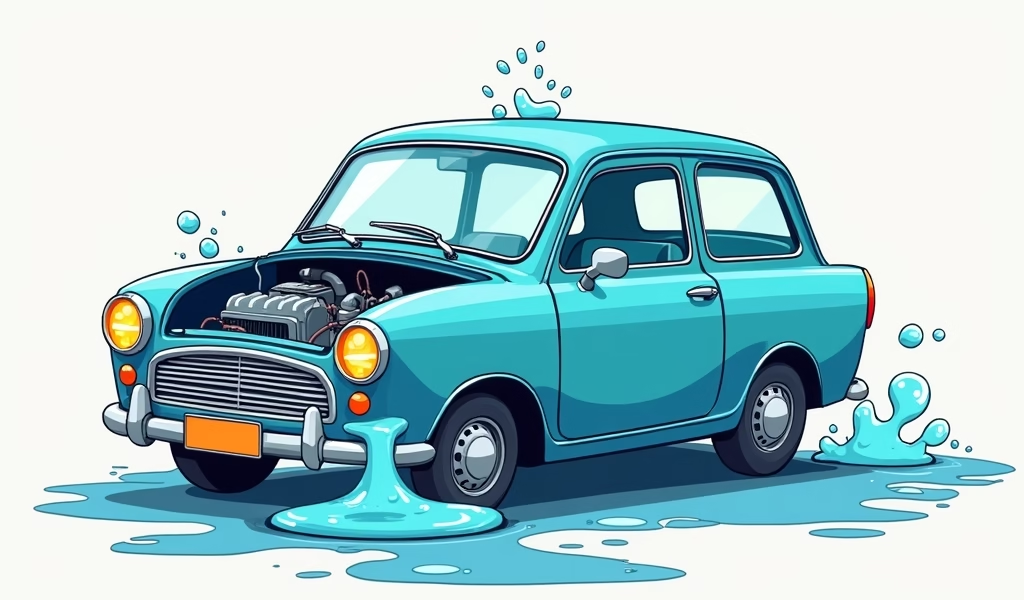
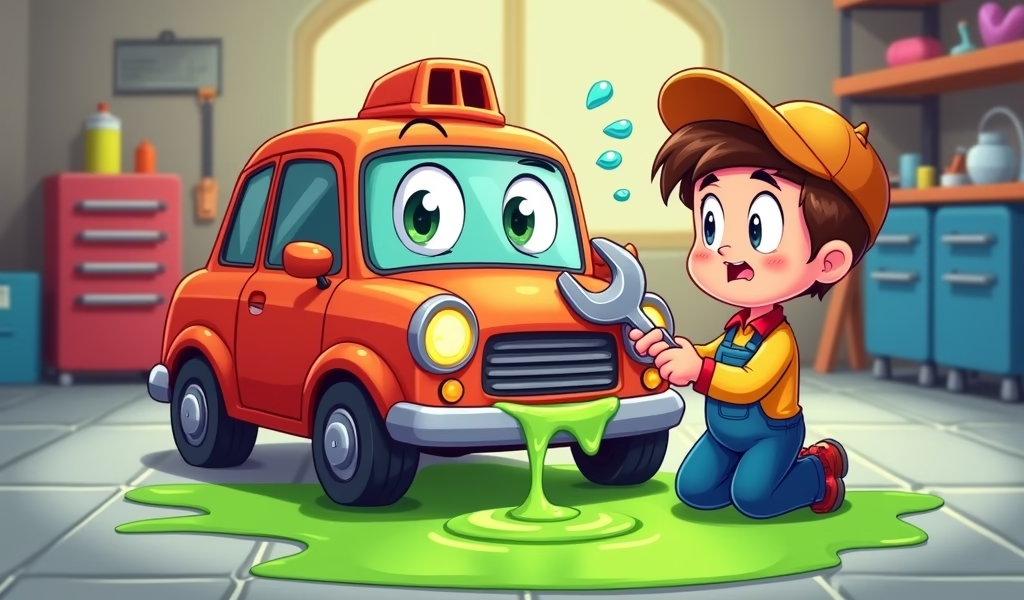
When your car’s coolant overflows, it’s sending you a distress signal that could indicate anything from a simple faulty radiator cap to a serious head gasket failure—issues that, when caught early, can save you thousands in repair costs. Understanding the seven common causes, recognizing warning signs like sweet smells or temperature gauge fluctuations, and following proper maintenance schedules are your best defenses against the cascade of problems that begin with that innocent puddle of green liquid under your car.
Table of Contents
- Understanding Coolant Overflow: The Basics
- How Your Car’s Cooling System Works
- 7 Common Causes of Coolant Overflow
- Warning Signs You Shouldn’t Ignore
- How to Diagnose Coolant Overflow Issues
- Preventative Maintenance to Avoid Overflow Problems
- DIY or Professional: When to Call a Mechanic
- Cost Estimates for Common Repairs
- Conclusion: Keeping Your Cool and Your Car Running
- Frequently Asked Questions
Understanding Coolant Overflow: The Basics
Ever spotted a puddle of bright green or orange liquid under your car? Or maybe you’ve seen steam billowing from under the hood during your morning commute. Either situation can trigger that sinking feeling in your stomach – something’s wrong with your car’s cooling system.
Coolant overflow isn’t just annoying – it’s your vehicle’s distress signal. When your car’s coolant escapes from where it should be contained, it’s telling you that something needs attention before a minor issue turns into a major repair bill. What causes coolant overflow ranges from simple fixes to more complex problems, but understanding the why behind it can save you time, money, and roadside headaches.
As a mechanic with over 15 years in the shop, I’ve seen countless coolant issues that could have been prevented with a little knowledge and timely action. The good news? Most coolant overflow problems can be spotted early and fixed before they drain your wallet. Let’s dive into what’s happening under your hood and how to keep your engine running cool and happy.
How Your Car’s Cooling System Works
Think of your car’s cooling system as its circulatory system. Just like your body needs to maintain the right temperature, your engine has an optimal operating range – typically between 195-220°F (90-105°C). Too cold, and your engine runs inefficiently; too hot, and you risk warped components or catastrophic failure.
The heart of this system is surprisingly simple. Your engine heats up coolant (a mixture of antifreeze and water), which then flows to the radiator where heat dissipates into the surrounding air. The cooled liquid then returns to the engine to repeat the cycle, all driven by the water pump.
Key components of your cooling system include:
- Radiator: The large heat exchanger at the front of your car
- Water pump: Circulates coolant throughout the system
- Thermostat: Controls coolant flow based on engine temperature
- Coolant reservoir: Stores excess coolant during thermal expansion
- Radiator cap: Maintains proper system pressure
- Hoses: Connect components and allow coolant to flow
When working properly, this system maintains perfect engine temperature through a careful balance of pressure and flow. When something goes wrong, that balance is disrupted – and coolant overflow is often the first noticeable symptom.
The overflow process itself is actually a safety feature. As coolant heats up, it expands. The excess volume gets redirected to the overflow reservoir through the radiator cap. When the engine cools, a vacuum effect should draw that excess coolant back into the radiator. If you’re seeing coolant escaping beyond this normal cycle, it’s time to investigate why.
7 Common Causes of Coolant Overflow
1. Faulty Radiator Cap
Don’t let its simple appearance fool you – the radiator cap is a precision pressure control device. When working properly, it maintains specific pressure (usually 12-16 psi) and directs excess fluid to the overflow tank during thermal expansion. When the cap fails, pressure regulation goes haywire.
Signs of a bad radiator cap include coolant seeping around the cap edges, overflow tank constantly full, or your temperature gauge reading higher than normal. Thankfully, this is one of the easiest and most affordable fixes – typically $10-20 for the part. I recommend replacing caps every 4-5 years as preventative maintenance, even if they haven’t visibly failed.
2. Overheating Engine
When your engine runs too hot, coolant expands beyond normal levels, forcing fluid into (and potentially out of) the overflow reservoir. But overheating itself is usually a symptom of another problem, not the root cause.
Common culprits include a failing water pump, clogged radiator, stuck thermostat, or insufficient coolant level. Your temperature gauge is your first line of defense – if it consistently runs near the “H” mark, address it immediately before it leads to coolant overflow and potentially severe engine damage.
3. Head Gasket Problems
A blown head gasket is the cooling system issue that keeps mechanics in business. This critical seal between your engine block and cylinder head can fail, allowing combustion gases to enter the cooling system. These hot gases create pressure bubbles that push coolant out of the radiator and into the overflow tank.
Tell-tale signs include bubbling in the coolant reservoir (even when the engine is cool), white exhaust smoke, and coolant that quickly turns brown or looks like a chocolate milkshake. This repair isn’t cheap ($1,200-2,500 depending on your vehicle), but ignoring it can lead to complete engine failure – a much costlier proposition.
According to a study by the Society of Automotive Engineers, up to 40% of catastrophic engine failures are related to cooling system issues that could have been addressed earlier.
4. Blocked Radiator or Cooling System
Over time, radiators and cooling passages can become clogged with mineral deposits, rust, or debris. These blockages create “hot spots” in the engine by restricting coolant flow, causing the fluid to expand more than it should and overflow.
Common blockage culprits include:
- Calcium deposits from using hard water instead of distilled water
- Corrosion from internal radiator deterioration
- External debris like leaves or insects blocking radiator fins
- Accumulated sediment from degraded coolant
Regular cooling system flushes every 30,000-50,000 miles can prevent most blockage-related issues. This simple maintenance step is a crucial part of your car maintenance checklist that pays dividends in longevity.
5. Coolant Mixture Problems
Coolant isn’t just colored water – it’s a precisely formulated mixture with specific heat transfer properties. Most vehicles require a 50/50 mix of antifreeze and distilled water, which provides optimal heat transfer while preventing freezing and boiling.
Using too much antifreeze, the wrong type, or mixing incompatible formulations can alter the coolant’s boiling point and expansion characteristics. Similarly, using tap water instead of distilled introduces minerals that can create deposits and reduce cooling efficiency. Always follow your vehicle manufacturer’s recommendations for coolant type and mixture.
6. Water Pump Failure
Your water pump is the heart of the cooling system, circulating coolant through the engine block, cylinder head, and radiator. When it starts failing (typically due to bearing wear or impeller damage), coolant doesn’t flow properly, causing hot spots and pressure buildup.
Warning signs include a high-pitched whining noise from the front of the engine, coolant leaking from the water pump weep hole, or engine overheating shortly after startup. Water pumps typically last 60,000-90,000 miles, though some can go much longer. Many mechanics recommend replacing the water pump during timing belt service as preventative maintenance.
7. Damaged Overflow Tank
The overflow tank itself can develop cracks or leaks, especially in older vehicles or those in regions with extreme temperature swings. Plastic tanks become brittle with age and exposure to heat cycles.
A visual inspection can often reveal hairline cracks, but sometimes they only appear when the system is under pressure. Professional pressure testing can identify these hidden leaks. Replacement overflow tanks are generally inexpensive ($30-100), though labor costs vary by vehicle model.
Warning Signs You Shouldn’t Ignore
Your car typically gives plenty of warning before a minor cooling issue becomes a major problem. Here are the signals you shouldn’t ignore:
- Sweet smell – Coolant has a distinctively sweet aroma, noticeable inside the car or around the engine
- Visible leaks – Colorful puddles under your vehicle (green, orange, pink, or blue depending on coolant type)
- Temperature gauge climbing – Consistently high readings or fluctuating temperatures during normal driving
- Steam from under the hood – A clear sign of boiling coolant or leakage onto hot engine components
- Discolored coolant – Healthy coolant is bright and clear; rusty, oily, or milky coolant indicates problems
- Frequent need to add coolant – If you’re regularly topping up, the coolant is escaping somewhere
I’ve seen countless customers ignore these early warnings, only to face much costlier repairs down the road. Being attentive to these signs is especially important when preparing your car for winter driving, when a cooling system failure can leave you stranded in dangerous conditions.
How to Diagnose Coolant Overflow Issues
If you’re experiencing coolant overflow, here’s a systematic approach to diagnosis:
Visual Inspection First
Begin with a thorough visual inspection of your cooling system. Look for obvious leaks, damaged hoses, corroded clamps, or signs of seepage around connections. Check the radiator cap for deterioration of the rubber seal. Examine the overflow tank for cracks or splits. This simple first step can often reveal the culprit without special tools.
Check Coolant Levels and Condition
Examine your coolant when the engine is COLD (never open a hot cooling system!). The level should be between the “min” and “max” marks on the reservoir. The color should be bright and consistent – not rusty, milky, or containing particles. Coolant that looks like a chocolate milkshake indicates oil contamination, typically from a head gasket issue.
Pressure Testing
A cooling system pressure tester is your best diagnostic friend. This tool, available at most auto parts stores for rental, allows you to safely pressurize the system while cold to check for leaks. It can also test your radiator cap’s pressure relief function. Most systems should hold pressure for at least 15 minutes without dropping – any loss indicates a leak somewhere.
Temperature Monitoring
If basic tests don’t reveal the issue, monitor your temperature gauge during various driving conditions. Does it overheat in traffic but cool on the highway? This might indicate airflow issues. Does it overheat quickly after startup? The thermostat might be stuck closed. Overheating after extended driving suggests radiator efficiency problems.
Using Diagnostic Tools
Modern vehicles store trouble codes related to cooling system issues that can be retrieved using apps for car diagnostics or scan tools. These codes can point to specific sensors or components that might be contributing to your coolant overflow problem.
Preventative Maintenance to Avoid Overflow Problems
An ounce of prevention is worth a gallon of coolant! Here’s how to keep your cooling system happy:
Regular Coolant Flushes
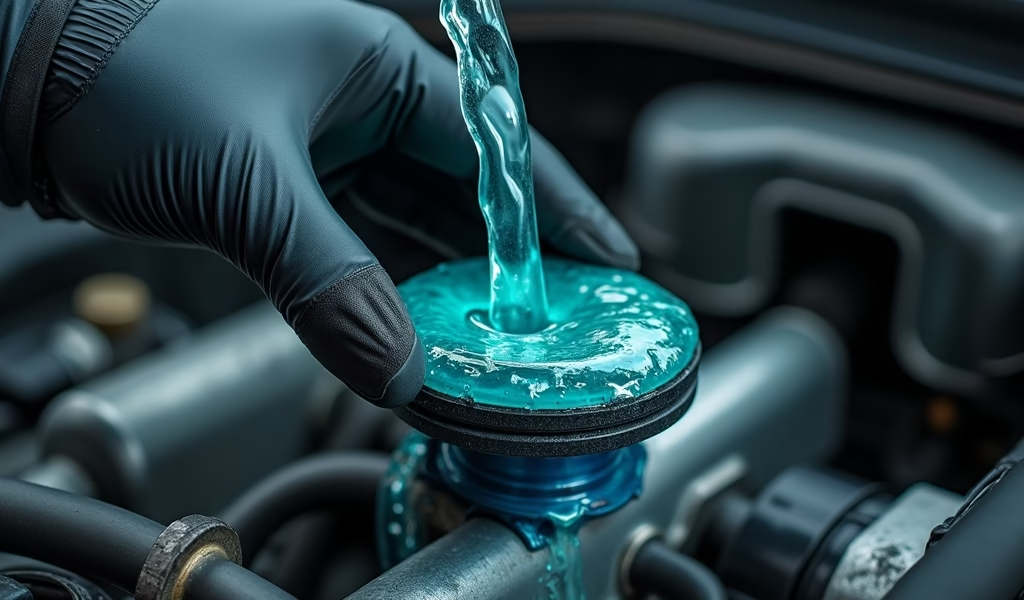
Coolant breaks down over time, becoming acidic and losing its anti-corrosion properties. Most vehicle manufacturers recommend flushing and replacing coolant every 30,000-50,000 miles. This removes contaminants and deposits before they can cause blockages or damage components.
When flushing, always use the correct coolant type specified in your owner’s manual. Modern vehicles often have specific requirements – using the wrong formulation can cause more problems than it solves. According to NHTSA recommendations, maintaining proper fluid levels and quality is essential for vehicle longevity.
Inspect Hoses Regularly
Cooling system hoses degrade from the inside out due to constant exposure to hot coolant. Feel your hoses when the engine is cool – they should be firm but slightly flexible. Replace any hoses that feel too soft, too hard, or show cracks. Pay special attention to the connections, where leaks often begin.
Radiator Cap Replacement
Replace your radiator cap every 4-5 years as preventative maintenance. This inexpensive part plays a crucial role in maintaining system pressure. When shopping for a replacement, always match the pressure rating to your manufacturer’s specifications.
Seasonal Coolant Check
Before extreme temperature seasons (summer and winter), check your coolant concentration using an inexpensive tester from any auto parts store. In winter, insufficient antifreeze concentration can lead to freezing and catastrophic damage. In summer, improper concentration can lower the boiling point and lead to overflow issues.
Keep Your Radiator Clean
The external fins of your radiator need airflow to dissipate heat effectively. Periodically check that the radiator isn’t clogged with leaves, bugs, or road debris. A gentle rinse with a garden hose (engine OFF and COOL) from the back side toward the front can dislodge debris without damaging the fins.
DIY or Professional: When to Call a Mechanic
Some cooling system tasks are perfect for DIY enthusiasts, while others are best left to professionals. Here’s how to know the difference:
DIY-Appropriate Tasks
With basic tools and proper safety precautions, most home mechanics can handle:
- Radiator cap replacement
- Coolant level checks and top-offs
- Visual inspections
- Basic hose replacement
- Coolant flushes (with proper disposal methods)
- Thermostat replacement (on some accessible engines)
Remember that coolant is toxic but recyclable – never pour it down drains or on the ground. Most auto parts stores accept used coolant for recycling.
Leave to the Professionals
Some cooling system repairs require specialized tools, expertise, or access:
- Head gasket repairs
- Water pump replacement (especially on timing belt-driven engines)
- Complex radiator replacements
- Diagnosing intermittent overheating issues
- Heater core replacements (typically buried in the dashboard)
- Any repair requiring system bleeding on modern vehicles with complex routing
When in doubt, consult a professional. The cost of diagnosis is typically far less than repairing damage from a DIY attempt gone wrong.
Cost Estimates for Common Repairs
Understanding potential costs helps you budget appropriately for cooling system issues:
- Radiator cap: $10-20 (parts), $0-50 (labor)
- Coolant flush: $100-200 total
- Hoses: $20-50 each (parts), $50-150 (labor)
- Thermostat: $10-30 (parts), $100-300 (labor)
- Water pump: $50-300 (parts), $200-600 (labor)
- Radiator: $200-1,000 (parts), $200-500 (labor)
- Head gasket: $30-50 (parts), $1,200-2,500 (labor)
- Overflow tank: $30-100 (parts), $50-150 (labor)
These estimates vary widely based on vehicle make, model, and your geographic location. European and luxury vehicles typically cost 30-50% more than domestic or Asian models due to parts availability and complexity. Getting multiple quotes for major repairs can save you significant money.
Remember that addressing minor cooling system issues early (like a $15 radiator cap) can prevent major repairs (like a $2,000 head gasket job) down the road.
Conclusion: Keeping Your Cool and Your Car Running
Coolant overflow is your car’s way of waving a red flag – something in your cooling system needs attention. By understanding the common causes and warning signs, you can catch problems early, when they’re still inexpensive to fix.
The key takeaways? Don’t ignore small problems, follow your manufacturer’s maintenance schedule, use the correct coolant for your vehicle, and address warning signs promptly. Your engine’s health depends on proper cooling, and your wallet will thank you for your proactive approach.
Whether you’re a DIY enthusiast or prefer professional service, knowledge is your best tool in preventing cooling system failures. A little attention now saves a lot of trouble later. Stay cool out there!
Frequently Asked Questions
Is it safe to drive with coolant overflowing?
No, it’s not safe to drive with coolant overflowing. Continuing to drive can lead to overheating, potentially causing expensive engine damage like warped cylinder heads or blown head gaskets.
How often should coolant be changed to prevent overflow issues?
Most manufacturers recommend changing coolant every 30,000-50,000 miles. Following this schedule prevents the buildup of contaminants and maintains the coolant’s protective properties.
Why does my coolant overflow only when the engine is hot?
Some expansion is normal as coolant heats up, but excessive overflow when hot typically indicates a pressure regulation problem. The most common culprit is a faulty radiator cap that isn’t maintaining proper system pressure.
Can weather changes cause coolant to overflow?
Extreme temperature changes can affect coolant expansion, but a properly functioning system should accommodate normal seasonal variations. If weather consistently triggers overflow, your system likely has an underlying issue needing attention.
What’s the difference between coolant leaking and normal overflow?
Normal overflow returns to the radiator when the engine cools through the recovery tank. Leaking means coolant is escaping the closed system entirely, requiring repair before engine damage occurs.