

Overview
That strange smell and sluggish performance might be your car’s cry for help—a clogged catalytic converter silently sabotaging your vehicle’s efficiency, emissions control, and engine health. This comprehensive guide walks you through identifying seven telltale symptoms, understanding root causes, exploring DIY diagnosis methods, weighing repair options from simple cleaning to replacement, and implementing preventative strategies to protect this expensive but essential component of your exhaust system.
Table of Contents
- Understanding Catalytic Converters: What They Do and Why They Matter
- 7 Telltale Signs Your Catalytic Converter Is Clogged
- What Causes Catalytic Converter Clogs?
- DIY Diagnosis: How to Check for a Clogged Converter
- Fixing a Clogged Catalytic Converter: Your Options
- Cost-Saving Strategies for Catalytic Converter Repairs
- Prevention Tips: Keeping Your Catalytic Converter Healthy
- Conclusion
- Frequently Asked Questions
Understanding Catalytic Converters: What They Do and Why They Matter
That strange smell from your exhaust and the sluggish acceleration might be telling you something important – your catalytic converter could be struggling. As a mechanic who’s seen thousands of exhaust systems in various states of distress, I can tell you that a clogged catalytic converter is one of those problems that sneaks up slowly but hits hard when it finally makes itself known.
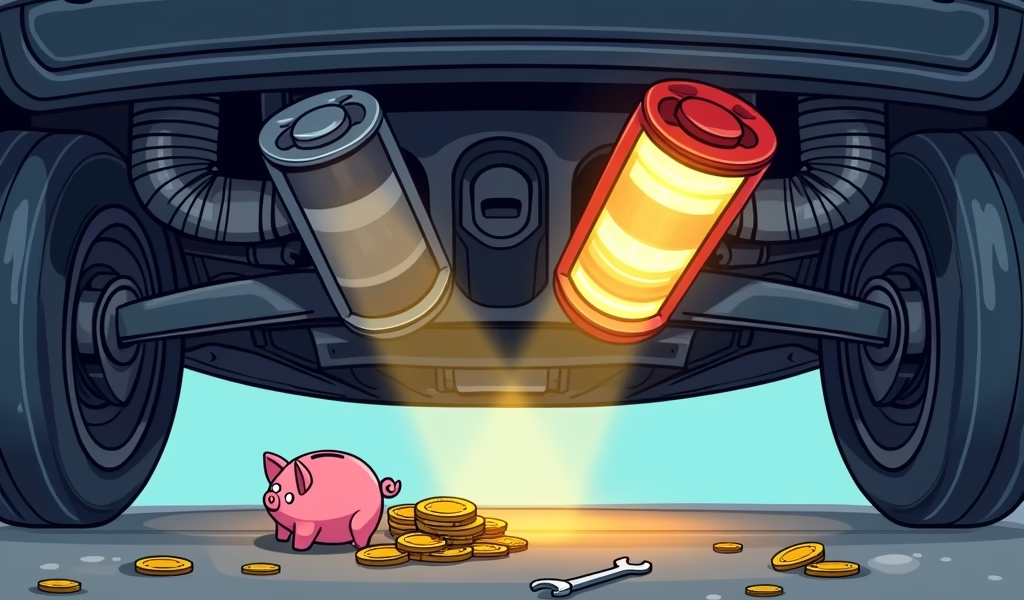
Think of your catalytic converter as the environmental guardian of your vehicle. It’s that unassuming component tucked underneath your car between the engine and muffler that transforms harmful engine emissions into less damaging substances before they exit your tailpipe. Inside its metal housing sits a honeycomb structure coated with precious metals – platinum, palladium, and rhodium – that work like magic to convert carbon monoxide into carbon dioxide, hydrocarbons into carbon dioxide and water, and nitrogen oxides into nitrogen and oxygen.
These workhorses have been mandatory in all gasoline-powered vehicles in the U.S. since the mid-1970s, and for good reason. Beyond keeping our air cleaner, they’re essential for your vehicle’s performance. When working properly, you’ll never notice your catalytic converter. When it’s clogged, though, your entire vehicle feels the effects – from poor fuel economy to potential engine damage.
Most catalytic converters are designed to last the lifetime of your vehicle (at least 100,000 miles), but various factors can cause them to fail prematurely. And when they do, you’re looking at one of the more expensive exhaust system repairs, largely due to those precious metals inside. Knowing the warning signs can save you hundreds, if not thousands, in repair costs.
7 Telltale Signs Your Catalytic Converter Is Clogged
After working on vehicles for over 15 years, I’ve become quite familiar with the distinctive symptoms of a clogged catalytic converter. Here’s what you should watch for:
1. Performance Problems
One of the first signs you’ll notice is a significant decrease in engine performance. Your car might feel like it’s running out of breath, especially when accelerating or climbing hills. This happens because a clogged converter creates backpressure in the exhaust system, essentially making your engine work against resistance. It’s like trying to blow through a straw with a marshmallow stuck in the middle – the air still moves, but much more effort is required.
2. Poor Fuel Economy
Have you been stopping at gas stations more frequently? A clogged catalytic converter forces your engine to work harder, consuming more fuel in the process. I’ve seen vehicles lose 10-20% of their fuel efficiency when dealing with severe converter restrictions. Your engine diagnostic app might even show fuel trim corrections as your car’s computer tries to compensate for the restricted exhaust flow.
3. Check Engine Light
Modern vehicles are pretty smart about monitoring their exhaust systems. Oxygen sensors positioned before and after your catalytic converter constantly compare emissions levels. When the converter isn’t doing its job effectively, these sensors trigger the check engine light. Specific trouble codes like P0420 or P0430 (Catalyst System Efficiency Below Threshold) often point directly to converter issues. Many drivers use apps for car diagnostics to check these codes themselves before heading to a shop.
4. Rotten Egg Smell
Notice a sulfurous, rotten egg smell from your exhaust? That’s hydrogen sulfide, which should normally be converted by a properly functioning catalytic converter. When your converter is failing, this distinctive odor becomes more noticeable, especially during acceleration. It’s not just unpleasant – it’s a clear warning sign something’s wrong.
5. Excessive Exhaust Smoke
A healthy exhaust should produce nearly invisible emissions. Dark smoke (black, blue, or gray) suggests incomplete combustion, with unburned fuel passing through a failing converter. This is particularly noticeable during acceleration or when the engine is under load.
6. Rough Idle and Misfires
The backpressure created by a clogged converter doesn’t just affect acceleration – it can make your engine run roughly even at idle. You might notice unusual vibrations, hesitation during acceleration, or even complete misfires where the engine momentarily cuts out. These symptoms tend to worsen as the clog increases.
7. Rattling Noises
If you hear metallic rattling sounds coming from underneath your vehicle, especially when starting your car or during acceleration, the honeycomb structure inside your catalytic converter might be breaking apart. This internal damage creates loose pieces that rattle around inside the converter housing – a sign replacement is likely needed soon.
What Causes Catalytic Converter Clogs?
Understanding what causes catalytic converter clogs helps you prevent them in the first place. After diagnosing hundreds of converter issues, I’ve found these are the most common culprits:
Rich Fuel Mixtures
When your engine burns more fuel than necessary (running “rich”), excess unburned fuel enters the exhaust system. This fuel can coat the catalytic converter’s internal surfaces, reducing efficiency and eventually causing clogs. Common causes include faulty oxygen sensors, fuel injector problems, or a malfunctioning engine control module.
Oil or Coolant Contamination
Internal engine issues that allow oil or coolant to enter the combustion chamber will send these contaminants straight through to your exhaust system. When these fluids hit the extremely hot catalytic converter (which normally operates between 800-1,200°F), they burn and create deposits that clog the honeycomb structure. According to EPA studies on emissions systems, even small amounts of oil contamination can significantly reduce converter efficiency.
Low-Quality Fuel
Fuel contaminated with excessive additives or impurities can contribute to carbon buildup inside your catalytic converter. I always recommend using high-quality fuel from reputable stations to minimize this risk.
Short-Trip Driving
Catalytic converters need to reach operating temperature (around 800°F) to function efficiently. If you primarily make short trips where the exhaust system never fully heats up, unburned fuel can accumulate in the converter, creating carbon deposits over time.
Ignition System Problems
Worn spark plugs, damaged ignition coils, or other ignition system issues can cause engine misfires. Each misfire sends unburned fuel into the exhaust system, overwhelming your catalytic converter’s ability to process emissions properly.
Physical Damage
Road debris, speed bumps, or off-road driving can physically damage your converter’s housing or internal structure. Even seemingly minor dents can restrict flow and cause eventual clogs.
DIY Diagnosis: How to Check for a Clogged Converter
Before heading to the shop and potentially spending hundreds on repairs, try these diagnostic methods to confirm whether your catalytic converter is actually the problem:
The Temperature Test
This is my favorite quick check when I suspect converter issues. A properly functioning catalytic converter gets extremely hot during operation due to the chemical reactions happening inside. After driving for about 15 minutes to warm everything up, safely park and turn off your engine. Using an infrared thermometer (available at most auto parts stores for under $30), measure the temperature at the inlet pipe (closer to the engine) and the outlet pipe of the converter.
The outlet should be significantly hotter than the inlet – typically by 100°F or more. If both sides show similar temperatures or if the inlet is actually hotter, your converter is likely clogged and not processing emissions correctly.
The Engine Vacuum Test
This test requires a vacuum gauge, which you can usually borrow from auto parts stores through their tool loan programs. Connect the gauge to a vacuum line on your intake manifold (your vehicle’s service manual can show you where). With the engine warmed up and idling, a normal reading should be steady between 17-21 inches of mercury (inHg).
Rev the engine to about 2,500 RPM, then quickly release the throttle. If the needle drops significantly below your idle reading before returning to normal, this indicates exhaust restriction that could be caused by a clogged converter.
The Back-Pressure Test
For a more definitive test, you can check exhaust back-pressure by temporarily removing the upstream oxygen sensor and connecting a back-pressure gauge (again, often available through tool loan programs). With the engine running at 2,000 RPM, back-pressure readings exceeding 1.5 psi strongly suggest a restricted catalytic converter.
Code Reading
Use an OBD-II scanner to check for trouble codes. Codes like P0420 (Catalyst System Efficiency Below Threshold) or P0430 (Catalyst System Efficiency Below Threshold Bank 2) commonly indicate converter issues. While these codes don’t automatically mean your converter is clogged, they do warrant further investigation.
The Rev Test
A simple but sometimes effective test is the “rev test.” With your vehicle safely parked, have someone rev the engine while you listen to the exhaust flow. A clogged converter often creates a distinctive flat or muffled sound during revving, and the engine may struggle to reach higher RPMs compared to normal operation.
Fixing a Clogged Catalytic Converter: Your Options
Once you’ve confirmed your catalytic converter is clogged, you have several potential solutions, ranging from simple cleaning to complete replacement:
Catalytic Converter Cleaners
For minor clogs caused by carbon buildup, fuel additive cleaners might help. These products contain chemicals designed to break down deposits when run through your engine and exhaust system. Look for cleaners containing polyetheramine (PEA), which is particularly effective at removing carbon deposits.
Pour the cleaner into your fuel tank according to the manufacturer’s instructions, then drive normally for the recommended distance. For best results, use the cleaner right before a long highway drive to help the converter reach optimal cleaning temperature. I’ve seen these products work well for mild cases, but they won’t fix severe clogs or physical damage.
The Italian Tune-Up
This old mechanic’s trick involves driving your vehicle at sustained higher RPMs to generate enough heat to burn off light deposits in the converter. Find a safe, open highway where you can legally maintain speeds around 55-65 mph for about 20-30 minutes. The increased exhaust temperature can sometimes clear minor clogs.
Keep in mind this method only works for light carbon buildup and won’t help with physical damage or severe blockages. It’s also important to follow all traffic laws and never push your engine beyond safe operating conditions.
Professional Cleaning Services
Some repair shops offer catalytic converter cleaning services using specialized equipment and chemicals. These typically cost between $150-$300 and can be effective for moderate clogs without physical damage.
The process usually involves removing the converter from your vehicle and using pressurized cleaning solutions or walnut shell blasting to remove deposits without damaging the delicate honeycomb structure. According to research from the Society of Automotive Engineers, professional cleaning can restore up to 80% of a converter’s efficiency when the clog is primarily carbon-based.
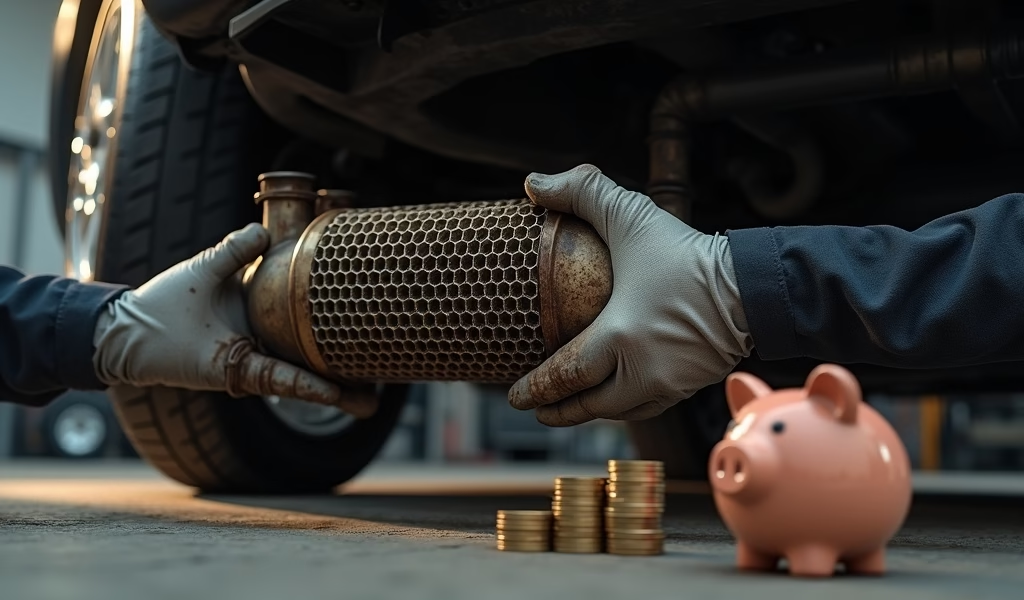
Replacement Options
When cleaning won’t help – which is often the case with severe clogs, internal damage, or contamination from oil or coolant – replacement becomes necessary. You have several options:
- OEM (Original Equipment Manufacturer): These match your vehicle’s original specifications exactly but are typically the most expensive option ($800-$2,500+).
- Aftermarket direct-fit: Designed specifically for your vehicle model but manufactured by third parties, often at lower costs ($250-$800).
- Universal converters: The most affordable option ($100-$350) but require modification to install and may not perform as well or last as long.
If your vehicle is less than 8 years old or has fewer than 80,000 miles, check if your catalytic converter is still under the federal emissions warranty, which might cover replacement costs completely.
Cost-Saving Strategies for Catalytic Converter Repairs
Catalytic converter repairs can be expensive, but these strategies can help minimize the financial impact:
Address the Underlying Cause
Simply replacing a clogged converter without fixing what caused the problem in the first place is like putting a new bandage on a wound without cleaning it. Always identify and address the root cause – whether it’s a rich fuel mixture, oil consumption, or ignition problems. Otherwise, your new converter will likely suffer the same fate as the old one.
Consider Aftermarket Options
While OEM parts offer perfect fitment and typically longer warranties, quality aftermarket converters can save you 30-50% on parts costs. Just make sure any replacement converter is EPA-compliant for your specific vehicle and state. California residents need to be particularly careful, as CARB (California Air Resources Board) requirements are stricter than federal standards.
Check for Recalls or Warranties
Before paying for repairs, check if your vehicle has any outstanding recalls related to the exhaust system. Also verify your warranty status – federal law requires manufacturers to warranty catalytic converters for 8 years or 80,000 miles, and some manufacturers offer even longer coverage.
Explore Independent Shops
Dealerships typically charge premium rates for catalytic converter replacement. Reputable independent shops often charge 20-40% less for the same repair while using quality parts. Ask for recommendations from trusted friends or check online reviews specifically mentioning exhaust system repairs.
Combine With Other Exhaust Work
If your exhaust system has other issues – like a leaking gasket or worn oxygen sensor – combining repairs can save on labor costs, as much of the disassembly work overlaps. A comprehensive car maintenance checklist can help identify multiple issues that might need attention.
DIY Installation (For Experienced Home Mechanics Only)
If you have the tools, space, and experience working on exhaust systems, replacing a catalytic converter yourself can save $150-$300 in labor costs. However, this isn’t a beginner-friendly job – you’ll be working underneath the vehicle with potentially rusted exhaust components, and proper reinstallation is critical for emissions compliance and safety.
Prevention Tips: Keeping Your Catalytic Converter Healthy
The best repair is the one you never need to make. These preventive measures can help maximize your catalytic converter’s lifespan:
Maintain Regular Engine Tune-ups
Follow your manufacturer’s recommended maintenance schedule for spark plugs, air filters, and other components that affect combustion quality. Properly maintained engines produce fewer contaminants that could damage your converter. Most vehicles benefit from comprehensive tune-ups every 30,000-60,000 miles, depending on age and manufacturer specifications.
Use Quality Fuel
Higher-grade fuels generally contain fewer contaminants and more effective cleaning additives. Consider using Top Tier certified gas, which exceeds minimum EPA detergent requirements and helps prevent carbon buildup throughout your fuel system and engine. The minimal extra cost per gallon can save you thousands in potential repairs.
Address Check Engine Lights Promptly
Don’t ignore that dashboard warning! Early detection of minor issues like oxygen sensor failures or minor misfires can prevent them from cascading into catalytic converter damage. Even seemingly unrelated codes can indicate conditions that might eventually harm your converter.
Drive Consciously
Avoid excessive idling and try to incorporate regular highway drives to keep your converter at optimal operating temperature. For city dwellers, try to combine errands into single trips rather than making numerous short trips that never allow your exhaust system to fully warm up.
Fix Oil Consumption Issues
If your vehicle is burning oil (blue smoke from the tailpipe, decreasing oil level between changes), address this problem immediately. Oil contamination is one of the quickest ways to destroy a catalytic converter.
Install a Converter Shield
With catalytic converter theft on the rise due to the valuable metals inside, installing a protective shield not only prevents theft but also protects against road debris damage. These shields typically cost $150-$300 installed – much cheaper than replacing a stolen or damaged converter.
Conclusion
A clogged catalytic converter doesn’t have to mean an empty wallet. By recognizing the warning signs early – performance issues, unusual smells, check engine lights, and strange noises – you can often catch problems before they require complete replacement. The simple diagnostic methods we’ve discussed can help you confirm whether your converter is really the culprit before you invest in repairs.
Remember that your catalytic converter is part of a larger system. Taking care of your engine through regular maintenance, using quality fuel, and addressing minor issues promptly will help keep your entire exhaust system healthy. Think of these preventive measures as an insurance policy that costs far less than the premium you’ll pay for major repairs down the road.
Whether you choose cleaning products, professional services, or replacement, always address the underlying cause of converter problems to prevent recurrence. And if replacement becomes necessary, explore all your options – from warranty coverage to aftermarket parts – to find the most cost-effective solution for your specific situation.
Your catalytic converter may be hidden underneath your vehicle, but the signs of its distress are clear if you know what to look for. Stay observant, be proactive, and your exhaust system will reward you with years of reliable, efficient, and environmentally friendly performance.
Frequently Asked Questions
How long can I drive with a clogged catalytic converter?
You shouldn’t drive long with a clogged converter as it can cause engine damage and potentially leave you stranded. While you might manage short distances, addressing the issue promptly prevents more expensive repairs later.
Will a clogged catalytic converter throw a check engine light?
Yes, a clogged converter will typically trigger a check engine light, often with codes P0420 or P0430. Modern vehicles have oxygen sensors before and after the converter that detect when it’s not functioning efficiently.
Can you unclog a catalytic converter without replacing it?
Minor clogs can sometimes be cleared using catalytic converter cleaners or the “Italian tune-up” method of sustained highway driving. Severe clogs, physical damage, or contamination from oil/coolant typically require replacement.
What does a clogged catalytic converter sound like?
A clogged converter may produce a rattling sound if internal components have broken loose, or the engine might make a muffled, struggling sound during acceleration. You might also notice popping or misfiring sounds as the engine fights against exhaust backpressure.
How much does it typically cost to replace a catalytic converter?
Replacement costs range from $500-$2,500 depending on your vehicle make, model, and whether you choose OEM or aftermarket parts. Labor typically accounts for $150-$300 of these costs.